


- 14 Mar 2002
- 21,050
- 18,903
When the plans were first put forward, officials said that in a place like this, a wooden pagoda would not last. The winds are too strong, the snow too heavy, the winters too hard on timber. If anything were to be approved, it would have to be steel. Yet, by late October, a five-storey wooden pagoda stood completed at Koshoin, a temple site about 30 minutes by car from JR Sapporo Station.
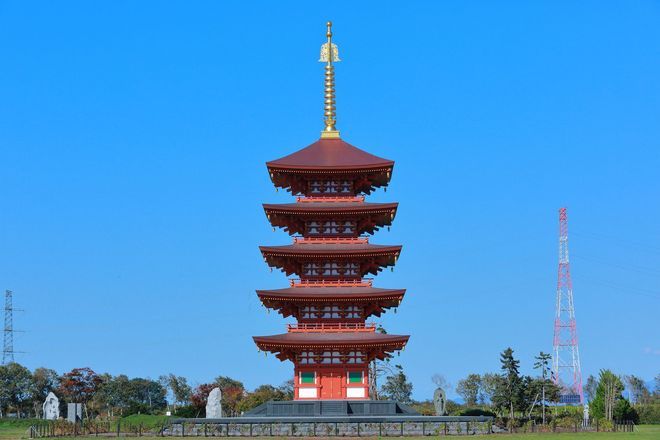
Photo credit: Kudo Ryo via Asahi
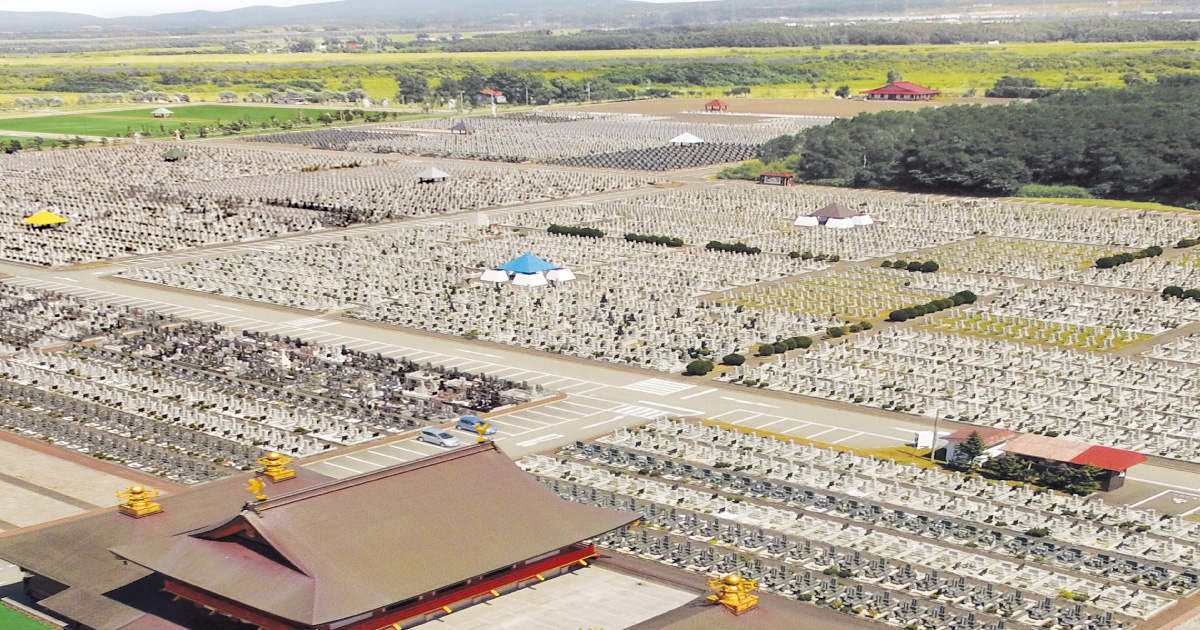
The pagoda stands 33.3 metres tall and is the first wooden five-storeyed pagoda built in Hokkaidō , making it the northernmost example of its kind in Japan. Its vermilion exterior contrasts sharply with the open northern landscape, creating a visual effect more commonly associated with Japan's historic capitals than with this region. Koshoin is a Shingon -sect temple founded in 1980. It is administratively affiliated with Daigoji in Kyoto , a UNESCO World Heritage site, and is also known as the operator of Barato Cemetery.
The structure was modelled after Daigoji temple's five-storied pagoda, which was built during the Heian Period (794-1185).
 baratoreien.com
Photo credit: Kudo Ryo via Asahi
The pagoda stands 33.3 metres tall and is the first wooden five-storeyed pagoda built in Hokkaidō , making it the northernmost example of its kind in Japan. Its vermilion exterior contrasts sharply with the open northern landscape, creating a visual effect more commonly associated with Japan's historic capitals than with this region. Koshoin is a Shingon -sect temple founded in 1980. It is administratively affiliated with Daigoji in Kyoto , a UNESCO World Heritage site, and is also known as the operator of Barato Cemetery.
A steel-skeleton structure wouldn't last even for a century, but a wooden one could stand for a millennium if only proper repairs were made, Sato thought as he insisted on a pagoda of wood being built. The temple was designed by Yoshio Yonehara, a former head of design with major general contractor Taisei Corp., who had worked on traditional architecture projects. [...] Yonehara decided to use copper roofing instead of tiles, which could break when water freezes in the winter. He also chose not to board the floors beneath each layer's railings so snow would filter through to the roofs below. Yonehara set the pagoda base at 2.4 meters to remain above the snow cover, which reaches a depth of 1.8 meters on the temple grounds in a normal year. He also had 24 29-meter-long piles driven into the ground to firm up the soil.
The structure was modelled after Daigoji temple's five-storied pagoda, which was built during the Heian Period (794-1185).
English | 札幌の霊園「ばらと霊園」|札幌都心から最も近い墓地
北海道札幌市北区茨戸の公園墓所「ばらと霊園」のホームページです。札幌で墓地、墓石をお探しなら、ばらと霊園にお問い合わせください。


