


- 14 Mar 2002
- 21,050
- 18,903
Avocados from Ehime and Shizuoka, while mikan production will move increasingly to the northeast of Japan.
Ehime Prefecture, renowned for its top mikan (mandarin orange) production, is starting to feel the impact of a warming climate. By the end of this century, areas now ideal for mikan cultivation are expected to become better suited to avocados, according to a government research institute.
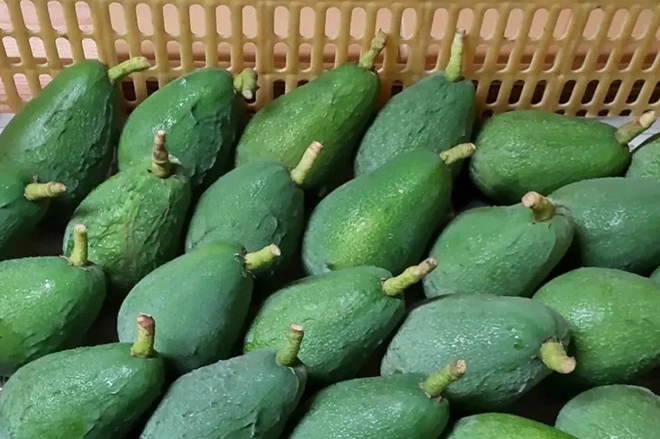
In some mikan-growing regions, farmers—backed by local governments—have already begun trial avocado cultivation. In Matsuyama, the prefectural capital, authorities have been distributing avocado seedlings to farmers, encouraging them to shift from mikan and other crops. What began as a plan to utilise idle farmland has now become a symbol of how climate change is reshaping Japanese agriculture.
Shizuoka Prefecture, another major mikan producer, has set its sights even higher. The governor aims to make Shizuoka Japan's leading avocado-producing region within a decade. With a ¥18 million budget for this fiscal year, the prefectural government has begun large-scale efforts to develop the industry. Thanks to its proximity to major urban markets, locally grown avocados could reach consumers fully ripened.
Avocados can be cultivated outdoors and bear fruit within a few years—faster than mikan trees—but challenges remain. Officials stress the need to identify varieties hardy enough for Japan's winters and to establish reliable methods of cultivation and quality control. Yuji Hirano, head of the prefecture's Agricultural Strategy Division, noted that little was yet known about avocado cultivation. He explained that only about 10 to 20 farms in the prefecture were currently growing the fruit and added that the government planned to collaborate with research institutes over the next three years to deepen its understanding and develop effective growing methods.
Ehime Prefecture, renowned for its top mikan (mandarin orange) production, is starting to feel the impact of a warming climate. By the end of this century, areas now ideal for mikan cultivation are expected to become better suited to avocados, according to a government research institute.
In some mikan-growing regions, farmers—backed by local governments—have already begun trial avocado cultivation. In Matsuyama, the prefectural capital, authorities have been distributing avocado seedlings to farmers, encouraging them to shift from mikan and other crops. What began as a plan to utilise idle farmland has now become a symbol of how climate change is reshaping Japanese agriculture.
Shizuoka Prefecture, another major mikan producer, has set its sights even higher. The governor aims to make Shizuoka Japan's leading avocado-producing region within a decade. With a ¥18 million budget for this fiscal year, the prefectural government has begun large-scale efforts to develop the industry. Thanks to its proximity to major urban markets, locally grown avocados could reach consumers fully ripened.
Avocados can be cultivated outdoors and bear fruit within a few years—faster than mikan trees—but challenges remain. Officials stress the need to identify varieties hardy enough for Japan's winters and to establish reliable methods of cultivation and quality control. Yuji Hirano, head of the prefecture's Agricultural Strategy Division, noted that little was yet known about avocado cultivation. He explained that only about 10 to 20 farms in the prefecture were currently growing the fruit and added that the government planned to collaborate with research institutes over the next three years to deepen its understanding and develop effective growing methods.
Avocados, which are currently grown mostly only in limited areas of Japan, including the Nansei island chain in Kagoshima and Okinawa prefectures, are expected to replace mikan as a new crop suitable for cultivation. The NARO officials predicted the areas suited to avocado culture will expand 2.5- to 3.7-fold from now by mid-century, and 2.4- to 7.7-fold from now by century-end, in the three scenarios considered. They said that, in the "very high" greenhouse gas emissions scenario, some 95,000 square kilometers will fall in a temperature zone suited to avocado culture by the end of the century, and that includes larger parts of the Kanto plains and of Izu and Boso peninsulas.


