Tech Agrobots: robotic rice planters and weeders

News stories related to technology and innovation.

thomas

Unswerving cyclist
Admin
Joined
14 Mar 2002
Messages
21,050
Reaction score
18,903
Fewer people mean more robots: Kyoto -based robot manufacturer Tmsuk Co. tested drones and robots to alleviate a shortage of farmers and agricultural workers.


Once rice seeds have been planted by a drone, a succession of robotic technologies still to be developed would deal with weeding and reaping. "This initiative is in line with our course of action to support (farming)," said a farm ministry representative. "We welcome the entry from different industries with wide perspectives." A trial run on April 15 saw a drone take off with a quiet whir, its movements controlled with joystick like one used for video games. The craft flew over a 1000-square-meter rice paddy, scattering seeds treated beforehand with powdered iron to ensure a smooth drop from the air. The seeding process took just 10 minutes.


Then, weeding would be undertaken by a different type of paddy bot:


Tmsuk Co., Ltd.

Tmsuk Co., Ltd.

Tmsuk Co., Ltd. (株式会社テムザック) is a company that develops, manufactures and sells robots, with headquarters in Munakata City, Fukuoka Prefecture. The company was established with the aim of "creating a society where humans and robots can coexist safely and comfortably".
 
Tmsuk's robots slashed the time needed for cultivation by 95 per cent while simultaneously ensuring a harvest level of 80 per cent.

4f0b92beec1aa988a229bb59f6eae6f3.webp

Working with Nobeoka city, which is seeking ways to claw back growing tracts of abandoned farmland due to the aging of farmers, Tmsuk is robotizing agricultural procedures in three paddies. The process of creating dedicated beds for seedlings is replaced by a drone's scattering of seeds directly on rice paddies. Conditions in each of the fields are monitored remotely, so farmers do not need to patrol them periodically. [...] In September, Tmsuk dispatched 12 employees with sickles to one of the test sites to harvest the crop by hand. Nearly 400 kilograms were harvested in the 1,000-square-meter plot. Robotics reduced the time spent in labor to 29 hours compared with 529 hours when cultivation was done by hand, and the output came to nearly 80 percent of 500 kg that is expected to be harvested by the conventional method.

 
Robots are making inroads in Japan's agriculture: Agrist, a startup company in Miyazaki, is employing robots on a bell pepper farm in Shintomi, Miyazaki:


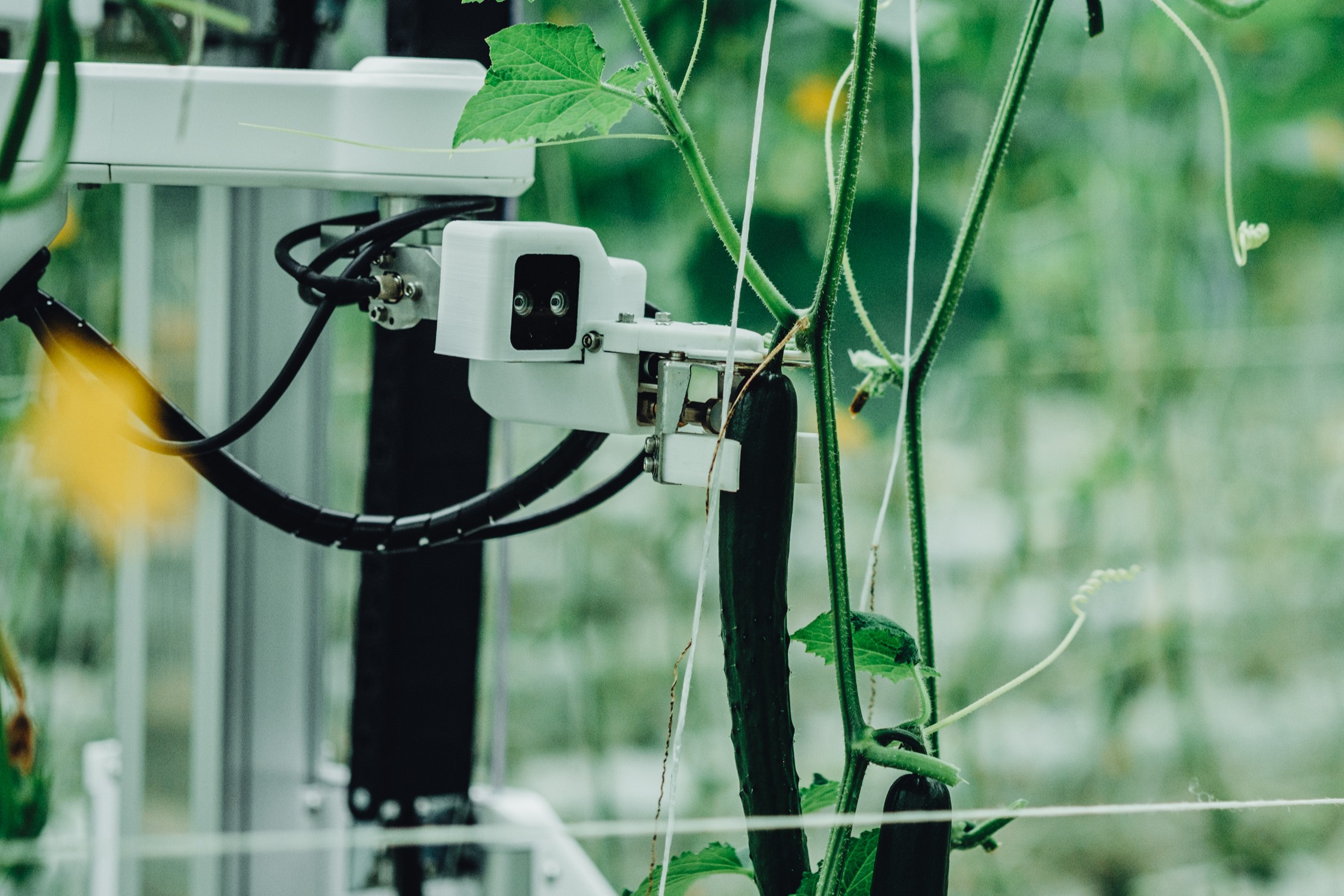
The L robot harvests bell peppers. The robot's artificial intelligence was trained to recognize fruit ripe for harvesting by showing about 30,000 images of ripe bell peppers. The robot glides between the rows of plants on wires near the ceiling of the vinyl house. When its two cameras detect a ripe pepper, a robot arm extends to cut the fruit and place it in a cart. It takes the robot about a minute to harvest one bell pepper, much slower than a human worker, but its strength lies in its ability to work continuously without breaks.

Each robot, like the one displayed below, costs between 2-3 million JPY (USD 13,800 to 20,700).

72615076c4b683543b1f9dc06211a49c.jpg

Photo credit: Denso Corp.

With the spread of robots on the assembly lines of semiconductor and automobile manufacturers, sales of robots in 2022 exceeded 1 trillion JPY. 😲


At that price it seems very good value.
 
Back
Top Bottom