Health 1/30: Japanese People With Mental Illness

thomas

Unswerving cyclist
Admin
Joined
14 Mar 2002
Messages
21,050
Reaction score
18,903
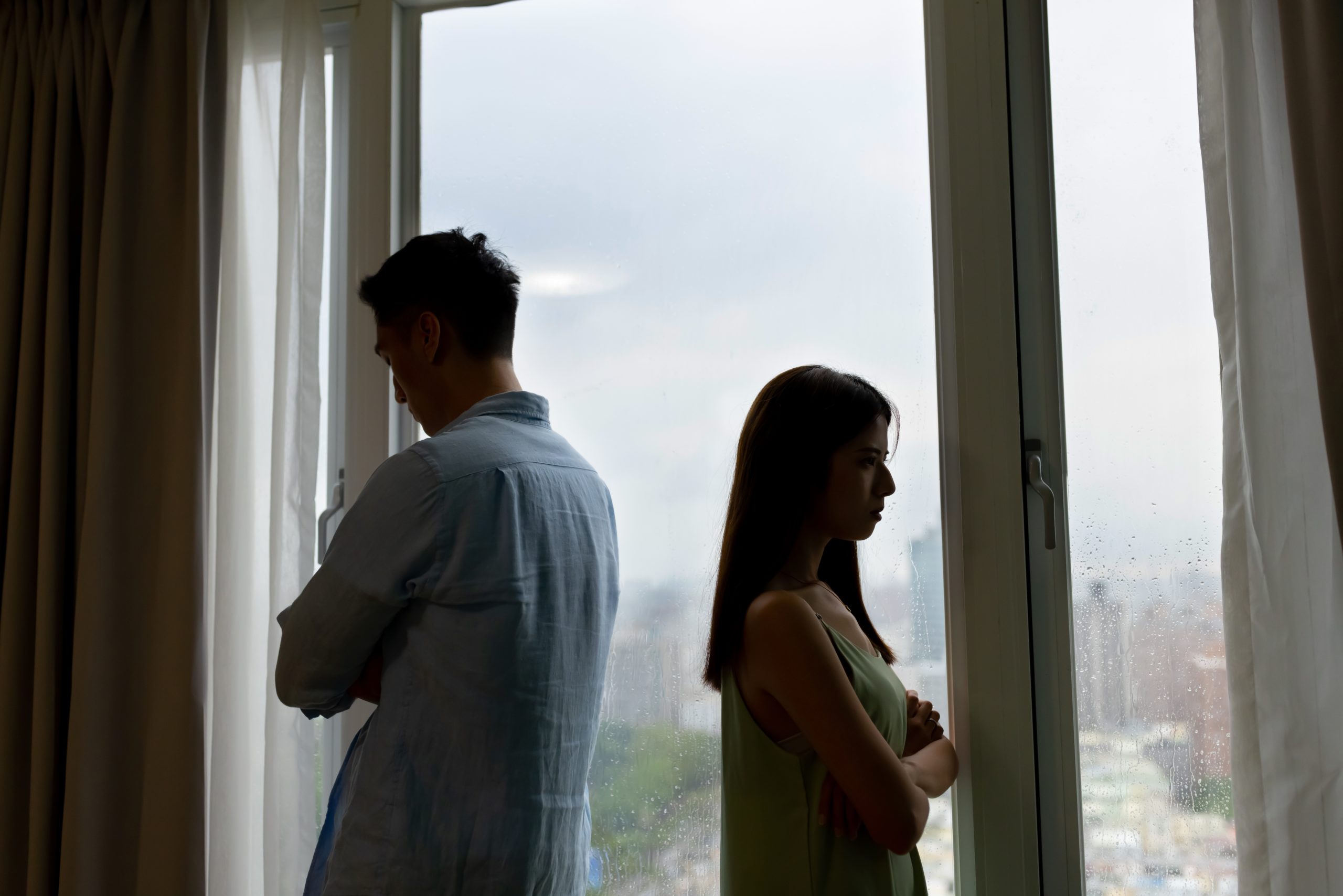
1 in 30 Japanese suffer from mental illness. NHK follows a woman who finds it hard to do simple tasks due to her illness, as she goes to rehabilitation for returning to work.

Links:


A country where young people are obsessed with their devices/avatars/idols/video games, sometimes directly financially supporting their preferred idol, don't desire a 'significant other' or indeed socialise in a meaningful manner, have their desire for physical relationships (one of the strongest primal drives) squibbed out of existence due to the perceptions of 'mendokusai' partly because men are perceived as being/looking effeminate acting as sōshoku-sei and women infantilise their appearance (who would find either of those traits sexually appealing?). They are expected to spend long hours at work away from whatever family they might have and their all important devices, often not actually working, and after those long hours, 'socialise' (drink large amounts of damaging alcohol) with domineering older men who unswervingly believe in the crushing, meritless kohai-sempai system. There's the constant threat and fear of fatal natural disasters, their jobs are dull and security within them is becoming worse and there's a high probability they'll die alone and their remains found as a puddle on the floor of their tiny apartments to be scooped up by a municipal department and rendered into asphalt to line the roads they once used to travel down.

And their mental health is increasingly poor? I'm very surprised by those data 🤔
 
A country where young people are obsessed with their devices/avatars/idols/video games, sometimes directly financially supporting their preferred idol, don't desire a 'significant other' or indeed socialise in a meaningful manner, have their desire for physical relationships (one of the strongest primal drives) squibbed out of existence due to the perceptions of 'mendokusai' partly because men are perceived as being/looking effeminate acting as sōshoku-sei and women infantilise their appearance (who would find either of those traits sexually appealing?). They are expected to spend long hours at work away from whatever family they might have and their all important devices, often not actually working, and after those long hours, 'socialise' (drink large amounts of damaging alcohol) with domineering older men who unswervingly believe in the crushing, meritless kohai-sempai system. There's the constant threat and fear of fatal natural disasters, their jobs are dull and security within them is becoming worse and there's a high probability they'll die alone and their remains found as a puddle on the floor of their tiny apartments to be scooped up by a municipal department and rendered into asphalt to line the roads they once used to travel down.

And their mental health is increasingly poor? I'm very surprised by those data 🤔
You need to spend some more time in Japan. Those people exist, as well as a lot of well-adjusted people, even the young ones!
 
You need to spend some more time in Japan.
When they invent teleportation, I'll definitely visit Japan again!
Those people exist, as well as a lot of well-adjusted people, even the young ones!
So this isn't common? Is it more of a 'Tokyo phenomenon'?

When I mention Japan to muggles, they immediately talk about dirty-knicker vending machines, explicit manga being read by middle-aged business men on trains and karoshi. Perhaps I've fallen for a slightly different stereotype.
 
You're definitely nowhere near the main part of the bell. All it takes to make a "trend" are a few articles about something. You're not going to see many articles about normal well-adjusted people compared to articles about the hikikomori (shut-ins) who won't leave the house or the guys who buy s*x dolls to be their girlfriends.

1753189968969.webp

P.S. I've never seen a dirty knicker vending machine in Japan despite the many hours I have spent searching.
 
You're definitely nowhere near the main part of the bell. All it takes to make a "trend" are a few articles about something. You're not going to see many articles about normal well-adjusted people compared to articles about the hikikomori (shut-ins) who won't leave the house or the guys who buy s*x dolls to be their girlfriends.
Where…err…where did he errr…get the s*x doll from?
View attachment 130552
P.S. I've never seen a dirty knicker vending machine in Japan despite the many hours I have spent searching.
We occasionally have a documentary on Japan over here (I can think of one's by Jonathon Ross, Sue Perkins and James May) and they always focus on the weird stuff in Japan which irritates me. It started with Clive James and his reporting of the Japanese game show, 'Endurance'. So the average Brit thinks that's what Japan is all about.

Dirty knicker vending machines are located, just outside the 7-11 at the west entrance of Shinjuku rail station, two outside the Imperial Palace and one outside the Tokyo Disney Resort. ¥1500 for crumpled, ¥2000 for 'yellowed' and ¥3000 for 'double barrelled' soiling. If you want girl's knickers, prices are considerably higher. A friend told me. 😐
 
The future does appear bleak for your people; anthropogenic climate change, declining economy, rise of the far right and growing general intolerance. So I wonder if this leads to general low mood (sadness) and being anxious amongst them; emotions that are 'normal' from time to time in one's life. I resist using terms like 'depression' because true clinical depression is a horrendous, debilitating condition. Avoiding people/socialising isn't always a psychiatric condition but sometimes a personality trait such as introversion or otrovertism, the latter of which I discovered I belonged, after a lifetime of really not understanding how people derive joy by congregating, backslapping and waving their arms above their heads at sporting/musical events etc.
 
As the article said, Japan is a stressful society. Or, as I heard it put elsewhere, being Japanese isn't easy. Aside from the commonly known work stressors like long hours and overbearing bosses, people also weather social stressors like "reading the air;" shame for making mistakes; being perceived as weak, disruptive, or disharmonious. Non-Japanese who don't come from similarly collective cultures usually don't appreciate how deep "fitting in" runs in cultures like Japan's. It's a significant effort. I have mental health struggles (diagnosed after my time in Japan), and the pressures of Japanese society took more of a toll on me than I realized at the time.

I can relate to Japanese people with mental health problems, because I grew up in a household that interpreted mental health struggles as weakness or having one's head up one's butt. The only therapy that came to mind was pressure to "get with the program." If you said you were struggling, the advice was usually in the form of one short, dismissive sentence that began with the word just. "Just don't worry about things so much." Connecting with therapy was one of the biggest gifts of my life, so I hope awareness and acceptance of it becomes more common in Japan.
 
Last edited:
As the article said, Japan is a stressful society. Or, as I heard it put elsewhere, being Japanese isn't easy. Aside from the commonly known work stressors like long hours and overbearing bosses, people also weather social stressors like "reading the air;" shame for making mistakes; being perceived as weak, disruptive, or disharmonious.
But if you're born and brought up in this sort of oppressive society isn't it seen as 'normal'? I one doesn't know any different etc.
Non-Japanese who don't come from similarly collective cultures usually don't appreciate how deep "fitting in" runs in cultures like Japan's.
Indian society is a very similar 'shame society' but with the added bonus of the shamefulness of being associated with handicap (having a disabled child, for example) and disease (developing cancer). It is truly awful.
It's a significant effort. I have mental health struggles (diagnosed after my time in Japan), and the pressures of Japanese society took more of a toll on me than I realized at the time.
I'm so sorry to hear this, Vincent3. I hope you're receiving the care you need and are making a good recovery 🙏🏽 May I ask, did your mental health struggles start while living and working in Tokyo?
I can relate to Japanese people with mental health problems, because I grew up in a household that interpreted mental health struggles as weakness or having one's head up one's butt.
That sounds tough and uncompromising…
The only therapy that came to mind was pressure to "get with the program."
Does that mean keeping a 'stiff upper lip'?
If you said you were struggling, the advice was usually in the form of one short, dismissive sentence that began with the word just. "Just don't worry about things so much."
You must be old school British or maybe Indian 😉 I think things are or have changed now, don't you think?
Connecting with therapy was one of the biggest gifts of my life,
Excellent!
so I hope awareness and acceptance of it becomes more common in Japan.
🤞🏽
Things have improved greatly in the UK, but the issue is the lack of psychiatric services; too few young doctors want to pursue psychiatry and there aren't enough NHS therapists so waiting lists are very long. Those suffering have to pay for their help, if, indeed they can afford it.
 
But if you're born and brought up in this sort of oppressive society isn't it seen as 'normal'? I one doesn't know any different etc.

Indian society is a very similar 'shame society' but with the added bonus of the shamefulness of being associated with handicap (having a disabled child, for example) and disease (developing cancer). It is truly awful.

I'm so sorry to hear this, Vincent3. I hope you're receiving the care you need and are making a good recovery 🙏🏽 May I ask, did your mental health struggles start while living and working in Tokyo?

That sounds tough and uncompromising…

Does that mean keeping a 'stiff upper lip'?

You must be old school British or maybe Indian 😉 I think things are or have changed now, don't you think?

Excellent!

🤞🏽
Things have improved greatly in the UK, but the issue is the lack of psychiatric services; too few young doctors want to pursue psychiatry and there aren't enough NHS therapists so waiting lists are very long. Those suffering have to pay for their help, if, indeed they can afford it.
The NHS psychiatric services are really struggling due to a combination of increased demand for services and long-term underfunding. One of my friends is a psychiatrist in the NHS and she's absolutely drained by the job.
 
Back
Top Bottom