

Sake specs
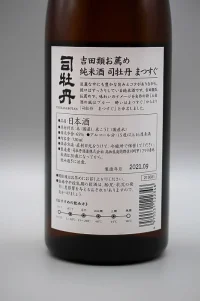
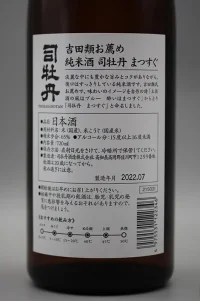
- Prefecture
- Kōchi (高知)
- Rice type
- Domestic rice (国産米)
- Polishing rate (semaibuai)
- 65%
- Alcohol content
- 15-16%
- SMV
- +6
- Acidity
- 1.5
- Amino acid level
- 1.2
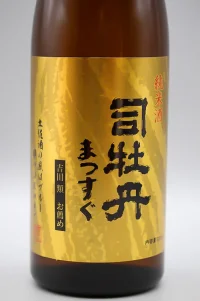
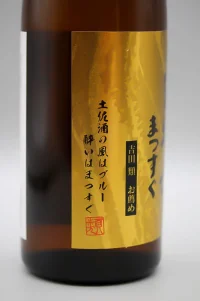
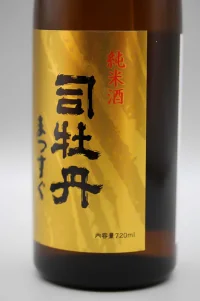
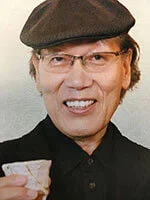
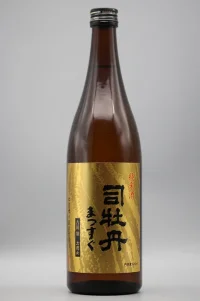
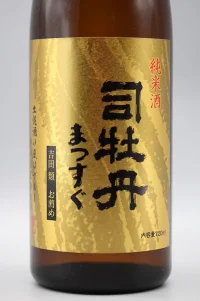
Tsukasabotan Masugu Junmai (純米酒 司牡丹 まつすぐ) is one of the two sake in the 'Junmai Sake Series Recommended by Yoshida Rui' (吉田類お薦め純米酒シリーズ). Yoshida Rui is a sake connoisseur and 'bar poet' travelling across Japan to promote the charm of bar culture. Mr Yoshida wrote the poem on the label and designed the calligraphy.
Masugu Junmai is light, dry, and representative of Tosa sake. Rich in umami, it has a soft and smooth finish. Created as an "evening drink," it is recommended to pair it with grilled mackerel, grilled eel, teriyaki chicken, gouda cheese, and sweet and sour meat dumplings.




2022 edition:



About the brewery
- Brewery
- Tsukasabotan Shuzō
- Name in Japanese
- 司牡丹酒造
- Address
- 1299 Sakawa-chō, Takaoka-gun, Kōchi 789-1201
- Phone
- 0889-221-211
- Website
司牡丹 公式WEBサイト
www.tsukasabotan.co.jp

Founded in 1603, the brewery's origins can be traced back to a "御酒屋" (onsakeya, a sake brewer who supplied sake to the feudal lord) who accompanied Fukao Shigeyoshi, the chief retainer of Yamauchi Kazutoyo (who was granted 240,000 koku of land in Tosa by Tokugawa Ieyasu ), to Tosa. This sake brewery was known as "Kuroganeya" and had deep connections with the "Sayaya" family, the ancestral home of Sakamoto Ryoma , who was also involved in sake brewing. In 1918, the sake brewers of Sakawa came together to establish the current brewery. Tanaka Mitsuakira, a native of Sakawa and a prominent figure in the Meiji Restoration, named the sake "Tsukasabotan," meaning "the supreme among peonies," symbolizing the highest quality. In 2005, a new brewery building, "Heisei-gura," was constructed, consolidating facilities from various locations within the town. Equipped with state-of-the-art rice polishing and koji-making machines, the brewery further enhanced its brewing precision.
The brewery's four pillars are rice, water, technique, and heart. Almost all their sake and koji rice is made from the premium Yamadanishiki variety. Since 1996, they've been contract-cultivating Yamadanishiki and other sake rice varieties using the Nagata farming method in local areas. The brewery uses crystal-clear soft water from the Nyo River system, known locally as "Kaminogawa." This water, combined with the traditional techniques passed down through generations of Hiroshima toji (brewmasters), results in high-quality sake. Despite the challenges of wartime and postwar periods, the brewery has always adhered to its principle of prioritizing quality. Currently, 70% of their production is speciality sake, to reach 100% in the future. Tsukasabotan sake is characterized by its clean, dry flavour, unique umami, and rich aroma.


