


- 14 Mar 2002
- 21,050
- 18,903
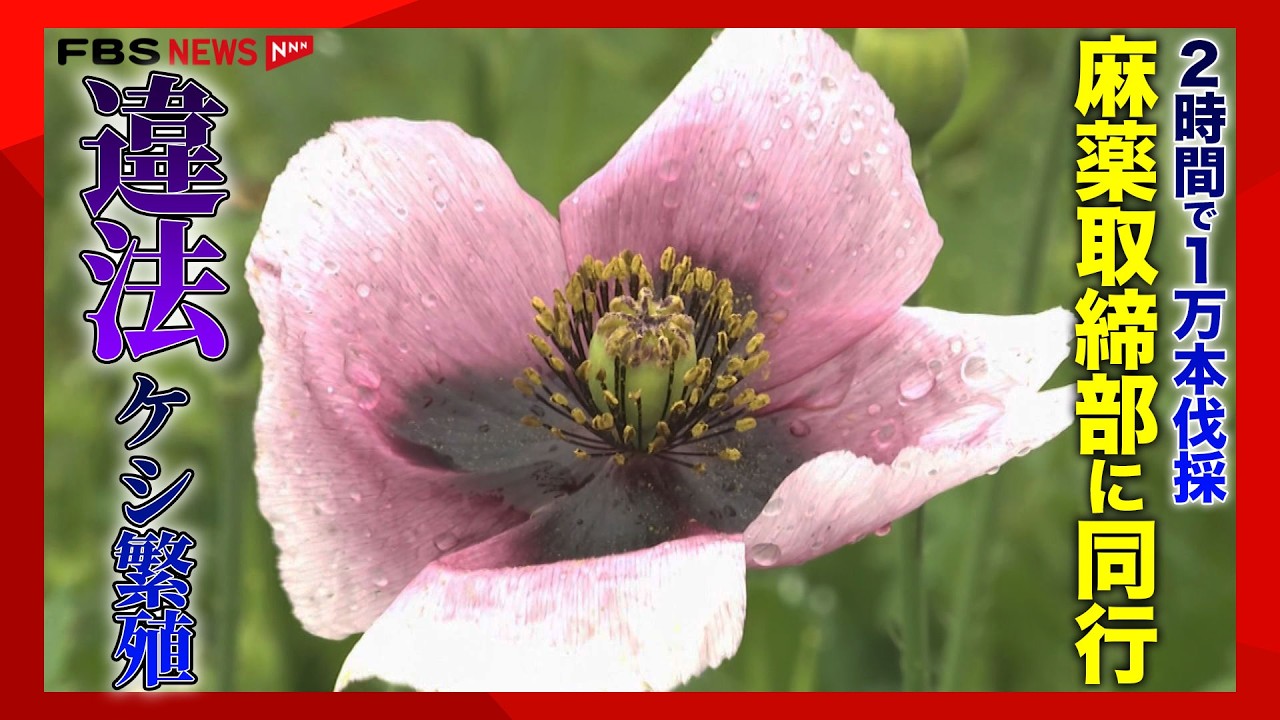
A rise in illegal opium poppies across Japan has led authorities to step up eradication work, with officials in Saga Prefecture removing about 10,000 plants in just two hours. The scale of that single operation has raised concern, and the public is being asked to report any sightings. The plant, known as atsumi-geshi (アツミゲシ), is part of the poppy family and can be used to produce opium. Under Japanese law, growing or distributing it carries criminal penalties.
Despite that, it keeps turning up in ordinary places. Along rivers and canals, by the roadside, in corners of parking lots, and even near railway tracks. Areas where people pay little attention or where maintenance is limited. That seems to be part of the problem. Officials say the plant spreads easily. Its seeds are carried in soil and fertiliser, as well as by birds. Once it takes hold, it can appear in places people do not expect. Reports now come from much of the country, suggesting it is no longer confined to a few areas.
Illegal atsumi-geshi plants can be identified by their leaves, which grow tightly wrapped around the stem without a stalk, and by their relatively shallow leaf indentations compared to legal varieties.
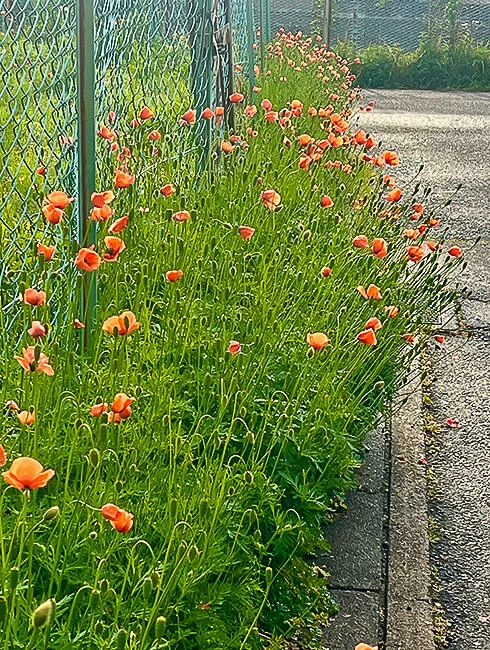
In our area, poppy plants (not native to Japan) are popping up everywhere, and seem to be increasing year by year, though they are all the legal variety.
Despite that, it keeps turning up in ordinary places. Along rivers and canals, by the roadside, in corners of parking lots, and even near railway tracks. Areas where people pay little attention or where maintenance is limited. That seems to be part of the problem. Officials say the plant spreads easily. Its seeds are carried in soil and fertiliser, as well as by birds. Once it takes hold, it can appear in places people do not expect. Reports now come from much of the country, suggesting it is no longer confined to a few areas.
In April, the plant was also discovered growing among fields of blue nemophila flowers at Uminonakamichi Seaside Park in Higashi Ward, Fukuoka City, where similar incidents were reported the previous year and the plants were subsequently incinerated. Atsumigeshi typically blooms between April and May, prompting the government to designate the period from May 1st to June 30th as a nationwide campaign to eradicate illegal cannabis and poppies. Officials from the Kyushu Regional Bureau of Health and Welfare's Narcotics Control Department have been responding to reports across the region, continuing removal operations. In fiscal 2025, approximately 35,000 plants were cut down in Fukuoka Prefecture and 29,000 in Saga Prefecture. Authorities caution that not all poppy-family plants are illegal, noting that ornamental varieties such as poppies are legally cultivated.
Illegal atsumi-geshi plants can be identified by their leaves, which grow tightly wrapped around the stem without a stalk, and by their relatively shallow leaf indentations compared to legal varieties.
Opium Poppies Spreading Rapidly Across Japan
A surge in the growth of illegal opium poppies across Japan has prompted authorities to intensify eradication efforts, with around 10,000 plants removed in just two hours in Saga Prefecture, as officials urge the public to report any sightings.
newsonjapan.com
In our area, poppy plants (not native to Japan) are popping up everywhere, and seem to be increasing year by year, though they are all the legal variety.


