Question Reading Japanese

MAN oh MAN... these videos are like freshly oxidated oxygen to a fish's gills, y'all. I really enjoyed the video Lily posted above AND the video on particles used for emphasis like NI WA, DE WA, etc. I see those a lot in Super Mario Kart... I know I know, NERD ALERT!!!! HAHAHAHA
ついさっきここに返事を書いたのだけれど、なくなってしまっているみたい😢トレバーさんに感謝の気持ちを伝えたいです🙏
 
Aw thank you ma'am. You're the best. Your videos are so fun, and easy to follow. Did you teach as your profession?
Yes. I teach private Japanese lessons online using Microsoft Teams all over the world. Only if Time difference and each other's schedule disponibility matches. These videos serve us well as homework and in real lessons more conversation in Japanese.
 
We need to protect this woman at all costs, haha. Have you guys been reading? I'm about to reread a 1st grade book I finished a while back. My OCD won't allow me to skip Kanji without knowing what it means, haha, so I think the next time I get up to Mitsuwa Marketplace near Chicago I'll pick up a few more 1st grade books, a second grade book, and a 3rd grade book. I have 4th, 5th and 6th grade books, but SURPRISE, they're actually hard as Hell to read without running into something I don't know! HAHAHAHA
 
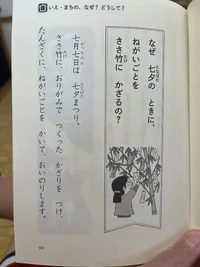
Does anybody know what 七夕 means in this context?
 

Attachments

  • image.webp
    image.webp
    1.5 MB · Views: 74
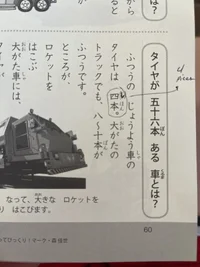
OK, back at it again with another question. In the following image, I'm going to provide in this post. I was curious if you guys have ever come across this squiggle?
 

Attachments

  • image.webp
    image.webp
    1.2 MB · Views: 60
Which squiggle are you talking about? Kind of unclear as to what character you are looking at. The encircled part is just normal kanji. The hiragana written inside the parenthesis is a normal hiragana. Maybe it could have been written clearer, but it is clear enough from the context.
Or are you looking at something else?
 
OK, its just the equivalent of a dash mark that expresses a range. As in "anywhere from 8 to 10 wheels".
Trucks have 8-10 wheels.

In other words, it indicates a range between the two numbers given.
 
Holy buckets, God bless you, good, sir. Looking at it now it cracks me up how I missed that. I love reading these books for first graders. I have first grade through sixth grade books and I think it's really really great. I read aloud and just like Lily. Sama said it really does help with confidence in speaking Japanese and also it's just really great practice.
 
If you want to voice that squiggly line, you can say "kara"


hachi kara jū Except in the case of that sentence, the kind of combines with hon to become jippon. So, "hachi kara jippon". Slightly confusing, but no need to get stuck in the weeds yet.

Also, 四本 is usually pronounced よんほん (yonhon). "Shihon" doesn't really work here, although compassionate listeners might understand your intent, and give you a pass for saying it. But "yonhon" is best.
 
Does anybody have any tips for the kanji 出? For clues as if it's DE or DA in any given instance I look at the okurigana behind it, but what do you guys think?
 
Back
Top Bottom