Question Reading Japanese

トレバー

後輩
Joined
30 Mar 2024
Messages
245
Reaction score
328
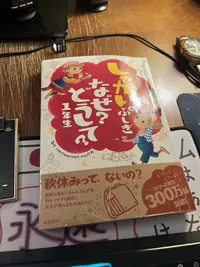
Hello all! I was wondering if you guys would share your thoughts on this, so, I read a lot of Japanese; I read mainly books aimed at younger kids because I feel it's my level and I love the introduction of kanji in context.

My question is:

Should I be worried if I don't fully understand what I'm reading? Sometimes it bothers me… haha, but I know it's still good for me because I'm building those neuropathways between eyes, brain and mouth; because I read a loud. I can infer and understand some things, though!

What do you guys think? I feel that reading and listening are best. Also, it's my birthday, today! I'm 34, babyyyyy!!! Haha

僕は34歳です!本日が僕の誕生日です! 😎
Thanks for the help wise sages!
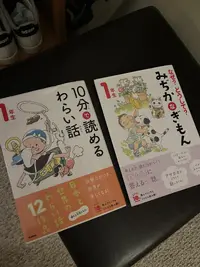
 
Oh! Also it can be tricky to read in all hiragana and katakana with the occasional Kanji, but I know it takes practice and time. Haha it's funny because one can make the sounds and not know what it means. Haha
 
It does matter that you don't understand it all according to the fantastic book.
IMG_4304.webp

It presents the techniques the true polyglots of the past used to learn languages and among them is using dual language books so you can cross reference exactly what you're reading.

Do get this book and have a read. The author is a Japanese speaker and I believe he's writing a book about learning kanji. His book 'Way of Salt' is fantastic!
 
Oh! Also it can be tricky to read in all hiragana and katakana with the occasional Kanji, but I know it takes practice and time.
I find the lack of gaps between words makes reading Japanese even harder
Haha it's funny because one can make the sounds and not know what it means. Haha
My father could speak Urdu (Hindi, Punjabi and English too). Urdu uses the Arabic alphabet so he could read Arabic but had no idea what it meant!
 
お誕生日おめでとうございます。
Obviously the more you can understand the better. But if you try to do that for every little thing you don't understand, you'll get into routine of parsing and analysis and less actual reading. When I did that I'd get bogged down and less motivated. And I know when reading English over the years, I didn't stop every time I encountered a word I didn't know and grab a dictionary. But I more or less gave up reading Japanese years ago. I still have to do it for emails, business communications, etc. but it's easy enough to get by these days without being fully literate. So the answer is... read the book that Ukigumo recommended. :)
 
There's something called a 'frequency dictionary' that lists words by how frequently they're used in everyday language. What's the point of learning the kanji and pronunciation of the word for the hand's thenar webspace for example when only plastic surgeons and practitioners of swordsmanship need know it? (Boshinitenkin, by the way). Frequency dictionaries are really useful (recommended in Ash Warren's book).

I never got on with most Japanese language books, too (Japanese for Busy People, Genki) because they assume business interactions are the main reason for the user to be using the book; it just didn't feel relevant to me. Then I came across Japanese for Healthcare Professionals which suited my background and, indeed, practise of swordsmanship, much more closely. Heart disease? Shinzo boy. Mental prominence? Ago no saki. Gingivae? Haguki. It makes learning fun for me!
 
Last edited:
Thanks for posting the link to Ash Warren's book. I worked with Ash while he was still running his language school in Takadanobaba. I never realised he's published so many books since then. "Way of Salt" looks interesting.
 
I found that there is a certain threshold of unknown words in any text, say, maybe 10% or less, and if your comprehension level enables you to hit that threshold, then reading becomes both practical and enjoyable, and the unknown words represent a minor speed bump on the way to total comprehension (or, "near total"). Your comprehension level becomes good enough so that you can look up (or guess with some accuracy) the pronunciation and meaning of the unknown words. You are still prone to making errors, and still liable to miss many salient points in the text, but you feel like you are reading.

But if you are still under that threshold, and every 5th word is just a mysterious blot on the page, then reading is a joyless slog, and its just speed bump after speed bump. You can't really understand the text, and you are just skimming for words you know.
 
All great points, wow, I was not prepared for all of these comments! Thank you all! I find that I'm enjoying reading, and making the sounds, and reading quietly aloud. I'll have to take some photos of the books I have read and am reading. :D
 
Hey all, it's been a while, but I was curious about something. So, I love Super Metroid and I found the Japanese Super Famicom manual for the game on Archive.org. I've been reading it and trying to learn new words from it, and having a lot of fun. I'm curious though about how one might intuitively translate what one is reading in a way that makes sense; seeing as though Japanese is not really a language that can be translated literally, or easily at all, sometimes. An example that was throwing me off was 使用上の注意。I was a little stumped and I didn't want to just look it up on Google.

The first portion meant "use" and then "above", and I was like... hmmmm... before use? Then the second compound Kanji meant "attention".
THEN, I was stumped because I was like... Before's Attention? Attention Before Use? Then I caved and looked it up on Google, and translate said,
"Precautions for Use"... I'm like... damn... this is hard, hahaha. Do you guys have any tips? Let me see if I can attach the manual here if you guys are curious like me. Thanks!
 

Attachments

上 is one of those swiss-army knife type of words/kanji. It has many uses and pronunciations, and can be attached to other words and compounds to modify them, as in the case of 使用上.

"Above" would be a very literal (and confusing) translation for this kanji in this case, but if you think of it as meaning "upon" (as in, "Precautions upon use of this product"), you can see it is kind of a not-so-distant cousin, and not too far off from Precautions for use, or Precautions when using. Learning when to ease up on the literal translations and be open to a translation or usage that is maybe not so intuitive, takes some time. So don't get frustrated at every instance like this. As I say, 上 has an unusually large number of possible readings and usages, despite its most obvious meaning of "up".

BUT, now that you have stored this particular usage in the long-term memory, you can read this phrase when it appears in any manual for any product. And you know that if 上 is attached to some verb, it probably means "when doing this verb", or "as you are doing this verb".

One step at a time. Its a marathon, not a sprint.
 
Does anyone know, when counting minutes, it switches from ぷん、to ふん。??? Does it switch after 10??? Haha, thanks!
 
Does anybody know what this word means? 間交流 かんこうりゅう is the reading this manual gives. Hmmmmmm
 
Back
Top Bottom