


- 17 Jul 2002
- 5,907
- 385
The Pew Research Center has conducted a new survey on Religion and Spirituality in East Asian Societies. It's interesting to see how Japan compares with its neighbours.
Japan is the most Buddhist country in East Asia. 46% of Buddhist, 42% of non-religious and the 9% of other religion are probably Shintoists for the most part. That shows that Shintoism is dying as a religion (its modern role is more folkloric).

East Asian and West/North European countries have the highest percentage of people quitting their childhood religion.

Christianity, Buddhism and Taoism are all losing ground to the non-affiliated, except in Vietnam where both Buddhism and Christianity are slightly on the rise.


Interestingly most people in Hong Kong, Taiwan and Vietnam believe in karma (a Hindu and Buddhist concept), while only 16% of Japanese do. It's surprising as Japan has the highest share of Buddhists.
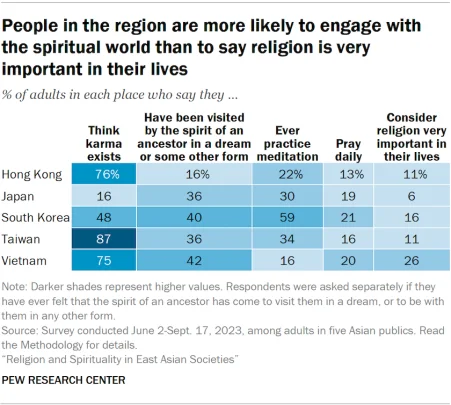
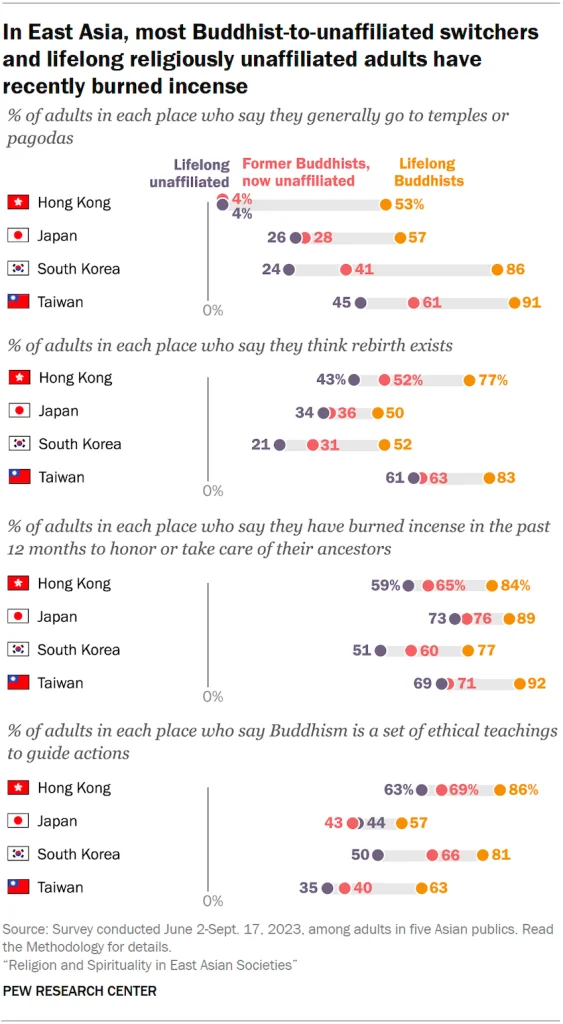
Many Japanese Buddhists may actually be Buddhist in name only. Half of Japanese people who consider themselves Buddhists do not believe in reincarnation, which is a core tenet of Buddhism. And only 57% of Japanese Buddhists do not follow the ethical teachings of Buddhism! In fact, more unaffiliated people in Hong Kong follow Buddhist ethics than Japanese Buddhists.
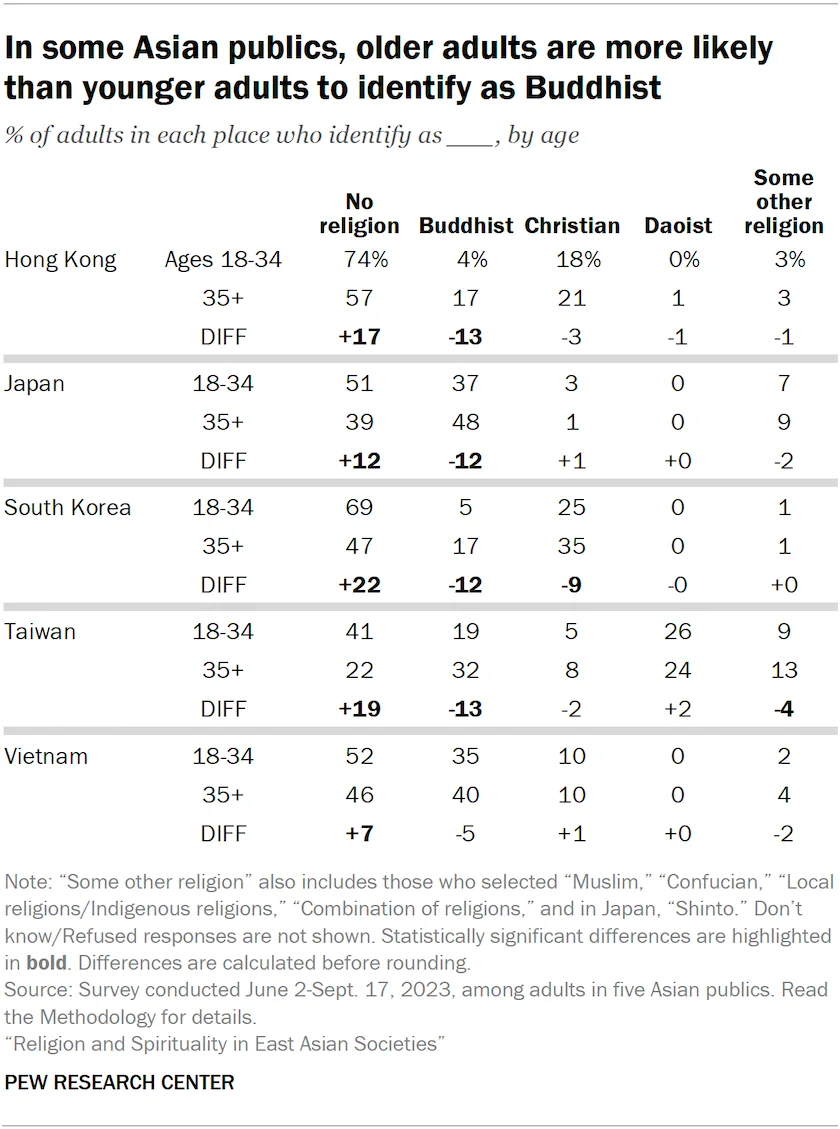
In every East Asian country young people are less religious than their elders. However Japan is the only country where young people (18-35 years old) are more likely to be Christian (3%) than older people (1%). In South Korea, the most Christian country in East Asia, younger people are much less likely to be Christian (25% vs 35%).
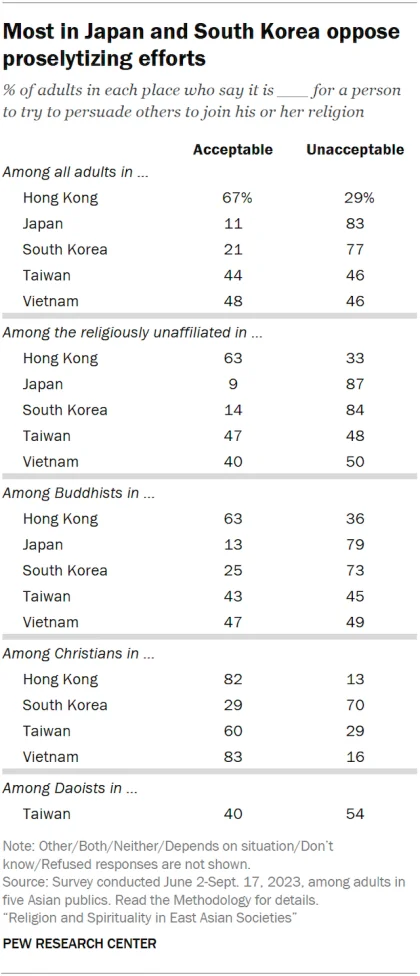
83% of the Japanese are opposed to religious proselytism - the highest rate in East Asia, although closely followed by South Korea.
Worldwide, Japan is the country where religion is the least important in people's world.
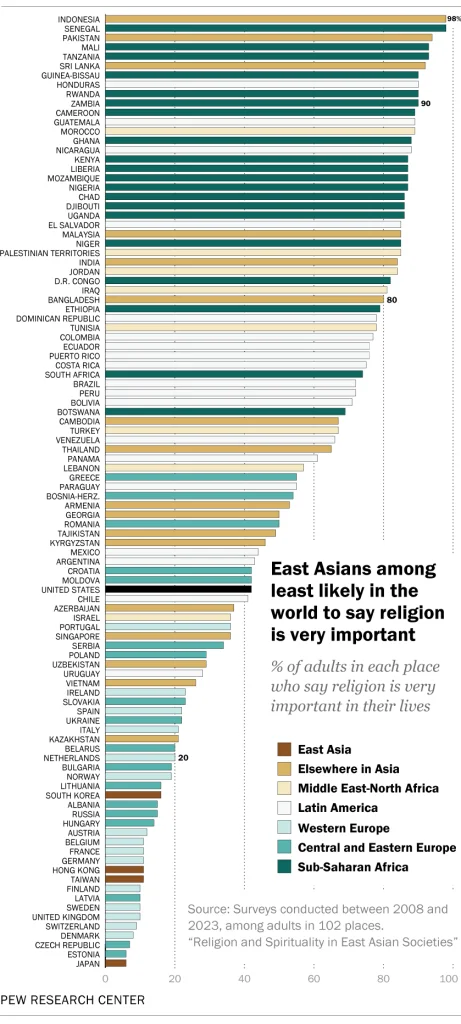
The survey is very long and has plenty of other charts. I am not going to repost everything here. I encourage you to check the link above if you want to know more.
Japan is the most Buddhist country in East Asia. 46% of Buddhist, 42% of non-religious and the 9% of other religion are probably Shintoists for the most part. That shows that Shintoism is dying as a religion (its modern role is more folkloric).
East Asian and West/North European countries have the highest percentage of people quitting their childhood religion.
Christianity, Buddhism and Taoism are all losing ground to the non-affiliated, except in Vietnam where both Buddhism and Christianity are slightly on the rise.
Interestingly most people in Hong Kong, Taiwan and Vietnam believe in karma (a Hindu and Buddhist concept), while only 16% of Japanese do. It's surprising as Japan has the highest share of Buddhists.
Many Japanese Buddhists may actually be Buddhist in name only. Half of Japanese people who consider themselves Buddhists do not believe in reincarnation, which is a core tenet of Buddhism. And only 57% of Japanese Buddhists do not follow the ethical teachings of Buddhism! In fact, more unaffiliated people in Hong Kong follow Buddhist ethics than Japanese Buddhists.
In every East Asian country young people are less religious than their elders. However Japan is the only country where young people (18-35 years old) are more likely to be Christian (3%) than older people (1%). In South Korea, the most Christian country in East Asia, younger people are much less likely to be Christian (25% vs 35%).
83% of the Japanese are opposed to religious proselytism - the highest rate in East Asia, although closely followed by South Korea.
Worldwide, Japan is the country where religion is the least important in people's world.
The survey is very long and has plenty of other charts. I am not going to repost everything here. I encourage you to check the link above if you want to know more.
Last edited:


