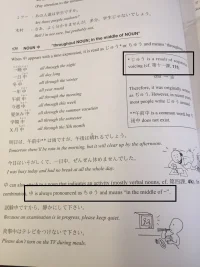
今年の十月に税率が変わった。 can't be rephrased to 今年の十月中に税率が変わった。 since a specific day can't be expresses by "within".
Are you saying we can specify for example 十月十日 for the former but not 十月中十日 for the latter?
X月中 and 夏休み中 should be read じゅう for "throughout", too
Are you saying they could be read じゅう as well or instead?
In a specific context, ちゅう can be "throughout", for instance 夏休み中ずっと北海道にいた, though.
That's because of the presence of ずっと, isn't it?
Without ずっと, it has to mean "in the summer vacation" not "throughout the summer vacation". Is it right?
I suppose the textbook is wrong again or not clear enough.
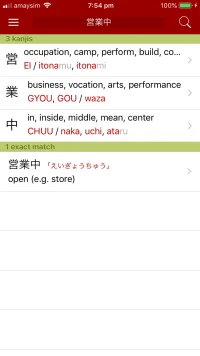
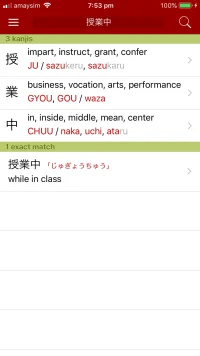
What dictionaries are you referring to?
imiwa? and jisho.org.
The definitions for the words I look up are identical in both dictionaries.
今週中 not in the dictionaries but 今週中に こんしゅうじゅう before the week is out; before the week is over; within the week; sometime this week
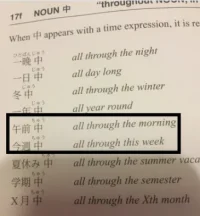
The texbook has 今週中 read こんしゅうちゅう for the meaning of throughout this week which is different from yours.
今週中 こんしゅうちゅう doesn't mean "throughout this week"
I asked just wanted to know which to follow.
you are blaming why the dictionary doesn't
I don't blame anyone or anything though I realize nothing is perfect in this world. There is a reason for everything even though there is no mistake. So I suppose a dictionary lists one not the other it might be because for example 今週中に is a set phrase whereas 今週中 is not. I'm not sure. I'm in no position to say and I believe you would be in a much better position to do so.
ごぜんちゅう is the only one reading of 午前中, as I repeatedly wrote.
I asked because the meaning stated in the textbook is different from the dictionary.
Since it is always ごぜんちゅう, could you please comment on the meaning. The dictionary says "in the morning; during the morning" while the textbook says "throughout".