Need a word or phrase translated?

Hello! Could someone kindly translate these?
Those are mostly just names, dates or meaningless fragments of sentences. It would be a checklist regarding a game, but you can at least tell us where you got it from in order to interpret it correctly, if you really want to get response.
 
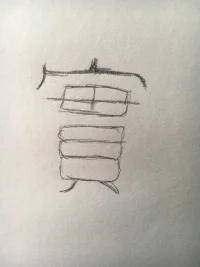
Can anyone please translate this kanji I saw. I'm not sure if it's a real kanji! Sorry for the poor rendering!
 

Attachments

  • IMG_2217.webp
    IMG_2217.webp
    941.3 KB · Views: 216
それで、キャップも外してですね、別に出してください
What is the meaning of this grammar? Or it is a typo?
 
それで、キャップも外してですね、別に出してください
What is the meaning of this grammar? Or it is a typo?
外し is the noun form of 外す. It has an adjectival function here.

"And now the cap is also off. Set it aside". (or "remove it separately". As usual, you give inadequate context).
 
それで、キャップも外してですね、別に出してください
What is the meaning of this grammar? Or it is a typo?
ですね is the polite version of an interjectory particle ね.
e.g.
formal/polite
キャップも外して、別に出してください
あそこの角を、右に曲がってください
明日までに、提出してくださいとのことです

casual/friendly
キャップも外してね、別に出して(ね)
あそこの角をね、右に曲がって(ね)
明日までにね、提出してって

casual/polite
キャップも外してですね、別に出してください
あそこの角をですね、右に曲がってください
明日までにですね、提出してほしいそうです
 
A: 電話で予約を入れた山田です。7時からで、6人でお願いしてあるんですが。。。

B: あ、はい、6名様、7時から2時間、Aコース、飲み放題付きで予約をいただいておりますが。

What does からで mean here?
 
から indicates the starting time of the reservation, and で is for "state".
 
I'm having trouble reading this character, due to how blurry it is. Could someone please translate it?
 

Attachments

  • Screenshot (84).webp
    Screenshot (84).webp
    624 bytes · Views: 201
  • Screenshot (84).webp
    Screenshot (84).webp
    624 bytes · Views: 195


What do you mean by "translate"? Do you understand how many meanings a single kanji character can have in Japanese depending on okurigana or preceding/following kanji in compound words?
 
Could anyone please translate this?

Unless you're asking for help with something you're too embarrassed for us to see, don't post just single characters. Post the entire word or sentence and tell us which specific bit you need help with.
 
Unless you're asking for help with something you're too embarrassed for us to see, don't post just single characters. Post the entire word or sentence and tell us which specific bit you need help with.
I'm sorry, I couldn't identify this character due to how blurry this passage was and needed it typed out. I'm able to work out the rest of this sentence on my own.
 
I'm sorry, I couldn't identify this character due to how blurry this passage was and needed it typed out. I'm able to work out the rest of this sentence on my own.


There's nothing particularly "blurry" about either of the two characters you have asked about. If you can't figure them out it is an indication you need to spend more time learning basic kanji and especially learning to recognize radicals and stroke count so you can look them up.

What resources are you using to look up kanji you don't recognize?
 
For looking up kanji, I used to use "The Learner's Japanese Kanji Dictionary", published by Tuttle. With the advent of internet dictionaries, I now use jisho.org. They're the best resources I've found for deciphering unfamiliar kanji (far better than pestering people on here).
 
I want to ask about やってられない (which is usually pronounced as やってらんない/やってらんねぇ)
As far as i can tell it is used to express a reproach, but how do you usually translate it into English?
Also i believe i've heard てらんない/てらんねぇ formed with verbs other than やる. Would such verbs mean something other than being unable to do something (as in られない)?
 
I want to ask about やってられない (which is usually pronounced as やってらんない/やってらんねぇ)
As far as i can tell it is used to express a reproach, but how do you usually translate it into English?
The translation would differ depending on the context, as always.

Also i believe i've heard てらんない/てらんねぇ formed with verbs other than やる. Would such verbs mean something other than being unable to do something (as in られない)?
It's just a colloquial/dialectal form of られない, as same as かもしれない --> かもしんない or わからない --> わかんない.
 
Could I please have somebody to help me out with this sentence? >D
あの時、俺はどうかしてたんだ。
 
Could I please have somebody to help me out with this sentence? >D
あの時、俺はどうかしてたんだ。
I was not myself at that time.

Notice it's どうか, not どうか(= somehow). どうかして(い)る is a set phrase, meaning "not oneself/crazy/mad".
 
Those set phrases always throw me off. The sentence is an explanation though correct because of "んだ"? And just when I thought I understood certain things. XD
 
Back
Top Bottom