Need a word or phrase translated?

ったく、こっちは死ぬ目にあったんだ。。。
ジョークにしても、笑えるのにしてほしい
Is this のに or の+に?
 
The latter; pronoun の + particle に.
笑えるけど/にもかかわらず、してほしい doesn't fit the context, no?
 
Hi,

Would someone be able to help me in translating, what I believe to be, some Japanese handwriting please?

SCCzfRG.webp

Many Thanks,
James
 
昭和二十一年九月七日
21st year of the reign of emperor Shōwa, September 7.
Signed 下田金一 ("Shimoda Kinichi", right?)
 
Last edited:
昭和二十一年九月七日
21st year of the reign of emperor Shōwa, September 7.
Signed 下田金一 ("Shimoda Kinichi", right?)

We usually go the extra step and convert the years to the western calendar.

Showa 21 was 1946
 
Well that's the part I don't yet understand. The Showa period started in 1926 and when I add 21 to 1926 I get 1947. That's why I didn't dare convert the date. I suppose there's a trick like there's actually not a year 0 and 1926 was year 1?
(Sorry for the stupid question).
 
Well that's the part I don't yet understand. The Showa period started in 1926 and when I add 21 to 1926 I get 1947. That's why I didn't dare convert the date. I suppose there's a trick like there's actually not a year 0 and 1926 was year 1?

That is exactly the trick to it.

An easy shortcut is to commit to memory that WWII ended in Showa 20 (1945).
 
Hi Kamille,

Many thanks for taking the trouble to translate this for me and thank you too Mike, for clarifying it further - it is most appreciated.

Thanks,
James
 
The reading of the given name 金一 also can be "Kaneichi".
 
I'm a bit unsure about the last phrase 「学校も、他に」. Does it simply means "I'm changing school."? Or since they are living in a dormitory, with も the speaker emphasizes the fact that she is changing school too(not the room)?

部屋を見まわした。手前の方の机が加乃のものらしいが、その机のまわりも、作り付けの棚の中も、綺麗に片づけられている。
「明日の朝、私、ここを出ることに決めました」
「ここを出るって、まさか」
学校も、他に
 
I don't know the context exactly, but 学校も、他に移ります/転校します makes sense?
 
Ah, I see your point. Yes, your interpretation "she is changing school too" is correct. She says that not only ここを出る but also 学校も他に移る.
 
I'd like to re-affirm one thing.

「ダメで」 is only here for emphasis?

ダメだったらちゃんとフォローするさ! I'll back you up accordingly if it ends up badly.

ダメだったらダメでちゃんとフォローするさ!If it ends up badly it ends up badly, I'll back you up accordingly. (The nuance being: If it ends up badly, so be it. We'll still get out of this situation. Don't worry about it.)?
 
Last edited:
ダメだったらダメで = ダメだったらダメだったで = 例えダメだった場合でも
I, too, think it's for emphasis, something like "even" here.
 
んな早く、動けるかってんだ
What is んな? And why does the potential of the verb there?
I suppose the translation is: Can we quickly get to work?
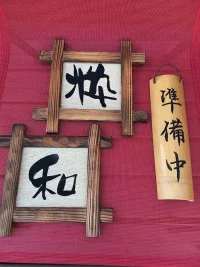
 
Hello! Can anyone translate these for me? Please, thanks!
 

Attachments

  • 10937588_570831329686370_1650672397_n.webp
    10937588_570831329686370_1650672397_n.webp
    279.4 KB · Views: 123
upper
Stylish / Elegant / Fashionable

lower left
Harmony

right
In Preparation

The upper and lower left kanji might be the name of a shop/restaurant because the right one is used for "Close".
 
I'm trying to figure out the meaning of 節の・・・・・・ in the following passage. Same as 曲節? 動揺みたいな、懐かしいの唄。

・・・・・・ウ・・・・・・タ・・・・・・?
唄だ・・・・・・唄が・・・・・・聴こえる・・・・・・
転がるような子供の・・・・・・声・・・・・・
動揺みたいな・・・・・・懐かしいの・・・・・・
僕はじっと耳をすます。
・・・・・・確かに、ここから聞こえる。
 
Back
Top Bottom