Need a word or phrase translated?

Thanks Toritoribe, is accepted 良い奴 and 悪い奴 ?

What's the difference between 良いand いい ?


In this case is better やつor 奴 ?

Thanks again
There's basically no difference between 良い and いい, or やつ and 奴. It's just the preference.
 
They are in this case separate -words-, although it does happen that words get split on line breaks in a lot of publications. However, Japanese is full of set expressions where the meaning comes from a set of words being used together in a fixed way, and these are hard to understand from the words alone.
(別にいい isn't so difficult as some, the meaning of the phrase is one that might be guessed from the words that make it.)
I don't think it is a combination that can necessarily be guessed. Depending on the context interpretations can range from

別には「あなたは心配しなくても・・・」の意味も含まれますね!/「気にしなくてもいいよ」くらいの意味です / 、「特別に(扱ってくれなくても)いいよ」と解釈出来ます / similar to 別にいいけど」。。。whatever/do not care/does not matter。。。etc
 
I don't think it is a combination that can necessarily be guessed. Depending on the context interpretations can range from

別には「あなたは心配しなくても・・・」の意味も含まれますね!/「気にしなくてもいいよ」くらいの意味です / 、「特別に(扱ってくれなくても)いいよ」と解釈出来ます / similar to 別にいいけど」。。。whatever/do not care/does not matter。。。etc
I don't mean it could be easily and clearly intuited without seeing many examples or looking it up, I just mean, if you see it a few times, its actual meaning is probably among the things you'd think it -might- be meaning.

I was just saying it's easy compared to expressions like 馬の骨 where the words that make up the expression don't hint at all at the meaning, and in fact are more likely to completely confuse the reader who first encounters them. I know I was trying like heck to figure out what horse they were talking about until I looked it up.


Whether the expressions are 'sort of' like the meaning of their words or 'nothing at all' like the meaning of their words though, such expressions do really need to just be learned as complete vocabulary terms in addition to their component words.
 
Ok I just need someone who can confirm me on a quick one..

So the phrase ''hayai sugi'' ... means too fast right?
 
Usually it would be hayasugi (or hayasugiru). "hayai" is the adjective, but the -i drops out when adding the suffix.
 
Use "the stem + sugi".
e.g.
shizuka da --> shizukasugi
oroka da --> orokasugi
kirei da --> kireisugi (Note that "kirei" is not an i-adjective.)
 
Wow thaaaaaank you!
Until now, I've only been aware of how to use 'sugi' with verbs and not adjective so thanks a bunch!
 
Long time after posting, and I have a question

だからディズニーのお土産は缶みたいな固くて後に使える奴にしとけと

This is a bit confusing to me, what that means really and why its there.
 
Long time no see!

It's a contraction of しておけと; imperative of しておく + quotation particle と.
 
Can you go over the use of to at the end of the sentence with an example? I can't think of why its particularly useful here
 
The main verb 言ったじゃないか, 忠告しただろ or something is omitted at the end of the sentence since it's obvus from the context. I'm sure you must have come across this kind of omission repeatedly.
 
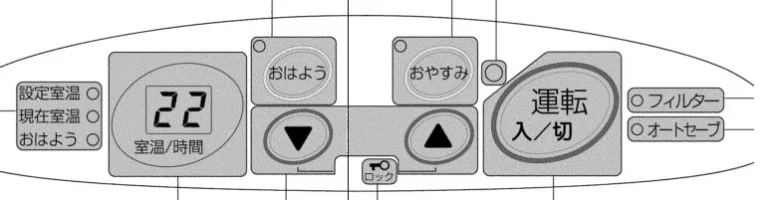
I have bought a Japanese Heater. Can some one translate its buttons (Picture attached)
 

Attachments

  • Heater.webp
    Heater.webp
    28.1 KB · Views: 180
フィルタ = filter
オートセーブ = auto save
運転 - Operation,motion(some stuff like that probs) then under that 入・切 = off/on
おやすみ = good night
おはよう = good morning
室温/時間 = room temperature/ time
設定室温 = room temperature setup/ options
現在室温 = present room temperature
おはよう( once again) = good morning


seems pretty sketchy buying a japanese heater loool.
 
Notice that the order of the words is not 室温設定 but 設定室温. It means "the preset room temperature" as in the thread I linked in my previous post (not "room temperature setup" but "setupped room temperature").
 
"Kagu-tsuchi" (加具土命) is translated as "added tool earth lord".
Do you fellas have a different interpretation? and would "Affixed Auxillary Soil/terra Lord" keep the intended meaning?
 
Kagu-tsuchi - Wikipedia, the free encyclopedia

As in the wiki page I linked above, Kagu-tsuchi is the name of a Japanese god of fire. "Kagu" is from "to shine" or "to smell", "tsu" means "of", and "chi" refers to "superpower of god". The kanji 加具土 is just ateji. It has nothing to do with the meaning.

Are you reading Naruto, perhaps? The names of jutsu Uchiha clan uses are often taken from the names of Japanese Gods, just like Izanami, Izanagi, Susanoo or Amaterasu. Kagu-tsuchi is another example of it.
 
"Kagu-tsuchi" (加具土命) is translated as "added tool earth lord".
Do you fellas have a different interpretation? and would "Affixed Auxillary Soil/terra Lord" keep the intended meaning?

They are kanjis from kojiki except with the kanji 命 it' be read as kagutsuchi no mikoto (≒the deity/sacred Kagutuchi),
I'm guessing the an article you read at 2chan took only one of many theories of the name for an only fact, which is not a very recommendable approach, whoever wrote it.

kagutsuchi means nothing in modern Japanese as toritobe said, other than just a name in myths.

kagutsuchi or those gods names had been there long before kanji came to Japan. So, other characters like '軻遇突智(from nihon shiki)' are also used for the name kagutsuchi, not just the 加具土 from kojiki.

By going with the sound, カグツチ, kagu-tsu-chi
kagu means 'to smell' in modern Japanese. and sparkling/shining in old Japanese as in Kaguya Hime

tsu meant 'of', and chi meant 'spirit/holy' in prehistoric times. and kagutuchis full name in kojiki is hi(read like english 'he'=fire) no kagutsuchi =(the holy spark of fire)

Sorry for my bad English. I have just recently moved from Japan to Britain to study. So I've got a ways to go with English grammar.
 
Happy New Year, everyone! :)
And here goes my first question in 2014: 誰かの夢に乗っかる - What does it mean? Is it some kind of idiom?
 
Back
Top Bottom