Need a word or phrase translated?

how do I know whether か will be negative then? and I think I have but I never considered it to be negative. Do i just do it be context?
Context and/or intonation. For instance, やるか can be a strong nagative, asking the addressee's will, invitation, saying to the speaker themselves, being amazed by someone's action, and so on...


Is this correct? In particular using '同級生たち' as classmates?
'I got off of the bus with my classmates.'
同級生たちとバスにおりました。
Yes, except 同級生たちとバスからおりました. ;-)
 
how do I know whether か will be negative then? and I think I have but I never considered it to be negative. Do i just do it be context?
And don't even use たまるか as a joke or manga word. That is the only instance I am aware of (I think :=) that literally no one will understand in the affirmative.
 
It seems that 寄らば大樹の陰 is an idiomatic saying that literally means 'If you need shelter, a big tree is better than a little one' or maybe 'If you need shelter, choose a big tree', but is actually a metaphor for 'If you need protection, find an influential man.'

Well, that's what the dictionary says anyway, but, how did they get from 寄る to 寄らば? The sentences looks to me like it says, "If you're getting close (to an unspecified thing or place), there is the shade of a large tree', excepting that vowel change is wrong for a ば conditional.

I can understand 'shade of a tree' is a metaphor for 'in the shelter of a tree', but beyond that I don't see where the supposedly literal meaning of this sentence is coming from.

Can anyone clarify this for me?
 
「~してたまるか」=「will not」?

Sort of? I feel like 'Couldn't bear to ~' or '~ would be unendurable' are the sorts of expressions that are close in both feeling and grammar.

「たまる」の検索結果 - Yahoo!辞書 says,
負けてたまるか
I'm not about to let him beat me!

Which is a totally different grammar between the languages of course, but that's the sense of the phrase.
 
It seems that 寄らば大樹の陰 is an idiomatic saying that literally means 'If you need shelter, a big tree is better than a little one' or maybe 'If you need shelter, choose a big tree', but is actually a metaphor for 'If you need protection, find an influential man.'

Well, that's what the dictionary says anyway, but, how did they get from 寄る to 寄らば? The sentences looks to me like it says, "If you're getting close (to an unspecified thing or place), there is the shade of a large tree', excepting that vowel change is wrong for a ば conditional.

I can understand 'shade of a tree' is a metaphor for 'in the shelter of a tree', but beyond that I don't see where the supposedly literal meaning of this sentence is coming from.

Can anyone clarify this for me?
寄らば/寄るならば大樹の陰がいい makes sense?

陰 is not a metapher. ~の陰 means the place protected from sunsine or rain by ~.

かげ【陰/蔭/翳】
1 物に遮られて、日光や風雨の当たらない所。「木の―で休む」
陰/蔭/翳(かげ)の意味 - goo国語辞書
 
寄らば/寄るならば大樹の陰がいい makes sense?
No, I'm afraid it doesn't. Is the subject of 寄る the person being advised by the saying, or some unspecified threat (perhaps 嵐), or ... though this seems unlikely... the 大樹?

And, if I may ask, is an '-aba' suffix like 寄らば a normal contraction for 動詞+ならば?

陰 is not a metapher. ~の陰 means the place protected from sunsine or rain by ~.
Ah, I see, so かげ is really 'shelter' rather than 'shade', it's just often 'shelter' from the sun. That doesn't really change my understanding of this sentence, but it's a good thing to know, thank you.
 
The first interpretation is correct for the subject.
寄らば is a classical conjugation. It's equivalent to 寄れば in modern Japanese. (Unlike modern -ba conditional, the classical one has two different forms each for "conditional (=if)" and "habitual action". 未然形 + ば(寄らば) is used only for the former case "if", and 已然形 + ば(寄れば) is only for the latter case.)
 
The first interpretation is correct for the subject.
寄らば is a classical conjugation. It's equivalent to 寄れば in modern Japanese. (Unlike modern -ba conditional, the classical one has two different forms each for "conditional (=if)" and "habitual action". 未然形 + ば(寄らば) is used only for the former case "if", and 已然形 + ば(寄れば) is only for the latter case.)
Ah, it is starting to make sense now. So it's 'if (you're) going (to shelter), then the shelter of a big tree (is better)'.
The first half of the sentence seems very hard to me to understand all that's being implied.
Thank you for your help!

Edit: Oh, wait, but this is the 已然形 case... so ... it's not really 'if you go' but 'where you make a habit of going', I suppose.
 
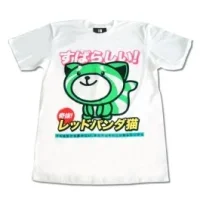
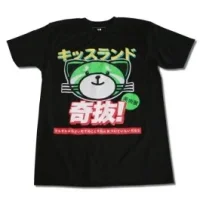
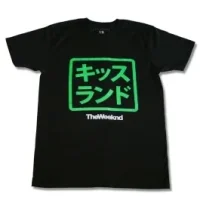
kissland stuff.webpblack_kissland_front.webpnew_kissland_city_tee.webp

What do these shirts say?
 
すばらしい! Great! Wonderful!
奇抜! Bizarre! Weird!
レッドパンダ猫 Red Panda Cat
キッスランド Kiss Land

I think 奇抜!says it all. ;)
 
Edit: Oh, wait, but this is the 已然形 case... so ... it's not really 'if you go' but 'where you make a habit of going', I suppose.
It's 寄らば, i.e., 未然形 case. ;) Your initial translation is correct.


What do these shirts say?
1st
Excellent/Wonderful/Awesome
Eccentric!
Red Panda Cat

(I can't decipher the sentence under "Red Panda Cat".)

2nd
Kiss Land
Eccentric!
Art Exhibition
But that's held in a small town. You wouldn't notice it.


last
Kiss Land
 
How would we describe something that is improper in Japanese? For example, like saying the word "gonna" or "cause" instead of because is improper. What words describe improper in Japanese?

And also, ありきたりな趣味にはとうに遊び飽きたわ。 What does とうに遊び mean?
 
Last edited:
It's ありきたりな趣味には・とうに・遊び飽きた・ わ
とうに already, long time ago
遊び飽きる = 遊ぶ+飽きる
飽きる fed up with ~ / tired of ~

Does it make sense now?
 
Yep, thanks!
How about how to say something is improper?
Sorry I do not really understand your question - do you wish to know the word "improper" in Japanese when pointing out improper use of words (i.e. not grammatically correct), or examples of improper words so you can say it is not improper "like this word or that words"?

In case of the former, the most commonly used expression is 正しくない. (Grammatically incorrect is 文法的に正しくない)
It can be different depending on the context though.
 
Hi all,

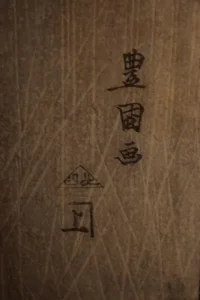
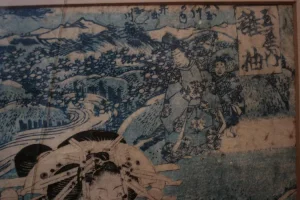
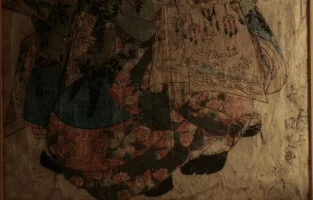
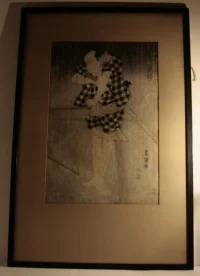
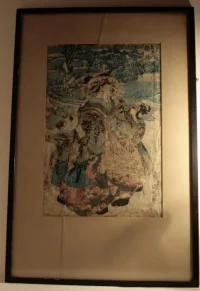
I am looking for the artist's name on the following Japanese woodcut prints ( I have two in total). I'll post the script that appears in both. I've been researching them and have been told that some of these woodcuts were taken from calenders in times past. Thanks in advance!
_MG_4753.webp_MG_4735.webp
 

Attachments

  • 2.webp
    2.webp
    96.9 KB · Views: 131
  • 1.webp
    1.webp
    83.8 KB · Views: 143
Hi all,

I am looking for the artist's name on the following Japanese woodcut prints ( I have two in total). I'll post the script that appears in both. I've been researching them and have been told that some of these woodcuts were taken from calenders in times past. Thanks in advance!
The name in the second picture is the artist's name; 豊國[Toyokuni] (歌川豊國 [Utagawa Toyokuni]).

the first picture
??團十郎 (most probably 市川團十郎[Ichikawa Danjūrō] ; a very famous Kabuki actor)

the third
玉屋内 誰袖[Tamaya nai Daresode]
"Tamaya" refers to the name of a geisha house. "Daresode" would be the name of the geisha drawn in the print, but it can have another meaning.

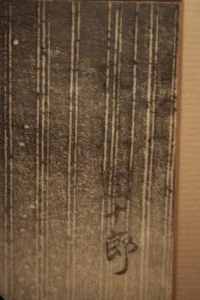
I can't decipher what is written on the fourth picture.
 
I am amazed at the utility of this forum - you've helped me out before so thanks once again! Rather than be a bore I'll actually post the pictures if anyone is interested, and also for clarity. I feared that some of them might have been a bit worse for wear.

_MG_4718.webp

_MG_4713.webp
 
Hi,
二人ともさー誰かれかまわずウインクしてんの?
whats this part mean?

Also what does this mean つこっめよ, where is this from?

Thanks!
 
I am amazed at the utility of this forum - you've helped me out before so thanks once again! Rather than be a bore I'll actually post the pictures if anyone is interested, and also for clarity. I feared that some of them might have been a bit worse for wear

I searched 歌川豊國 in an Ukiyoe database, and got the result "6831 hits" lol.

歌川豊国 - 浮世絵検索


Hi
二人ともさー誰かれかまわずウインクしてんの?
whats this part mean?

also what does this mean つこっめよ, where is this from?

thanks

誰かれ(=彼) / かまわず
It's the same meaning as 誰彼なしに.

誰彼なしにの英語・英訳 - goo辞書 英和和英

っこめよ, not つこっめよ.
 
Back
Top Bottom