

ooh... Then how do you say it's snowing or raining? In hiragana please. I always though 溢れる means falling...It means to overflow, and you use it when you want to talk about something overflowing, whether literally or figuratively.
You could get it in a post but you couldn't look it up?
Navigation
Install the app
How to install the app on iOS
Follow along with the video below to see how to install our site as a web app on your home screen.
Note: This feature may not be available in some browsers.
More options
Style variation
System
Light
Dark

You are using an out of date browser. It may not display this or other websites correctly.
You should upgrade or use an alternative browser.
You should upgrade or use an alternative browser.
Need a word or phrase translated?
- Thread starter Buntaro
- Start date

undrentide
Japa'n vagyok
- 18 Jan 2006
- 3,652
- 310
ooh... Then how do you say it's snowing or raining? In hiragana please. I always though 溢れる means falling...
For rain and snow, we use 降る(ふる)。
雪が降る、雨が降る、霙(みぞれ)が降る、etc.

tenshi696
後輩
- 3 Mar 2013
- 15
- 0
"君はいないか"? That's also the name of the song by Toshi from X-Japan. After all the researching on the song, most of the results were "Are you still there?" but the people, who said that also said that it isn't an accurate translation. Can you give me a more accurate or at least explain to me why is this not an accurate translation?
Oh and if I were to say "are you there?" in a more formal way, would it be like this "貴方はいないか?", because I know that 君 is something the japanese people say to their close friends, that's something like "pal".
Thanks in advance
Oh and if I were to say "are you there?" in a more formal way, would it be like this "貴方はいないか?", because I know that 君 is something the japanese people say to their close friends, that's something like "pal".
Thanks in advance

- 22 Feb 2008
- 18,266
- 4,926
自分を信じてHi, I' new here and I need help with translation...need the expression 'believe in yourself' translated. It can be in kanji and hiragana, but both would be the best. I loved japanese for some time now but just recently started to learn it properly.
I'd be glad to get any help with this:?
I read the lyrics of the song. 君 refers to "the person you were before", not just you, and 君はいないか is asking if "the person you were before" is still in yourself."君はいないか"? That's also the name of the song by Toshi from X-Japan. After all the researching on the song, most of the results were "Are you still there?" but the people, who said that also said that it isn't an accurate translation. Can you give me a more accurate or at least explain to me why is this not an accurate translation?
I would use そこにいらっしゃいませんか. いない is neither a polite form nor an honorific verb. Also, second person pronoun is not needed here.tenshi696;717864 said:Oh and if I were to say "are you there?" in a more formal way, would it be like this "貴方はいないか?", because I know that 君 is something the japanese people say to their close friends, that's something like "pal".

- 15 Mar 2002
- 16,758
- 2,298
also, I have some problems with this direct speech: お金もないのに、ようそだてきらん。こどもがかわいそうや。
Also, because I have no money, I am not able to rise children well. Poor kids.
1. Is this translation correct?
2. Is this some kind of dialect? plz explain this -kiran thing to me
It is very colloquial and seems to be a dialect (Kansai?).
よう Is よく
きらん is きらない (and is a verb suffix)
What are you reading? You might want to try reading things in more standard Japanese first until you build up to colloquial stuff.

LewiiG
先輩
- 27 Dec 2012
- 221
- 13
What does it mean when people use 神 in their sentences? I mean, like this:
"カービィは神ゲームだよな~"
I see it everywhere. Can I assume it means "amazing" or "epic" or something in this case?
There are many other ways to say how good something is, so does this 神 have some special hidden meaning?
"カービィは神ゲームだよな~"
I see it everywhere. Can I assume it means "amazing" or "epic" or something in this case?
There are many other ways to say how good something is, so does this 神 have some special hidden meaning?

- 22 Feb 2008
- 18,266
- 4,926
早く is an adverbial form "quickly".早く、くれんかな.
Quick, why does he/she not give it to me? Correct or wrong?
Your translation is correct, but that きる is a subsidiary verb, meaning "to finish doing", not "to cut".I'm reading an interview I need to translate asap- I mostly fine with standard Japanese, but need some help with dialectal stuff.
So is my translation than ok? Kiranai means "does not cut it", so does it mean: I am no able to raise children? Thanks.
LewiiG
先輩
- 27 Dec 2012
- 221
- 13
神 (also ネ申) in net slang is indeed much like "epic". I'm not sure it gets used outside of the internet. I don't think there's any particular hidden meaning, it's just that if something is "god level" it's obviously pretty damn good.
I see. Yeah, "epic", "god level", it makes sense. Thank you for the answer
- 3 Jan 2012
- 842
- 9
でも、週明けっていうのもね。。。
Can anyone explain for me the one in bold line. Thank you!
Can anyone explain for me the one in bold line. Thank you!
- 22 Feb 2008
- 18,266
- 4,926
ね is a sentence final particle, and a clause/phrase following っていうのも is omitted.
- 22 Feb 2008
- 18,266
- 4,926
てっぺん is a colloquial word for "summit/top" in that case. てっぺん(を)とる usually means "to get the top (in a group)", but can also mean "to defeat/kill the opponent's leader" depending on the context, e.g., in a conflict between yakuza organizations. Thus, てっぺんとるチャンス means "an opportunity to become No.1" or "an opportunity to kill the opponent's leader".
Last edited:

FinancialWar
Sempai
- 19 May 2006
- 1,065
- 44
住む vs 住まう ??
what is the difference of the two.
what is the difference of the two.
- 22 Feb 2008
- 18,266
- 4,926
住まう - goo辞書住まう
[動ワ五(ハ四)]《動詞「す(住)む」の未然形+反復継続の助動詞「ふ」から》
1 住んでいる。住みつづける。「郊外に―・っている」

xyukikazex
後輩
- 7 Aug 2011
- 44
- 3
What might the girl mean by レベル上がるんだ? Thanks in advance.
- 22 Feb 2008
- 18,266
- 4,926
It expresses that she did not know the fact that the crying girl's level is up as the result of the event, and have found it. It's often used in the structure へぇ、~(な)んだ, connoting the speaker's slight surprise or admiration.What might the girl mean by レベル上がるんだ? Thanks in advance.
BTW, do you know why the eyepatch girl says 今が8時ちょうどだったらよかったのにね when the soul of あずさ2号 has gone?
Last edited:
BrianLewis
先輩
- 27 Nov 2012
- 317
- 33
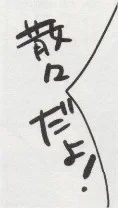
散々 さんざん severely, harshly, utterly, terrible
xyukikazex
後輩
- 7 Aug 2011
- 44
- 3
Thank you for the tip. In other words, it's like saying "so you do level up" in English, isn't it?It expresses that she did not know the fact that the crying girl's level is up as the result of the event, and have found it. It's often used in the structure へぇ、~(な)んだ, connoting the speaker's slight surprise or admiration.
My guess is that if the moment in the story was exactly 8PM, it'd be more convenient for her. I guess this has something to do with religious belief of souls, but I'm not really sure. Maybe that's when souls go to the other world?BTW, do you know why the eyepatch girl says 今が8時ちょうどだったらよかったのにね when the soul of あずさ2号 has gone?
Similar threads


- Replies
- 11
- Views
- 115K