Need a Kanji Translated? Just ask!

Hello again! :)

I have a problem with a certain sentence (it's a fragment of a dialogue from a manga; I put it in the same way it's printed in the speech bubble):

そんななりで
うろうろ
されてみろ
目立って仕方ねえ

I have the biggest problem with うろうろされてみろ . Is うろうろされて a passive form of うろうろする? If so, what does it mean in this form? If you translate it literally it doesn't make sense... Or maybe it's a potential form of さる? I found quite a lot examples of such usage of this verb - is it a set expression?
That's the passive of うろうろする. This passive is called the passive of adversity(迷惑の受身) among the indirect passive(間接受身). This form expresses that the subject suffers inconvenience/annoyance from the event. The subject is neither "the person who is done" nor "the person who does"("the person who is hung around(?)" nor "the person who hangs around" in this case). The true subject is indicated by に, just as お前にうろうろされる.

(俺がお前に)うろうろされる。
I suffer annoyance from your hanging around.

You can think that the meaning is the same to そんななりで(お前が)うろうろしてみろ。目立って仕 方ねえ。 except the nuance of annoyance.

Also, just to make sure: I should treat 目立って仕方ねえ as a separate sentence, right?

Yes, but してみろ is used as a conditional; うろうろしたら/したとすると here.
 
Hello, I'm not quite sure what this is supposed to be.
Does anyone have any idea?

afdhgre.webp
前に__あまった事が判明
Is it just supposed to be the Latin letters IP? If so, does anyone know what IP would mean here?
I'm not sure if the acronym has a different meaning in Japanese.
 
I don't know the context, but if IP as "Internet Protocol address" doesn't make sense there, it might be 1P "one page" (especially when it's a topic about manga).
 
I don't know the context, but if IP as "Internet Protocol address" doesn't make sense there, it might be 1P "one page" (especially when it's a topic about manga).

IP in that sense definitely doesn't fit. 1P makes more sense. I'd explain the context more, but it's part of the title for a single page comic, so I'm not really sure how to explain it. 😌
Thank you for the help!
 
That's the passive of うろうろする. This passive is called the passive of adversity(迷惑の受身) among the indirect passive(間接受身). This form expresses that the subject suffers inconvenience/annoyance from the event. The subject is neither "the person who is done" nor "the person who does"("the person who is hung around(?)" nor "the person who hangs around" in this case). The true subject is indicated by に, just as お前にうろうろされる.

(俺がお前に)うろうろされる。
I suffer annoyance from your hanging around.

You can think that the meaning is the same to そんななりで(お前が)うろうろしてみろ。目立って仕方ねえ。 except the nuance of annoyance.


Yes, but してみろ is used as a conditional; うろうろしたら/したとすると here.

Thank you so much for taking time to explain that matter so extensively! It turned out to be really interesting grammatical issue and I doubt I would be able to figure it out without your help. ^^
Thank you again!
 
Hi!
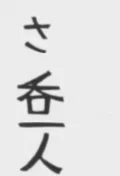
Could someone lease translate these Kanji for me to romaji ?
orlqh1oud4m709mh51vv.webp

Thank you!
 
Thank you Toritoribe, you were a great help as always!
If it i not a problem, could you please also translate the following sentence+3 kanjis to romaji as well?
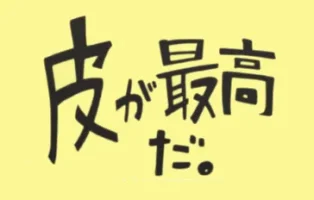
Kawa ga saikou da.
no(-mu)/don
ichi
hito
(or "hitori" as a compound word)
The right one doesn't make much sense.
みちこさん、お元気ですか。
せんしゅうおきなわに行きました。あそこはとてもあつかったです。天気はよかったです。木曜日はともだちといっしょにうみでおよぎました。土曜日は日本の男の人と女の人と山に行って、たいへんでしたよ。でもとてもきれいでした。まいにちはたのしかったです。おきなわにきさってんがたくさんあります。まいにちきさってんでコーヒーを飲んで、ケーキも食べました。とてもおいしかったです。
らいしゅうあいましょうか。らいしゅうきょうとに行きますから。
じゃあ、また。
山田よkoう
七月十四日
Please don't double post.
 
Japanese Name

Can someone tell me the Romanization for the following Japanese name?
涩谷和匡
涩 is the Simplified Chinese Character for 澀
涩谷 is probably Shibuya?
But I couldn't find 和匡

Context
较早并较有影响的定义是 1965 年日本学者涩谷和匡对 "族群" 下的定义

So is must be the name of a Japanese Scholar, most likely an anthropologist.

Thanks!
 
Is
''サウジアラビアなどから石油を輸入されています''
translate as ''We has been imported oil from Saudi Arabia and the like''?

What is ''などから'' doing here?
 
など "or the like/etc." + から "from"

It should be サウジアラビアなどから石油輸入されています or サウジアラビアなどから石油を輸入ています.
 
If there's no typo, 輸入されています is an honorific of 輸入する and "we" can't be the subject.
 
Yes, that's correct. That's the past passive. The problem in the original example is 輸入される, i.e., "を + passive".
 
I believe these are the two rarest Kanji I have come across. Please, see if you can find anything, as I sure couldn't.

and

 
I believe these are the two rarest Kanji I have come across. Please, see if you can find anything, as I sure couldn't.

and

I can't see this one on my computer (and I thought that all the necessary fonts were installed !) (right radical is 米 and left is 無 according to google image)
蟱, the kanji dictionary I use do not show meaning for this one, only the on-readings which are : ボう, ム,ブ and a kun-reading : くも.
Seeing that there is the radical 虫, I assume this one means spider, but I can't be sure.
By the way, I think that trying to find the rarest kanji is pretty vain, because probably more than 50 thousands of them or not used anymore (according to some ultra comprehensive kanji dictionaries). Check wikipedia and you'll find never used, complex kanji you'll never see again.

Anyway, I have a question about these two kanji together : 土産
It is usually read みやげ , is it not ? Is it a gikun like 田舎 ?

Thank you very much.
 
I can't see this one on my computer (and I thought that all the necessary fonts were installed !)
How about the following ones?
匤瀨惲汜

And these ones?

If you can see only the former ones, it shows that your PC can't display four bytes UTF-8 characters.

Anyway, I have a question about these two kanji together : 土産
It is usually read みやげ , is it not ? Is it a gikun like 田舎 ?
That's 熟字訓 rather than 義訓. 義訓 is a term for Old Japanese(上代日本語), especially the ones used in 万葉集.

Kanji - Wikipedia, the free encyclopedia

The kanji 土産 is from (その)地の物; produce/products of the region.
 
Well I don't know how to have these characters on the screen, and it's not as if I cared : I suppose these characters are never used because I've never had this problem beforehand.

Thanks Toritoribe.
 
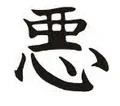
Probably that's a mistake in writing. I think the artist wanted to write 謝.
 
Back
Top Bottom