FinancialWar
Sempai
- 19 May 2006
- 1,065
- 44
How do I pronounce this?
1力所
いちかしょ?
1力所
いちかしょ?
Follow along with the video below to see how to install our site as a web app on your home screen.
Note: This feature may not be available in some browsers.


Are there any typos/misreadings in 儚い?
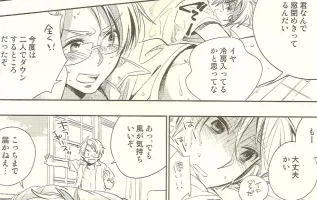
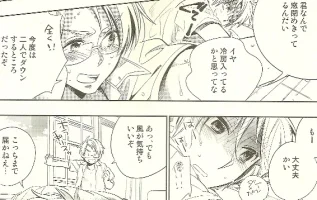
Were they still talking about the air-conditioning after the third line, too?
果無い/果敢無い/儚い(はかない)の意味 - goo国語辞書4 甲斐がない。無駄である。
「行く水に数書くよりも―・きは思はぬ人を思ふなりけり」
Yeah, it's no doubt 儚い. According to dictionaries, 儚い can mean "useless/unrewarding", it would be a classical usage and I've never heard it, though.


So 楽しいに越した事はないよな is close in nuance to 楽しいほうがいいですよな/ね. Hmmm....:?: Maybe in this context.Isn't there a typo in 楽しめらな? It's barely comprehensible, but not so common.
同じ三年間なら楽しいに越した事はないよな
Whether it's fun or not, we have to spend three years (in high school, maybe?). Then, it must be the best to spend fun three years.


Hello i would like to confirm 地味な translates to sober in english.
Thank you in advanced.
地味 refers to that which is plain, unostentatious, reserved, unadorned, drab or subdued (in color, design, form, or pattern), etc.
That's 二人でダウンするところだった "we both were almost about to be sick and down and out", and not "the place the air-conditioner is down".;-)Sorry to keep bothering you with things, but I'm not sure I quite understand the meaning of "今度は二人でダウンするところだったぞ" either.
Do you know what the character means by "ダウンするところ"? Is he just making a statement about how the air-conditioner is "down" in the room they're in?
The second sentence must be an explanation/difinition of a thing, probably an item in a game, as nekojita-san explained. Right?^ Thanks for explaining but I don't really get what you mean in the second sentence.
The description for the second sentence is only like that as I typed btw...
地味 is the stem or noun form of a na-adjective 地味だ, whereas 地味な is the adnominal/attributive form.Ok great the second definition was the one i intended. What is the purpose of this character な in the word? In your definition you wrote 地味 without that character ?
The second sentence must be an explanation/difinition of a thing, probably an item in a game, as nekojita-san explained. Right?
That's 二人でダウンするところだった "we both were almost about to be sick and down and out", and not "the place the air-conditioner is down".;-)
EDIT:
I've reviewed the scene and got an idea that "儚い!!" is A's words and means Bの命が儚い(= fragile/frail), i.e., "You're near death!" or like that.
もの I believe is referring to the pattern. The pattern was the thing that was engraved to increase the effect on the stone."A large grain of bondstone into which a pattern to increase the effect is engraved."
(もの = an generic "thing", so this is probably a definition of some other term).
に connects to the verb 掘り込んだ, e.g. : 大粒の絆石に[効力を高めるための]紋様を掘り込んだ where 効力を高めるための is modifying 紋様 (what sort of pattern).
Oh, OK. I was thinking "The thing that was the pattern." Thanks ! Sorry for any confusion.As the OP answered, the sentence is the explanation about an item 攻撃の紋章石. Thus, もの refers to the "stone", not the pattern, as nekojita-san interpreted correctly. If the sentence explains about the pattern, it should be 大粒の絆石に効力を高めるために掘り込んだ紋様。


Um, I'm a little shy posting here so forgive me if I seem nervous. Anyway, I have a genuine question that I really want to get to the bottom of. My sister is studying Japanese (she can translate sentences and whatnot, still not a master though) anyway, she pointed out that she didn't see the word "desire" present in the following sentences. She then went to someone else and they agreed with her that there is no "feelings of desire" in either sentence (they too know the language).
So I guess I'm here to ask for assistance in getting to the bottom of it. Here's the sentences of my concern, they are pretty small:
クラウドの提案で一時解散することになるが、飛空艇に残り、クラウドと想いを通わせる。
&
ティファのクラウドに対する好感度が高い場合、飛空艇に残ったふたりは、互いを求める気持ちを確かめ合う。
(Note: I know Japanese needs backstory/context to be able to translate it properly so here it is: the male named Cloud/クラウド isn't in a relationship with the woman named Tifa/ティファ before or after these quotes. They, along with a woman named Aerith, are in a love triangle and who Cloud loves is left up to the reader to decide. So there is no canon woman who he loves despite what fans make of these quotes. This quote is from an optional scene-that the writer has said more than once-has more than one version, therefor, if it's optional it isn't conclusive unless the creator has said otherwise(which he hasn't) and these optional scenes of romance that fans interpret between him and both women exist purely for replay value and has no conclusion to who he loves canonly.)
Any help would be greatly appreciated.
Um, I'm a little shy posting here so forgive me if I seem nervous. Anyway, I have a genuine question that I really want to get to the bottom of. My sister is studying Japanese (she can translate sentences and whatnot, still not a master though) anyway, she pointed out that she didn't see the word "desire" present in the following sentences. She then went to someone else and they agreed with her that there is no "feelings of desire" in either sentence (they too know the language).
So I guess I'm here to ask for assistance in getting to the bottom of it. Here's the sentences of my concern, they are pretty small:
クラウドの提案で一時解散することになるが、飛空艇に残り、クラウドと想いを通わせる。
&
ティファのクラウドに対する好感度が高い場合、飛空艇に残ったふたりは、互いを求める気持ちを確かめ合う。
(Note: I know Japanese needs backstory/context to be able to translate it properly so here it is: the male named Cloud/クラウド isn't in a relationship with the woman named Tifa/ティファ before or after these quotes. They, along with a woman named Aerith, are in a love triangle and who Cloud loves is left up to the reader to decide. So there is no canon woman who he loves despite what fans make of these quotes. This quote is from an optional scene-that the writer has said more than once-has more than one version, therefor, if it's optional it isn't conclusive unless the creator has said otherwise(which he hasn't) and these optional scenes of romance that fans interpret between him and both women exist purely for replay value and has no conclusion to who he loves canonly.)
Any help would be greatly appreciated. :13:
thelifestream.net/forums/showpost.php?p=384706&postcount=2375ティファのクラウドに対する好感度が高い場合、飛空艇に残ったふたりは、互いを求める気持ちを確かめ合う。
"If Tifa's affection regarding Cloud is high, when the two stay behind at the airship, they will confirm that their feelings of desire/wanting for one another match."
What part can't you get? What is your "direct translation"?So I return to lesson 32 of Minna no Nihongo and there is something bugging me again.
1) チームの友達が足にけがをしたんです。
Completely lost on this. Direct translation doesn't make sense to me.
まえから works as an adverbial phrase "for a long time" here. ずいぶん modifies まえから.2) オリンピックは成功するでしょうか。
。。。大丈夫でしょう
ずいぶん まえから 準備しています から。
I'm quite sure the 3rd phrase means ''because we have a habit prepare before the games''. However, when I lookup the dictionary, it says ずいぶん means ''extreme'', what the hell? So what is ずいぶん means exactly?