Need a Kanji Translated? Just ask!

hi, i was wondering if any one could help me translate the text on the right side of this image:[/QUOTE
Very close. The first character is not the kanji 力[chikara] but the katakana カ. That's カタルシス or "catharsis".
 
thanks a lot. i figured i had it pretty correct based on how it looked but when i went to translate it i got that weird response.
 
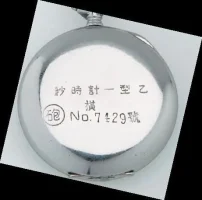
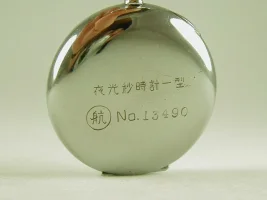
Hi all, I have two pocket watches, which are probably military chronographs,
could someone translate the inscriptions which are on the back?
Thanks in advance.
 

Attachments

  • Japanair1.webp
    Japanair1.webp
    15.4 KB · Views: 190
  • LonginesBackJapan Large.webp
    LonginesBackJapan Large.webp
    19.9 KB · Views: 210
Hi all, I have two pocket watches, which are probably military chronographs,
could someone translate the inscriptions which are on the back?
Thanks in advance.
秒時計一型乙

砲 No.7429號

byoudokei ichigata otsu
yoko
hou No.7429 gou

chronograph type 1 improved edition
yoko(Yokohama?)
gunnery No.7429


right one

夜光秒時計一型
航 No.13490

yakou byoudokei ichigata
kou No.13490

luminous dial chronograph type 1
nautical No.13490
 
ありがとう Toritoribe,
What a wonderful way of helping one another. If I can do the same for you in German, let me know 🙂:

Thanks once again
Jimmy
 
Hi again.

イヤになった者

Has it a bad connotation like a mad person (illness) or is it just for telling : it's someone who has difficulties to live in the current society?

thanks in advance!
 
Hi again.
イヤになった者
Has it a bad connotation like a mad person (illness) or is it just for telling : it's someone who has difficulties to live in the current society?
thanks in advance!


It's a person who has become somehow unlikeable, disagreeable, or otherwise unpleasant.
 
今明日
今日明日

as far as I know they both mean "today and/or tomorrow"
so what is the difference?
 
今明日
今日明日
as far as I know they both mean "today and/or tomorrow"
so what is the difference?
The latter is correct, but the former is wrong.

EDIT:
The term "wrong" is not appropriate here. I looked up a dictionary, and found the word 今明日[こんみょうにち]. I had to use "an obsolete word" instead.:emoji_stuck_out_tongue_winking_eye:
 
Last edited:
伝言がとどいていませんか
I try to find out how to take this sentence apart
私宛に何か伝言がとどいていませんか

私宛 my address
に ni particle
何か something
this is as far as I can get

so what does 伝言がとどいていませんか mean?
 
Last edited:
伝言 means "message", and 届く means "to deliver" in an intransitive sense, so it's like "did something not come for me?"
 
I've been looking in dictionaries for this Kanji, but I can't find it. I don't know how to pronounce it, so I can't type it.
It's 益 only with a ツ next to it. The closest thing I could find was 溢, but it doesn't look quite right, is that the right one?
The kanji is followed by れ出る and 溢れ出る makes sense, but the kanji doesn't look the same, so I just want to make sure.

If it isn't right, does anyone know what the correct kanji is and how it's pronounced?
 
Yes, it's the right one. It's read あふれる, and the word 溢れ出る is あふれでる. It basically means to flow freely. The reason it looks different is because 溢 isn't a 常用漢字, so its form didn't change, as 益's did during the simplification and standardization of the (at the time) 当用漢字.

By the way, that シ is an abbreviation of 水, and is called さんずい.
 
Yes, it's the right one. It's read あふれる, and the word 溢れ出る is あふれでる. It basically means to flow freely. The reason it looks different is because 溢 isn't a 常用漢字, so its form didn't change, as 益's did during the simplification and standardization of the (at the time) 当用漢字.

By the way, that シ is an abbreviation of 水, and is called さんずい.

I see, thank you. :)
 
Sorry, I just want to clarify that it's 溢れる that basically means to flow freely, not 溢れ出る. That has more a meaning of freely flowing out of something/somewhere.
 
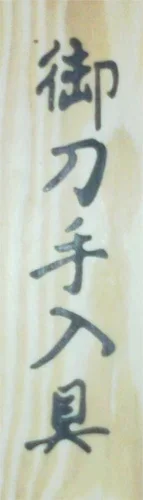
I was wondering what the kanji on the cleaning supply box for my katana mean =)
the second one means katana/sword, that's the only one I know
 

Attachments

  • kanji.webp
    kanji.webp
    6.2 KB · Views: 198
I was wondering what the kanji on the cleaning supply box for my katana mean =)
the second one means katana/sword, that's the only one I know
御 is an honorific modifying "sword"
手入 means "maintenance"
具 means "tools" or "supplies"

Hope this helps!
 
Is there any meaning in 御? or is it just standing in front of 刀 because it can?
 
I was wondering what the kanji on the cleaning supply box for my katana mean =)
the second one means katana/sword, that's the only one I know
御 and 具 seems incorrect. I wonder if it's a Japanese kanji...:emoji_fearful:
 
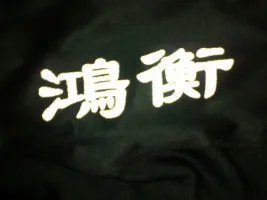
these were on a shirt, but i really have no idea of what they can mean
can someone here tell me please?
 

Attachments

  • 09112010014.webp
    09112010014.webp
    11.8 KB · Views: 184
"Bean goose" and "equilibrium"? Doesn't make any sense to me, and Google turns up next to nothing.
 
Back
Top Bottom