

Navigation
Install the app
How to install the app on iOS
Follow along with the video below to see how to install our site as a web app on your home screen.
Note: This feature may not be available in some browsers.
More options
Style variation
System
Light
Dark

You are using an out of date browser. It may not display this or other websites correctly.
You should upgrade or use an alternative browser.
You should upgrade or use an alternative browser.
Need a Kanji Translated? Just ask!
- Thread starter Mikawa Ossan
- Start date
-
- Tags
- kanji translation


Glenn
一切皆苦
- 8 Jan 2004
- 7,842
- 200
You got youse some Chinese there.
Top: "regret"
Right: "love"
Bottom: the surname Chǔ*, also the name of a Chinese state during the the Spring and Autumn Period (770 to 476 B.C.), also points to Hubei and Hunan provinces, also "thistle," also "suffering," and being clear. It also seems to have a meaning as some sort of cane, but I'm not totally getting that definition.
Left: "spring" (the season)
I'm guessing the 楚 goes with the 春, since there's that Spring and Autumn Period meaning. It may have something to do with the Spring and Autumn Annals, actually, perhaps some reference to something therein. But, I could be way off. You may want to consult someone knowledgeable about China, Chinese, and Chinese history.
*Should display as Chu3 with the third tone pinyin diacritic over the "u."
Top: "regret"
Right: "love"
Bottom: the surname Chǔ*, also the name of a Chinese state during the the Spring and Autumn Period (770 to 476 B.C.), also points to Hubei and Hunan provinces, also "thistle," also "suffering," and being clear. It also seems to have a meaning as some sort of cane, but I'm not totally getting that definition.
Left: "spring" (the season)
I'm guessing the 楚 goes with the 春, since there's that Spring and Autumn Period meaning. It may have something to do with the Spring and Autumn Annals, actually, perhaps some reference to something therein. But, I could be way off. You may want to consult someone knowledgeable about China, Chinese, and Chinese history.
*Should display as Chu3 with the third tone pinyin diacritic over the "u."
Last edited:

- 17 Sep 2005
- 6,017
- 1,970
- Thread starter
- #554
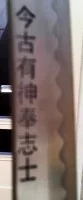
I don't have time to go through them now, but they are
今古有神奉志士
今古有神奉志士

- 6 Jan 2007
- 318
- 22
the kanji aren't really good to see, but I hope that someone can tell me what these mean
Check this out:
今古有神奉志士 | WordReference Forums
NickJaguar
にくじゃがさん
- 21 Apr 2010
- 21
- 0
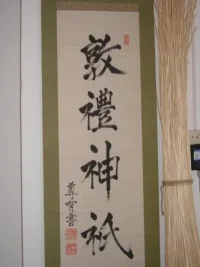
The first picture is in "Kango=漢語" which is Chinese styled writings they used to use in Japan. They don't use any hiragana in Kango. If you use hiragana, it would beCan someone translate these?
It would be great if someone can tell me the kanji, romaji and the translation.
Thank you!
「敦(あつ)く 神祇(じんぎ)を 禮(うやま)う」
"atuku jingi wo uyamau"
「禮」 is same as 「ネ+豊」. Nowadays we don't use both of them, and instead we use 「礼」. Furthermore, when you want to say "uyamau", we use 「敬う」 in these days.
敦く (atuku) is unusual word, in this case it's probably a emphasis word.
神祇 (jingi) means 「天神&地神」 which are the God of the Sky & the God of the Ground. Again this is unfamiliar word.
敬う(礼う)(uyamau) means "respect" or "worship".
So as a sentence, it means like "Worship the Gods very much" or something. I'm not fully sure, since it is in ancient writings. 尊有書 is somebody's name, and I'm not sure who he is.
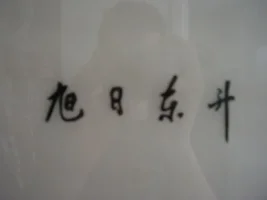
The second picture is probably 「旭日东升」 and I think it's in Chinese. If you try to read it in the 漢語 style it's something like 「升(のぼ)る旭日(あさひ)」 and the meaning is "Rising sun".
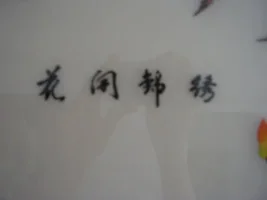
The third picture is definitely Chinese, because 綉 is a Kanji we don't use in Japan. We use 繍 instead. I'm not sure about the meaning.
I'm sorry I couldn't be much help. Since Japanese was strongly affected by Chinese especially in the old days, it's hard to read ancient writings.
Glenn
一切皆苦
- 8 Jan 2004
- 7,842
- 200
The second picture is probably 「旭日东升」 and I think it's in Chinese. If you try to read it in the 漢語 style it's something like 「升(のぼ)る旭日(あさひ)」 and the meaning is "Rising sun".
东 is the simplified variant of 東, so probably it's something like "the sun rising in the east." I'm surprised you got のぼる for 升, since it's 昇 in Japanese (but now I'm wondering if 升 was the original form...). Then again, I guess it wasn't too difficult since you've got 旭日 there.
The third picture is definitely Chinese, because 綉 is a Kanji we don't use in Japan. We use 繍 instead. I'm not sure about the meaning.
Ha, that's good to know! I thought I was going to have to learn a whole new character!
I'm sorry I couldn't be much help. Since Japanese was strongly affected by Chinese especially in the old days, it's hard to read ancient writings.
You helped me out!


- 22 Feb 2008
- 18,266
- 4,926
升 can mean "to rise" also in Japanese.;-) Of course it would be basically used only in classical or Chinese-like sentences, though.东 is the simplified variant of 東, so probably it's something like "the sun rising in the east." I'm surprised you got のぼる for 升, since it's 昇 in Japanese (but now I'm wondering if 升 was the original form...). Then again, I guess it wasn't too difficult since you've got 旭日 there.
しょう【升】[漢字項目]の意味 - goo国語辞書
同音異義語「のぼる」
升
「降」の対。日月が上がり、雲気が立ちのぼる類に用い る。進み上る。勢いのある字。
「登天」「登堂」「登車」は、だんだんとすすみ上がる 。「上天」「上堂」「上車」は、その上に上がる。「升 天」「升堂」「升車」は、勢いよく上がる。
昇
日が上がること。もと「升」を使ったが、のちに日を加 えた字ができた。「升平」は「昇平」とも書くが、「升 堂」などには通用しない。
from
新字源
So the sentence might be 旭日(きょくじつ)東よりのぼる?
NickJaguar
にくじゃがさん
- 21 Apr 2010
- 21
- 0
今古有神奉志士
( at Mikawa Ossan: thanks for telling the kanji, it really helps)
can someone tell me what they mean?
I only know 神 and 士, they mean "god" and "samurai" if i'm right
今古有神奉志士 is a phrase they used in the Hollywood movie "The Last Samurai". I think the picture you've posted is from the Last Samurai too. Again this is in Kango=漢語 style, and if you use hiragana it would be
「今(いま)も古(いにしえ)にも神(かみ)に奉(ほう)ずる志士(しし)有(あ)り」
"ima mo inishie nimo kami ni houzuru shishi ari"
今(ima) means "now"
古(inishie) means "ancient"
神(kami) means "god"
奉ずる(hou zuru) means "to serve"
志士(shishi) means "those who never hesitate to sacrifice themselves for their country and society". It was the word for the activists in the end of Edo era , when the movie took place. 志(kokorozashi) means "will", 士 means "samurai" so it can be translated as "Samurais with strong will and motivation" or something like that.
有り(ari) is affirmative word.
So, the sentence means "From the past to now, there has always been 志士s who served for the God". Hmm.. my translation doesn't sound natural... need some help!!
>>thanks for Glenn and Toritoribe!! I never knew that 东 was 東...
Glenn
一切皆苦
- 8 Jan 2004
- 7,842
- 200
I see. I just checked that link, and I think I knew the first definition (容量の単位。一〇合。「一升」). Number 3 (穀物が実る。転じて、世の中がよく治まる。「升平」) really caught me off guard. But I'm pretty sure I learned it as 枡 (ます). Good stuff. By the way, I'm sure you'll be able to get it, but can you guess what this Chinese word means? 置升機升 can mean "to rise" also in Japanese.;-) Of course it would be basically used only in classical or Chinese-like sentences, though.
しょう【升】[漢字項目]の意味 - goo国語辞書
from新字源
So the sentence might be 旭日(きょくじつ)東よりのぼる?
- 22 Feb 2008
- 18,266
- 4,926

NickJaguar
にくじゃがさん
- 21 Apr 2010
- 21
- 0
Thanks again :emoji_slight_smile:

- 22 Feb 2008
- 18,266
- 4,926
置いて昇る機械... I have no idea. What came up in my mind first was "(car) jack" and "forklift."can you guess what this Chinese word means? 置升機

Please replenish the battery fluid.Hello. Please translate the attachment for me.
Last edited:

Glenn
一切皆苦
- 8 Jan 2004
- 7,842
- 200
Haha, I'm retarded. It should have been 直升機. That should make more sense.置いて昇る機械... I have no idea. What came up in my mind first was "(car) jack" and "forklift."
NickJaguar
にくじゃがさん
- 21 Apr 2010
- 21
- 0
I just searched 直升機 on google and it said it means "helicopter".Haha, I'm retarded. It should have been 直升機. That should make more sense.
垂直に昇る機械(Machine that rises straight up) means helicopter... Chinese is interesting!!
Glenn
一切皆苦
- 8 Jan 2004
- 7,842
- 200
Yeah, it certainly has its advantages at times if you know the characters. For instance, when I saw 背包 I had a decent idea what it meant, but its Japanese equivalent, リュック, left me completely at a loss. I have a harder time with foreign katakana loans into Japanese when they aren't from English (even some that are: セクハラ, for instance) than I do with the Chinese versions at first glance, unless the context makes the meaning obvious.
- 22 Feb 2008
- 18,266
- 4,926
Yes and no.地
does this mean earth?
and what's the hiragana?
地[chi/ji]
earth, ground, place, land, basis, bare skin, one's true character, descriptive part of sentences,,,,
A word doesn't always have the one-to-one correspondence between different languages. It may be one-to-multiple, or vice versa. Especially, a single kanji often can be interpreted multiply.
Glenn
一切皆苦
- 8 Jan 2004
- 7,842
- 200
The first thing I thought of was 忍耐 for "perseverance." It's not the same as "determination," though.
I can't tell what the character in that picture is supposed to be. I've got 犭, what looks like 皿, and 戈. I'm not sure what the other part is supposed to be, and I don't know of any character that combines those. Neither does Jim Breen's WWWJDIC.
I can't tell what the character in that picture is supposed to be. I've got 犭, what looks like 皿, and 戈. I'm not sure what the other part is supposed to be, and I don't know of any character that combines those. Neither does Jim Breen's WWWJDIC.
what about that one http(space)://perseverancearts.com/nin.JPGThe first thing I thought of was 忍耐 for "perseverance." It's not the same as "determination," though.
I can't tell what the character in that picture is supposed to be. I've got 犭, what looks like 皿, and 戈. I'm not sure what the other part is supposed to be, and I don't know of any character that combines those. Neither does Jim Breen's WWWJDIC.
also whats the kanji for determination?
thx a lot !


