How do you know... ON/KUN and beyond

I take everything you guys say seriously and with full regard, if it causes offense then it comes before grammar. Of course I'm happy it was gramatically correct, but I also need to make sure that I'm not offending people. suginai seems more discrectionary than judgemental.
ところで、この「過ぎない」自体には特に意味合いはないですね。 Undrentideさんがいったとおり、
語尾の助詞(ね、よ。。。)によりますね。

皆さん、二日酔いになるまで飲み過ぎないように注意しましょう!:D
 
Shot you a PM about your message, Elizabeth.

And just thought I'd update, I'm doing -te ageru/morau and ~toki, stuff I had problems with before. The ~toki is still confusing, but who knows, it'll sink in eventually.
 
Hey guys. I just wanted to tell you I'm not going to be here very much for the next some weeks. I think it's obvious why in this pic:


😊

Before I do vanish, I'd hope that this thread doesn't die. I still need to review a bunch of posts and I'd like to come back to see my many mistakes on the following pictures. I tried to decipher the texts and this is what I got:

untitled110-1.jpg

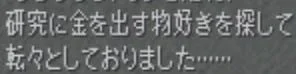
Japanese: けんきゅう に かね を だす もの すき を さがして てんてん と しておいました
English translation: Research's money outthing like look for travel (something). I think it means, I like to travel and go out looking for money for research.


untitled111-1.jpg

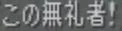
Japanese: この ぶれいもの
I don't understand why it's bureimono, I thought it would be mureisha.
English: This ungrateful person!


untitled112-1.jpg

Japanese: 500ねん いじょうむかし の こぶんしょ を かいどくするに ふたつ の たんご を しばしば みつける こと が できる
English:500 years with above old times's old writing write decipher do, two simple words (vocab?) again and again discovered (I don't understand why koto is in this) can. I think it means: I deciphered a 500 year old writing and discovered two words over and over again.


untitled113-1.jpg

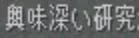
Japanese: きょうみ ふかい けんきゅう
English: interest deep research. I think this was one of the easier ones that I saw.


untitled114-1.jpg

Japanese: また むずかしい ごほん を よんでいたの
English: again difficult book have read. I think this was also easy, but the -ita at the end makes me think it has to do with 'recently read (past tense)'. I also read in genki that females are allowed to use go-(noun) like gohon, and they can also use a no at the end of a sentence?


untitled115-1.jpg

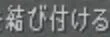
Japanese: むすびつける
English: The only thing I can come up with is: tie attach.


untitled116-1.jpg

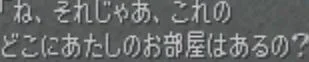
Japanese: それじゃあ、これの どこに あたし の おへや は あるの
English: there then, this (I think it was in a hotel, sorry I had to cut it off) where at my room is?


untitled117-1.jpg

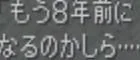
Japanese: もう 8 ねん まえ に なる の かしら
English: Already 8 years before has become, I wonder. Or: I wonder, has it already been 8 years?


untitled118-1.jpg

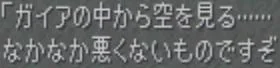
Japanese: ガイア の なか から そら を みる
なかなか わるくない もの です ぞ
English: Gaia's center from sky see. By no means is it evil.


untitled119-1.jpg

Japanese: げんざい の せいかいりつ は100%!
English: I have no idea at all. I found through WWWJDIC (like most here) the first two are "as of now", the three make no sense to me. Taken apart, I found it meant "correct percentage". So: As of now, correct percentage is 100%!

The translations are not as important as the hiragana being correct, but let's see if they're right :)

Thanks in advance again!
 
Hey guys. I just wanted to tell you I'm not going to be here very much for the next some weeks. I think it's obvious why in this pic:

😊
Before I do vanish, I'd hope that this thread doesn't die. I still need to review a bunch of posts and I'd like to come back to see my many mistakes on the following pictures. I tried to decipher the texts and this is what I got:


Japanese: けんきゅう に かね を だす もの すき を さがして てんてん と しておいました
English translation: Research money out things like look for travel (something). I think it means, I like to travel and go out looking for money for research.

"As I travel from place to place I find curiosities to fund for research"
monosuki = Curiousity, kane wo dasu = to fund.
Also its としておりましたnot としておいました

Japanese: この ぶれいもの
I don't understand why it's bureimono, I thought it would be mureisha.
English: This ungrateful person!

There is no logic to kanji readings sometimes...its just how it is. lol

Japanese: 500ねん いじょうむかし の こぶんしょ を かいどくするに ふたつ の たんご を しばしば みつける こと が できる
English:500 years with above old times' old writing write decipher do, two simple words (vocab?) again and again discovered (I don't understand why koto is in this) can. I think it means: that I deciphered a 500-year-old writing and discovered two words over and over again.

As I deciphered the over 500-year-old document I was able to find two words repeated over and over again.
Koto in this sense is attached to the set "dict. verb + koto ga dekiru" which is the same as the potential form of the verb (rareru form).

Japanese: また むずかしい ごほん を よんでいたの
English: again difficult book have read. I think this was also easy, but the -ita at the end makes me think it has to do with 'recently read (past tense)'. I also read in genki that females are allowed to use go-(noun) like gohon, and they can also use a no at the end of a sentence.

"You read this book again?"
no in this sense is a contracted version of "no desu". both males and females can use no in this way. However, if you replace yo with no in an emphatic sentence it becomes very feminine and if a guy uses no in this way it makes them look like they are gay lol.

Go or O in front of a noun is honorific and both males and females can use it.

Japanese: むすびつける
English: The only thing I can come up with is: tie attach.
To combine, to tie with a knot, to attach.

Japanese:
それじゃあ、これの どこに あたし の おへや は あるの
English: there then, this (I think it was in a hotel, sorry I had to cut it off) where at my room is?
Well then, where in this place is my (or some person's) room?

Japanese: もう 8 ねん まえ に なる の かしら
English: Already 8 years before has become, I wonder. Or: I wonder, has it already been 8 years?

Mou only means already if it's attached a verb of the perfect tense (-ta or mashita). If its attached to an imperfect verb then it takes the meaning of "almost". So this sentence is more like:
"Has it almost been 8 years?"

Japanese: ガイア の なか から そら を みる
なかなか わるくない もの です ぞ
English: Gaia's center from sky see. By no means is it evil.

"Look at the sky from the centre of gaia...Its not really all that bad you know."

Kara is attached "Gaia no naka" so its "Look at the sky from gaia" not "From the sky see gaia" ^^;

Japanese: げんざい の せいかいりつ は100%!
English: I have no idea at all. I found through WWWJDIC (like most here) the first two are "as of now", and the three make no sense to me. Taken apart, i found it meant "correct percentage". So: As of now, the correct percentage is 100%!

Your translation is more or less correct...genzai is a more formal version of "ima" and seikai is just a more formal version of "tadashii"
"The correct percentage right now is 100%!"
 

Attachments

  • untitled112-1.webp
    untitled112-1.webp
    6.3 KB · Views: 95
  • untitled113-1.webp
    untitled113-1.webp
    1.4 KB · Views: 109
  • untitled114-1.webp
    untitled114-1.webp
    2.5 KB · Views: 112
  • untitled115-1.webp
    untitled115-1.webp
    1.1 KB · Views: 127
  • untitled116-1.webp
    untitled116-1.webp
    4.1 KB · Views: 109
  • untitled117-1.webp
    untitled117-1.webp
    2 KB · Views: 98
  • untitled118-1.webp
    untitled118-1.webp
    4.3 KB · Views: 109
  • untitled119-1.webp
    untitled119-1.webp
    2.2 KB · Views: 112
  • untitled111-1.webp
    untitled111-1.webp
    1.1 KB · Views: 110
  • untitled110-1.webp
    untitled110-1.webp
    4.7 KB · Views: 110
Last edited:
Japanese: けんきゅう に かね を だす もの き を さがして てんてん と しておました
in this sentence, 物好き=物好きな人, a person who likes strange things / has strange taste / are very curious.

More often than not when this word is used, it has a negative connotation, like when someone appreciates things that are weird, useless, of poor taste, etc.
One can assume this "research" deals with a subject that is trivial and/or out of the norm as only a 物好き would fund it. It may very well be an important subject for the speaker, but here, s/he talks about the research with a bit of sarcasm. Oh, and it is pronounced monoZuki.

So, I would translate it like this....

I was traveling from place to place looking for weirdos/chumps who would fund the research.

Japanese: げんざい の せいかいりつ は100%!
正解 = correct answer

率 = rate

Let us say you took a test and you got 8 questions correct out of 10. Your 正解率, then, is 80%.
 
I'm late to this thread, but I thought to give my views on some parts.

物好く refer to people who literally likes things. The negative connotation is that they like things more than people, like guys who polish their cars rather than talk to their girlfriends. If I guess correctly, these "eccentrics who love things" love rare curiosities. So the character is looking for people who would give him money for his research.

興味深い研究 - I would translate more as research which am deeply interested in.

無礼者 - I would translate this as "You knave!". There is no modern equivalent for that word, and ungrateful is not the most accurate term, since it literally means "you with no manners!".

ガイア の なか から そら を みる...
なかなか わるくない もの です ぞ


To watch the sky from Gaia... Not such a bad thing after all.

My perspective on this line is that 悪くないもの refers to the act of watching the sky from Gaia (Earth) and he's understating the awesomeness of the event. So he's commenting on his feelings as he watches the sky, much like how someone would say when he is watching the sunrise from the top of Mount Everest, that kind of feeling.

正解率 is tough to translate into purely english terms, since 正解 means correct answer and 率 means percentage. The closest word is "accuracy", the most accurate phrase would be "percentage of questions you got correct".
 
Thanks Kira, ASHIKAGA, neokai! I left rep for you guys. Time to see if I can also leave some for the previous page...

Koto in this sense is attached to the set "dict. verb + koto ga dekiru" which is the same as the potential form of the verb (rareru form).

I'm going to have to go over this and a few posts from last page.

Well then, where in this place is my (or some person's) room?
Could it have been kore no de doko ni... but they left out the de? Or is that sentence good?

Mou only means already if its attached a verb of the perfect tense (-ta or mashita). If its atttached to an imperfect verb then it takes the meaning of "almost". So this sentence is more like:
"Has it almost been 8 years?"
Time to break out the Genki I book, haha.

in this sentence, 物好き=物好きな人, a person who likes strange things / has strange taste / are very curious.
Oh, and it is pronounced monoZuki.
Hmm, I learned some new stuff. Thanks for correcting the hiragana, same with Kira, but I really thought that ri was an i.

My perspective on this line is that 悪くないもの refers to the act of watching the sky from Gaia (Earth) and he's understating the awesomeness of the event. So he's commenting on his feelings as he watches the sky, much like how someone would say when he is watching the sunrise from the top of Mount Everest, that kind of feeling.
I see, I get what you mean. I went to WWWJDIC to translate this なかなか and I saw: "by no means (with negative verb);" so I thought since the "evil/bad" is in negative, "by no means bad thing isn't". Roughly, the roughest translation, I think I did alright.

正解率 is tough to translate into purely english terms, since 正解 means correct answer and 率 means percentage. The closest word is "accuracy", the most accurate phrase would be "percentage of questions you got correct".
正解 = correct answer

率 = rate

Let us say you took a test and you got 8 questions correct out of 10. Your 正解率, then, is 80%.

Right, I accidentally looked up all three characters, but breaking it into two and one made it pretty good.

Thanks again for all your guys help! I'll probably try to post something between the times where I'm not working and times I'm passed out, haha.
 
Could it have been kore no de doko ni... but they left out the de? Or is that sentence good?
You can't say これのどこに. This の is a particle not a pronoun. これの is qualifying どこ.

東京は日本のどこにありますか?

I went to WWWJDIC to translate this なかなか and I saw: "by no means (with negative verb);" so I thought since the "evil/bad" is in negative, "by no means bad thing isn't". Roughly, the roughest translation, I think I did alright.
悪くない is not "negative." It's close to 良い. So なかなか doesn't mean "ny no means" in that sentence.;-)
 
Last edited:
You're right, even if I put hotel in the first sentence, it doesn't go with kore. And you're right again, it says with a negative verb...but isn't warukunai the negative form? Unless it means a negative verb alltogether.

Also, does nakanaka in this sense mean "Not too much"?
 
Last edited:
isn't warukunai the negative form? Unless it means a negative verb altogether.
なかなか as #2 in WWWJDIC is used to express a thing/situation is hardly fulfilled, and connotes that that state has nagative meaning for the speaker.

景気がなかなか回復しない。
The economy is slow to recover.

Plus, it's always used with a verb to descrive some kind of change/movement. 悪くない is exactly a negative form but expresses a state, not a change/movement. So, it means #1 in WWWJDIC (very; considerably; easily; readily; fairly; quite; highly; rather) in that sentence.

Also, does nakanaka in this sense mean "Not too much"?
なかなか悪くない is similar to 意外にいい, "unexpectedly good" or "not bad after all," as neokai-san translated.
 
plus, it's always used with a verb to descrive some kind of change/movement. 悪くない is exactly a negative form, but expresses a state, not a change/movement. So, it means #1 in wwwjdic (very; considerably; easily; readily; fairly; quite; highly; rather) in that sentence.
なかなか悪くない is similar to 意外にいい, "unexpectedly good" or "not bad after all," as neokai-san translated.
「けっこういい」、「意外にいい・(といい?)」、「案外いい」などと同じような言い方でしょう。。。:-)
 

Mou only means already if its attached a verb of the perfect tense (-ta or mashita). If its atttached to an imperfect verb then it takes the meaning of "almost". So this sentence is more like:
"Has it almost been 8 years?"
Could it be "soon/almost" or "another" in this sentence ?? My interpretration was also for "already." At least that's usually how it has worked for もう~~なる。:?

彼はあの町に住んでもう10年になる。 He's lived in that town for 10 years already.
彼女がここで働いてもう二ヶ月になる。 She's been working here for 2 months already.

 
Could it be "soon/almost" or "another" in this sentence ?? My interpretration was also for "already." At least that's usually how it has worked for もう~~なる。:?

彼はあの町に住んでもう10年になる。 He's lived in that town for 10 years already.
彼女がここで働いてもう二ヶ月になる。 She's been working here for 2 months already.


I think in english saying almost or already X amount of years are fairly close in meaning. I sort of interpreted naru as having not completely passed 8 years yet so mou became "almost" for me. I think "almost x years" and "already x years" have fairly close meanings anyway so...i just went with what i thought because when you say things like "Mou ichi ji desu yo!" it takes on the meaning of "almost" as in "Its almost 1 o clock!"
 
なかなか as #2 in WWWJDIC is used to express a thing/situation is hardly fulfilled, and connotes that that state has nagative meaning for the speaker.
景気がなかなか回復しない。
The economy is slow to recover.
Plus, it's always used with a verb to descrive some kind of change/movement. 悪くない is exactly a negative form, but expresses a state, not a change/movement. So, it means #1 in WWWJDIC (very; considerably; easily; readily; fairly; quite; highly; rather) in that sentence.
なかなか悪くない is similar to 意外にいい, "unexpectedly good" or "not bad after all," as neokai-san translated

Yup, 悪くない is used in the same sense that English speakers say something is "not bad". when you say it's "not bad" you actually mean its "good" right? :)
 
I think in english saying almost or already X amount of years are fairly close in meaning. I sort of interpreted naru as having not completely passed 8 years yet so mou became "almost" for me. I think "almost x years" and "already x years" have fairly close meanings anyway so...i just went with what i thought because when you say things like "Mou ichi ji desu yo!" it takes on the meaning of "almost" as in "Its almost 1 o clock!"
And I believe this still implies "Already 1:00."

An "almost one" phrase would be "もう1時近い、" as an example...😌
 
I have to further read those as well. I have work 24 days this month, wow! Good way to start off the school year, haha.

I was thinking that I should post in sections rather than one huge block like Elizabeth said, it seems easier and such.

Chapter 16 was decently hard, I have to say, right in the middle with ~toki. I'll have to do that a lot. The -te ageru/kureru/morau wasn't that bad, just cemented in the placements between recipient and giver, the ending was also pretty weird. I also tried to use polite forms as undrentide suggested!


宿題を手伝ってあげました。
紙を直してあげました。
花を買ってあげました。
病院に行ってあげました。
洗濯してあげました。
部屋を掃除してあげました。
ノートを借りてあげました。
先生に電話してあげました。
銀行に行って、お金をおろしてあげます。
I don't really know how to say #10, to be honest.

I had more of this type of excersize but I can't find where I put the typings, so I'm re-typing them!
 
Last edited:
(彼の)宿題を手伝ってあげました。
(彼の)書類/答案を直してあげました。
彼を病院に連れて行ってあげました。
(彼の)部屋を掃除してあげました。
あなたのノートを彼に貸してあげました。(貸す: "to lend," 借りる: "to borrow")
(彼の)先生に電話してあげました。
銀行に行って、お金をおろしてあげました
 
do dishes : 皿を洗う、食器を洗う :)
So 「~てあげる」 form is?

皿を洗うってあげました?

Looks like I missed a bunch, I'll have to review the ones I typed more thoroughly. Thank you so far!
 
very close
皿を洗って(あらって)あげました。

Ah yeah, I left that u in there instead of deleting it.
Toritoribe;640943 said:
And (お)皿洗いをする before either (of those)?

I don't understand this one, perhaps I didn't get to this part of grammar? It looks like the verb stem form of arau, then o suru?

Here is another part of Lesson 16, same stuff:
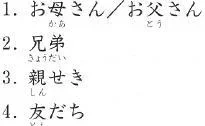
untitled13jpgt1250091229-1.webp


お母さんがアルバイトに運転してくれました。
お父さんにアルバイトに運転してもらいました。
Not sure if this is actually alright.

兄弟が食べ物を買ってくれました。
兄弟に食べ物を買ってもらいます。(Present tense)

親せきは楽しプレゼンスをくれました。
親せきに新しい本を買ってもらいます。(Present tense)

友だちが日本語の電子メールを (私に) 訳してくれました。

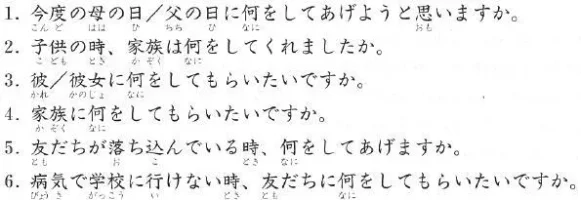
untitled14jpgt1250091681-1.webp


The following ones I decided to experiment on.

今度の母の日, 一番レストランで (を?) 予約してあげようと思います。
家族が難しい本を説明してくれました。
(Here's the sentence I actually wanted to use: 家族が分かり難い本を説明してくれました.
I also wondered if this was okay: 困り読み?)

彼女に朝ご飯をおごってもらいたいです。

家族に東京を案内してもらいたいです。

友だちと映画に見に連れて行ってあげます。

友だちに去年彼女が編んだセーターを探して持って来てもらいたいです。
(I want my friend to find the sweater my girlfriend knit last year and bring it. Probably messed this up :relief:)
 

Attachments

  • untitled13jpgt1250091229-1.webp
    untitled13jpgt1250091229-1.webp
    4.1 KB · Views: 104
  • untitled14jpgt1250091681-1.webp
    untitled14jpgt1250091681-1.webp
    23.8 KB · Views: 97
Last edited:
Ah yeah, I left that u in there instead of deleting it.
:) Thanks, I'm double checkin' my ones that I re-did now to make sure it's all good.
I don't understand this one, perhaps I didn't get to this part of grammar? It looks like the verb stem form of arau, then o suru?
皿洗い (さらあらい) = washing dishes, dish washing, dishes, cleaning, wash 'em up..

It's so cheap and informal (used with any verb, too, not only with する).

:42:
 
Back
Top Bottom