Need a Kanji Translated? Just ask!

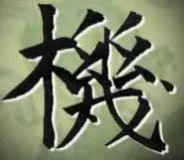
Quick question. I was watching the Colbert Report and I saw this;
25974247-1.webp

I then heard it was "opportunity". But I remember this as part of airplane, machine.

So does this also mean opportunity?
 
Quick question. I was watching the Colbert Report and I saw this;
25974247-1.webp

I then heard it was "opportunity". But I remember this as part of airplane, machine.

So does this also mean opportunity?
Yes. The meaning depends on the context.
機会: chance/opportunity
e.g.
勝機: a chance to win

機械: machine
e.g.
飛行機: airplane
 
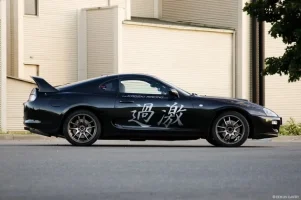
Please help me to understand what is written on this car:
 

Attachments

  • supra.webp
    supra.webp
    38.3 KB · Views: 171
Hello all,

What is Kanji for "Dosukoi", the exclamation of sumo wrestlers?

Thanks very much!

It's a kind of interjection and it does not have kanji.
It is always written either in hiragana or katakana.
 
海豚

Hi all, may i know how is 海豚 iruka when 海 is either kai / umi and when 豚 is either ton / buta
 
Hi all, may i know how is 海豚 iruka when 海 is either kai / umi and when 豚 is either ton / buta
As recommended earlier by other members, please post your questions in the appropriate thread.
 
Hi all, may i know how is 海豚 iruka when 海 is either kai / umi and when 豚 is either ton / buta
It's 当て字 ateji, applying Japanese pronunciation to kanji compound (in many cases Chinese word).
dolphin : イルカ (iruka) in Japanese
dolphin : 海豚 (haitun) in Chinese
Ateji - Wikipedia
 
Help Please

Hello, I am painting someone a landscape, and was thinking about placing some kanji in the finished product. I want it to say "Alone among many". I'm beginning to study Japanese, however, I haven't learned these kanji yet. I found these: 独 僚 多. Is that close, or am I completely off the mark? (I also don't know the word order...)
 
Hello, I am painting someone a landscape, and was thinking about placing some kanji in the finished product. I want it to say "Alone among many". I'm beginning to study Japanese, however, I haven't learned these kanji yet. I found these: 独 僚 多. Is that close, or am I completely off the mark? (I also don't know the word order...)
I don't understand. Are you more interested in brushing on a few kanji or for something that makes sense in Japanese? It isn't the same at all. This is how I would say it.

"Alone in a crowd."

群衆の中の孤独.
 
I want it to make sense, I want it to mean something. I like your phrase also, and I appreciate your help.
 
Stumped by symbol on wall mural

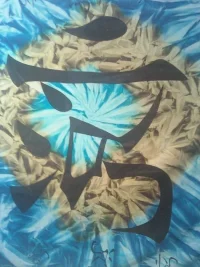
Hi all, I am new here, this is my first pot. I have a wall mural that I got about a year ago and it's been hanging in my room for a while and I have always been curious about its meaning. I attached a picture of the mural to this post. Any and all help is welcome!
Thanks
 

Attachments

  • 0721091927.webp
    0721091927.webp
    47.8 KB · Views: 152
Assuming it is a Chinese character, here's what I make of it.

The top two lines might be the radical なべぶた, the three to the left might be さんずい, and the part on the right looks to me like it could be an abbreviated form of 馬

Unfortunately, I know of no such kanji which is comprised of these parts.
 
Good thinking on 馬. There are several characters that combine the top and left radicals. Now that I check again, the middle part sort of looks like 兄 turned on its side ??
 
Now that you mention it, the part on the right does look like ナ短 on its side, provided that it's also the mirror image.

Where was this wall mural acquired, if I may ask?
 
I got curious, and looked up the list of simplified Chinese characters list.
马 is the one for 馬 but it looks a bit different from the picture...

簡体字 - Wikipedia

(馬 is just under M)

The closest thing is what Elizabeth mentioned, 兄 not only turned on its side, but mirrored as well. :emoji_blush:

I tried to "reproduce" this character, even なべぶた does not really fit well (even though I tried with several different font), and had to use the mirrored dot plus 一.
Now I do wonder whether such a kanji (hanzi?) really exists or it's just an art work of imaginary kanji by an inspired artist...???

kanjiq-1.webp
 
I tried to "reproduce" this character, even なべぶた does not really fit well (even though I tried with several different font), and had to use the mirrored dot plus 一.
Now I do wonder whether such a kanji (hanzi?) really exists or it's just an art work of imaginary kanji by an inspired artist...???
As a native Chinese speaker, I can tell you there is no such word in the Chinese dictionary. I have yet to encounter anything remotely close to this word in my Japanese studies as well. It's not conclusive, but the spacing between the strokes shows that the word does not appear to be "natural", and so I dismiss it as a make-believe or an unknown rune from some other dimension. :emoji_grinning:
 
Back
Top Bottom