

Navigation
Install the app
How to install the app on iOS
Follow along with the video below to see how to install our site as a web app on your home screen.
Note: This feature may not be available in some browsers.
More options
Style variation
System
Light
Dark

You are using an out of date browser. It may not display this or other websites correctly.
You should upgrade or use an alternative browser.
You should upgrade or use an alternative browser.
Need a word or phrase translated?
- Thread starter Buntaro
- Start date

Elizabeth
先輩
- 22 Apr 2003
- 9,839
- 135
桃太郎などの伝統的な日本の物語に興味を持っています。それは、現在の日本人の価値観を形成するのに、大事な役割を果たしていたから。I'm looking for a word that means something like 'to create' or 'to shape the development of'--essentially a word that means to cause something to come into being.
What I want to say: I am interested in reading traditional stories like Momotarou because they have helped to shape Japanese values.
My attempt in Japanese:
桃太郎を初め、伝統的な日本の物語に興味を持っています。なぜかと言えば、現在の日本人の価値観を決定づけたんですから。
決定づける--> I have no confidence in this phrase as I just kind of stumbled upon it in my dictionary. Would this work here? If not, what would?
Also, how would I express the sentiment 'to help' in this context? I wouldn't say, in English anyway, that those stories 'shaped japanese' sense of values' because there are certainly other factors. How do I express that its one of several factors? Does adding something like ある程度まで at the beginning of sentence two work? Is there a smoother way, possibly by changing the verb somehow?
In conversational English I think I would say "It played a major role in shaping Japanese peoples values." So that was how I chose to literally convey and frame it with the above translation. How natural it comes off in Japanese I think is fairly high....until a native gets back with me otherwise.


Charles Barkley
TNT Basketball Analyst
- 14 Jun 2007
- 560
- 12
Thanks for the suggestion Elizabeth. Did you change をはじめ to など because of a correctness issue, a formality issue, or a personal preference issue? It seemed an appropriate sentence for the construction so I decided to try it out...
The "AはB(に・で・において)大事な役割を果たす。" got a lot of hits in Jim Breen's online dictionary. I'll have to try to start using it when occasion merits (though such occasions are probably few and far between).
As best I can tell, using に vs で vs において after B (either a noun or nominalized verb) is based on the following
に A, working towards B
で A, working as a member of B (reminds me a bit of として in that its defining the role?)
において same as で except more formal and probably something I will never use unless I start publishing in academic journals/giving official speeches?
Would these examples work (made up out of my head)?
1) 佐々木さんは私の日本語の上達に大きな役割を果たしました。 --> this sounds better than below but my ear's not so good
(佐々木さんは私の日本語が上達するのに大きな役割を果たしました。)
2) 佐々木さんは国際交流協会の会議で大事な役割を果たしました。
Are these sentences correct and do they accurately illustrate the differences between the particles で and に in this construction?
The "AはB(に・で・において)大事な役割を果たす。" got a lot of hits in Jim Breen's online dictionary. I'll have to try to start using it when occasion merits (though such occasions are probably few and far between).
As best I can tell, using に vs で vs において after B (either a noun or nominalized verb) is based on the following
に A, working towards B
で A, working as a member of B (reminds me a bit of として in that its defining the role?)
において same as で except more formal and probably something I will never use unless I start publishing in academic journals/giving official speeches?
Would these examples work (made up out of my head)?
1) 佐々木さんは私の日本語の上達に大きな役割を果たしました。 --> this sounds better than below but my ear's not so good
(佐々木さんは私の日本語が上達するのに大きな役割を果たしました。)
2) 佐々木さんは国際交流協会の会議で大事な役割を果たしました。
Are these sentences correct and do they accurately illustrate the differences between the particles で and に in this construction?
Elizabeth
先輩
- 22 Apr 2003
- 9,839
- 135
I don't think it is correct but at any rate I have not been exposed to it in that context and couldn't piece together your intended meaning....My alteration was entirely unconscious although out of proper JREF etiquette I probably should have asked if I'd thought of it.Thanks for the suggestion Elizabeth. Did you change をはじめ to など because of a correctness issue, a formality issue, or a personal preference issue? It seemed an appropriate sentence for the construction so I decided to try it out...
My experience has been with 大事な役割を果たす the difference is most often the common distinction found across grammar points and constructions that で refers to a place or activity occuring on a specified stage bounded by a specified space. In contrast, as you say, the "location" in に expresses the working towards or tendancy in the direction of a particular end state.The "AはB(に・で・において)大事な役割を果たす。" got a lot of hits in Jim Breem's online dictionary. I'll have to try to start using it when occassion merits (though such occassions are probably few and far between).
As best I can tell, using に vs で vs において after B (either a noun or nominalized verb) is based on the following
に A, working towards B
で A, working as a member of B (reminds me a bit of として in that its defining the role?)
It can substitute for で or に and was given a brief introduction here :において same as で except more formal and probably something I will never use unless I start publishing in academic journals/giving official speeches?
Quick question about the use of "於"
It's not particularly constructive, but they all sound good and equally natural to me.1) 佐々木さんは私の日本語の上達に大きな役割を果たしました。 --> this sounds better than below but my ear's not so good
(佐々木さんは私の日本語が上達するのに大きな役割を果たしました。)
2) 佐々木さんは国際交流協会の会議で大事な役割を果たしました。
Are these sentences correct and do they accurately illustrate the differences between the particles で and に in this construction?

Last edited:

Fuumei
眼鏡が要る
- 18 Sep 2005
- 242
- 1
The nuance of "mysteriously" is not so strong.
不思議と~になる is often used in Japanese,
but in most cases, it has little to do with mystery/supernatural phenomena.
I'd say it's more like "somehow".
"I don't know why, but somehow I'm feeling exhilarated."
Ah thanks so much for clearing that up. That makes much more sense to me that way.
ZhadowQueen
後輩
- 18 Nov 2007
- 5
- 0
Hello.
I am signing up for a Japanese website where I have to enter a security code.
Here is the image:
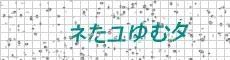
Thanks in advance
I am signing up for a Japanese website where I have to enter a security code.
Here is the image:
Thanks in advance
Last edited:

roman_torkit
先輩
- 15 Aug 2006
- 40
- 0
Could you please help me type "I love Japanese girls" in kanji. I ended up with this: 私日本人の女の子が大好き. But I'm pretty sure this is not right.
Thank you
Thank you
Charles Barkley
TNT Basketball Analyst
- 14 Jun 2007
- 560
- 12
I don't think it is correct but at any rate I have not been exposed to it in that context and couldn't piece together your intended meaning....My alteration was entirely unconscious although out of proper JREF etiquette I probably should have asked if I'd thought of it.
I'm still a bit confused on this point. The goal is to highlight momotarou as one specific example of the larger group 'traditional japanese stories,' and I understand why など works here, but I don't understand why をはじめ wouldn't. It seems similar to the example sentence コンサートで歌手Aは最新のヒット曲を始め、25の新曲を歌った。
Using your corrections from earlier but replacing など with おはじめ, the sentence reads:
桃太郎をはじめ伝統的な日本の物語に興味を持っています。それは、現在の日本人の価値観を形成するのに、大事 な役割を果たしていたから。
Could anyone explain if/why this is incorrect? Thanks.
Elizabeth
先輩
- 22 Apr 2003
- 9,839
- 135
Oh, yes, I think it is fine. My apologies. I read it to some Japanese friends and they didn't understand. But now that I see the example sentence it makes absolute sense as a kind of "especially" or "in particular"....:sorry:I'm still a bit confused on this point. The goal is to highlight momotarou as one specific example of the larger group 'traditional japanese stories,' and I understand why など works here, but I don't understand why をはじめ wouldn't. It seems similar to the example sentence コンサートで歌手Aは最新のヒット曲を始め、25の新曲を歌った。
Using your corrections from earlier but replacing など with おはじめ, the sentence reads:
桃太郎をはじめ伝統的な日本の物語に興味を持っています。それは、現在の日本人の価値観を形成するのに、大事 な役割を果たしていたから。
Could anyone explain if/why this is incorrect? Thanks.

undrentide
Japa'n vagyok
- 18 Jan 2006
- 3,652
- 310
はじめ can be used to put something as an example.I'm still a bit confused on this point. The goal is to highlight momotarou as one specific example of the larger group 'traditional japanese stories,' and I understand why など works here, but I don't understand why をはじめ wouldn't. It seems similar to the example sentence コンサートで歌手Aは最新のヒット曲を始め、25の新曲を歌った。
Using your corrections from earlier but replacing など with おはじめ, the sentence reads:
桃太郎をはじめ伝統的な日本の物語に興味を持っています。それは、現在の日本人の価値観を形成するのに、大事 な役割を果たしていたから。
Could anyone explain if/why this is incorrect? Thanks.
I don't think your sentence is incorrect, though usually はじめ is used like ~をはじめとした/~をはじめとする. (And yes, sometimes people do write ~をはじめ without とした/とする.) I might say:
桃太郎をはじめとした伝統的な日本の物語に興味を持っています。
それは、現在の日本人の価値観を形成するのに大切な役割を果たしているからです。
The first part can be rephrased :
桃太郎などの伝統的な日本の物語・・・
Meaning are quite similar, "traditional Japanese stories such as momotarou" "tarditional Japanese stories, momotarou, for example" but maybe など is more vague while をはじめとした is more focused on momotarou (compared with など).

AichiAlex
先輩
- 20 Nov 2007
- 50
- 0
roman_torkit;530618 said:Could you please help me type "I love Japanese girls" in kanji. I ended up with this: 私日本人の女の子が大好き. But I'm pretty sure this is not right.
Thank you
僕は日本人の女子が大好き!!
Hope that helped
roman_torkit
先輩
- 15 Aug 2006
- 40
- 0
Domo Arigato, AichiAlex僕は日本人の女子が大好き!!
Hope that helped

Did someone saw Gokusen (season I) Episode II?
in the beginning somewhere Matsumoto Jun saids something like: Nakama? nakama te kata ni janai yo or something: the subs were : Friends? don't use that word easily
(at lenght : 00 : 14:05 there you see Jun saying the phrase)
can someone help me please?
I heard 仲間仲間って簡単に言うんじゃねえよ。
Is this correct?
Because the translation of 仲間仲間って簡単に言うんじゃねえよ。 =
nakama nakama tte kantan ni iu njaneeyo
(and how do you say this? (teh kantan nii un janee joo?)
Charles Barkley
TNT Basketball Analyst
- 14 Jun 2007
- 560
- 12
Is this correct?
Because the translation of 仲間仲間って簡単に言うんじゃねえよ。 =
nakama nakama tte kantan ni iu njaneeyo
(and how do you say this? (teh kantan nii un janee joo?)
You mean what kind of intonation? Probably a natural reading would have a small pause after the first nakama, then a larger pause after tte.
なかま なかまって かんたんにいうんじゃねえよ Other than that just pronounce it as you normally would each hiragana...
ie, something like: nakama nakamatte, kantanniyuunjaneeyo
(and how do you say this? (teh kantan nii un janee joo?)
I really don't know why you are asking us this. You have the original audio source which would be far more useful than anything we could explain to you through text.

undrentide
Japa'n vagyok
- 18 Jan 2006
- 3,652
- 310
Hi xFanGirl, if you mean the text in the picture, I'm afraid that it is not Japanese but Chinese...
sigmentofb
先輩
- 1 Oct 2007
- 75
- 0
Hello,
Would anybody here know how to pronounce this name?
善久惠
I couldn't find it in Jim Breen's name dictionary. Thank you!
Would anybody here know how to pronounce this name?
善久惠
I couldn't find it in Jim Breen's name dictionary. Thank you!
D
diceke
Guest
Zen Hisae. But proper nouns in Kanji can be pronounced in so many different ways, so you're never 100% sure about it. :emoji_thumbsup:Hello,
Would anybody here know how to pronounce this name?
善久惠
I couldn't find it in Jim Breen's name dictionary. Thank you!
Last edited by a moderator:
sigmentofb
先輩
- 1 Oct 2007
- 75
- 0
Hello,
Thank you for the reply, but the name above is a single name, not a full name.
Thank you for the reply, but the name above is a single name, not a full name.
D
diceke
Guest
I googled it, but not a single hit!!! Like I said you are never 100% sure about names, unless they're common names like Tanaka, Suzuki, etc.Hello,
Thank you for the reply, but the name above is a single name, not a full name.

D
diceke
Guest
Are you really sure it's a single name?? A surname or a given name?:clueless:
?S???̕c???i?????j?P?P????善 Zen, Miyoshi
善久 Yoshihisa, Zenhisa, Zenku
sigmentofb
先輩
- 1 Oct 2007
- 75
- 0
Are you really sure it's a single name?? A surname or a given name?
Yes, it is a single name. This particular person is my great-grandmother's cousin and is listed in the family koseki.
Similar threads


- Replies
- 11
- Views
- 115K