倭人(wa-jin, Japanese)

caster51

後輩
Joined
27 Feb 2005
Messages
2,106
Reaction score
37
According to 魏志倭人伝(Gishi-wajin-den) AC280~290
魏志倭人伝 - Wikipedia
the character of wa-jin (Japanese) tattooed on the face and body.
男子無大小皆黥面文身自古以來其使詣中國皆自稱大夫夏后少康之子封於曾稽斷髪
文身以避蛟龍之害今倭水人好沈沒捕魚蛤文身亦以厭大魚水禽後稍以爲飾諸國文身
各異或左或右或大或小尊有差

男は、大人も子供も、みんな顔にいれずみをして体に文字を書いている
A lot of these customs were seen in Polynesia.?

http://www.webtelevi.com/yamataigisi.htm

(tattoo) is painted on the faces of a lot of haniwa (unglazed earthen objects fashioned in ancient Japan).

anyway, I want to search them(倭人、倭国) at random according to ancient documents (including Chinese ones)
 
Gwanggaeto Stele(広開土王碑)
Gwanggaeto Stele - Wikipedia
an important document of wa-jin is written on that.
And in the sinmyo year the Wa (Japanese) came and crossed [the sea] and defeated Baekje, [unknown], and [Sil]la and made them subjects."
任那日本府 (mimana japan-G ) in Korean peninsula was existed as wa-jin's military bases until AC 562
この石碑には古代朝鮮(高句麗)の広開土王の業績が書かれている。
そしてその一部に倭国との戦いの記述があるのだ。
曰く「もともと百済・新羅は高句麗の属民で高句麗に朝貢していた。ところが、倭が辛酉の年(391年)以来、しばしば海を渡って百済を破り、新羅を(風化によって判読不能)し、両国を倭の臣民としてしまった。そこで広開土王は396年に自ら水軍を率いて、倭の臣民となった百済を討伐した。」以下、404年まで倭との戦いを記録している。
Accordind to Gwanggaeto Stele
the work of Kogryo king is written in that...
and there are some describes of fighting with "wa" japan until AC404
According to the Book of Song
these things are confirmed..
Book of Song - Wikipedia
btw
was it really the Japanese culture by way of Baekje?
how about the relationship between the Japanese emperor and Korea?.......
there are a lot of big Kofuns in japan
仁徳天皇 - Wikipedia
and there are some small ones in Korea where mimana-japan was located.
therefore I doubt these kofuns in japan are koreans....
even in kogryo there is a small one...
 
Last edited:
What are you peddle here,ancient Japanese Yamato race and Koreans ( of Baekje or Silla or Koguryo stock ) NOT related ?

Japanese race has MULTIPLE-origins,Tungus is most prevalent in Japanese gene pool whereas Mongol and Tungus most dominant among Korean population ( for Northern Han Chinese as well ).However,it doesn't warrant some fanatic ultra-nationalist S Koreans' idiotic shameless claim Japanese descended from them which is near total fallacy.

This one forumer " c@#%*_kor " was here over 1 year propagated PURE Siberian-origin theory for both Japanese and Koreans as in same fathers and mothers crap talk,and openly solicited racist-Japanese support his bigoted view in degrading SE Asians as inferior yellow folks oppose to Koreans and Japanese are superior PURE East Asian (phony) genetic-twins.Kimuchi people are :sick: psychologically surely
 
Last edited:
Seven-Branched Sword(七支刀)was sent by Baekje as a bringing tribute
Seven-Branched Sword - Wikipedia

chiljido.webp


according to (三国史記 百済本紀 Baekje history)
六年 夏五月 王與倭國結好 以太子支爲質 秋七月 大閱於漢水之南
Baekje's prince was sent to "wa" as a hostage in 397
澳门永利官网入口 - 欢迎您
according to 三国史記 新羅本紀(silla history)
元年 三月 與倭國通好 以奈勿王子未斯欣爲質
Silla's prince was sent to "wa" as a hostage in AC402
http://www.koreandb.net/Sam/bon/samkuk/04_030_2000277.htm
according to that, I think these dynasties were not equal in relation to WA.
 
Tattoo tradition has never been a cultural aspect of ancient Mongol hordes and Tungusic clans.

Japanese can trace it to either Bai Yue indigenous peoples populated south of Yangtze River ( China ) in ancient times or some Polynesia islanders.

Ancient China's Dong-Yi and Hua-Xia clans had no such traditional practice,my direct ancestors were mainly Hua-Xia and Bai Yue ancient folks.
 

emperor just said " I feel some connection with Korea"
however, he never said his roots...
I can guess a frightening fact from many documents.
Tattoo tradition has never been a cultural aspect of ancient Mongol hordes and Tungusic clans.
thanks.
 
1) about Silla.......
there are many 新羅神社(silla, shiragi) in japan
those are located in regions near the Japanese sea in japan
三井寺>連載>新羅神社考
these shrines have surely a relation with silla.
三井寺>連載>新羅神社考>福井県の新羅神社(2)
新撰姓氏録
新撰姓氏録 - Wikipedia
古代氏族名鑑。各氏族を皇別、神別、諸蕃に分類して、その祖先を明らかにする。日本古代氏族あるいは日本古代史全般の研究に欠かせない史料である。
There is a name of 1200 in the Shinsen-syoujiroku compiled in AC815.
it is a kind of Japanese name for a dictionary.....
漢系163氏、百済系104氏、高句麗系41氏、新羅系9氏
hun 163 clans, Baekje 104 clans, kogryou 41clans and silla 9 clans...
The rest of them are Japanese...
about the history of silla in Japanese version...
新羅 - Wikipedia
Silla was very interesting in Japanese wikipedia
もともと中国の史書によると韓とは遼東半島南部にあった倭人(この倭人は日本列島の住民と直接の関係はない。倭人という言葉が日本列島の居住民にのみ限定されて使われるよう確立したのは時代が下り七、八世紀以降。)
が移り住んだ朝鮮半島の地域を指しており
、新羅は倭人国ではないため末裔国家としての韓国という名称はふさわしくないという意見もある
according to Chinese documents, shilla was place where wa-jin's immigrants were living......* at that time wa-jin was not indicated the Japanese who were living in japan...
However
日本側伝承では、新羅王の祖は鵜草葺不合命の子稲飯命(神武天皇の兄)だと『新撰姓氏録』にあるが
as japanese myth in 新撰姓氏録 king of silla's ancester was Wa-jin
三井寺>連載>新羅神社考>福井県の新羅神社(2)
there are alot of Jomon earthenware that are discovered in this shrine
朝日新聞社が発行した『邪馬台国』という本の155頁に、次の文章があります。
朝鮮の史書『三国史記』の新羅本記には、
第四代解脱王
は、「倭の東北一千里」にある多婆那国の生れだとある。倭にいた人が新羅で大臣や王になったりしているわけだ。朝鮮民主主義人民共和国の金錫亨氏(歴史学)は、「多婆那国がどこにあったか、筆者はまだこれを出雲地方に探しだせないでいる。しかし、この地方と関連ある地帯であったろうことはいいうる。倭国東北一千里というとき、この倭国は大和ではなく、北九州であることを思いださねばならない。ここから出雲は東北にあることだけは事実である」(『古代朝日関係史』)
it means #4 king of silla was from 多婆那国 (somewhere in japan?)
BTW
next ... pusan was a wa-jin's teritory according to (gishiwajinden魏志倭人伝 and gikanden魏志韓伝)???????
it is interesting though nobody might believe it.
 
Chinese history texts and modern day Chinese academic historians commonly acknowleged Gaya federation was a Japanese domain in Korea peninsula.
 
白村江の戦い
Battle of Baekgang - Wikipedia
I think 倭国 was ruined by this wAR..
"Wa" means " it was located at kyuushu 九州"? and kyusyu PPL?
Chinese history texts and modern day Chinese academic historians commonly acknowleged Gaya federation was a Japanese domain in Korea peninsula
.
I think so ,too
倭国 had the influence power in the Korean peninsula at that time....
the Ent of Wa came after a Battle of Baekgang
according to 日本書紀 ...
「日本書紀」671年
「筑紫君薩夜麻(ちくしのきみ・さちやま)が唐から帰国した」(要約)
筑紫君=倭王(king of Wa) came back from Tang(唐) in 671
this battle was finished in 663....
what was king oF WA happened from 663~671?
he had been in Tang for 8 years... as a war criminal???:relief:
It was natural the there was no room for him in japan
"wa" s teritory has already been deprived by yamato court (大和朝廷)???
ヤマト王権 - Wikipedia
この他にもヤマト政権、大和政権、倭王権、倭国政権などと呼ぶ場合もある
I think it is strange for me..
dazaigu(大宰府)
Dazaifu - Wikipedia
太宰府 - Wikipedia
I think Dazaifu was built as new teritory of Yamato...:relief:
why was there no doccuments in japan before kojiki and Nihon shoki?
yeah they burnt them??
倭奴国王印 was discovered in Fukuoka 1784
BABAD9C1C5ABB9FACDF5BDF0D3A1C8ABCDBCJPG-1.webp

Book of Later Han
建武中元二年 倭奴國奉貢朝賀 使人自稱大夫 倭國之極南界也 光武賜以印綬
in AC 57
according to nihonnsyoki ,,,,
唐人2000人の「進駐」,もう一方の戦勝国・新羅人も、亡国の民・百済人も、日本に流れ込んできました
2000 Tang ppl occupied ? lol.....like American???
silla ppl and Baekje's refugees came to Yamato....
Karuma?? no more such karuma again...
 
(1) ( 筑紫君=倭王(king of Wa) came back from Tang(唐) in 671
this battle was finished in 663,what was king oF WA happened from 663~671 ? he had been in Tang for 8 years,as a war criminal ? 😌

(2) 2000 Tang ppl occupied.....like american???☝

(3) silla ppl and Baekje's refugees came to Yamato....


(1) Is this noted in Nihon Shoki,what chapter ?

(2) Tang troops grabbed northern half of Koguryo,which is today's Jilin and Liaoning provinces in China's NE region ( southern old Manchuria ).

(3) Ancient Silla Kingdom's military alliance with China's Tang Dynasty defeated both Koguryo and Baekje,Baekje was an ally of Japan's Yamato Court at that time.The commercially written history books I've read only mentioned Tang Court forced relocation of half million Koguryo subjects to China proper and Silla took 50,000,a few thousand Baekje refugees escaped to Japan's Kyushu Island.No ancient Silla people left Korea peninsula for Japan islands in this time period.
 
(1) Is this noted in Nihon Shoki,what chapter ?
(2) Tang troops grabbed northern half of Koguryo,which is today's Jilin and Liaoning provinces in China's NE region ( old Manchuria ).
(3) Ancient Silla Kingdom's military alliance with China's Tang Dynasty defeated both Koguryo and Baekje,Baekje was an ally of Japan's Yamato Court at that time.The commercially written history books I've read only mentioned Tang Court forced relocation of half million Koguryo subjects to China proper and Silla took 250,000,a few thousand Baekje refugees escaped to Japan's Kyushu Island.No ancient Silla people left Korea peninsula for Japan islands in this time period.
yeah..
funny note.
"Kudara nai ,there is no Kudara" in Japanese means 1)good-for-nothing 2)stupid 3)trivial 4)worthless :relief:
百済=kudara in Japanese...
they say this origine of word cames from ....
what chapther
describe in 671

250,000,a few thousand Baekje refugees escaped to Japan's Kyushu Island
I will check..
Btw i want to search it more at random
 
Kudara is Japanized name for Baekje ( or Paekche ).

I will leave this thread,if you begin writing some nonsense history stuff as you always end up doing somehow.
 
The FIRST Korean migration to Japan island(s) was those few thousand Baekje refugees fled to Kyushu Island when their kingdom was militarily defeated and annexed by Silla later became part of " Unified Silla " in ancient Korea history.

Great majority Japanese are NOT descended from Korean race,there were several migration waves came through Korea peninsula from NE Siberia and China's NE region ( old Manchuria ) 2000-2500 years before the formation of Sam-Han statelets and 3 ancient Korean kingdoms ( Silla/Baekje/Koguryo ) in the Korea peninsula.This is how Japanese and Koreans have share Tungus origin,with the Manchu and Northern Han Chinese populations as well.

Yayoi period - Wikipedia,Japan's ancient Yayoi migrated from China's Yangtze River what's now coastal Jiangsu province.Rice cultivation and tattoo tradition originated in this region.
 
I will leave this thread if you begin writing some nonsense history stuff as you always end up doing somehow
.
it is not nonsense history or a silly pun.
anyway
about 壬申の乱 671~672
壬申の乱 - Wikipedia
Jinshin War - Wikipedia
as one of reasons, The civil war put it over their(refugees) treatment.

天智天皇は、即位以前の天智天皇2年(663年)に百済の復興を企図して朝鮮半島へ出兵して新羅・唐連合軍と戦うことになったが白村江の戦いでの大敗により百済復興戦争は大失敗に終わった。このため、天智天皇は、国防施設を玄界灘や瀬戸内海の沿岸に築くとともに、百済難民を東国へ移住させ、都を奈良盆地の飛鳥から琵琶湖南端の近江宮へ移した。また、国内の政治改革も急進的に行われた。しかし、これらの動きは、豪族や民衆に新たな負担を与えることとなり、少なくない不満を生んだと考えられている。近江宮遷都の際には火災が多発しており、遷都に対する豪族・民衆の不満の現れだとされている。さらに、天智の改革においては地方豪族(特に東国)を軽視したために地方豪族の間で不平が高まったと見られている。これらの不満の高まりが壬申の乱の背景となっていった。
 
There is a name of 1200 in the Shinsen-syoujiroku compiled in AC815,it is a kind of japanese name of dictionary.

* Han 163 clans, Baekje 104 clans, koguryo 41 clans and silla 9 clans...

* rest of them are Japanese....


* Those ancient Han Chinese clans and Korean clans were the LAST migration wave to Japan islands.

* 75% of native Yamato population comprised of earlier settler descendants.


Haniwa - Wikipedia

Yamato origin was horse-riding warriors from Northeast Asia ( territory of numerous Tungusic tribes ) on the continent,WHY can't Koreans accept this historic fact.
 
Before that
according to wikipedia
Kammu was the son of Emperor Kōnin. According to the Shoku Nihongi, (続日本紀), Emperor Kammu's mother Yamato no Niigasa, later Takano no Niigasa, was a descendant of King Muryeong of Baekje, Korea. Kammu was born before his father ascended to the throne.
After his father Kōnin became emperor, Kammu's half-brother was appointed to the rank of the crown prince. Later Kammu was named to succeed father instead of his brother.
私自身としては、桓武(かんむ)天皇の生母が百済の武寧王(ぶねいおう)の子孫であると続日本紀(しょくにほんぎ)に記されていることに、韓国とのゆかりを感じています」と語られました。

around AC400 king of Baekje, 蓋鹵王 sent his daughter(池津媛) to japan as a hostage
because Baekje needs Japan to defend her against Koguryo.
1) afetr that ,she was killed in japan ...the story was so sad.....
2)軍君 , brother of 蓋鹵王, was sent to japan instead of her
3)son of 軍君, 武寧王 was born in japan as #25 king of Baekje, so,he was called Shima島王
4)after that, the son of 武寧王 was sent to japan as a hostage..
5)his son was sent to Japan. after him, His decendants settled in japan
6) 〃 became a japanese
7)〃
8)〃
9)〃low class government official, His daughter married the emperor's family.
then he was given the name of "Takano"
10)高野(takano)新笠 AC733,she became #49 Emperor 光仁 's concubine.
AC773 her son, Kanmu became a prince and 781 became #50 emperor
桓武天皇は白壁王の第一皇子として天平9年(737年)に産まれた。初名は山部王。父の白壁王の即位後も母の高野新笠が下級貴族に属していたため、立太子は望まれておらず、当初は官僚としての出世を目指しており、大学頭などを歴任していた。しかし、藤原氏などを巻き込んだ政争によって異母弟である前皇太子他戸親王とその母であった皇后井上内親王が突如廃されて宝亀4年(773年)に立太子。天応元年(781年)、4月15日、即位。
I think it was good..
blood or race are meaningless for emperor.
emperor in male line is only needed .....
 
It's some Japanese-obsessed ( out of inferiority complex ) S Koreans making a big fuss over this little acknowledgment by Japanese Emperor Akihito,one of his ancestors' birth mother was an ancient Baekje princess.There were many " political marriages " in those days,as is now to lesser extent.Baekje Kingdom's Royal House of Puyo have had countless inter-marriages with the House of Kung-Sung ( Han Chinese origin ) in Liao-Tung peninsula ( part of southern old Manchuria ) during those centuries the Puyo clan populated what's now China's Jilin province later fled to south of Korea peninsula created the kingdom of Baekje.

It was common practice in ancient East Asian kingdoms,a prince or princess was kept as political hostage by an enemy state or a trade-off.
 
There is a name 1200 in the Shinsen-syoujiroku compiled in AC815, it is a kind of Japanese name for a dictionary.
* Han 163 clans, Baekje 104 clans, koguryo 41 clans and silla 9 clans...
* rest of them are Japanese....
新撰姓氏録
http://homepage1.nifty.com/k-kitagawa/data/data.html
http://homepage1.nifty.com/k-kitagawa/data/shoji.html
ナスツ≫?伉ーヒ?ェ窶披?披?啌( data of clans)
http://homepage1.nifty.com/k-kitagawa/data/shoji03.html

漢系氏族
秦(hata , hada) clan was a key of Japanese history...
http://www.keikyo.com/books/hada/Coming_of_Hadas.html
 
Last edited:
You need to provide some credible links or book sources,otherwise this thread is not worth of discussion.

Japan has a good selection of written materials on ancient East Asia history,I know some Chinese academia circle rely on them for cross-references.

S Korea's commercially available sources are a " shame ",there are S Korean revisionists continue to fabricate Korea history and several dedicated nutjob ultra-nationalists terrorize Chinese history forums relentlessly on a fervor mission.:(
 
Last edited:
rest of them are Japanese.....


This has a better explanation .....

Asuka period - Wikipedia


Those Han clan progenitors were mainly " single " males with some probably married to indigenous Japanese locals and their off-springs blended in with the native Yamato population,not a settlement migration of Han Chinese families to Japan therefore didn't have a significant impact on native Japanese gene pool as it stays predominantly Tungus to this day.
 
Last edited:
Have you read the Japanese language book titled " Ancient Myths and Early Japanese History " written by Machiko Y Aoki ?

Her theory was semi-agricultural units ( I think it was those ancient Bai Yue indigenous people with tattoo tradition ) dwelled in China's lower Yangtze River Delta emigrated to Japan islands hadn't had Sinicization therefore NOT considered as " Chinese " settlers in early Japanese history.
 
ricecake, you seem to be interested in japanese culture, and rather want to connect your chinese history to japanese while rejecting korean connections. Wonder what you are studying in university? Are you studying anthropology or something related?
 
anyway, I want to search 倭人、倭国 at random according to ancient documents ( include Chinese one )

中国の文献「旧唐書」には倭国は古の倭奴国である.日本国は倭国の別種である."倭奴"は元来日本語,その(中国語)漢字の読み方.倭奴は音訳します.

邪馬台 ( Yamatai ) = ヤマト ( Yamato ) の当て字
邪馬台=ヤマト王朝の原初/大和朝廷の祖 (中国側での音を当てた,と思っております)

この時代にはまだ名称を漢字表記していなかったので.中国でも日本でも韻にどんな漢字を当てても良かったはずである.

その他の国 ( other tribal nations in ancient Japan )

邪馬台国の北方にある国の、対馬国から投馬国までの国の他に、国名のみが記される斯馬国、己百支国、伊邪国、都支国、彌奴国、 好古都国、不呼国、姐奴国、對蘇国、蘇奴国、 呼邑国、華奴蘇奴国、鬼国、爲吾国、鬼奴国、 邪馬国、躬臣国、巴利国、支惟国、烏奴国、奴国(先に詳細が記されている奴国と同一とする説がある)があり、邪馬台国はこれら20数カ国を支配していた。日本列島の全てを支配した訳ではなく領域外の国々もあり、特に南の狗奴国の男王卑弥弓呼と不和で戦争状態にあった。

source: 魏志倭人伝 - Wikipedia
 
I believe those indigenous tribes ( tribal nations of ancient Japan ) recorded in Book of Wei ( Wei Zhi 魏志倭人伝 ) were originally northern continental Asian nomadic clans closely related to 烏桓 or 烏丸 ( Wuhuan ) 鮮卑 ( Mongol-Xianbei ) 匈奴 ( Mongol-Xiongnu ) 契丹 ( Khitan ).Authentic ancient Chinese history chronicles documented these 4 northern 东胡 ( 東胡 ) Nomadic tribes had custom of 削り取る髪 ( shaved foreheads ).

Donghu - Wikipedia

Khitan people - Wikipedia

Wuhuan - Wikipedia

Xianbei - Wikipedia

No,Wa-jins ( or Yamato people ) weren't Chinese or the other NE Asian.

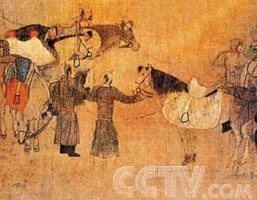
photo ( L ): mural painting of ancient 契丹 Khitan horshmen
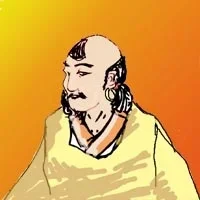
photo ( R ): hair style of ancient 匈奴 Mongol Xiongnu
 

Attachments

  • Img240124316.webp
    Img240124316.webp
    34.8 KB · Views: 203
  • mongoru.webp
    mongoru.webp
    6.6 KB · Views: 246
Back
Top Bottom