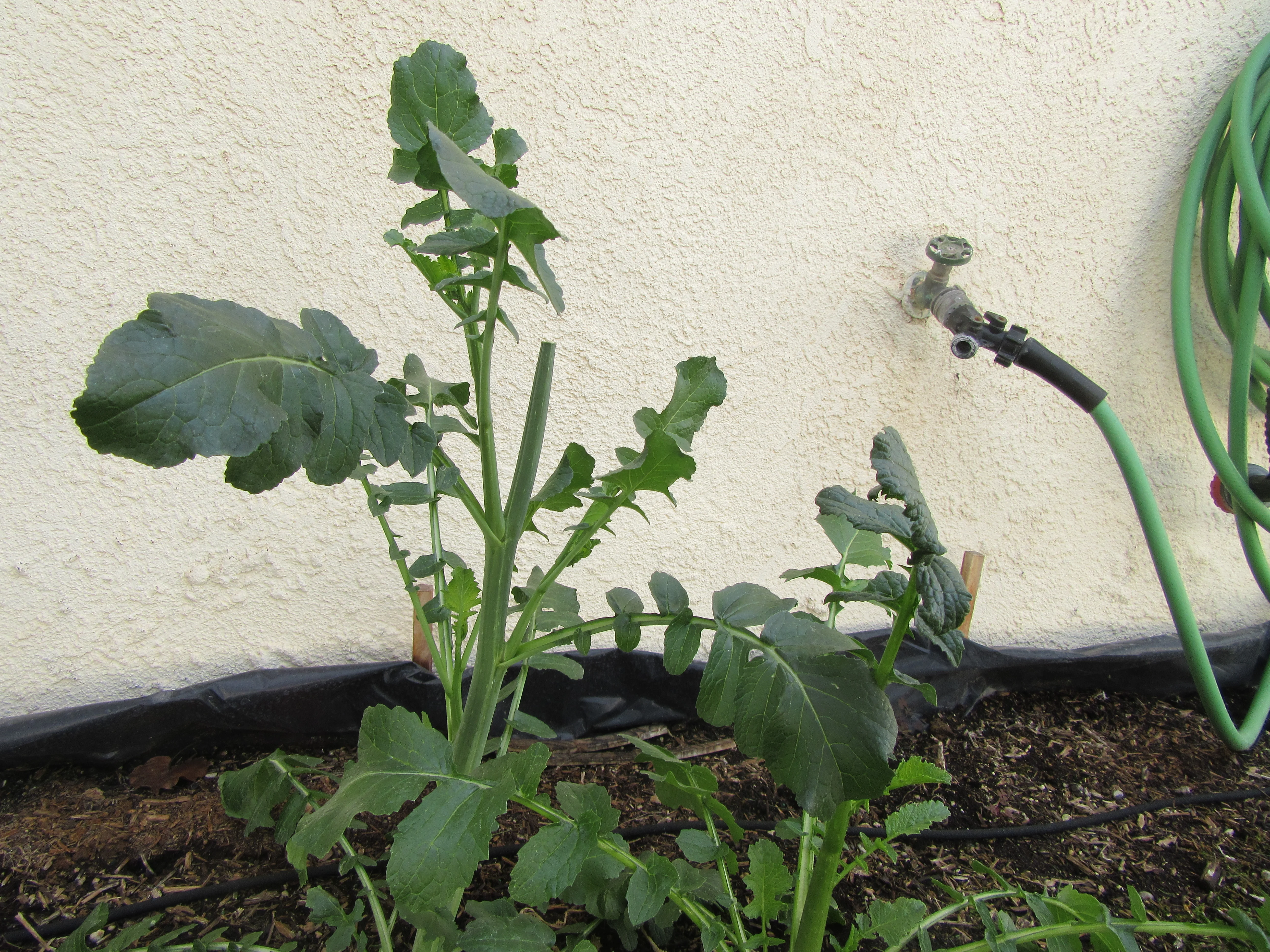
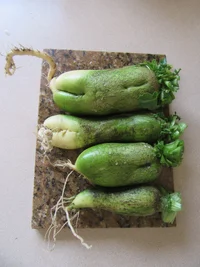
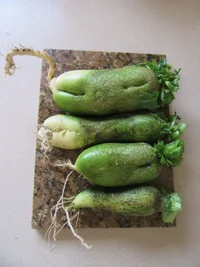
(Japanese Wasabi) What is this plant? Is this even Wasabi at all? How/where can I get real Japanese Wasabi seeds?

JT303

Kouhai
Joined
17 May 2025
Messages
34
Reaction score
40
So, I'm not sure if I should post this here or Gastronomy. Gardening question.
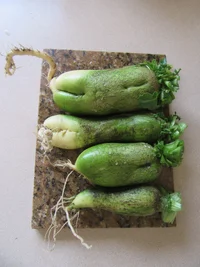
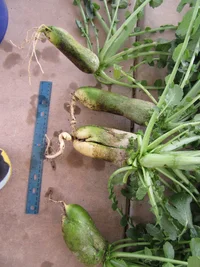
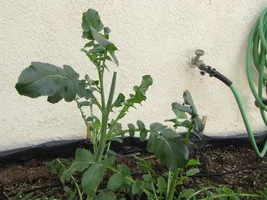
I wanted to grow some Japanese Wasabi to make some fresh, from my own garden. I thought I was buying Japanese Wasabi but every time I got this (whatever it is). I think this may be Chinese Wasabi or something like that. I knew pretty early on that it is NOT Japanese Wasabi. I bought the seeds from an Etsy seller. 3 packets of seeds from 3 different Etsy sellers actually, and all 3 are the same kind. This stuff, whatever it is. I put a dollar bill next to it for reference.
I'm curious to know if anyone can tell me what this is? I'm going to harvest them next week, (as they have begun flowering).
I get the sense Japanese wasabi seeds are hard to get, more expensive. Most sellers on Etsy, eBay, Amazon are selling some other kind of seed as "Japanese Wasabi". Real Japanese Wasabi is expensive, and for very good reason.
Any info on where to get the real Japanese Wasabi seeds would be welcome.
Also, does anyone know what this is? These photos were taken at just over 13 months since germination. Flowers began developing last week, so I topped them off. $1 bill for scale.
IMG_2956.webp
IMG_2957.webp
 
Real wasabi is rare even in Japan.

And quite difficult to grow.


well, first off, congratulations on germinating a seed and bringing it all the way to harvest, but I have to agree that what you did grow doesn't look like the Japanese wasabi I've seen... the aerial parts look more like a mustard green or horseradish, and my first impression from the size and way the root is sticking out of the ground reminded me of daikon, one of the few edibles I've been able to grow on my own. The color of the root is darker than daikon though, so some other kind of radish or horseradish seems likely? You'll find out soon enough!

I went to the Izu peninsula last December and visited a very nice waterfall called Jōren no Taki, and they grow wasabi there. Actually, that area is known for its wasabi, and we saw several farms along the trip. Jōren no taki and the michi no eki (road stations/rest areas) sold all kinds of wasabi-infused or related goods, though I wasn't looking for seeds. The purity and temperature of the water is really important, as my foodie friend informed me. The wasabi fields looked like they were flooded like rice fields; I'm not sure if it's to keep pests away, or if there's some other advantage. Here's a photo I found of the lower field, it pretty much looked like this when I visited. Note the leaf shape.
RIMG8519-e1550988497365.jpg


here's video someone made of their visit to the falls, and you get a little idea of what's there


from a travel blog i found about the area, talking about the cultivation methods they use there.
The cultivation method of water wasabi, such as the "Tatamiseki method" developed in Shizuoka Prefecture, which is still handed down today, was developed in the mid-Edo period by Kanshiro Itagaki, a shiitake mushroom cultivator, who took great pains to successfully propagate the plant. It is said that the cultivation of Amagi wasabi began. Amagi is a volcano that erupted hundreds of thousands of years ago. Because the mountain is made of porous volcanic rock, a large amount of rainwater seeps into the mountain body, and at the foot of the mountain, underground water at the perfect temperature for wasabi cultivation gushes out in abundance.
 
How To Grow Wasabi | Seeds | Seedlings | Harvest | Propagate

AI-Generated Answer:

🇺🇸 How to Grow Wasabi at Home in the United States
Wasabi (Wasabi japonica) is a delicate plant that naturally grows in cool, shaded mountain streams in Japan. It can be grown at home in the U.S., but success depends heavily on controlling temperature, sunlight, and moisture.
🌿 Basic Requirements
Wasabi needs a very specific environment:
Temperature: 50–68°F (10–20°C)
Light: Indirect light (shade or filtered sunlight)
Water: Constant moisture with good drainage
Humidity: Moderate to high
Airflow: Good ventilation to prevent disease

👉 The biggest challenges in the U.S. are heat and dryness.
🪴 Method 1: Container Growing (Best Option)
This is the most practical method for most U.S. gardeners.
Why it works:
Easier to control temperature
Can move plants indoors during extreme weather
Better control over watering
Steps:
Use a deep pot with drainage holes
Fill with well-draining soil (potting mix + perlite)
Plant seedlings shallowly (top of rhizome slightly exposed)
Place in a shaded area (patio, balcony, or under trees)
Keep soil consistently moist, but not soggy
👉 Move the plant indoors or into a cooler area during hot summer days.
💧 Method 2: Semi-Hydroponic Growing (Advanced)
This method mimics natural stream conditions.
Key points:
Use gently flowing or circulating water
Maintain water temperature around 59°F (15°C)
Simple setup:
Container with gravel or stones
Small water pump for circulation
Keep in a shaded, cool location
👉 Avoid stagnant water to prevent root rot.
🌎 Regional Tips in the U.S.
☀️ Warm Regions (California, Texas, Southern States)
Too hot for wasabi → grow in shade or indoors
Use shade cloth (50–70%)
Cooling is essential
🌲 Mild, Cool Regions (Oregon, Washington)
Ideal climate → can grow outdoors
These areas even support commercial wasabi farms
❄️ Cold Regions (New York, Midwest)
Winters are too cold → use indoor growing or a greenhouse
Protect from freezing temperatures
⚠️ Common Mistakes
Too much direct sunlight → leaf burn
High temperatures (above 75°F / 24°C) → stress or death
Dry soil → plant decline
Poor drainage → root rot
⏳ Harvest
Takes about 18–24 months
Harvest when the rhizome becomes thick
Leaves and stems are also edible
✅ Summary

To successfully grow wasabi in the U.S.:
👉 Keep it cool, shaded, moist, and well-ventilated
The key challenge is managing summer heat, so container growing with the ability to move the plant is the most reliable strategy.
 
And quite difficult to grow.


Yeah, I grew it in winter but started them indoors where it's air conditioned. I actually saw that same video before about a year ago when I researched planting, watering, growing time, season, etc. (It was a good video.) I grew them on the north side of the house, and it is pretty cold there most of the time, night, morning, for 5 months out of the year. It sometimes dips to freezing for an hour or so every now and then but not much lower. I know it's far from ideal here, but I did get the timing and temp differentials to the best conditions available. I guess harvest is right before flowering (flowering process always affect flavor, any plant), 12 to 16 months duration. They did grow very well, I harvested them.
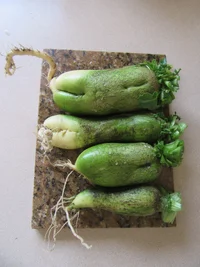
I did figure out what it was and feel very stupid for not getting this sooner. It was listed as Japonica on Etsy...
Diakon Radish!!!!!!IMG_2965.webpIMG_2962.webp
 
well, first off, congratulations on germinating a seed and bringing it all the way to harvest, but I have to agree that what you did grow doesn't look like the Japanese wasabi I've seen... the aerial parts look more like a mustard green or horseradish, and my first impression from the size and way the root is sticking out of the ground reminded me of daikon, one of the few edibles I've been able to grow on my own. The color of the root is darker than daikon though, so some other kind of radish or horseradish seems likely? You'll find out soon enough!

I went to the Izu peninsula last December and visited a very nice waterfall called Jōren no Taki, and they grow wasabi there. Actually, that area is known for its wasabi, and we saw several farms along the trip. Jōren no taki and the michi no eki (road stations/rest areas) sold all kinds of wasabi-infused or related goods, though I wasn't looking for seeds. The purity and temperature of the water is really important, as my foodie friend informed me. The wasabi fields looked like they were flooded like rice fields; I'm not sure if it's to keep pests away, or if there's some other advantage. Here's a photo I found of the lower field, it pretty much looked like this when I visited. Note the leaf shape.
View attachment 135991

here's video someone made of their visit to the falls, and you get a little idea of what's there


from a travel blog i found about the area, talking about the cultivation methods they use there.

It was a Diakon Radish ; )IMG_2965.webp
 
How To Grow Wasabi | Seeds | Seedlings | Harvest | Propagate

AI-Generated Answer:

🇺🇸 How to Grow Wasabi at Home in the United States
Wasabi (Wasabi japonica) is a delicate plant that naturally grows in cool, shaded mountain streams in Japan. It can be grown at home in the U.S., but success depends heavily on controlling temperature, sunlight, and moisture.
🌿 Basic Requirements
Wasabi needs a very specific environment:
Temperature: 50–68°F (10–20°C)
Light: Indirect light (shade or filtered sunlight)
Water: Constant moisture with good drainage
Humidity: Moderate to high
Airflow: Good ventilation to prevent disease

👉 The biggest challenges in the U.S. are heat and dryness.
🪴 Method 1: Container Growing (Best Option)
This is the most practical method for most U.S. gardeners.
Why it works:
Easier to control temperature
Can move plants indoors during extreme weather
Better control over watering
Steps:
Use a deep pot with drainage holes
Fill with well-draining soil (potting mix + perlite)
Plant seedlings shallowly (top of rhizome slightly exposed)
Place in a shaded area (patio, balcony, or under trees)
Keep soil consistently moist, but not soggy
👉 Move the plant indoors or into a cooler area during hot summer days.
💧 Method 2: Semi-Hydroponic Growing (Advanced)
This method mimics natural stream conditions.
Key points:
Use gently flowing or circulating water
Maintain water temperature around 59°F (15°C)
Simple setup:
Container with gravel or stones
Small water pump for circulation
Keep in a shaded, cool location
👉 Avoid stagnant water to prevent root rot.
🌎 Regional Tips in the U.S.
☀️ Warm Regions (California, Texas, Southern States)
Too hot for wasabi → grow in shade or indoors
Use shade cloth (50–70%)
Cooling is essential
🌲 Mild, Cool Regions (Oregon, Washington)
Ideal climate → can grow outdoors
These areas even support commercial wasabi farms
❄️ Cold Regions (New York, Midwest)
Winters are too cold → use indoor growing or a greenhouse
Protect from freezing temperatures
⚠️ Common Mistakes
Too much direct sunlight → leaf burn
High temperatures (above 75°F / 24°C) → stress or death
Dry soil → plant decline
Poor drainage → root rot
⏳ Harvest
Takes about 18–24 months
Harvest when the rhizome becomes thick
Leaves and stems are also edible
✅ Summary

To successfully grow wasabi in the U.S.:
👉 Keep it cool, shaded, moist, and well-ventilated
The key challenge is managing summer heat, so container growing with the ability to move the plant is the most reliable strategy.

IMG_2965.webpIMG_2957.webp
It was a Diakon Radish.
 
I thought wasabi roots were knobbly and they grew in very clean mountain streams?

The samurai who originally commissioned this wakizashi seems to have been a fan of wasabi!
View attachment 135995
Well, they can and do. Sort of. It's more like a swamp or a rice paddy. It can also be grown in fields if the irrigation is correct and the water temperature is cold enough. I did a ton of research before growing these. A single root goes for up to $100 US if its good quality. That's why I wanted to grow my own, not for profit, but to try it out. It was a Diakon Radish, that's still a Japanese radish at least.
IMG_2965.webp
 
View attachment 136024Well, they can and do. Sort of. It's more like a swamp or a rice paddy. It can also be grown in fields if the irrigation is correct and the water temperature is cold enough. I did a ton of research before growing these. A single root goes for up to $100 US if its good quality. That's why I wanted to grow my own, not for profit, but to try it out. It was a Diakon Radish, that's still a Japanese radish at least.
View attachment 136021
I've been doing the same thing with the 'Glastonbury Thorn' which are sold by a few growers for over a hundred pounds-an unreasonable amount in my opinion. It involves grafting onto root stock and it's worked rather well. I want to give them to my friends and maybe sell them at the price I buy the root stock (about £10).
20260308_171731.webp
 
Does knobbly wasabi look tasty? Is it actually tasty? 😉

I'm guessing you know the legends surrounding Glastonbury, or 'Holy' Thorn?
 
The Knights Who Say 'Ni!' were ambiguous about the nature of 'shwubberwee' they required.

It is written, that the Glastonbury Thorn originated from the staff that Joseph of Arimathea stuck into the ground of Wearyall Hill in Somerset. It overlooks Glastonbury. It immediately rooted and bloomed. It is called the holy thorn because it flowers twice a year, once at Christmas and at Spring as is usual. Joseph of Arimathea ultimately provided the tomb for Jesus's body after his crucifixion and some legends suggest he actually brought a teenage Jesus to Glastonbury on that occasion (hence the lyrics to the hymn, 'Jerusalem') This rare hawthorn (Crataegus monogyna 'Biflora') is linked to the Holy Grail and symbolises the origin of British Christianity.

It is actually the F1 plant (short for 'filial 1') of the first-generation offspring produced by intentionally cross-pollinating two distinct, genetically uniform stable parent plants. F1's tend to produce few, infertile seeds that will not germinate, hence the need to graft onto rootstock to propagation.
 
Back
Top Bottom