Question Do YOU read the subtitles (字幕版) of foreign movies?

LTDAN

後輩
Joined
11 Jan 2026
Messages
15
Reaction score
13
When you purchase a DVD (either Blu Ray or 4K) of let's say a Hollywood title in Japan, on the back lists two options for audio: Japanese or English (same for subtitles) meaning there is Japanese dubbing (I don't really like dubs of non Japanese media, especially in a Western settting). Do you watch Western movies with Japanese dub or retain the original audio enabling Japanese subtitles instead? Me personally, I don't change the audio mainly relying on subtitles but sometimes there are translation mistakes bound to happen as the dialog from the original dub differs from what the subtitles convey or that word choices are adjusted if the original dialog has a ton of slang.

For instance, I was watching 24 and there's a glaring mistranslation from the subtitles (日本語字幕) during one of the second last episodes of the fifth season: in that scene where Jack Bauer contacts the last surviving sailor on the submarine via radio, the rank of that sailor was incorrectly translated in the subtitles. The original dialog was something alongst the lines of: "Petty Officer Rooney, can you hear me?" but the sailors rank was lazily subtitled as 軍曹 (which is a sergeant in the army) when the visual context via the rank insignia doesn't reflect that (clearly his uniform displays the Petty Officer rank) when a correct translation should be closer to 兵曹長.
 
I do just because the diction and audio is unintelligible these days 👴🏽

I never used to listen to dubbed-in-English Japanese films (I'm by no means fluent in Japanese and require considerable translations), but I noticed I was missing the actor's facial expressions and other subtle acting nuances whilst reading. So, I turned them on and, other than the American accents (the neutral British 'accents only', please😐), I found it was like…adding aji-in-moto to bland food! It opened up and enriched the story telling for me. Surprisingly, it improved my Japanese too; I'd hear an English expression and think, 'I wonder how you say that in Japanese', rewind a little, turn back to Japanese audio and Japanese subtitles and find out! 🤓 Occasionally, I become irritated by what I deem are inappropriate, inaccurate translations and shout at the screen (other cinema goers don't like that) but generally I quite like the English dubbing together with those seamless AI lip movement manipulations. I sometimes watch really good films again in the original Japanese with English subtitles just to get the original perspective.
 
I sometimes watch really good films again in the original Japanese with English subtitles just to get the original perspective.
I'm mainly talking about the reverse: original movies in English with Japanese subtitles and the translations of those can be weird sometimes but depending on the genre of the movie, there are hard words (in Kanji) from films that dive into medicine, politics, military or crime for example as they have specific terminology within those frields. Recently I was watching 眼下の敵 (The Enemy Below) which is a WWII movie from the 50s enabling 日本語字幕, the subtitles in nihongo from that can be difficult due to the usage of either military & naval jargon.
 
Last edited:
I'm mainly talking about the reverse: original movies in English with Japanese subtitles
Oh I see! 🙏🏽
and the translations of those can be weird sometimes but depending on the genre of the movie, there are hard words (in Kanji) from films that dive into medicine, politics, military or crime for example as they have specific terminology within those frields.
You mean like Kakō dai-dōmyaku (no bunki) = 下行大動脈(の分岐), bifurcation of the descending aorta? They always get that one wrong 😑😉
Recently I was watching 眼下の敵 (The Enemy Below) which is a WWII movie from the 50s enabling 日本語字幕, the subtitles in nihongo from that can be difficult due to the usage of either military & naval jargon.
I practise an old sword art and I sometimes use words and phrases from it with my Japanese sanshin playing friends and, at times, they really make them laugh!
 
You mean like Kakō dai-dōmyaku (no bunki) = 下行大動脈(の分岐), bifurcation of the descending aorta? They always get that one wrong 😑😉
Another translation mistake I recently just encountered was from clear & present danger (今そこにある危機) where the scene involving a commander giving orders to special forces whilst talking in code, it was during a segment where they are intending to blow up a plane full of drugs. The commander ordered his men to "cook it" (which is basically colloquial for saying "blow it up") but the subtitles in Japanese translated this literally into 料理しろ which is just wrong (not even close) when the visual context of the scene reflects a literal explosive being implanted onto the aircraft then being given the order to press the detonator.

I mean, have you seen translation mistakes from Japanese subtitles whilst watching movies in English?
 
Another translation mistake I recently just encountered was from clear & present danger (今そこにある危機) where the scene involving a commander giving orders to special forces whilst talking in code, it was during a segment where they are intending to blow up a plane full of drugs. The commander ordered his men to "cook it" (which is basically colloquial for saying "blow it up") but the subtitles in Japanese translated this literally into 料理しろ which is just wrong (not even close) when the visual context of the scene reflects a literal explosive being implanted onto the aircraft then being given the order to press the detonator.
I suppose colloquialisms are bound to be difficult to translate. Even into British English, "cook it" is meaningless if you're over the age of 50.
I mean, have you seen translation mistakes from Japanese subtitles whilst watching movies in English?
Ah no. My kanji reading ability is too limited!
 
My kanji reading ability is too limited!
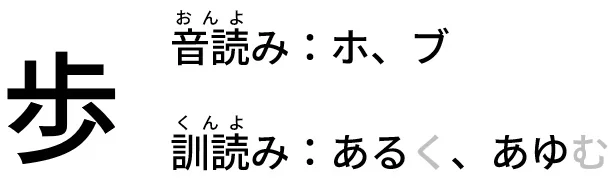
I digress, do you find kanji difficult to handwrite? The hard part is knowing 訓読み & 音読み within a single kanji, like whether it's paired with kana or another kanji. Especially with 日本語字幕 you need to know the correct reading upon first viewing without having to pause every frame. If I recall, the 訓読み reading is considered "Japanese" while 音読み is derivative from Mandarin.
 

Attachments

  • Screenshot 2026-01-26 004004.webp
    Screenshot 2026-01-26 004004.webp
    9.1 KB · Views: 32
I digress, do you find kanji difficult to handwrite?
Oh I just have limited Japanese language ability in general. Since I don't live in Japan or meet regularly with Japanese people with whom to converse, I'm just not very good at speaking. I'm fascinated with kanji and the language but unless I could be immersed in it, I personally wouldn't be able to become accomplished in it.
 
Another translation mistake I recently just encountered was from clear & present danger (今そこにある危機) where the scene involving a commander giving orders to special forces whilst talking in code, it was during a segment where they are intending to blow up a plane full of drugs. The commander ordered his men to "cook it" (which is basically colloquial for saying "blow it up") but the subtitles in Japanese translated this literally into 料理しろ which is just wrong (not even close) when the visual context of the scene reflects a literal explosive being implanted onto the aircraft then being given the order to press the detonator.

I mean, have you seen translation mistakes from Japanese subtitles whilst watching movies in English?
That's lazy translating. Does the Japanese soundtrack have the same error? I think 爆破しろ would be more appropriate.
 
I think 爆破しろ would be more appropriate.
I didn't watch it with Japanese dubbing since I was watching the movie with subs (字幕版), and that was not the only one. There was another scene where the main character was reading a document with one of the lines from the text containing term light infantry (軽歩兵) as the file talks about a military operation in Colombia but the subtitles instead worded this as 歩兵小隊 (infantry platoon) which is different.
 
Last edited:
Back
Top Bottom