News Official romanisation rules to be revised for first time in 70 years

thomas

Unswerving cyclist
Admin
Joined
14 Mar 2002
Messages
21,053
Reaction score
18,906
Gems like "Sibuya" and "Aiti", based on the officially approved Kunrei-Shiki rules, will soon be a thing of the past:

Japan plans to revise its romanisation rules for the first time in approximately 70 years. The goal is to align the official language transliteration system with everyday usage. As part of this change, the country will transition from the current Kunrei-Shiki rules to the Hepburn rules. For instance, the official spelling of the central Japan prefecture of Aichi will replace the current Kunrei-Shiki rendering of "Aiti". Similarly, the famous Tokyo shopping district known worldwide as Shibuya will be officially presented as "Sibuya" under the new rules.

The Hepburn system, which more accurately reflects English pronunciations, has been widely used in society and official contexts. Despite the Cabinet's decision in 1954 to adopt the Kunrei-Shiki rules in principle, Hepburn has remained prevalent, appearing on passports, road signs, and other official documents. This revision aims to streamline the romanization system and make it more intuitive for residents and visitors. It acknowledges the practical preference for Hepburn, which has persisted over the years.
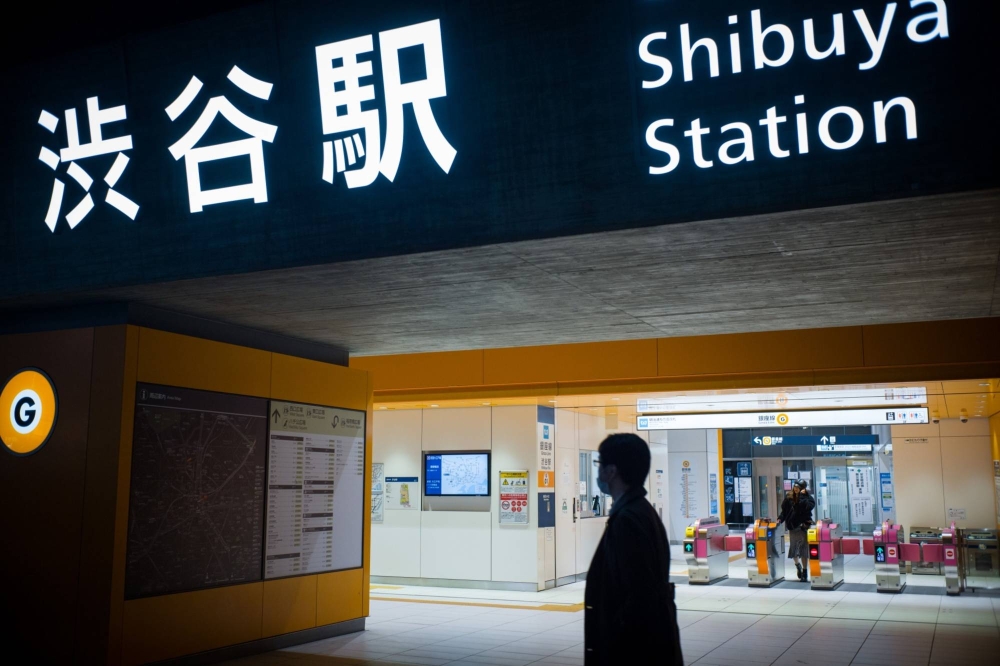

 
I don't know about that article...

Shibuya will be officially presented as "Sibuya"
... not if they're moving away from Kunrei-Shiki it won't.

On a serious note though, it's about time. Kunrei-Shiki was unloved and mostly unused, except for those poor souls forced to use it for "educational reasons". In principle it makes sense, it's a better correspondence to the kana tables, but in practice it's used almost entirely to communicate Japanese pronunciation to foreigners who couldn't care less about the kana and already speak English, English being a big multinational language in its own right, and an extremely common 2nd language.

If it were used only for serious students of Japanese (who almost all immediately learn kana anyway), or if Japan wanted to move to using a roman alphabet natively (not happening), then Kunrei-Shiki would make all kinds of sense, but not for its actual use of communicating name pronunciations to foreigners.
 
Last edited:
I think the textbook my school used when I was first learning Japanese used the textbook in the link below. I'm pretty sure that it used the kunrei-shiki romanization. That's the only place I think I've ever personally encountered that system. The book is not bad for learning how to speak Japanese as long as you were religious about using the audio tapes, but it doesn't address reading or writing Japanese at all.

 
The Agency for Cultural Affairs is seeking public input on proposed changes to the official romanisation rules for the Japanese language, a revision not undertaken in nearly 70 years.

A subcommittee of the Council for Cultural Affairs, an advisory panel, has recommended the adoption of the Hepburn romanisation system as the primary standard. Developed by American missionary James Curtis Hepburn in the late 19th century, the Hepburn system utilises spellings resembling English pronunciation. It has gained widespread use in Japan, appearing on various signage, including station, road, and passports.

The Kunrei-shiki system, initially established in 1937, is officially recognised as the standard romanisation system under a 1954 Cabinet notification. It emphasises regular combinations of consonants and vowels. The Ministry of Education's curriculum guidelines currently prioritise the teaching of Kunrei-Shiki in elementary schools. The Agency for Cultural Affairs's public consultation aims to gather feedback on the proposed shift towards the Hepburn system.

Romanization


While the advisory panel's revision plan is based on Hepburn, the council proposed specific differences. In Hepburn, a long vowel sound is often indicated with a macron ( ¯ ), or it may not be accompanied by any diacritic. The revision plan calls for adding a macron as a standard practice but allows for using a combination of two vowels instead.


For example, "okami" (wolf) would be written as "ōkami" or "ookami."

The latter option was included because adding a macron on electronic devices may be burdensome.

Hepburn uses "m" if the consonant "n" is followed by "b," "m" or "p," as in "shimbun" (newspaper).

However, the revision plan calls for using "n" as a standard practice.

Agency officials said they will not request immediate changes to the proposed romanisation system.

The revision plan allows for the use of no diacritic for a long vowel, as in "judo," or the addition of "h," as in "Ohtani," for the Los Angeles Dodgers star. Both are widely used internationally.

In addition, Nihombashi, a district of Tokyo, has long been spelt with "m" instead of "n," although the consonant is followed by "b."

Agency officials emphasised they have no intention of determining that the proposed romanisation system is better than other popular methods.


Yesterday, the Agency for Cultural Affairs presented education minister Abe Toshiko with a proposal to revise the government's system of romanising Japanese, marking the first significant change in seven decades. The agency suggests abandoning the long-standing Kunrei system in favour of the more commonly used Hepburn style. If approved within the current fiscal year, the shift will be phased in through textbooks and other official materials.

Under the Kunrei system, codified by Cabinet notification in 1954, phonemes for ち and ふ are written as ti and hu. Most Japanese schools still teach the style in romanization studies. But the Hepburn system, which renders them as chi and fu, has become dominant both in Japan and abroad, making the impact of the change likely most evident in educational materials such as school textbooks. The council's recommendation also adopts Hepburn spellings for し, じ and つ as shi, ji, and tsu, compared to the Kunrei spellings of si, zi and tu. It specifies that double consonants, as in てっぱん, should be written by repeating the consonant, while long vowels such as in かあさん can be indicated with either a macron (kāsan) or doubled letters (kaasan).

Personal and organisational names will be left to the preference of individuals and entities concerned.

 
ふうううううう!

I can do these, ø é ç π ¬ ∆ © ƒ ∂ ß å Ω ≈ √ ∫ ñ µ œ ∑ ® † , but how do you do macrons?

In the old days, you could backspace, turn the roller/platen slightly, and type a hyphen. Even with capital O.
 
Last edited:
I don't know how to type macrons on a windows pc. Do you have to switch IME keyboards?
 
@thomas I seem to remember an argumentative thread** from several years ago--someone maybe suggesting that japan should abolish all kana and kanji and use only romaji instead.

**(at least I was being sort of prickly there)

Here it is--started in 2017, ended in 2022:

 
That thread was a linguistic massacre, but it made an interesting read. The other classic was much more civilised:

 
It is interesting to know Japan has a department that attends to such matters and very reasonably too.

My other half is Burmese which has the devil's own language. I cant even pronounce the words and it seems to be devoid of consonants transliteration into the English alphabet are problematic and who ever is deciding how that is done requires a slap! For example, her brother's name, transliterate into the English alphabet is 'Kyaw'. Try saying it.

It actually sounds like 'Jaw'! 🤷🏾‍♂️ Who decided that? Who? WHO?😡
 
...Burmese ...
I can't write it any more, but "buhma-zaga na lei the la, k'm-ya?"

Burmese is a good example to study tonogenesis, the development of tones. The final consonants, having all but disappeared influencing tone. It's kind of like in english 'back' and 'bag'. Same initial consonant and vowel, but in the first the pitch (tone) of the vowel is higher and shorter due to the unvoiced final; in 'bag' the vowel is lower and longer, even with a kind of falling tone, due to the voiced final. Also unusual are the aspirated nasals: something like hna, hma, and hnga. Not hard, just unusual.

I took a semester as an introduction ('78?), used a beginner's book by Cornyn & Roop. Also a semester of Tibetan. The language families in that area are sometimes tagged as Sino-Tibetan, other times the alignment is Tibeto-Burmese. There's some Indian influence, the numbers 1, 2, and 3 are something like ti', hni', and thown but I've lost the rationale for linking those to Indo-European. Burmese script is Indian derived, with pretty obvious influence from Pali or the older Sanskrit (Tibetan, too). Also, if you know Korean Hangul, I'd say that King Sejong to those or similar scripts when developing the Korean writing system.
 
I can't write it any more, but "buhma-zaga na lei the la, k'm-ya?"

Burmese is a good example to study tonogenesis, the development of tones. The final consonants, having all but disappeared influencing tone. It's kind of like in english 'back' and 'bag'. Same initial consonant and vowel, but in the first the pitch (tone) of the vowel is higher and shorter due to the unvoiced final; in 'bag' the vowel is lower and longer, even with a kind of falling tone, due to the voiced final. Also unusual are the aspirated nasals: something like hna, hma, and hnga. Not hard, just unusual.

I took a semester as an introduction ('78?), used a beginner's book by Cornyn & Roop. Also a semester of Tibetan. The language families in that area are sometimes tagged as Sino-Tibetan, other times the alignment is Tibeto-Burmese. There's some Indian influence, the numbers 1, 2, and 3 are something like ti', hni', and thown but I've lost the rationale for linking those to Indo-European. Burmese script is Indian derived, with pretty obvious influence from Pali or the older Sanskrit (Tibetan, too). Also, if you know Korean Hangul, I'd say that King Sejong to those or similar scripts when developing the Korean writing system.
I'll show her this and then deride her silly language once again! 😈
 
Yesterday, the Agency for Cultural Affairs presented education minister Abe Toshiko with a proposal to revise the government's system of romanising Japanese, marking the first significant change in seven decades. The agency suggests abandoning the long-standing Kunrei system in favour of the more commonly used Hepburn style. If approved within the current fiscal year, the shift will be phased in through textbooks and other official materials.


Personal and organisational names will be left to the preference of individuals and entities concerned.

Having learned Japanese using mostly Hepburn, it threw me for a loop when Japanese people seemed to use a different way to romanize their language. It only first appeared when I watched my Japanese friends type, and took me a while to understand what was really going on. At first, it was novel to me to use these keyboard "shortcuts" to get the IME to produce the correct characters, and on a keyboard it gave me access to characters that I hadn't unlocked using Hepburn. Especially since I chose to use ヂ instead of ジ when writing my name, which was no problem with a pen or tenkey/touchscreen entry but a pain in the butt with a keyboard, I found myself using a mixture of Hepburn and Kunrei when typing, often just choosing which convention to use based on what was the easiest to type in the moment.

But while Hepburn and Kunrei were--to me--simply a means to an end (using a latin keyboard with IME to get to Japanese characters), I noticed that my Japanese friends had essentially gone the other way, learning how to romanize their own language mostly using Kunrei, which... kinda warped their perception of how consonants work in English. This misapprehension of phonetics would then spill into their English and other foreign language studies, and cause some predictable and consistent errors in usage.

Having just gotten back from a trip to three different European countries (Czechia, Austria and Hungary) that each use their own "fancy" or "enhanced" versions of latin characters to write their native languages (i.e. this is how they write their own language, it's not a romanization for a different script), my mind is awash with a new barrage of phonological rules that I have yet to properly study.

Hepburn uses "m" if the consonant "n" is followed by "b," "m" or "p," as in "shimbun" (newspaper).

However, the revision plan calls for using "n" as a standard practice.

Agency officials said they will not request immediate changes to the proposed romanisation system.

The revision plan allows for the use of no diacritic for a long vowel, as in "judo," or the addition of "h," as in "Ohtani," for the Los Angeles Dodgers star. Both are widely used internationally.

In addition, Nihombashi, a district of Tokyo, has long been spelt with "m" instead of "n," although the consonant is followed by "b."

Agency officials emphasised they have no intention of determining that the proposed romanisation system is better than other popular methods.
This is my only quibble with the revisions, as using an "m" where it is phonetically appropriate is actually more accurate and improves the reader's pronunciation of the word even if they don't speak Japanese. We've gone over the various ways that the /N/ phoneme ん is realized in other threads. I used to try to stick to using 'n' always for consistency's sake, but these days I change my romanization to be more phonetically accurate.
 
OH-tani (Otani, Ootani, Outani, Ōtani) can keep his "OH."

Regardless of whether they are celebrities or not, people will not be required to immediately alter their name spellings to align with the Hepburn style. The council report states that "in reality, various spellings are used" for proper nouns, suggesting a certain level of acceptance of diversity.

 
This is my only quibble with the revisions, as using an "m" where it is phonetically appropriate is actually more accurate and improves the reader's pronunciation of the word even if they don't speak Japanese. We've gone over the various ways that the /N/ phoneme ん is realized in other threads. I used to try to stick to using 'n' always for consistency's sake, but these days I change my romanization to be more phonetically accurate.
I can't count how many times I've had arguments online with young people in particular who would consistently say 'sanpo' or similar for words they hadn't heard many times. I tried explaining the rules but "It doesn't say 'm' so why should I pronounce it that way?" Consistency is key, and I really think the 'm' helped me a lot when I was studying Japanese.
 
I can't count how many times I've had arguments online with young people in particular who would consistently say 'sanpo' or similar for words they hadn't heard many times. I tried explaining the rules but "It doesn't say 'm' so why should I pronounce it that way?" Consistency is key, and I really think the 'm' helped me a lot when I was studying Japanese.
yeah, I can see both sides of the argument. If the goal is to approximate the writing system of Japanese, using /N/ for all instances of ん is a sensible approach. If the goal is to most accurately approximate the phonetic spelling of the particular word, then the ん can become many different things depending on the following sound; it has so many variants, actually, that the standard alphabet is insufficient to accurately represent the sounds used in Japanese; only the international phonetic alphabet is up to this task, but unless you're looking at a dictionary, nobody is using IPA to write Japanese sentences.

My current stance is: go ahead and spell it however you want, but try to be consistent about it. The thing is, when you're using Romaji, you aren't writing Japanese, so sanpo and sampo are both equally right and wrong, in a sense. Just learn kana and kanji and don't look back.
 
My current stance is: go ahead and spell it however you want, but try to be consistent about it. The thing is, when you're using Romaji, you aren't writing Japanese, so sanpo and sampo are both equally right and wrong, in a sense. Just learn kana and kanji and don't look back.
That's been my opinion, too, but a lot of the people I've spoken to don't think they need it. And to be completely honest they don't because once the initial infatuation has died down, most of them don't take it much further. It is sigh-inducing, however, to hear an entire community insisting that I am wrong simply because their peers say so - their peers who, incidentally, have never studied Japanese either. Watching anime for 5 years does help some things but it does not make you immune to mistakes. Ah, well..
 
Back
Top Bottom