Business 7-Eleven owner eyes potential record-breaking buyout by Canadian giant

thomas

Unswerving cyclist
Admin
Joined
14 Mar 2002
Messages
21,050
Reaction score
18,904
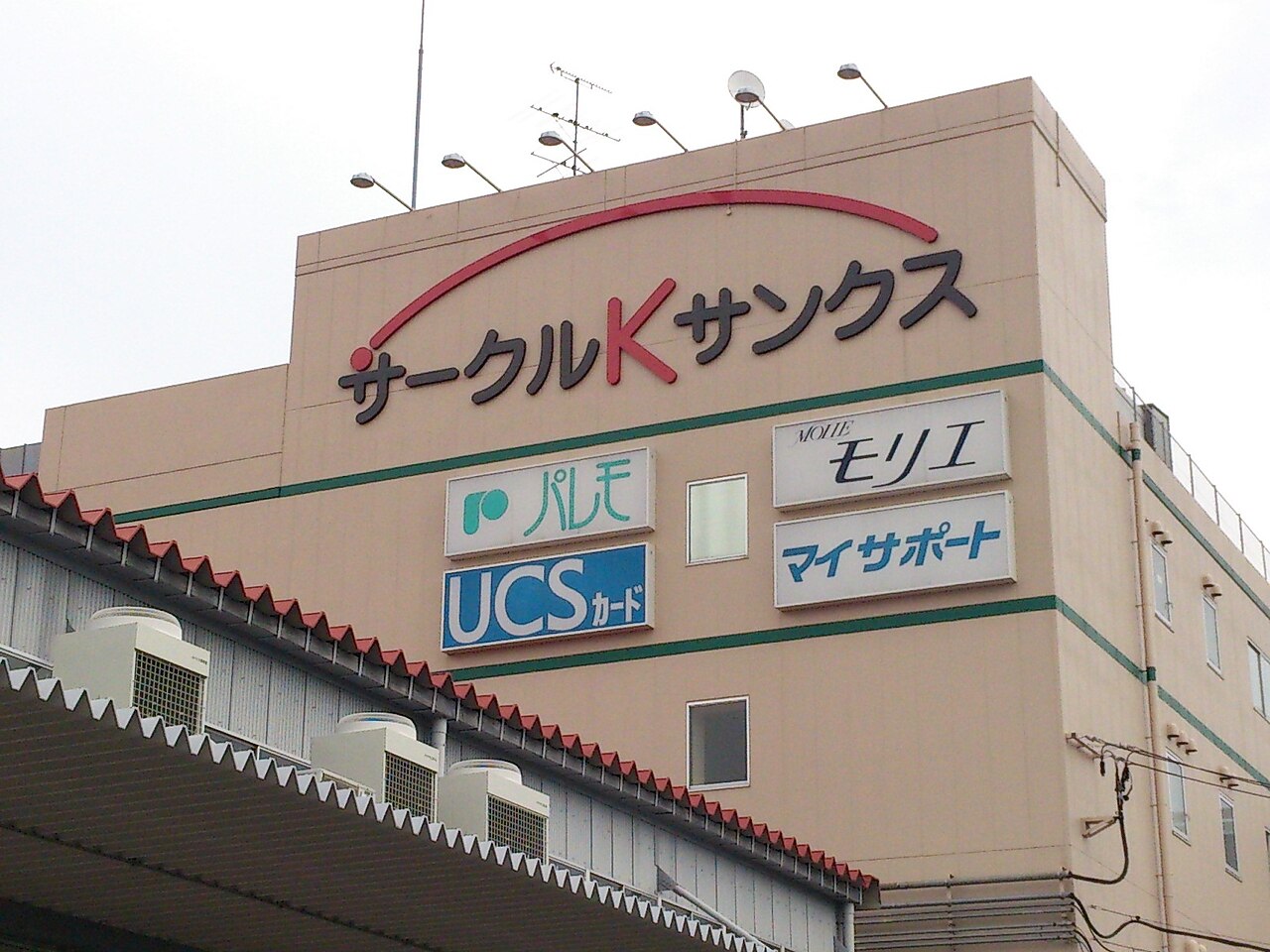
Seven & i Holdings, the company behind the ubiquitous 7-Eleven convenience stores, is considering a takeover proposal from Alimentation Couche-Tard, the Canadian owner of Circle K. This potential deal could mark the largest-ever foreign acquisition of a Japanese company. According to sources familiar with the situation, Seven & i has formed a committee of independent directors to analyze the offer, particularly its valuation. This follows Seven & I's confirmation on Monday that they received a "confidential, non-binding, and preliminary proposal" from Alimentation Couche-Tard to acquire all outstanding shares of the company. They also established a special committee to review this proposal thoroughly.
7-eleven.webp


Seven & i's market capitalization was approximately 4.6 trillion yen ($31.5 billion) as of Friday. If the Canadian company ends up buying 100% of Seven & i, the deal would require at least 5 trillion yen. Such an acquisition would be the largest of a Japanese company by a foreign one. After Nikkei's report, Seven & i's stock price surged on Monday, closing up 23% at 2,161 yen, hitting the upper end of its intraday trading limit and taking its market capitalization to 5.6 trillion yen. [...] However, Alimentation Couche-Tard responded with a statement on Monday, saying the proposal is "friendly" and the company is "focused on reaching a mutually agreeable transaction that benefits both companies' customers, employees, franchisees and shareholders."


Paywall alert:

 
The Japanese strongest convenience store is to be Seicomart.
The convenience store which came first in a customer satisfaction investigation two years in a row before industry giant Seven-Eleven is Hokkaido and is "Seicomart" of the store number first place.
The salted salmon roe rice ball of this convenience store is really delicious.
 
The Japanese strongest convenience store is to be Seicomart.
The convenience store which came first in a customer satisfaction investigation two years in a row before industry giant Seven-Eleven is Hokkaido and is "Seicomart" of the store number first place.
The salted salmon roe rice ball of this convenience store is really delicious.
I had never heard of Seicomart before. If I ever go to Hokkaido , Saitama, or Ibaraki , I'll have to try them!
 
The NYT asked why 7-Eleven is considered a national treasure in Japan.


Japan's largest konbini chain, 7-Eleven, is also its most famous. Understandably, a rival company wants in on the action. This week, Seven & i Holdings, the Japanese company that operates 7-Eleven, said it had received an unsolicited takeover proposal from Alimentation Couche-Tard, a convenience store giant in Canada. The status of 7-Eleven stores as a cornerstone of Japanese society also means Japan probably will not be willing to part with them despite increasing pressure on the nation's corporations to demonstrate openness to foreign-led acquisitions. 7-Eleven is "one of the best brick-and-mortar retail businesses in the world," said Hiroaki Watanabe, an independent retail analyst. Selling 7-Eleven to Couche-Tard would be, for Japan, "equivalent to Toyota becoming a foreign company," he said.


Paywall alert
 
It's ironic since the brand itself originated in America and the brand still exists here. Do people really think it's Japanese?
 
Didn't the Japanese arm buy out the parent company in the US way back in the day?

But, yeah, point made.
Well sure but I would guess 0% of Americans would think that 7-11 is anything but American. In Japan, I don't know. Given the name some Japanese may not think it's fully Japanese.
 
Canadian convenience store operator Alimentation Couche-Tard has sweetened its takeover bid for Japanese retailer Seven & i Holdings, offering a valuation more than 20% higher than its previous proposal, according to sources familiar with the deal. The revised offer, which involves an all-share buyout, would be approximately $47 billion, surpassing the previous valuation of $38.5 billion. If successful, this acquisition would be a foreign entity's largest takeover of a Japanese company. The new offer is valued at $18.19 per share, representing a premium of about 20% compared to Seven & i's closing price of 2,230 yen ($15.03) on the Tokyo Stock Exchange on Tuesday. In July, Couche-Tard proposed acquiring all of Seven's shares for $14.86 per share in cash.


Seven & i's share price jumped 11.77% to 2,492.5 yen ($16.8) at one point following the reports on Couche-Tard's new offer. Seven & i is expected to discuss the new proposal with its special committee, which is made up of independent outside directors, looking at issues such as whether the valuation is appropriate and whether it will lead to long-term growth for the company.


Paywall alert:


Shares in the owner of convenience store giant 7-Eleven jumped on Wednesday after it received a new takeover offer from Canadian rival Alimentation Couche-Tard. Japan's Seven & i Holdings confirmed the new approach but revealed no new details. The announcement came after Bloomberg News reported that the new offer valued the firm at over $47bn (£36bn) - around 20% higher than previously.

 
It seems that the planned buyout is in a quagmire. Seven & i is now considering a management buyout to fend off the Canadian takeover bid.


The founding Ito family is considering a management buyout, while a takeover bid from Canada's Alimentation Couche-Tard looms. The company could also choose to remain independent. If Seven & i opts for a family buyout or independence, it will likely stick to its existing strategy. This involves global expansion, with a target of 100,000 stores in 30 countries by 2030 and a goal of ¥30 trillion in annual sales. A potential acquisition by Couche-Tard would likely lead to collaboration with Circle K, creating the world's largest convenience store chain with nearly 100,000 stores combined.


Paywall alert:
 
Ito family 7-Eleven
The NYT has an interesting piece on why the Ito family resists Alimentation Couche-Tard's takeover bid.

It is a clash of conflicting business cultures: "customers first" vs "shareholders first."

 
I asked ChatGPT the following questions:
Recently, it seems that delisting strategies, such as privatization of stocks, have become more common in Japan to prevent hostile takeovers. Could this pose significant risks to Japan's international credibility?
ChatGPT's answer
Recently, it seems that the strategy of delisting stocks (e.g., management buyouts or privatization) has been increasing in Japan to prevent hostile takeovers. However, this trend may pose significant risks to Japan's international credibility. Below are the reasons and considerations regarding this issue:

1. Background of Delisting Strategies
Defense Against Takeovers
Public companies are more vulnerable to hostile takeovers. By privatizing their stock, management and parent companies can shield themselves from external acquisition risks.

Pursuit of Operational Efficiency
Listed companies face pressure from shareholders and markets to deliver short-term profits. Privatization enables management to focus on long-term strategies without external interference.

Undervaluation in the Market
Many Japanese companies are undervalued in the stock market, which makes it easier for management or parent companies to buy back shares at relatively low prices.

2. Risks to International Credibility
Reduced Transparency
Delisted companies face fewer disclosure requirements, potentially leading to a decline in transparency. This could cause international investors to perceive the Japanese market as less trustworthy.

Investor Withdrawal
Foreign investors and funds prioritize transparency and liquidity. An increase in delistings might push these investors away from the Japanese market.

Decline in Global Competitiveness
If the Japanese market is seen as "closed," it could weaken the competitive position of Japanese firms against global competitors. Moreover, Tokyo's role as an international financial hub may diminish.

3. Impact on the Japanese Market
Perception of Shareholder Neglect
If delisting processes favor management or parent companies disproportionately, minority shareholders may feel neglected. This could erode trust in Japan's equity markets.

Risk of Market Contraction
An increase in delisted companies could reduce investment opportunities, harming the liquidity and overall appeal of the domestic stock market.

4. Countermeasures and Proposals
Strengthening Minority Shareholder Protections
Regulations should ensure fairness in delisting procedures, particularly in terms of pricing and transparency.

Enhancing Market Appeal
Measures to ensure companies are appropriately valued, such as encouraging better engagement between investors and management, are essential to address undervaluation concerns.

Maintaining International Transparency
Even after delisting, companies should adhere to global standards of information disclosure to maintain investor trust and market credibility.

While delisting strategies may stabilize individual companies in the short term, they risk undermining Japan's overall market competitiveness and international trust in the long run. Policymakers must strike a balance between supporting corporate management and preserving the vitality and credibility of Japan's capital markets.
 
On Wednesday, Japan's economy minister, Akazawa Ryosei, said that a potential foreign acquisition of Japanese retail giant Seven & i would be "heavily related" to national security. His public comment is the first by a senior Japanese official regarding security issues raised by Canada's Alimentation Couche-Tard's $47 billion buyout offer.

Seven & i was classified as "core" to Japan's national security in September, raising questions about whether it was a defensive move. The finance ministry said the classification would not create hurdles to a potential buyout. The owner of 7-Eleven convenience stores has rejected Couche-Tard's offer, and the company's founding family is in talks to take it private to fend off the takeover attempt.


Not so different from the planned "U.S. Steel" takeover, then...

Oh, and Seven & i plans to change its name to "7-Eleven Corp." in 2025.
 
On Wednesday, Japan's economy minister, Akazawa Ryosei, said that a potential foreign acquisition of Japanese retail giant Seven & i would be "heavily related" to national security. His public comment is the first by a senior Japanese official regarding security issues raised by Canada's Alimentation Couche-Tard's $47 billion buyout offer.

Seven & i was classified as "core" to Japan's national security in September, raising questions about whether it was a defensive move. The finance ministry said the classification would not create hurdles to a potential buyout. The owner of 7-Eleven convenience stores has rejected Couche-Tard's offer, and the company's founding family is in talks to take it private to fend off the takeover attempt.


Not so different from the planned "U.S. Steel" takeover, then...

Oh, and Seven & i plans to change its name to "7-Eleven Corp." in 2025.
While I don't agree with the blocking of the U.S. Steel sale I can at least see where national security might be impacted. But a convenience store? Is it because there are 7-11's on SDF bases or something? 😆
 
While I don't agree with the blocking of the U.S. Steel sale I can at least see where national security might be impacted. But a convenience store? Is it because there are 7-11's on SDF bases or something? 😆
Close. They are taking the place of koban now apparently. If the Canadians took over they would have to place a mounty at every store.
200.gif
 
At first, I thought it was just nonsense from Minister of Economy, Trade, and Industry Ryosei Akazawa. However, after examining the informational value held by 7-Eleven, I started to feel that it might not be entirely incorrect.

Japanese convenience stores handle a wide range of services beyond customer and purchase data, including utility bill payments, bank ATMs, reservations and payments for various events, refunds for online shopping, and parcel pickups. This suggests they possess significant informational value.

Similarly, 7-Eleven stores in North America might also hold comparable informational value. 🤔
 
Similarly, 7-Eleven stores in North America might also hold comparable informational value.
No I don't think so. Convenience stores in America are nothing special. They don't provide any of the special services that Japan convenience stores do.
But I see your point about the role of 7-11 in Japan.
 
7-11 US has very bad food but is know for their slurpee which you can get for free every July 11. Slurpee is not popular enough to add that much value I think.

Buck-ees is a mega convenice store spreading. We went to the one in Colorado coming back from visiting my father over the holidays. They are building another in Colorado. A huge huge number of gas pumps and very large inside. Americans like their bigger. This is the one I visited:


for me on the road I want to go in and out quickly on the road. Anyway this is a growing convenience store. 7-11 is not.
 
Recently, allegations of "false bottoms" in Seven-Eleven's bento box containers have been circulating on social media, leading to a decline in customer loyalty.
October 26, 2024
Convenience Stores
The controversy over "false bottoms" in bento boxes sparks debate… Toshifumi Suzuki, the founder of Seven-Eleven, says, "I have nothing to do with it!" The business genius reveals his "true feelings" amid the "lone loser" status among the big three chains.
"(Sometimes the media just writes whatever they feel like)," he remarked during an interview.

Toshifumi Suzuki (91), who built Seven-Eleven from the ground up and made it the industry's number one, shared these sentiments.

"Seven's lone struggle is not just because of the 'false-bottom bento' issue. Signs of the king's decline have been evident for nine years." (Daily Shincho, October 16)
"Seven's troubles spark criticism over its 'unfriendly registers.' Complaints of 'elderly-unfriendly' and 'cold service' abound. Why is this happening?" (Toyo Keizai Online, October 24)
"We questioned Seven's president about the 'false-bottom bento' allegations: 'We would never do anything so ruthless. I hope people posting online base their claims on facts.'" (Bunshun Online, October 25)
Recently, articles analyzing Seven-Eleven's decline in customer numbers have been on the rise. The backdrop to this discussion is the company's poor performance. In the interim consolidated results for August 2024, among the three major convenience store chains, Lawson and FamilyMart achieved increased profits compared to the same period last year. However, Seven-Eleven, the largest chain, reported a decline in profits.
The reality of Seven-Eleven's struggles lies significantly in the underperformance of its North American operations. However, customer dissatisfaction with its products has been identified as a key factor driving customer defection.

One such issue is the perception that its products are overpriced. While Lawson and FamilyMart have rolled out campaigns to increase the quantity of their private-label products, Seven-Eleven has focused on premium offerings, exemplified by its "Gold Series." This strategy has cemented the image of Seven-Eleven as "expensive," particularly among younger generations.

Additionally, complaints about packaging tactics have surfaced. These include "false bottoms" in bento boxes to create the illusion of more food and the "hollow front" practice of arranging sandwich fillings toward the visible side of the packaging.

Fumihiko Nagamatsu, President of Seven-Eleven Japan, responded to the "false bottom" allegations in an interview with Bunshun Online, asserting, "We would never engage in such unethical practices."

Meanwhile, social media continues to buzz with diverse analyses of the factors behind customer defection. It's clear that the once-unchallenged king of convenience stores is now facing increased scrutiny and criticism.
 
Back
Top Bottom