


- 14 Mar 2002
- 21,053
- 18,905
In December 2023, ATLA granted limited access to their Iwakuni Maritime Environment Test & Evaluation Satellite (IMETS) facility, where they showcased their experimental XLUUV, the "Long Endurance UUV." This facility in Yamaguchi Prefecture is dedicated to testing and advancing UUVs.
The "Long Endurance UUV," first revealed at DSEI Japan 2023, is an experimental XLUUV constructed by Mitsubishi Heavy Industry (MHI) and is under development by ATLA's Naval Systems Research Center. With Japan's demographic challenges of an ageing population and declining birthrate, there's a growing difficulty in operating unmanned equipment, particularly in training submarine crews and maintaining vessel numbers. Consequently, Japan is intensifying its research and development efforts on UUVs to enhance its underwater defence capabilities in the future potentially.
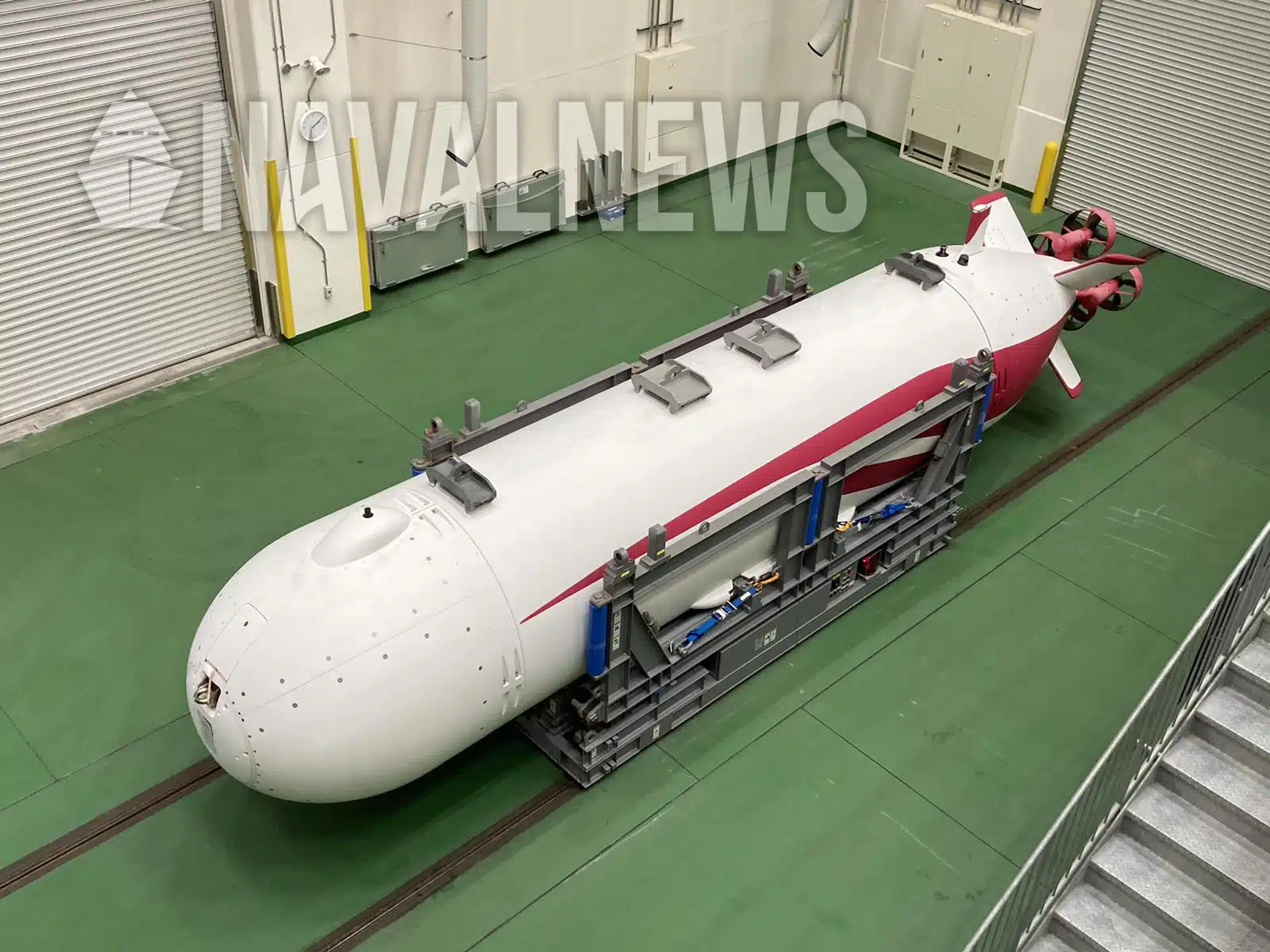
Photo credit: Yoshihiro Inaba
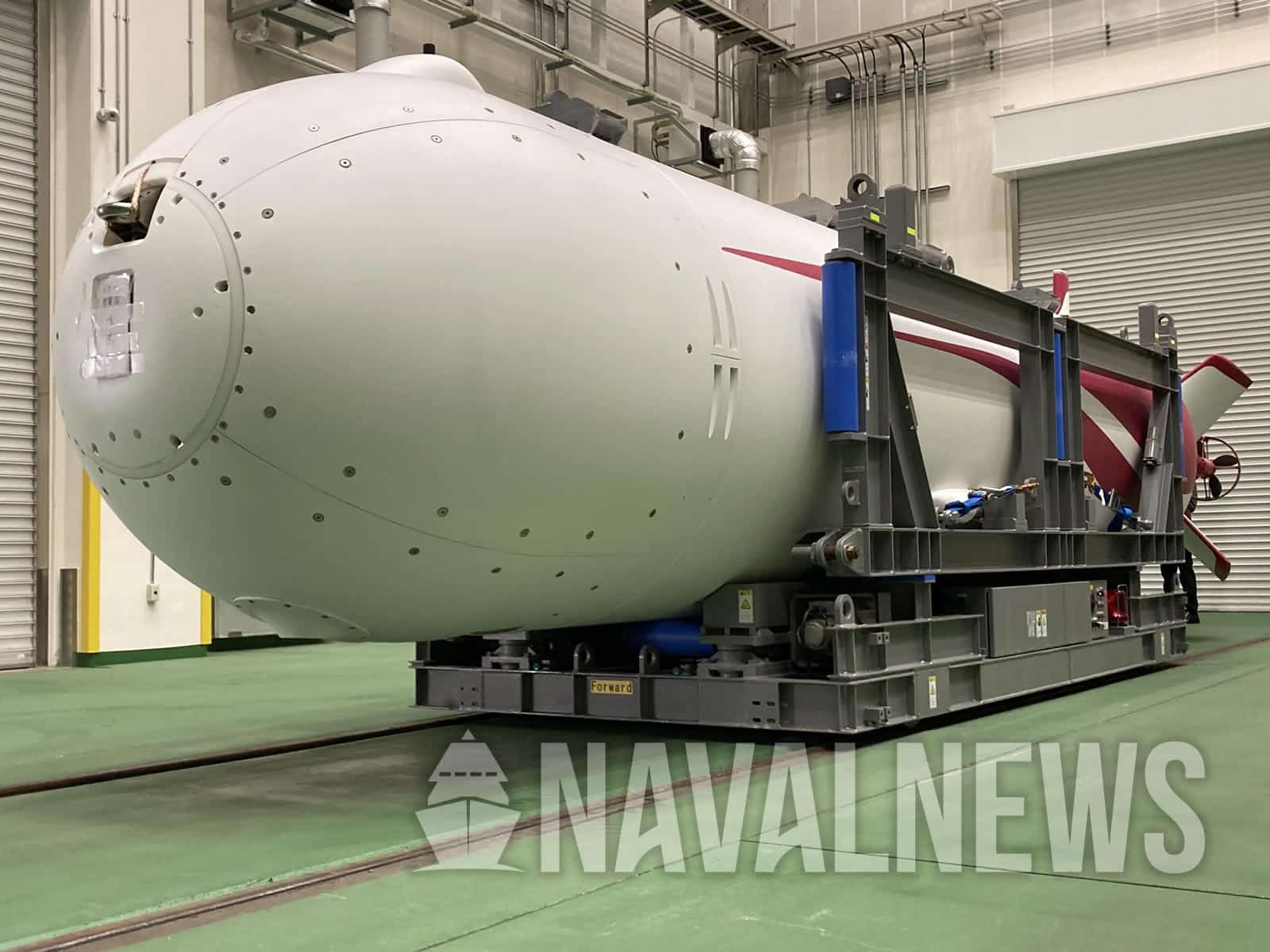
 www.navalnews.com
The "Long Endurance UUV," first revealed at DSEI Japan 2023, is an experimental XLUUV constructed by Mitsubishi Heavy Industry (MHI) and is under development by ATLA's Naval Systems Research Center. With Japan's demographic challenges of an ageing population and declining birthrate, there's a growing difficulty in operating unmanned equipment, particularly in training submarine crews and maintaining vessel numbers. Consequently, Japan is intensifying its research and development efforts on UUVs to enhance its underwater defence capabilities in the future potentially.
Photo credit: Yoshihiro Inaba
As the name "long endurance" implies, this UUV is intended to operate autonomously over a long period of time, and currently, in its basic configuration (10 meters in length), it has achieved a week of continuous operation at 3 to 4 knots. However, this is only a milestone, and ATLA aims to achieve even longer continuous operation. Lithium-ion batteries power the UUV, but ATLA is currently considering using liquid/solid fuel batteries and AIP and diesel-electric engines to achieve a longer cruising range. [...] Additional payload modules are being researched, including an "underwater equipment installation module" to carry heavy payloads such as sensors/communication nodes, an "ocean observation module" to have various oceanographic survey equipment, a "surface launch module" for launching drones or other equipment at the surface, and an "ocean surveillance module" to conduct effective Maritime Domain Awareness(MDA).
Our First Look at Japan's New XLUUV Submarine Drone - Naval News
Japan’s ATLA has showed to Naval News its Extra-large unmanned underwater vehicle (XLUUV), which now is now at R&D phase.
www.navalnews.com


