- 17 Jul 2002
- 5,907
- 385
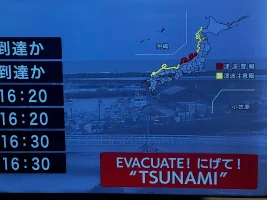
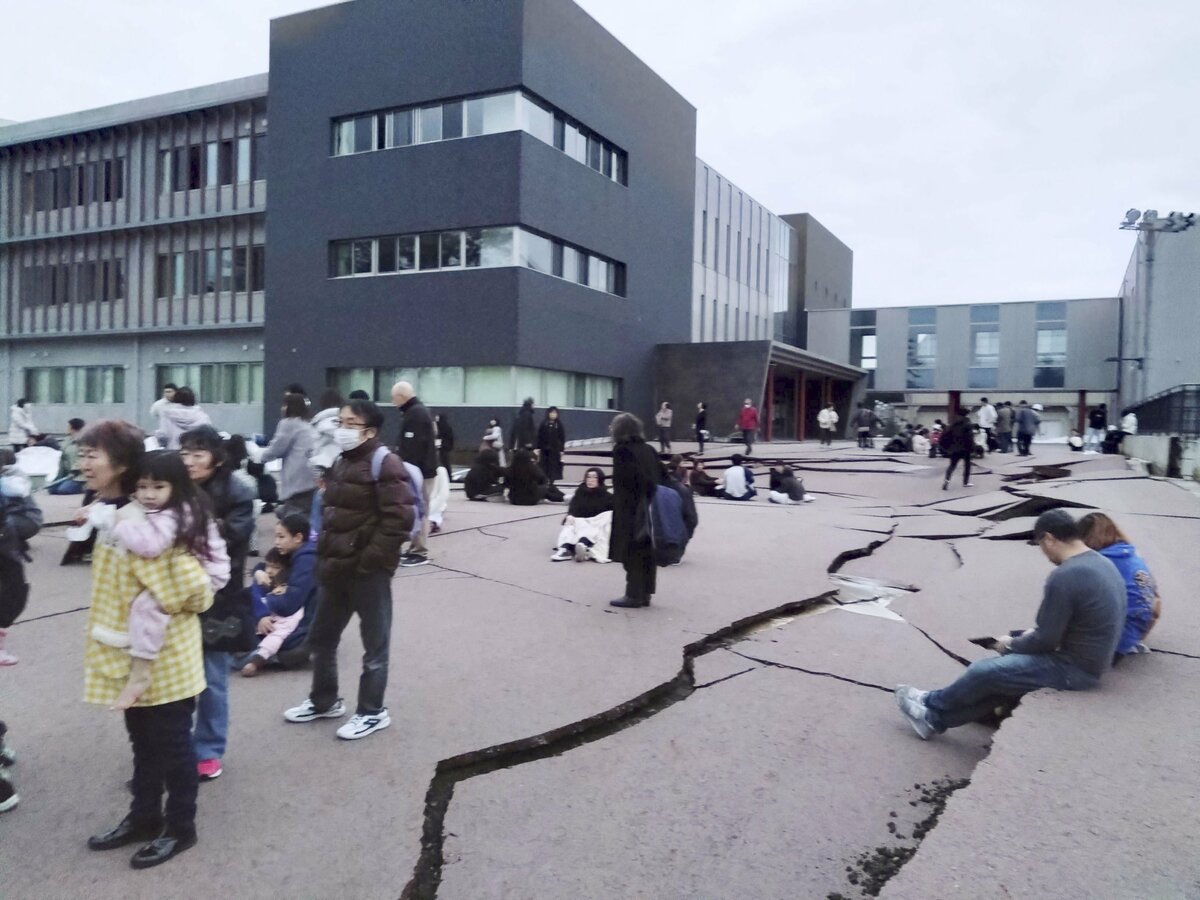
A major earthquake has struck the Noto peninsula. According to the NHK the magnitude was 7.6 and intensity 7. There is some major tsunami warning. We await more news.

Follow along with the video below to see how to install our site as a web app on your home screen.
Note: This feature may not be available in some browsers.





 japannews.yomiuri.co.jp


The safest thing to do generally is to stand in an internal doorway (from one room to another) as doorway frames are very sturdy compared to other parts of a house, and are generally placed away from anything that can fall on you (shelves, light fixtures).I think it was last year that I warned about a great earthquake and probable Tsunami in Japan based on some signs that I found out through geophysical activities in the area , but I don't think anyone took it serious.
I think many people sleep out of their houses tonight and that is what most people do after the first quake!
Of course, in Japan persons have to have a boat in the yard, as well LOL
Excuse me, last week, I myself experienced an earthquake just under my city with a horrible sound from underground. I always ran away into the yard in such situations but this time I couldn't move from my place because of fear LOL but I appealed God to have mercy on me. The lamp on the ceiling moved to the sides for seconds. It was 3.5 Richter.

The safest thing to do generally is to stand in an internal doorway (from one room to another) as doorway frames are very sturdy compared to other parts of a house, and are generally placed away from anything that can fall on you (shelves, light fixtures).
Going outdoors is often not safer because trees and utility poles can fall on you, debris from tall buildings can land on you, etc. If you're in a short building, without a porch or deck that can collapse on your way out, and in an area without tall trees, tall buildings, or utility poles then maybe outdoors is safer, but in many common situations it is more dangerous to use the exit, and also there is generally a sturdy doorway nearer than the exit and earthquakes can start and stop quite suddenly.
At least, this is my understanding from reading up on earthquake safety when living in or visiting California, where I once lived and still have family.
I wonder if the same advice is accepted in Japan, and also if it applies to traditional Japanese homes as it seems to me that shoji doors don't require the same sturdy framing as rigid, hinged doors.
In any case, here's hoping for the safety of everyone caught up in this Earthquake. I know there have been at least a couple casualties, but let's hope that's the extent of it.

Thousands would have died had it happened in any other country.So far only 4 deaths have been reported. It could have been so much worse had the earthquake's epicentre been closer to a major city (e.g. under Kanazawa itself).
Not so sure about that. Most of the buildings in the Noto peninsula were old and not really earthquake proof. Japanese people usually claim that wooden buildings are more resistant to earthquakes than stone buildings, but the few major stone buildings that existed in Tokyo before the Great Kantō earthquake of 1923 survived just fine. For example the Akasaka Palace (built between 1899 and 1909) or the Bank of Japan building in Nihonbashi (same period). Even the brick Tokyo Station building, completed in 1914, suffered minimal damage from the 1923 earthquake (according to the Japanese Wikipedia page). I think that the main reason why they claim that stone and brick buildings can't resist earthquakes is simply because construction companies make more money from building shoddy houses that need to be torn down and rebuilt every 30 years. There is also the traditional aspect of building in wood and rebuilding every 30 years, as they do for some Shinto shrines (e.g. Ise Jingū ).Thousands would have died had it happened in any other country.
Maybe not Germany or some such but there are many examples of major earthquake disasters in other countries even when the earthquake itself is relatively small. Mostly due to poor construction practices and insufficient building codes as you said. I didn't make any claims regarding wood vs stone.Not so sure about that. Most of the buildings in the Noto peninsula were old and not really earthquake proof. Japanese people usually claim that wooden buildings are more resistant to earthquakes than stone buildings, but the few major stone buildings that existed in Tokyo before the Great Kantō earthquake of 1923 survived just fine. For example the Akasaka Palace (built between 1899 and 1909) or the Bank of Japan building in Nihonbashi (same period). Even the brick Tokyo Station building, completed in 1914, suffered minimal damage from the 1923 earthquake (according to the Japanese Wikipedia page). I think that the main reason why they claim that stone and brick buildings can't resist earthquakes is simply because construction companies make more money from building shoddy houses that need to be torn down and rebuilt every 30 years. There is also the traditional aspect of building in wood and rebuilding every 30 years, as they do for some Shinto shrines (e.g. Ise Jingū).
This isn't how earthquakes work. They move like ocean waves (not like the surf, but like the waves under a boat at sea) ... the motion is all up and down, but because there is a leading and a trailing edge, it also tips things very slightly side to side. There is, however, no large sideways pushing force. The damage from an earthquake is almost entirely due to gravity, the earthquake merely puts things off balance just enough for gravity to take over... which is why you don't want to be around anything that can fall over if made unstable.But I am thinking, what if the door itself moves violently because of the quake?! It will kicks the person into the room or hallway!
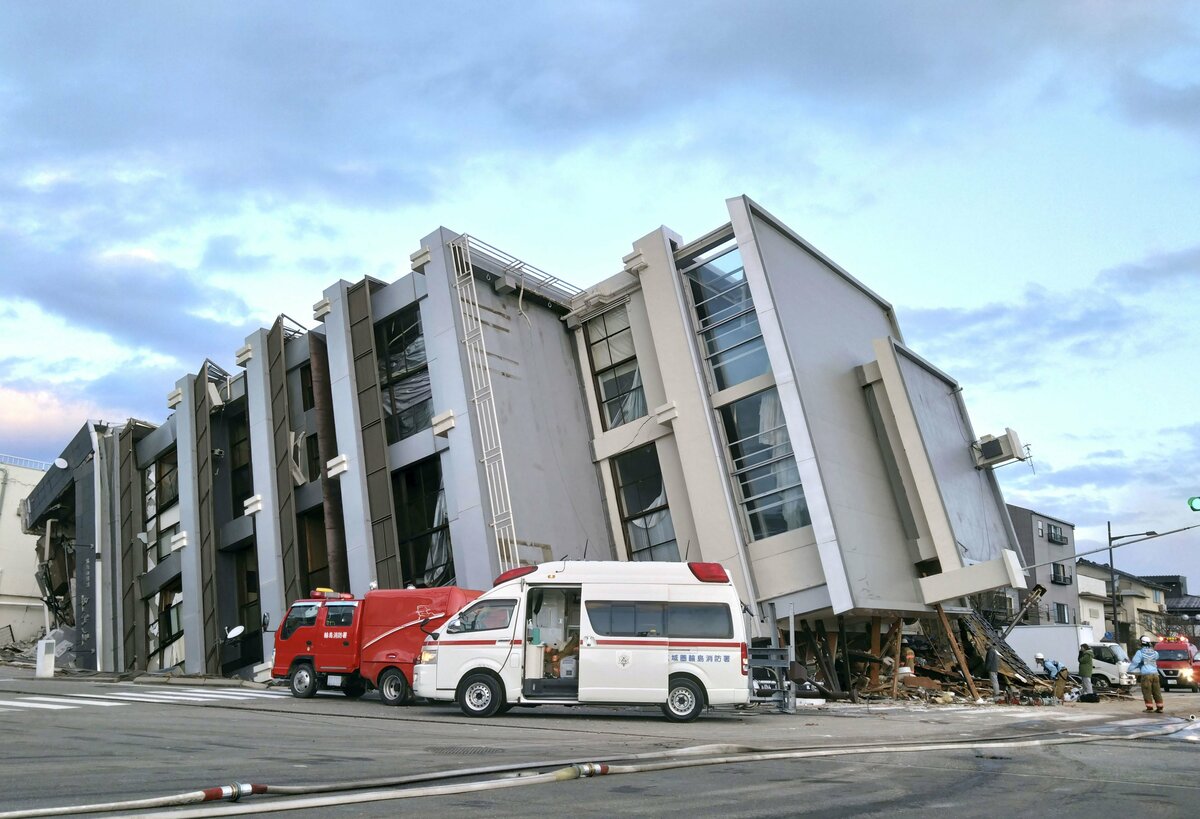
This is actually amazing that the building could fall over and still remain so nearly intact. I still definitely would not want to be in it, of course, but it's much better than being in a building that collapses into rubble. Here we can realistically hope (and I do hope) that everyone got out alive.

Falling that building on side is due to weakness of the ground that it is built on, and probably it is because of an extraordinary moisture in the ground around the foundation, not weakness of the foundation itself.This isn't how earthquakes work. They move like ocean waves (not like the surf, but like the waves under a boat at sea) ... the motion is all up and down, but because there is a leading and a trailing edge, it also tips things very slightly side to side. There is, however, no large sideways pushing force. The damage from an earthquake is almost entirely due to gravity, the earthquake merely puts things off balance just enough for gravity to take over... which is why you don't want to be around anything that can fall over if made unstable.
So for the door to be knocked around, it would need to be opened such that it was blocking a bookcase or similar tall furnishing which then falls over, but such an item falling over will only push it with the weight of the furnishing itself, and only until about 90 degrees. Depending on how you are gripping the door frame there would be a real risk of damage to your fingers, but the door won't come at you with the sort of speed necessary to send you flying across the room (modern hollow core doors are very light and would need to move very fast to hit you with significant force, and nothing is moving that fast in this case.)
All the same, if you're in an earthquake prone area you should try not to put tall furnishings behind your door, and your tall furnishings in any case should have wedges under their front to have them slightly leaning backward, and in back be anchored to the wall (we had a screw in the furniture near the top of it, and another in the wall, connected together by sturdy fishing line that could hold under hundreds of pounds of strain) and so avoid the furnishing falling over in the first place.
Of course being in a doorway doesn't guarantee your safety, and if the building collapses or falls over like thomas's Wajima photograph then who knows how things will move, but those are exceptional circumstances. It's just a matter of making the best choice in a bad situation.
Speaking of which,
This is actually amazing that the building could fall over and still remain so nearly intact. I still definitely would not want to be in it, of course, but it's much better than being in a building that collapses into rubble. Here we can realistically hope (and I do hope) that everyone got out alive.
On the other hand, I do also have to wonder how the building was so top-heavy and/or already leaning or off-balance that it could fall like this in the first place. I feel like something wasn't up to construction code, or else that code needs some revision.
Of course I speak from a European point of view (being Belgian). There are virtually no wooden buildings in Europe apart from some Swiss chalets (a small minority of houses in the country) and some traditional wooden houses in the Swedish countryside.Maybe not Germany or some such but there are many examples of major earthquake disasters in other countries even when the earthquake itself is relatively small. Mostly due to poor construction practices and insufficient building codes as you said. I didn't make any claims regarding wood vs stone.