Society Japan has over 90,000 centenarians

thomas

Unswerving cyclist
Admin
Joined
14 Mar 2002
Messages
21,050
Reaction score
18,903
According to the latest stats released but the Welfare Ministry, the number of centenarians in Japan has increased to a record 92,139, led by women, who account for 88.5 per cent of the total with the world's longest life expectancy.
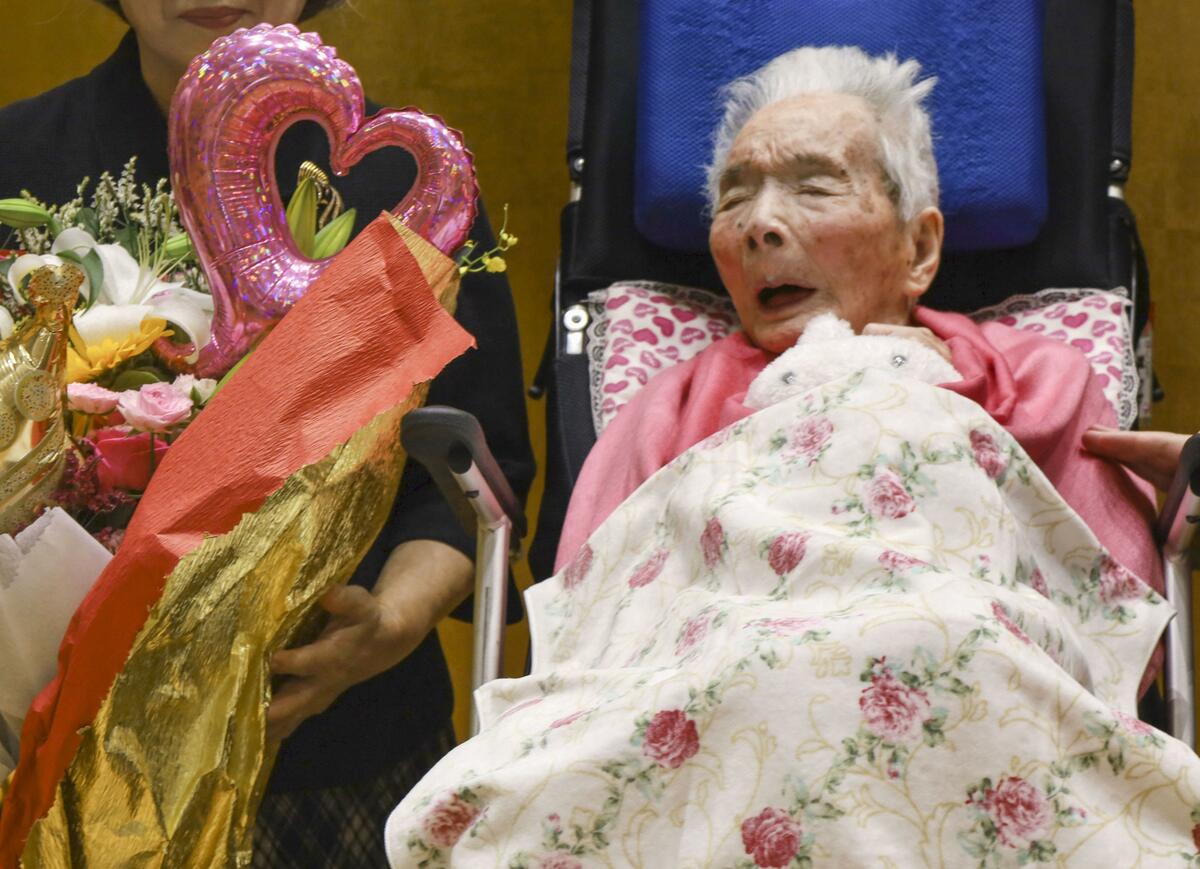

The number of those aged 100 or older as of Sept. 15 was up 1,613 from a year earlier for the 53th consecutive annual rise, the Health, Labor and Welfare Ministry said ahead of the Respect for the Aged Day holiday next Monday. There were an average 73.74 centenarians per 100,000 people in Japan, one of the most rapidly ageing populations in the world. […] Female centenarians totaled 81,589, up 1,428 from a year earlier. Japan's oldest woman was 116-year-old Fusa Tatsumi from Osaka Prefecture. The average life expectancy of Japanese women was 87.09 years in 2022, the ministry said last month. The average life span of men stood at 81.05 years. Male centenarians are estimated to increase 185 to 10,550. The country's oldest man was 111-year-old Gisaburo Sonobe from Chiba Prefecture. The number of centenarians in Japan stood at 153 in 1963, when data were first collected. The figure topped the 10,000 mark in 1998, largely due to advances in medical care and nursing.


According to the latest stats released but the Welfare Ministry, the number of centenarians in Japan has increased to a record 92,139, led by women, who account for 88.5 per cent of the total with the world's longest life expectancy.


I think the more children the women have, the longer they live. Not sure what will happen with today's child bearing women though.
 
This is really interesting, and it also points to an inevitable demographic cliff that Japan is teetering over.

Just a thought, but the people over 100 years old now were in their 20's at the end of World War 2, which means they likely survived through some seriously dire conditions. It's a bit of survivorship bias, but for these folks at least, perhaps the harsh times helped forge them into more resilient individuals. I was just listening to an interview with someone down in Okinawa who has been researching their longevity down there (I'm not sure how much Okinawa comprises the list of centenarians, but I believe they have the highest concentration in Japan), and one of the biggest factors she was talking about beyond lifestyle and diet was social connections.
 
I'm not sure how much Okinawa comprises the list of centenarians, but I believe they have the highest concentration in Japan.

According to NHK, the Top 3 are:
  1. Shimane
  2. Kochi
  3. Tottori

The bottom of the league (least on top):
  • Saitama
  • Aichi
  • Chiba
By region, Shimane Prefecture has the highest proportion of centenarians, with 155 per 100,000 people, topping the list for the 11th consecutive year. Shimane is followed by Kochi and Tottori prefectures. Saitama Prefecture has the fewest at 44 per 100,000 people. It has stayed at the bottom of the prefectural rankings for 34 years in a row. Saitama is followed by Aichi and Chiba prefectures. When including Japanese living abroad and foreign nationals who are permanent residents of Japan, a total of 47,107 people will turn 100 by the end of March. The ministry plans to send gifts to them.

 
Wow, I hear so much about longevity in the "Blue Zone" that it's become part of Okinawa's brand.

I couldn't find a full on list to compare populations and ratios by age, but this article says okinawa is at 68 per 100k (with a total population of about 1.4m residents), which is far below Shimane's 155/100k, who has only 650k residents and a population density of 97 per square kilometer.

 
To add to Japan's record number of centenarians, figures released by the Ministry of Internal Affairs showed that those aged 80 and older represent 10 per cent of the population for the first time.

An estimated 36.23 million people in Japan were aged 65 or older as of Sept. 15. The percentage of the total population rose to a record 29.1 percent, up 0.1 point from 2022. But the number fell for the first time since comparable statistics became available in 1950 because the demographic group now reaching the age of 65 is relatively small. An estimated 20.51 million women were aged 65 or older, unchanged from 2022 and accounting for 32.1 percent of the female population. The number of men aged 65 or older fell 10,000 to an estimated 15.72 million, or 26 percent of the male population. The number of people aged 75 or older increased by 720,000 from 2022 to an estimated 20.05 million and exceeded the 20 million mark for the first time. The age group includes many of the baby-boomers born in 1947 through 1949. The number of people aged 80 or older rose 270,000 to an estimated 12.59 million, accounting for 10 percent of the total population.


Happy Respect for the Aged Day! :giggle:
 
According to the nationwide life expectancy rankings published every five years since 1965, Okinawa's ranking has fallen sharply, especially for men, leaving it near the bottom. Central prefectures like Nagano and Shiga have moved into the top ranks, while Aomori in the northeast remains at the bottom:
  • National average life expectancy in 2020
    • Men: 81.49 years
    • Women: 87.60 years
  • Men (top prefectures, 2020)
    • Shiga: 82.73 years
    • Nagano: 82.68 years
    • Nara: 82.40 years
  • Women (top prefectures, 2020)
    • Okayama: 88.29 years
    • Shiga: 88.26 years
    • Kyoto : 88.25 years
  • Regional trends
    • Okinawa: no longer in the top 10 overall; men rank near the bottom nationally.
    • Aomori: the lowest-ranked prefecture for life expectancy.
    • Nagano and Shiga have consistently high rankings in recent years.


Back
Top Bottom