News China banning imports of Japanese seafood

thomas

Unswerving cyclist
Admin
Joined
14 Mar 2002
Messages
21,056
Reaction score
18,911
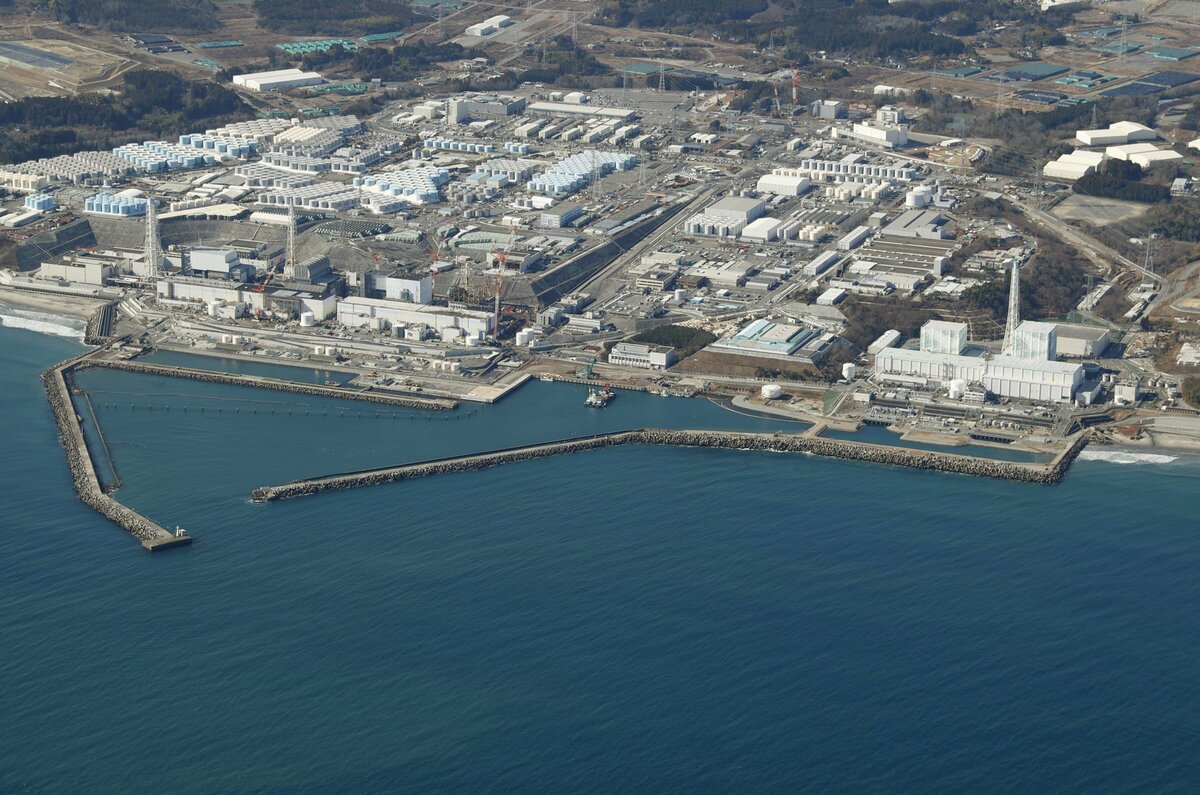
Japan is between a rock and a hard place: China has begun blanket radiation testing on seafood imports from Japan to pressure PM Kishida's plan to release treated radioactive water from the crippled Fukushima nuclear plant into the sea. The measure introduced earlier this month has prolonged customs procedures, prompting some businesses in China to forego importing seafood from Japan.

Since the 2011 Fukushima nuclear accident triggered by a major earthquake and tsunami, China has banned food imports from Fukushima and nine other Japanese prefectures. If the water discharge begins, Beijing could further tighten controls on food imports from Japan. A Japanese restaurant in Shanghai said it had no choice but to use tuna imported from Spain as seafood imports from Japan stopped last Thursday. A Shanghai dealer told its clients it had halted the import and delivery of fresh fish from Japan on Monday. It plans to send staff abroad to find alternative procurement sources.


Hongkong, too, confirmed a ban on Japanese seafood if Japan releases Fukushima water:

Paywall alert:


The JT took a closer look at why China opposes the release of treated water and why doubts remain even after the IAEA's safety review and green light.


In a written statement, the China Atomic Energy Authority said the IAEA report failed to fully reflect expert views, adding that Japan should not consider the watchdog's approval as a "shield" or a "green light" to press ahead with its discharge plan. "Even if the IAEA believes that the discharge of nuclear wastewater into the sea meets international safety standards, it can't prove that the discharge is the only or the best option for the disposal of nuclear-contaminated water," the statement says. Foreign Minister Yoshimasa Hayashi, who has accused China of disseminating "incorrect information," urged it to deal with the matter "from a scientific standpoint," during talks Friday with top Chinese diplomat Wang Yi, who emphasized that there "is no precedent for discharging water polluted by a nuclear accident into the ocean." At a news conference after the talks, Hayashi said he also conveyed to China his objection to "politicizing" the issue.

And:

Last Tuesday, China criticized those who said the wastewater is free of safety concerns. "If some people think that the nuclear-contaminated water from Fukushima is safe to drink or swim in, we suggest that Japan save the nuclear-contaminated water for these people to drink or swim in, instead of releasing it into the sea and causing widespread concerns internationally," Chinese Foreign Ministry spokesman Wang Wenbin said.


The Global Times explained why China is not obligated to consult with Japan. It's all a plot by the sneaky Japanese. 🧐


Japan is constantly trying to communicate with China, while China is unwilling to engage, thereby diverting responsibility and attention onto China. This is a tactic that Japan is accustomed to and quite skilled at employing. What is Japan's intention in proposing to establish a consultation mechanism with China? Is it to discuss and coordinate the disposal methods for the contaminated water, or is it to make China unconditionally accept Japan's dumping plan? If it is the former, we would certainly welcome it. However, if it is the latter, the matter needs to be reconsidered.


China does not refuse negotiations, but we reject using negotiations as a pretext. Meaningful negotiations should occur before Japan unilaterally decides on dumping the water. However, Japan did not conduct sufficient consultations with any neighboring countries or stakeholders involved before presenting the plan, disregarding everyone's concerns and opposition. Moreover, meaningful negotiations should involve different options, and decisions should be made based on the results of the consultations. But did Japan do this? It's imposing the dumping plan as the only option on all parties. Is that negotiation? Certainly not, and China will not cooperate with Japan's show.


The Global Times explained why China is not obligated to consult with Japan. It's all a plot by the sneaky Japanese. 🧐

wow, how dare they try to communicate with us, if we respond then we're basically capitulating to everything they want to do.
200.gif
 
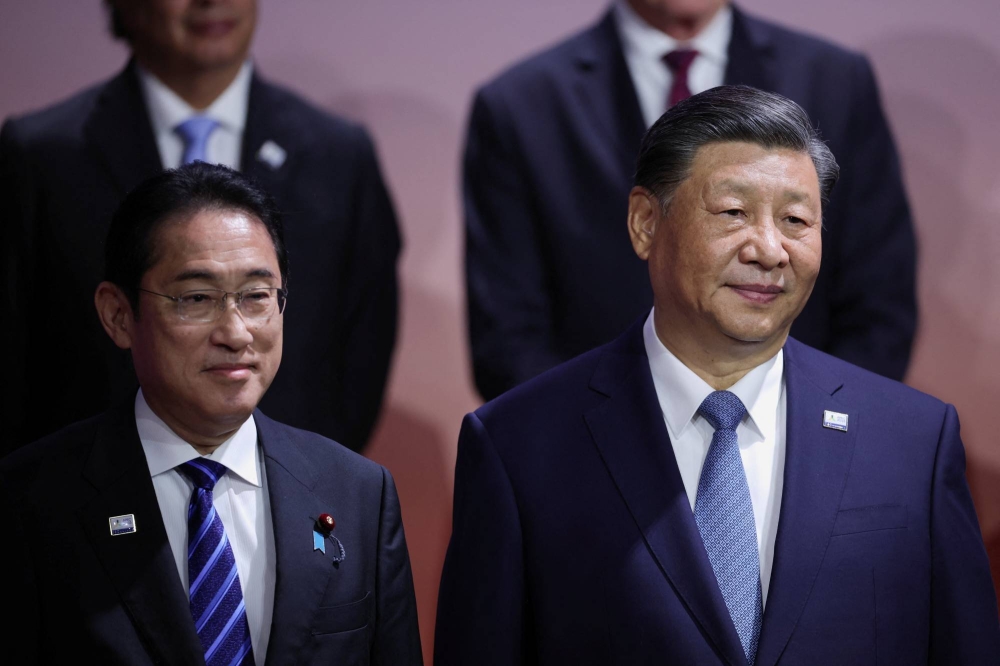
PM Kishida met Chinese President Xi Jinping at the APEC summit in Los Angeles for the first time in a year.

194974c27aeb76da57d867c6e1b76047.webp

Kishida asked China to immediately lift the ban on Japanese seafood imports and respond calmly "based on scientific evidence".

Not much was achieved, but they're talking again.

The two sides agreed that the bilateral relationship should move in a constructive and stable direction and reconfirmed promoting a comprehensive strategic relationship seeking mutual benefits and to hold close talks at various levels, including at the top.


In a new round of discussions, Japan and China have revisited the issue of discharging treated wastewater from the Fukushima Daiichi nuclear power plant, a topic agreed upon during a summit in November. The unpublicized meeting earlier this year included officials from Japan's Ministry of Foreign Affairs and the Ministry of Economy, Trade and Industry. These officials are thought to have sought comprehension of Japan's position, emphasizing that the safety of the discharge process is under the surveillance of the International Atomic Energy Agency. However, China, referring to the wastewater as "nuclear-contaminated water, " has opposed its release into the sea. Following the commencement of the water's release by Tepco in August, China halted all imports of Japanese seafood. Japan has since been advocating for the removal of this ban.

Paywall alert:


Meanwhile, a Kyodo News survey showed 80.6 per cent of prefectural fisheries cooperative associations were affected by the discharge of treated radioactive water from the crippled Fukushima nuclear plant into the sea, with many feeling the impact of China's import ban on Japanese marine products.

The survey found that 29 out of 36 respondents among the members of the National Federation of Fisheries Cooperative Associations said they "had felt" or "had somewhat felt" negative effects including financial damage due to the water release, overwhelmingly due to the subsequent import ban by China. [...] None of the 29 organizations saw a negative impact in the domestic market such as refusal to purchase their products. The Fisheries Agency has said there is no other reputational damage than the one caused by the Chinese import ban. Regarding the kinds of damage they had suffered, 24 organizations said they were "no longer able to export" products such as sea cucumber, scallops and yellowtail due to restrictions from places such as China and Hong Kong. Some 18 organizations said they experienced a "drop in marine product prices," attributing the price decline to China's import ban.


While China maintains its ban on Japanese seafood, Chinese fishing vessels have been active in waters around Japan, especially off Sanriku. :rolleyes: Despite official and private efforts by Japanese fisheries minister Sakamoto Tetsushi to lift the ban in Hong Kong, he received "no clear response" during a recent visit.


A 31-year-old fisherman from Kesennuma, a deep-sea fishing base on the Sanriku coast, expressed deep concern about the increasing number of Chinese fishing vessels in the area. He told Nikkei in June that the waters off Sanriku had witnessed a significant influx of these vessels in recent years.
Known for its rich fishing grounds where the warm Kuroshio and cold Oyashio currents meet, the Sanriku coast and the eastern Hokkaido region have been inundated with Chinese fishing boats since the 2010s. The fisherman recounted a frightening incident where a Chinese fishing vessel threatened him with a barrage of fireworks while he was saury fishing off the Sanriku coast. He believed the aggressive action was a clear attempt to intimidate him into abandoning the fishing grounds. The fisherman emphasized the vital importance of these fishing grounds to the local community, explaining that a variety of fish, including horse mackerel, sardines, saury, and cod, could be caught throughout the year, with the exception of the winter months.


Japan maintains that China's seafood ban was not based on scientific reasons.

Paywall alert:

 
Asahi reported that Chinese fishermen visiting the Toyosu fish market to explore the sentiments of ordinary Japanese regarding Fukushima fish catch were surprised to find no concerns over food safety in Japan. Japanese fishers are not the only casualties of the Chinese government's total ban on seafood imports from Japan imposed immediately after the start of the discharges. Chinese in the fisheries industry, along with this man, have also taken a hit.


Chinese fishermen in Toyosu

Taken from Chinese social media via Asahi

"I came here to ask Japanese about their thoughts on marine products," the man said in the clip posted on a video-sharing platform in April. "But I am now wondering if I still need to do that after seeing the long line of people waiting to buy seafood." [...] Consumers in China increasingly shun marine products even if they come from home waters, adding to the fisheries' economic misery. Fishers blame social media posts for reputational damage to their products by repeatedly stating that marine life and human health have been put at "serious risk" by the releases. The man who appeared at the Toyosu market is believed to be cultivating sea cucumbers in China. These marine animals are traded as a high-end food product and farmed in coastal regions. He has also posted multiple videos to tout the safety of sea cucumbers. Another Chinese man who said he farms flounders in the northeastern region also waged a similar campaign. He posted a series of videos in late July in which he sipped water, swam in, and ate fish from his aquaculture pond to convince consumers of the safety of marine products. While he said he would sue Tokyo Electric Power Co., operator of the Fukushima plant, for damage from the water releases, he refuted widespread social media asserting that seafood is not safe to eat. "Is there any evidence to prove it?" he asked in the video. "How about the results of official inspections?"


Good news for Japan's fishing industry: China is expected to lift its ban on Japanese seafood imports, imposed over a year following the release of treated radioactive water into the sea. This decision comes after Japan and the IAEA agreed to allow China to monitor the treated water from the Fukushima Daiichi nuclear power plant. PM Kishida expressed his approval for this additional monitoring following a phone conversation with IAEA head Rafael Grossi. Kishida stated that China had begun easing its import restrictions and would gradually resume imports of Japanese seafood that met safety standards and emphasised that Japan's stance on the immediate removal of these restrictions remained unchanged.


Paywall alert:
 
Chinese ships continue to operate off the coast of Sanriku even after the "ban": Data reveals reality. Japanese fishermen say it's "contradictory" [Sunday Station] (August 25, 2024)

Disposal of Fukushima Daiichi Nuclear Power Station water release begins; and one year. China still embargos a Japanese marine products product. Meanwhile, the actual situation that a Chinese ship operated in the Japanese sea near the shore when I collected data on the fisherman of the two countries in the daytime floated.

■It is the actual situation of the "interference" China fishing boat by Japanner with fireworks

Yesterday 24th, Kesennuma, Miyagi fishing port of 5:00 a.m.
(Director Masaki Fukushi) "unloading work is carried out here now. Wow, what デカッ Q. this fish is it?
"A bottle butterfly"
"It seems to be a bottle butterfly tuna. The bonito which was produced in the Sanriku offing to the bottle butterfly tuna that it was produced off the east of Hokkaido to have been landed which was a great number no. On 23rd, sauries were landed for the first time this year in Kesennuma.
The Chinese government continues the full-scale import ban of Japanese fishery products from disposal of Fukushima Daiichi Nuclear Power Station water release in ... now for one year. On the other hand, the voice that does not come from a fisherman of Kesennuma.
(fisherman (70) of the saury fishing) when "it is the time of the saury several hundred ships outside 200 nautical miles (exclusive economic zone). It is a Chinese ship of the number of ズラー っとすごい. Because I went for saury fishing until last year, it is a scramble, after the release of the processing water, I am really you when I met with much China fishing boats on high seas of the Sanriku offing.
(fisherman (70) of the saury fishing) "sound line くとさ, whistle ばーっと near, and an authority of そばをすれすれを performs it, and there is always such a trouble. Fireworks are launched, and they are already serious for a feeling to be obstructive. Japanner is disturbed. The partner whom a ship has a big is ship がすごいんだもん, 750 tons. This does not spread not more than 200 tons. Cannot but avoid it afterward; according to the fisherman is ..., too
(the fishery head of the bonito fishing boat) though "sometimes see it, in China, as for the funny ship, it is not revealed what take. I do it that only own thing that I want to say says and wants to do it"

■The actual situation of the Sanriku offing operation to float in "trail analysis"

The contradiction that a Chinese fishing boat operates lively in the Japanese sea near the shore while the Chinese government continues embargoing Japanese fishery products. We went to the fishing port of Zhejiang Zhoushan City to investigate the actual situation.
(reporter Fumiyasu Ozaki) "is the port of the scale eminent China in Zhejiang here. The basket which is carried out of the fishing boat energized in fishermen from morning in sequence. Crab is clogged up closely among them. Various fish which were just landed at the port were arranged. The restaurant close to the port is this turnout. The seafood using a crab and the shellfish equals a table.
(storekeeper) "Are you full-fledged?"
(visitor) "crawl"
(storekeeper of the seafood restaurant) soon after "having released the ocean, everybody was tense. I could not do business or worried that I could not eat sea foods. The government says nothing in particular, and the eating person is knowing now. There are sales most now as it is summer vacation. The business goes well. Competition was very intense, and China where "loss of interest in sea foods" happened seemed to calm down a little now at one time now.
(reporter Fumiyasu Ozaki) "a ship comes and goes incessantly in this big port. I met the fisherman who actually fished it in the Japan sea near the shore among them while I was you when there was the ship to go for fishing and pushed forward coverage to the sea near the shore of Japan in a fishing port for a rich fishing ground.
(fisherman fishing in the Japanese sea near the shore) "we fish around the boundary line in the daytime. It should be high seas, and does it take Q. what day?
"It takes 1 day or more about 30 hours"
Q.How many days is it that it comes back?
"I cannot say clearly. It depends on wind, and do you go to "the high seas" where Q. why Japan is near because you take it until a ship becomes full?
Depending on "a fisherman, fishing becomes the custom (in the Japanese sea near the shore). If there is the fisherman liking far-off fishing grounds, there is the fisherman liking neighborhood"

When chase the movement of a certain Chinese fishing boat based in the Funayama Port using the site that the operation situation knows from the signal which a ship sends; ... I leave the Funayama Port in April. Via Pusan of Korea, I go north in the Sea of Japan. Through Tsugaru Channel, I arrived on the high seas of the Sanriku offing. These outskirts are one of the world's best good fishing grounds where the Kuroshio Current conflicts with the Kurile Current. I can read that I fish from the movement of the ship repeatedly in this sea area. This Chinese fishing boat is still remaining on the sea. Furthermore, after all, as well as a Chinese coastal place, much China fishing boats flock in the Japan sea near the shore including the Sanriku offing even if I look at the operation area of the latest one-month Chinese fishing boat, and it is revealed that I fish it.
Q.You make all the Japanese marine products an embargo (in the Chinese government), but what do you think of what you take in a fishing ground same as Japan?
(fisherman (70)) because "assent is what do not go, China does though it is a strange story if assume it us, is not a hopeless thing? Because it contradicts it that China is open, I think that I think even if I say anything that it is useless, and all give it up"

■As for "the pinch, it is increased to a chance" a market in an "embargo" opportunity

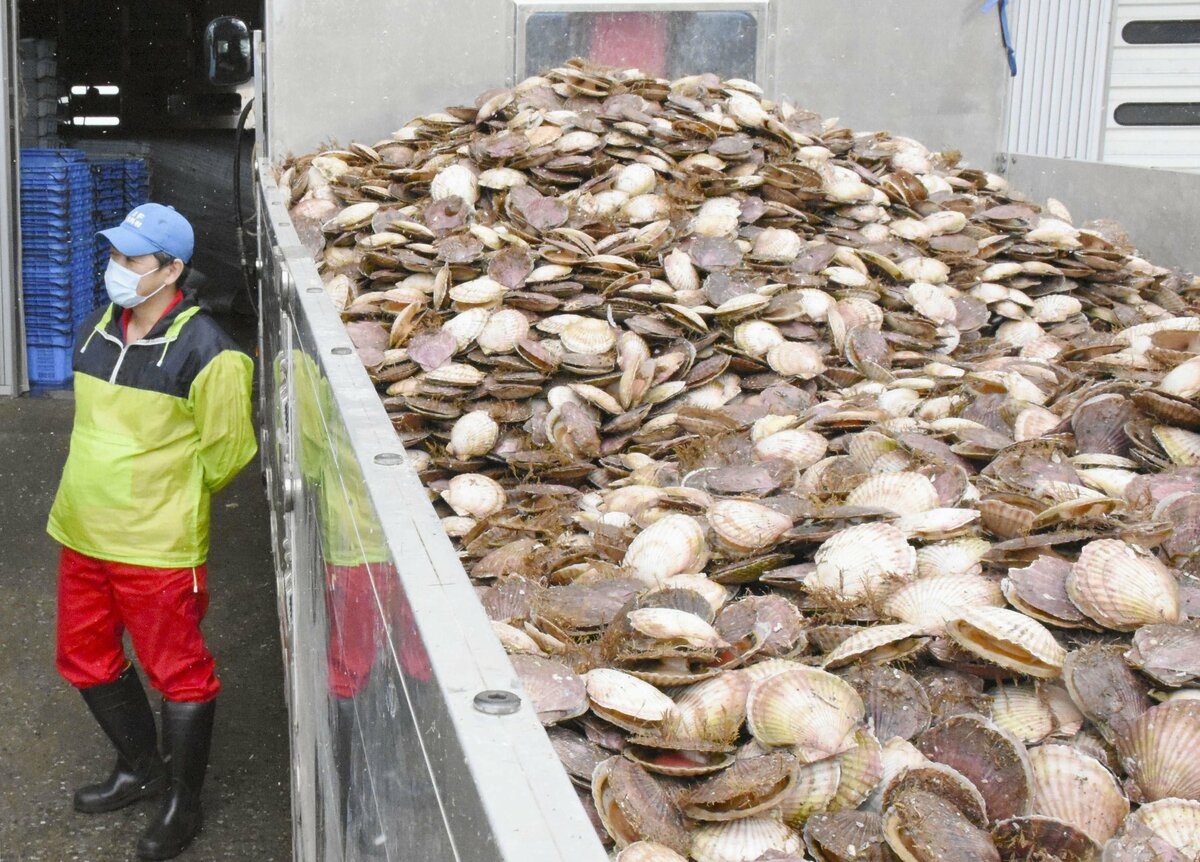
The Japanese scallop which caught the severely wounding by a Chinese embargo. A large quantity of scallops lost a place to go in Hokkaido. A fisheries processing company in Hakodate.
(Announcer Kazuteru Kusanagi) for the Q. quantity that "was that held a large quantity of stock just after import entire surface stop of China in this company" (Director Yumiko Nishi out of Kyuichi), and "piled up to the first top, and was in stock to this neighborhood" around several tons?
"Dozens of tons"
This company which was driven into a corner with the stock of the scallop of dozens of tons. Therefore "I think that I want to make some market if I cannot give it to China anyway and start online sale ..." ... (Director Yumiko Nishi out of Kyuichi) immediately.
(Director Yumiko Nishi out of Kyuichi) "it is said that changed a pinch into a chance as it is hard to find sale because it is said at first to do it", or the online sale is brisk, and the stock that there were dozens of tons is sold out for half a year. And I make a rally in the next hand.
(Director Yumiko Nishi out of Kyuichi) "become "the tunnel freezer" which replaced newly. I found the machine huge freezer that "a scallop is refrigerated and comes out," can refrigerate a raw scallop in approximately eight minutes in this January rapidly freezing a scallop. Quality improved by the short freezing. Furthermore, in last month, I introduced the machine which sorted a scallop for tens of millions of yen.
(Director Yumiko Nishi out of Kyuichi) which "a scallop comes to come out of here every size" "is with M or S clearly?"
Q.When I shipped it to China, was it not said that I distributed size weight?
(Director Yumiko Nishi out of Kyuichi) "is not doing it at all. As I send it with being unshelled. As I consider the market expansion to the foreign territory and think whether you come out at the opportunity when the scallop which I sorted is overlooked, in this June when I stand on there and introduced it, I accept an inspection team from Mexico and aim at the expansion of the foreign countries market.
(Director Yumiko Nishi out of Kyuichi) "think that one selling is partial earlier that want to enlarge right or wrong, a market even if turn it to the foreign countries other countries except China as the management risk rises"

Than an August 25 "sundae station"
 
China announced yesterday that it will immediately resume imports of seafood products from certain parts of Japan, bringing an end to a nearly two-year blanket ban that was introduced over concerns related to Japan's release of treated wastewater from the Fukushima nuclear power plant.

According to a notice issued by China Customs, seafood from ten prefectures—namely Fukushima, Gunma, Tochigi , Ibaraki , Miyagi, Niigata, Nagano, Saitama, Tokyo and Chiba—will remain prohibited from entering the country. Seafood from other Japanese regions will be permitted but must be accompanied by health certificates, documentation verifying screening for radioactive substances, and certificates indicating the place of origin, all of which must be issued by the Japanese government for customs clearance in China.

Paywall alert:

Why food products from the Kanto region and Niigata continue to be banned is beyond me. 🤷‍♂️
 
That's really bad for Tochigi and Gunma's seafood industries.

Or it might be, except that both of them are entirely land-locked!

Saitama, too, I believe.
 
Of course, this has nothing to do with the diplomatic row between China and Japan. :whistle:


Kyodo and NHK reported that Tokyo had been told by Beijing it would stop importing Japanese seafood altogether, a decision made amid increasingly strained ties between the two governments. China had eased parts of its earlier measures earlier in the year, after Japan began discharging treated water from the damaged Fukushima plant in 2023, but that brief thaw has now given way to a complete halt in imports. Before those measures were put in place, Chinese buyers accounted for more than a fifth of Japan's seafood exports. Sources familiar with the exchange told Kyodo that China justified reinstating the complete ban by saying it needed more time to monitor ongoing water discharge.


Konnichiwa Mina-san!

The Communist Party is always taking away the pleasures of the common people. They're banning the import of Japanese seafood because it's dangerous.

And yet they are enjoying themselves, eating safe and delicious seafood from Japan that is imported via a third country.

Shady!

Someday we too would like to enrich ourselves through corruption and eat expensive Japanese seafood imported via a third country.

By Representative of the Chinese people


共産党はいつも庶民の楽しみを取り上げる。

日本の魚介類を危険だからと言って輸入禁止にするんだ。

そのくせ、自分たちだけ楽しんでいる。彼らは第三国経由で輸入した、日本産の安全でおいしい魚介類を食べている。

ずるい!

いつか俺たちも汚職で私腹を肥やし、高価な第三国経由で輸入した日本の魚介類を食べたい。

中国人民の代表
 
Konnichiwa Mina-san!

I owe an apology to all members of the forum. In my last post, I wrote that the Communist Party is taking away people's enjoyment.

But that was a mistake.

china.webp


The Communist Party is warning the people. Below is the translation.

Do not eat Japanese seafood because it is dangerous.

This is a measure for the people.

Communist Party officials personally taste Japanese seafood to confirm its safety.

The people must be grateful for the self-sacrifice of Communist Party officials.


What self-sacrifice! They are heroes! The Communist Party is the role model for the people.

But here comes a new suspicion. The Communist Party banned Chinese people from traveling to Japan. The purpose is said to be for Communist Party officials and their families to take their time sightseeing around Japan.

Is this suspicion true?

NANGI
 
More harassment from Chinese authorities:

Customs procedures for food and other goods shipped from Japan to China are taking longer than usual, with many shipments delayed by about two weeks. The slowdown has led to speculation that it may be linked to recent comments by Takaichi about a possible Taiwan contingency. Sources say the delays are affecting a wide range of exports, including alcohol and food. The Japanese embassy in Beijing has also received reports of longer clearance times, especially for sake and other Japanese products, suggesting the problem is spreading rather than limited to a few cases.


In addition, exporters are now being asked to submit documents that were not previously required, while inspections during customs clearance, which had formerly been conducted on only some shipments, are now being applied to all products. In some cases, goods are being held in port warehouses, prompting concerns from businesses about rising transport costs, with some noting that storage fees are higher than normal. The delays reportedly began after Takaichi's remarks concerning a Taiwan contingency, suggesting the possibility that the Chinese side has taken countermeasures.

 
Back
Top Bottom