

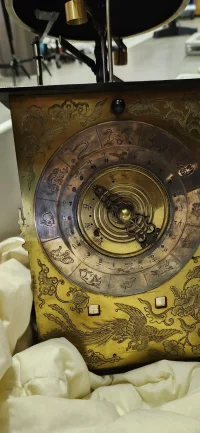
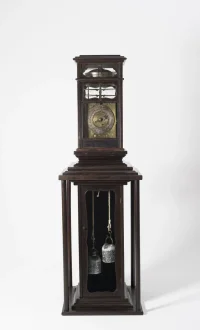
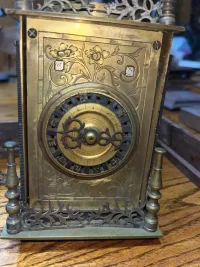
We have a Japanese lantern clock, engraved brass dial with the signs of the zodiac, in carved hardwood case, 1860. Is anyone able to read the Japanese symbols on the clock face and in the little white box below the clock face please? If anyone knows a Japanese museum that I can ask for more information about the clock that would also be great.
Navigation
Install the app
How to install the app on iOS
Follow along with the video below to see how to install our site as a web app on your home screen.
Note: This feature may not be available in some browsers.
More options
Style variation
System
Light
Dark
You are using an out of date browser. It may not display this or other websites correctly.
You should upgrade or use an alternative browser.
You should upgrade or use an alternative browser.

- 12 Oct 2013
- 4,071
- 5,023
The characters in the innermost circle are the 12 Chinese zodiac symbols: Rat, Cow, Tiger, Rabbit, Dragon, Horse, Sheep, Monkey, Rooster, Dog, Pig. The characters (in the above order) are 子丑寅卯辰巳午未申酉戌亥
The Chinese zodiac system was well-known and used in Japan, and is still used in Japan for some traditional things (fortune-telling, calendars, symbols for New Year's celebrations etc). In feudal times the zodiac was used to tell time. The day was divided into 12 sections, with each section corresponding to one of the animals of the zodiac system.
In the ring with the western numerals, the characters under each numeral are the kanji equivalent of that numberal. In other words, they are the Japanese characters for 1 to 12.
The small white square on the left side under the clock face is the number "20". Hard to tell what it is...is it a day/date counter?
The Chinese zodiac system was well-known and used in Japan, and is still used in Japan for some traditional things (fortune-telling, calendars, symbols for New Year's celebrations etc). In feudal times the zodiac was used to tell time. The day was divided into 12 sections, with each section corresponding to one of the animals of the zodiac system.
In the ring with the western numerals, the characters under each numeral are the kanji equivalent of that numberal. In other words, they are the Japanese characters for 1 to 12.
The small white square on the left side under the clock face is the number "20". Hard to tell what it is...is it a day/date counter?

- 12 Oct 2013
- 4,071
- 5,023
It's going to rain snakes tomorrow in the hour of the Rabbit (assuming the clock is working) 

Edit: Joking aside, I'm going to have to look again at that inner circle because it only lists 5 of the twelve zodiac animals. And there there are a number of small dots (more than 5) under the animals, so I'm not exactly sure what that inner circle represents.
Edit: Joking aside, I'm going to have to look again at that inner circle because it only lists 5 of the twelve zodiac animals. And there there are a number of small dots (more than 5) under the animals, so I'm not exactly sure what that inner circle represents.
Last edited:
- 12 Oct 2013
- 4,071
- 5,023
OK, taking another look at this whole thread, and I can see that @ClareBk already knows they are the signs of the zodiac around the dials. So all of this might be redundant, or somehow surplus to requirements. Anyway, I've come this far, so...
On the inner circle (clockwise from bottom)
卯・寅・丑・子・亥
Rabbit, Tiger, Cow, Rat, Pig
I don't know what they represent, or why there are only 5 of the twelve animals. I'm guessing the holes represent some kind of adjustment mechanism. In Edo times, the day was fixed at 12 hours, but the length of the hours changed with the seasons. Sunrise and sunset was fixed at (say) 6:00 regardless of the season. Therefore, a summer "hour of the snake" was longer than a winter "hour of the snake". This requires some complicated machinery if you are making a mechanical clock, so that's why I think these small holes must be for making adjustments. I have seen some other Edo period clocks with these same, or similar, holes in the clock face.
 watart.jp

 www.touken-world.jp
etc.
www.touken-world.jp
etc.
The two squares at the bottom of the clock face would indeed be day/date counters, if this clock as the same as others I've seen on the internet. In some instances, these two windows represent month and day again using zodiac symbols. Yours look like numerals, which isn't uncommon.
That Seiko Museum link may be a good place to submit further inquiries. They may be interested in looking at your clock. Or, if you are keen to get yours in working condition, you might try to contact this Japanese gentleman who repairs such exotic timepieces. Check out his videos (and a link to his contact address) at
He may also be able to answer your inquiry. I don't know if he speaks English, but give it a shot. If he only communicates in Japanese, let us know here, and we can have a go at being an interlocutor.
On the inner circle (clockwise from bottom)
卯・寅・丑・子・亥
Rabbit, Tiger, Cow, Rat, Pig
I don't know what they represent, or why there are only 5 of the twelve animals. I'm guessing the holes represent some kind of adjustment mechanism. In Edo times, the day was fixed at 12 hours, but the length of the hours changed with the seasons. Sunrise and sunset was fixed at (say) 6:00 regardless of the season. Therefore, a summer "hour of the snake" was longer than a winter "hour of the snake". This requires some complicated machinery if you are making a mechanical clock, so that's why I think these small holes must be for making adjustments. I have seen some other Edo period clocks with these same, or similar, holes in the clock face.
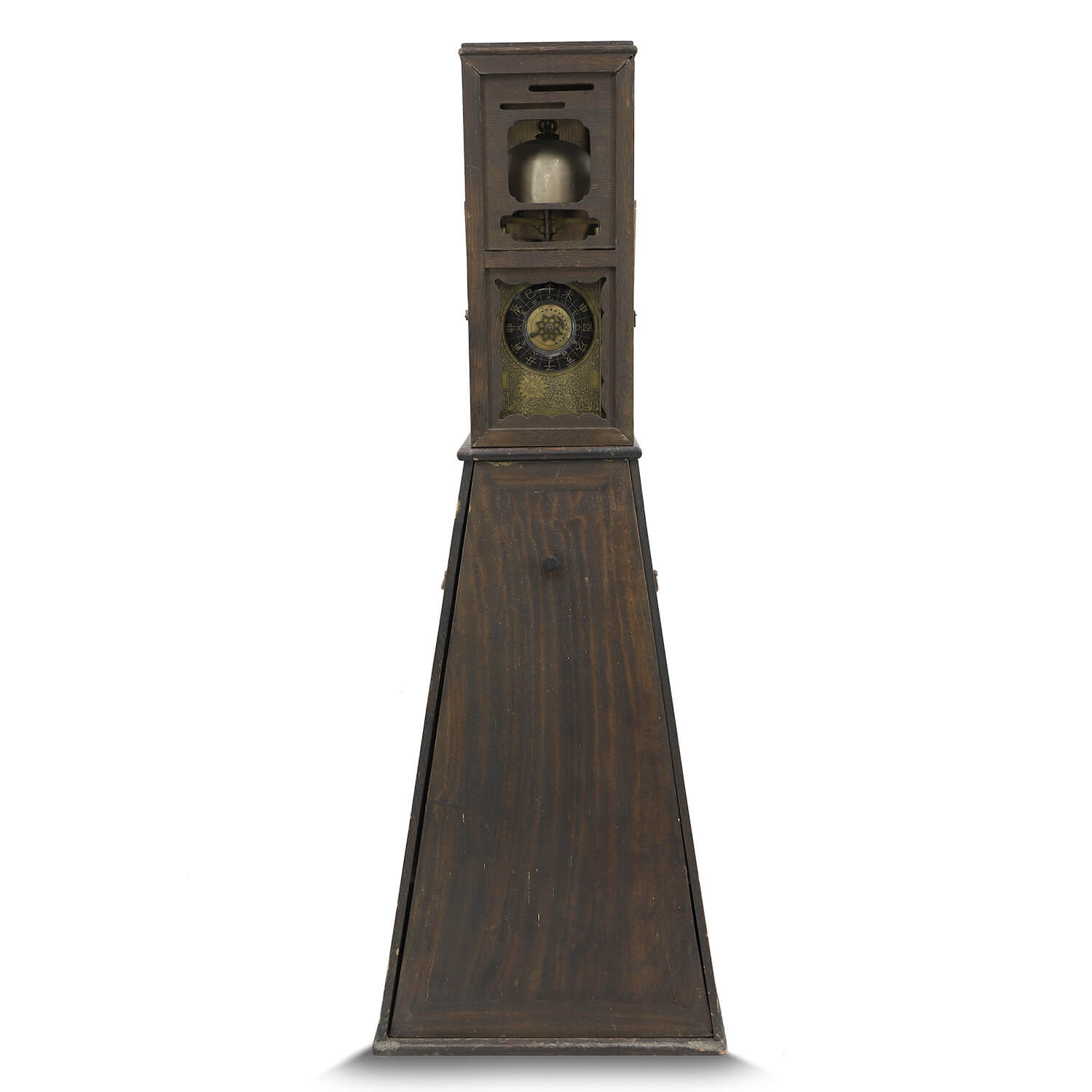
鳥取池田家伝来 二挺天符目覚付櫓時計 – 渡辺美術館
渡辺美術館 鳥取市の医師、渡辺元が、昭和初期から60年余年に亘り収集した古美術品約3万点を収蔵する国内に類を見ない美術館です。
お知らせ 2023年02月08日 | THE SEIKO MUSEUM GINZA セイコーミュージアム 銀座
和時計企画展「江戸の暮らしと和時計」開催のお知らせ/2023年02月08日のご紹介です。
museum.seiko.co.jp
二挺天符櫓時計
「美術品・合戦武具写真」では、調度品や家具、衣類・小物といった美術品と扇や筒などの合戦武具を掲載。こちらではそのなかから、「二挺天符櫓時計」の写真・画像と詳細情報がご覧頂けます。写真・画像は拡大可能。心ゆくまで「二挺天符櫓時計」をご堪能下さい。
www.touken-world.jp
The two squares at the bottom of the clock face would indeed be day/date counters, if this clock as the same as others I've seen on the internet. In some instances, these two windows represent month and day again using zodiac symbols. Yours look like numerals, which isn't uncommon.
That Seiko Museum link may be a good place to submit further inquiries. They may be interested in looking at your clock. Or, if you are keen to get yours in working condition, you might try to contact this Japanese gentleman who repairs such exotic timepieces. Check out his videos (and a link to his contact address) at
He may also be able to answer your inquiry. I don't know if he speaks English, but give it a shot. If he only communicates in Japanese, let us know here, and we can have a go at being an interlocutor.
- 12 Oct 2013
- 4,071
- 5,023
More ramblings: The shift from Japanese traditional time to "western" time (fixed length of hours) happened officially in 1872. If this clock is from 1860, and it has some kind of mechanism for adjusting the length of the hours, it ought to be a very interesting timepiece indeed. Anyway, this is out of my field of expertise, but I'm very curious now about this item.
- Thread starter
- #7
Thank you so much for clarifying some information that I have worked out via the internet and giving me better explanations of some of the inner circles and the little white squares! The clock isn't working at the moment unfortunately so I am limited in what information I can confirm. I am trying to contact the Japanese Clock and Watch Association via email but they don't have an enquiries form. I am only volunteering here once a week so hence why length of time in replying. It is an exquisite piece. I will look at your links and information above and let you know how I go. Kind regards, Clare BkMore ramblings: The shift from Japanese traditional time to "western" time (fixed length of hours) happened officially in 1872. If this clock is from 1860, and it has some kind of mechanism for adjusting the length of the hours, it ought to be a very interesting timepiece indeed. Anyway, this is out of my field of expertise, but I'm very curious now about this item.
- Thread starter
- #8
I tried to find the Old Clock House in Japan and searched for Yasuyuki Mizukami but couldn't find it nor link into it unfortunately. I have contacted Seiko, Japanese Clock and Watch Association, Daimyo Clock Museum, Horological Society of Japan but they are unable to assist me.Thank you so much for clarifying some information that I have worked out via the internet and giving me better explanations of some of the inner circles and the little white squares! The clock isn't working at the moment unfortunately so I am limited in what information I can confirm. I am trying to contact the Japanese Clock and Watch Association via email but they don't have an enquiries form. I am only volunteering here once a week so hence why length of time in replying. It is an exquisite piece. I will look at your links and information above and let you know how I go. Kind regards, Clare Bk
- Thread starter
- #10
Had a lot of trouble finding his email: found [email protected] and have sent email. Lets see what happens. I also sent enqujiry to the Old Clock shop. A lot of Japanese sites dont disclose email addresses. Thanks for the follow up!
- Thread starter
- #11
Am now in touch with Ada Takumi. He is a mind full of information. Wish I had enough mechanical knowledge to understand it all!Did you find the link to Ada Takumi, the guy who repairs such antique clocks? His email address is on his YouTube "About" page. He may be your best chance. Let me know if you can't find it.

- 17 Sep 2005
- 6,017
- 1,970
This most likely is for 更点法, which was a way to categorize evening hours. See Wikipedia:Majestic said:On the inner circle (clockwise from bottom)
卯・寅・丑・子・亥
Rabbit, Tiger, Cow, Rat, Pig
I don't know what they represent, or why there are only 5 of the twelve animals.
I'm being lazy so here is the Google Translate of the above:Wikipedia said:更点法
夜間の分割については6等分のほか、5等分の更点法もある。日暮れを一更(初更)とし、二更、三更として夜明け前は五更となり、一つの更はさらに一点(初点)から五点まで5等分され、夜明けは五更五点となる。
日本でも更点法は奈良時代から一部で使われたが、どちらかというと更点法は中国や朝鮮で盛んに用いられた。
Also see this link to see how the 更点法 connects to the Chinese characters.Google Translate said:As for the division at night, in addition to 6 equal divisions, there is also a 5 equal division method. Sunset is 1st stage (first stage), 2nd stage, 3rd stage, and 5th stage before dawn. .
In Japan, the Saketen method was used in some areas from the Nara period, but the Saketen method was more actively used in China and Korea.
- Thread starter
- #14
Thanks for your guidance. I will be showing all this information to the technical person. Ada has been extremely helpful. I wish he would write the paragraphs for me because he is technical but has provided so much information which I really appreciated.This most likely is for 更点法, which was a way to categorize evening hours. See Wikipedia:
I'm being lazy so here is the Google Translate of the above:
Also see this link to see how the 更点法 connects to the Chinese characters.
歌舞伎用語案内
enmokudb.kabuki.ne.jp

Capt G
Registered
- 20 Jun 2024
- 2
- 7
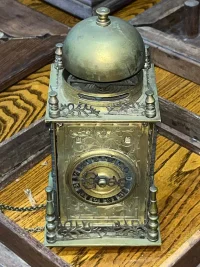
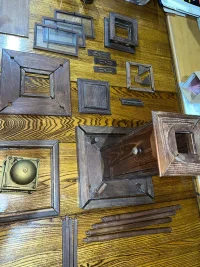
Hope it's cool me popping up in here… but look what I found this weekend. Ima need some help with identifying my Japanese lantern clock.. and honestly, putting it together!! So this is where I'm at….The characters in the innermost circle are the 12 Chinese zodiac symbols: Rat, Cow, Tiger, Rabbit, Dragon, Horse, Sheep, Monkey, Rooster, Dog, Pig. The characters (in the above order) are 子丑寅卯辰巳午未申酉戌亥
The Chinese zodiac system was well-known and used in Japan, and is still used in Japan for some traditional things (fortune-telling, calendars, symbols for New Year's celebrations etc). In feudal times the zodiac was used to tell time. The day was divided into 12 sections, with each section corresponding to one of the animals of the zodiac system.
In the ring with the western numerals, the characters under each numeral are the kanji equivalent of that numberal. In other words, they are the Japanese characters for 1 to 12.
The small white square on the left side under the clock face is the number "20". Hard to tell what it is...is it a day/date counter?

- 8 Aug 2005
- 7,316
- 3,727
That's quite a find!My crazy barn find…
- 12 Oct 2013
- 4,071
- 5,023
Great barn find! You'll need some expert help with that. Might be an idea to send an email to the guy mentioned above in this thread (Ada Takumi).
The 6 numerals on the faceplate are out of order. Or, they look like they are out of order...maybe there was some intention on the way they are arranged, but my hunch is that the parts with the numerals were removed at some point, and got put back the wrong way.
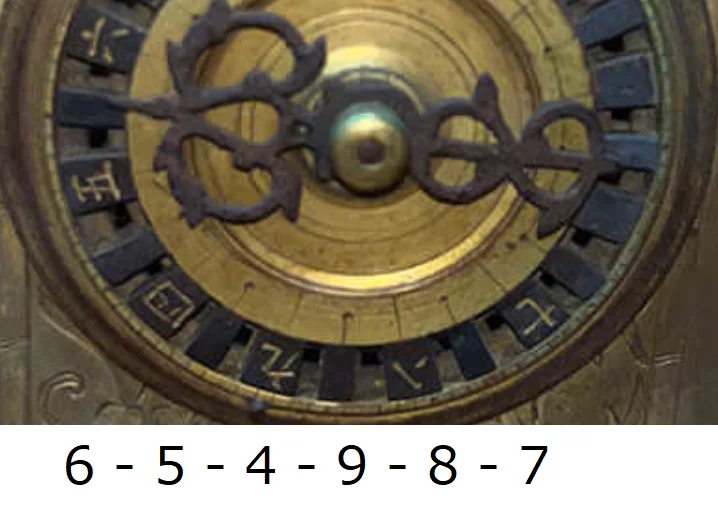
The 6 numerals on the faceplate are out of order. Or, they look like they are out of order...maybe there was some intention on the way they are arranged, but my hunch is that the parts with the numerals were removed at some point, and got put back the wrong way.
Similar threads


- Replies
- 421
- Views
- 142K

