Modern English vs Modern Japanese Lyric Flow

DJ D

後輩
Joined
27 Oct 2022
Messages
23
Reaction score
17
Hey guys, here's a question that's been sitting in the back of my head.
When it comes to lyrical flow in a song, what are the general things that make it sound "off" to Japanese people?

I notice a lot of times when Japanese people create their own songs and add English phrases in them, the flow sounds off, unnatural. I thought about why, and after a while I realized that in English, since we have "stress-based" pronunciation when we speak, these kinds of rules seem to unconsciously carry over in singing as well, not just speaking. Even the direction the notes go also matters, even though we don't necessarily have "pitch accent" like in Japanese. I've also known that even some amateur native English singers have trouble catching onto these kinds of things subconsciously, and it makes the flow sound... like that of an amateur 😅
It's hard to give examples, but hopefully most of you understand what I'm talking about, as well as when some Japanese singers do it to English as well.
So first, I do understand that pitch accent plays an important role in the melody of the lyrics and even the rhythm to some degree as well. I also know since Japanese is a mora-based language, the syllables of each word play the biggest part in the way the rhythm is performed in the lyrics.
However, as I'm sure you all know, Japanese people break the mora rule and even the pitch accent rule in many cases while in the process of making their songs.
So, my extended question is more like:
How does one know when it's okay to break the rules of the language in the case of songwriting, and how does one break them?
Is it common for Japanese people themselves to make mistakes that cause a song to sound "off" or "amateurish" to other Japanese people?
What exactly is it that will make it sound off to Japanese people, and are there any guidelines to follow when breaking the rules, or does it boil down to "you need native ears", and it not being worth it to attempt to break the rules on your own in order to make a more interesting song?

I sure hope that last one isn't the answer. I researched about this a lot in the past, but nobody really talks about this type of thing specifically, and the only reason I was able to get any insight at all was because ChatGPT exists and it at least brought important concepts to my attention (I will attach screenshots of the conversation if I find it).
There may be more questions after this, but let's have this be an open discussion with the goal of shedding light on lyrical flow/rhythm in Japanese!

(P.S.) Personally, I'm focused on the modern style of Japanese songs (J-POP, J-Rock, and so on), but if there are any additional pieces of info pertaining to older Japanese song styles as well as poems, I'd love for it to be added here as well. The most important thing for this discussion is that we release more information about this to the public audience in English, for those who have been looking for a way to understand how Japanese minds process auditory signals, including, but not limited to, music. Looking forward to the discussion!
 
Excerpt of the conversation between me and ChatGPT on this topic; asked around February or March:
DJ D: Yes... this might be complicated, but can you tell me about the differences in lyrical rhythm in japanese compared to english lyrics in songs?

ChatGPT:
Certainly! The differences in lyrical rhythm between Japanese and English can be quite significant due to differences in the structure of the two languages.

In English, syllables tend to be stressed or unstressed, and the rhythm of the lyrics is often based on these patterns of stress. In contrast, Japanese is a mora-timed language, which means that each syllable has roughly the same duration, and the rhythm of the lyrics is based on patterns of long and short syllables.

This difference in rhythm can be heard in the way that lyrics are sung in each language. In English songs, the melody often follows the rhythm of the stressed and unstressed syllables, while in Japanese songs, the melody tends to follow the rhythm of the morae. As a result, Japanese lyrics often have a more even and flowing rhythm, while English lyrics can be more varied and syncopated.

Another difference is that Japanese lyrics often make use of repeating patterns of syllables or sounds, known as onomatopoeia or sound symbolism, to create a sense of rhythm and musicality. English also has onomatopoeia, but it is generally used more sparingly and is less central to the rhythm of the lyrics.

Overall, the differences in lyrical rhythm between Japanese and English can be quite pronounced, but both languages have their own unique musical qualities that make them well-suited for song lyrics.

DJ D: thanks for the info. so when writing a japanese song, how would i know if the rhythm of the lyrics sounds wrong?

ChatGPT:
To know if the rhythm of the lyrics in a Japanese song sounds wrong, it's important to have a good sense of the natural rhythms and intonations of the Japanese language. One way to develop this sense is to listen to a lot of Japanese music and pay close attention to the lyrics and how they are sung.

In general, Japanese lyrics tend to have a relatively consistent and predictable rhythm, with each syllable being given roughly the same amount of time and emphasis. This is different from English, where the rhythm of the lyrics can vary greatly depending on the melody and the singer's interpretation.

Some things to keep in mind when writing Japanese lyrics include:

  • The number of syllables per line: Japanese lyrics often have a fixed number of syllables per line, which can help to maintain a consistent rhythm throughout the song.
  • The placement of accent and emphasis: In Japanese, certain syllables are accented or emphasized more than others, which can affect the rhythm and flow of the lyrics.
  • The use of onomatopoeia and other sound effects: Japanese has a rich tradition of onomatopoeia, which can be used to create interesting and unique rhythms and textures in the lyrics.
Ultimately, the best way to ensure that the rhythm of your Japanese lyrics sounds natural and effective is to work closely with a native speaker or experienced Japanese lyricist who can provide feedback and guidance.

DJ D: sometimes, it feels like i may never develop the sense on my own, as it's been over 6 years of listening to over 90% japanese music, yet i still am unsure of what will sound "off" in a japanese song... is there anything else you can tell me about japanese lyrics that might help me know what to avoid?

ChatGPT:
It's important to keep in mind that rhythm and melody are not the only factors that contribute to the overall feel and flow of a song. Japanese lyrics also have a unique structure and phrasing that can affect the overall rhythm of the song.

One thing you could try is to study the structure and phrasing of Japanese lyrics in more detail. Pay attention to the number of syllables in each line, the placement of stresses within each line, and the use of pauses and breaks in the lyrics. You could also try analyzing the lyrics of songs you enjoy and compare them to songs that feel awkward or off-rhythm to you.

Another thing to keep in mind is that it's not uncommon for Japanese songwriters to intentionally break with traditional rhythm and phrasing patterns in order to create a unique and memorable sound. So, while it's important to have a good sense of rhythm, it's also important to be open to experimentation and taking risks in your songwriting.

Finally, it's worth noting that being a non-native speaker of Japanese may make it more difficult to develop a sense of what sounds natural in Japanese lyrics. So, don't be too hard on yourself if it takes time to develop this skill. Keep practicing and studying, and you'll get there!

DJ D: thanks for the encouragement... well, there's still a concerning point about songwriting in japanese which is that each word not only has certain parts where the rhythm may have to be a certain way, but also the pitch accent of certain words can't be altered in certain ways, and these things can even change depending on the words around it... are there no written rules out there to describe this?

ChatGPT:
Yes, you're correct that Japanese words have pitch accents, which can affect the rhythm and melody of a song. In fact, the pitch accent of a word can change depending on the context in which it's used, so it can be quite challenging to write lyrics that sound natural and flowing.

There are some general rules and guidelines that can help you when writing Japanese lyrics, but there are no hard and fast rules that can guarantee success. One helpful tip is to try to use words that have a similar pitch accent, especially when they're used in close proximity to each other. For example, if you're writing a song that uses the words "kimi" (you) and "shinjiru" (believe), you may want to choose another word with a high pitch accent to use in between them, as using two high-pitch-accented words together can create a choppy rhythm.

Another thing to keep in mind is that certain phrases and expressions are more commonly used in Japanese lyrics than others. For example, repeating a phrase or a word can be a powerful way to emphasize its meaning in Japanese, and using onomatopoeia can add a unique and playful element to your lyrics.

Ultimately, the best way to develop your sense of Japanese lyric writing is to listen to a lot of Japanese music, pay attention to the lyrics, and try to analyze why certain lyrics work well or not. It may take time and practice, but with perseverance, you can definitely improve your Japanese lyric writing skills.
 
I think it will be hard for us non-natives to answer that question. Pitch is important for differentiating between homophones, but my feeling is that pop music is very flexible with regards to pitch AS LONG AS the lyrics can be well understood by the context despite the funny pitch. And some ways of bending the rules are probably more acceptable than others: high-to-low pitch might be able to be flattened without any loss of comprehension, but you can't deliberately invert the pitch without causing confusion. (← this is just a wild guess at how pitch might work in pop songs - I don't know if it actually works this way in practice or not).

So I'm afraid the only answer I can give is the one you are most afraid of: ask a native speaker to check.
 
Last edited:
Hmm, an interesting question. @DJ D it sounds like you're already aware of some of the major differences in the Japanese phonological structure that causes noticeable 'foreign' accents/intrusion in spoken language. Those are usually well-defined in linguistic or phonological studies because of the regularity of Japanese accents, but music is much more open to creative expression and rule-breaking, as you put it. The most important difference is definitely moraic vs syllabic timing, so having a good sense of how to time mora to your music is going to get you most of the way.

I'd say the most glaring language errors in lyrics will be grammatical or word choice rather than in pitch accents... While lyrics are more open to creative expression when we look at Japanese lyrics we tend to see similar patterns grammatically as we do in poetry or even what I call "headline grammar" in newspapers, where the grammatical structure is shaved down (in print to save space or increase the density of information, but in music it can be used to adhere to the time signature) and the remaining words get emphasized as the context does the heavy lifting. Knowing what to elide and what to emphasize is a matter of practice, and success is only earned through trial and error. But I digress.

As far as pitch accents go, you can try to match up the accents to your melody but honestly I don't think it matters so much. Listening to a lot of music in a particular genre, you probably have developed an innate sense of the patterns that permeate that genre, so I would focus more on your creative expression. You can even play with this, by writing lyrics that purposely use homophones, then repeat them in the song, maybe to different melodies and play with interpretation: does あのはしではさんだこころ mean "the heart that you pinched with those chopsticks" or " the heart that someone squeezed at that bridge," or can you keep it vague, leave it in hiragana and mean both, and leave it up to interpretation? Does changing the melody change the way people hear it? You just have to keep playing.

I understand you don't want any "scratched record" moments that ruins someone's enjoyment of your music... but if someone listens to your song and can tell that a non-native speaker made it... So what? That's the truth of it, and it doesn't spoil any of the effort you put into the song. You aren't making Japanese music, you're making YOUR music, influenced by music by Japanese artists, using Japanese. Don't focus too hard on being perfect, just try to improve incrementally; your discography is a track record of your progression over time. If seeking perfection stops you from trying, it's not serving your development as an artist.

Hearing examples would be helpful if you need to borrow an ear, I'm sure no one here would mind providing feedback if you're looking for it, and with specific examples it'll be easier to pinpoint the awkward bits and try to extrapolate some reasoning that can help create guidelines in the future.
 
Another thought that came to mind is that Japanese pop tunes are performed on live TV (well, taped and often lip-synched), but the lyrics are shown on screen (subtitled). So by the time a song becomes really popular, most Japanese people will have been exposed to the lyrics in text form. Also, in karaoke rooms they play the music with the lyrics subtitled. So seeing the lyrics seems to be slightly more common in Japan (and Korea) than it is in the US, where as a kid I would often be mystified by what was being said if the liner notes didn't contain the lyrics.

And another thought that is kind of tangential to this; I remember the Southern All Stars's song Ai no Kotodama (愛の言霊) is deliberately written using offbeat phrasing/words so that it kind of sounds like a foreign language when you first listen to it. Interesting to me, but not particularly on topic.
 
Whenever I think of weird or misunderstood lyrics , I think of the song "Rock the Casbah". It never sounds like "rock" to me.
 
Another thought that came to mind is that Japanese pop tunes are performed on live TV (well, taped and often lip-synched), but the lyrics are shown on screen (subtitled). So by the time a song becomes really popular, most Japanese people will have been exposed to the lyrics in text form. Also, in karaoke rooms they play the music with the lyrics subtitled. So seeing the lyrics seems to be slightly more common in Japan (and Korea) than it is in the US, where as a kid I would often be mystified by what was being said if the liner notes didn't contain the lyrics.

And another thought that is kind of tangential to this; I remember the Southern All Stars's song Ai no Kotodama (愛の言霊) is deliberately written using offbeat phrasing/words so that it kind of sounds like a foreign language when you first listen to it. Interesting to me, but not particularly on topic.
Even for the spoken language such as on news programs or "wide shows" they often subtitle what people say.
 
Thank you everyone, for your replies! It was so insightful to read, and I got surprisingly more info to consider than I was expecting :)

I'd say the most glaring language errors in lyrics will be grammatical or word choice rather than in pitch accents... While lyrics are more open to creative expression when we look at Japanese lyrics we tend to see similar patterns grammatically as we do in poetry or even what I call "headline grammar" in newspapers, where the grammatical structure is shaved down (in print to save space or increase the density of information, but in music it can be used to adhere to the time signature) and the remaining words get emphasized as the context does the heavy lifting. Knowing what to elide and what to emphasize is a matter of practice, and success is only earned through trial and error. But I digress.
Would you also say it's generally less restrictive in Japanese than English when it comes to the pitch accent/rhythm compared to stressed syllables? I do feel like it might be less restrictive, but once again, I also feel that it could be me not being able to notice when I'm crossing the natural line, so I'm not too sure.
Also, the "headline grammar" you mentioned, I've seriously been trying so hard to find a term for that in Japanese, but I don't know what it's called or how to explain it to Japanese people... I've noticed a certain title style where they avoid or omit the use of words containing kana, leaving only kanji, but when I try to come up with the same title style, Japanese people don't understand it and even think it's Chinese sometimes 🫠 apart from that, just generally trying to explain this title style, nobody seems to know what I'm talking about, even when I show examples of it...
ChatGPT:
I don't believe there is a specific word for omitting kana from a word in Japanese. However, it is a common practice in writing, especially in headlines or titles, to use kanji compounds without their accompanying kana to make them more concise and visually appealing. This is known as 省略表記 (shouryaku hyouki) or "abbreviated expression."
Of course, I'm aware that word he gave me is just a made up term ChatGPT created, but it's the closest to making sense of what's happening here. Anyone know what it's supposed to be called, if it even has a term? How do I do it? For example: 「煌雲内夢宙」 why doesn't something like this make sense to the average Japanese person? What are the rules to follow for kana omission or kanji compound creation?

As far as pitch accents go, you can try to match up the accents to your melody but honestly I don't think it matters so much. Listening to a lot of music in a particular genre, you probably have developed an innate sense of the patterns that permeate that genre, so I would focus more on your creative expression. You can even play with this, by writing lyrics that purposely use homophones, then repeat them in the song, maybe to different melodies and play with interpretation: does あのはしではさんだこころ mean "the heart that you pinched with those chopsticks" or " the heart that someone squeezed at that bridge," or can you keep it vague, leave it in hiragana and mean both, and leave it up to interpretation? Does changing the melody change the way people hear it? You just have to keep playing.
You bring up a good point, especially the homophones and interpretation. Many VOCALOID artists tend to create songs with complicated double meanings and multiple interpretations that leaves the listeners pondering, and I'd like to do that as well. Unfortunately, doing that kind of thing comprises mostly of skill, and since in the grand scheme of things, I don't have enough yet, I still will have trouble doing that in Japanese, and asking people to do it for me would also take the creativity out of it. Overall I'm just going to have to increase my skill level when it comes to lyrics in Japanese, if I want to master this type of thing and do it right (because I've kinda done it wrong before 😅)

I understand you don't want any "scratched record" moments that ruins someone's enjoyment of your music... but if someone listens to your song and can tell that a non-native speaker made it... So what? That's the truth of it, and it doesn't spoil any of the effort you put into the song. You aren't making Japanese music, you're making YOUR music, influenced by music by Japanese artists, using Japanese. Don't focus too hard on being perfect, just try to improve incrementally; your discography is a track record of your progression over time. If seeking perfection stops you from trying, it's not serving your development as an artist.
It's not necessarily the fact that I'm a non-native that I'm trying to mask, but I still want my music to be "natural" in a sense for both English listeners (or general listeners) and specifically Japanese listeners too, because after all, my supreme goal is to do that kind of thing for a living with Japanese people, and I wouldn't want to leave any kind of reason for someone to be to not get picked (for any opportunity). If there's a chance Japanese people will overpower my sheer lyrical skills due to simply being able to make their lyrics flow more naturally, that's something I (naturally) have to eliminate to compete. I understand that I can never be #1 or perfect, but I still have to do what I can and scour the ends of the Earth to potentially find the answers I'm looking for if I want the best shot at standing up to a Japanese person. I completely agree with everything you say of course, but I hope you also get that I have to eliminate all vulnerabilities possible to increase my chances. This is just one of those attempts, but I can accept it if I find that there's really nothing more I can do! :)

Hearing examples would be helpful if you need to borrow an ear, I'm sure no one here would mind providing feedback if you're looking for it, and with specific examples it'll be easier to pinpoint the awkward bits and try to extrapolate some reasoning that can help create guidelines in the future.
Sure thing, I appreciate that offer! :) I don't really have a particular example, it's just something subconsciously being wondered about in the back of my head while I consider writing lyrics or making a melody/rhythm for them. I don't know what part could potentially sound off, but that's exactly the reason I was concerned. I can only assume I do it right if no Japanese people complain about it, but even then, I can never fully count on them for a realistic opinion because... yeah. I'll definitely check with you guys for feedback next time I create a song!

Another thought that came to mind is that Japanese pop tunes are performed on live TV (well, taped and often lip-synched), but the lyrics are shown on screen (subtitled). So by the time a song becomes really popular, most Japanese people will have been exposed to the lyrics in text form. Also, in karaoke rooms they play the music with the lyrics subtitled. So seeing the lyrics seems to be slightly more common in Japan (and Korea) than it is in the US, where as a kid I would often be mystified by what was being said if the liner notes didn't contain the lyrics.
So true, I've noticed this for so long, especially with VOCALOID music too. It's like seeing the lyrics are part of the experience almost, and so many music videos contain the lyrics in an appropriately styled way, where as in western music it rarely happens unless it's specifically considered a "lyric video" which is usually released separate from a "music video" in the US, for example. Thinking about it, it's probably due to how many homophones can potentially exist especially with bent pitch accent rules, so the lyrics kind of have to be there to guide the listener to the correct interpretation (or sometimes even mislead them) as the artist intended. It's kinda interesting to think about these differences that most likely influenced the culture in some way. Also, I as well had trouble hearing what most song lyrics were saying in English as a kid, and I would make up random words that I heard to fill in what could've been said 🤣 fun times!

Even for the spoken language such as on news programs or "wide shows" they often subtitle what people say.
What I've seen most often for the news and such as a summarization and not always direct captioning of what someone says on TV, and sometimes they even add/remove honorific language 🤔

And another thought that is kind of tangential to this; I remember the Southern All Stars's song Ai no Kotodama (愛の言霊) is deliberately written using offbeat phrasing/words so that it kind of sounds like a foreign language when you first listen to it. Interesting to me, but not particularly on topic.
That seems interesting, I think I'll check it out, sounds relevant enough to me at least! Maybe I'll get an idea of how not to sound when I want to sound more natural 😆
So I'm afraid the only answer I can give is the one you are most afraid of: ask a native speaker to check.
After taking in everything everyone's said, I guess I can accept the fact that I'll just have to depend on another person for certain things like that (at least for 100% assurance), no matter how much I want to be able to master the skills myself. Thanks again, everyone!
I'm also really hoping the thing about titles and kanji compounds and kana omission can be answered, but let me know if we're supposed to talk about it on a different thread, since I know it's quite off topic!
 
I'm also really hoping the thing about titles and kanji compounds and kana omission can be answered, but let me know if we're supposed to talk about it on a different thread, since I know it's quite off topic!
That's indeed off topic, but there is no problem to use this thread for that purpose.

For example: 「煌雲内夢宙」 why doesn't something like this make sense to the average Japanese person?
Is it possible to show us the full version of it, containing kana you omitted?
 
Kind of off topic but I thought of you when I heard this bilingual song by Shao Dow. Some of the Japanese words I didn't catch until I saw the video as it sounded maybe a little unnatural (like the phrasing ofすべて ). (But then there's plenty of English lyrics I don't get just from listening to a song either.) Usually I don't hear British accents come through in songs but you can hear it here. Maybe because he's rapping not singing. (I didn't even know Ed Sheeran was British until just recently.)
I haven't heard any of his other stuff but it seems he regularly dabbles in Japanese lyrics.

 
That's indeed off topic, but there is no problem to use this thread for that purpose.
Thank you very much 🙇‍♂️
Is it possible to show us the full version of it, containing kana you omitted?
Sure thing, but that example was more of an idea turned into kanji compounds rather than simply removing the kana:

煌雲:キラキラ光る雲
内:入り
夢宙:夢のある空間

Essentially, a dream space that contains sparkling/shining clouds, meant to portray imagery such as the images attached to this reply. Am I using 内 incorrectly or something? (I tried to use it based on a ChatGPT explanation, sorry @mdchachi I know I'm using it a lot! 草) I'm pretty sure the other two pieces are normal kanji compounds, right?
As for the kana omission type, I once made a title like this: 寂し気な笑顔→寂気笑顔

I personally don't know why something like that wouldn't make sense, but it seemed after asking a Japanese person about this conversion, they believed there were no cases where something like this can/does happen. They didn't directly say it didn't make sense that time, though I got the feeling they would've told me if it was a valid way to portray the same meaning. I can definitely agree that it would be harder to know the reading with an increased amount of kanji connected together in a "non-official" word (造語?)but the meaning itself seems completely clear even to me as a novice Japanese learner (all low-level kanji).

It's meant to portray, in simple terms, "a sad/lonesome smile". If the meaning isn't properly portrayed here, why not, and how do I know what is allowed to be removed? I know 「な」 will make 寂し気 into an adjective form word, but it doesn't really have to be in the form of an adjective to make sense, does it?

Similarly, I believe (not certain) the し connected to 寂し has to do with the "-ness" part in lonesome[ness], which kind of makes the uncompressed meaning of the original phrase more like "a smile that seemingly has a quality of lonesomeness to it", but without し, it would only stop referring to the quality of lonesomeness and simply refer to "lonesome" as far as I know (if this isn't the case, let's blame it on ChatGPT since it taught me about it 😅). Couldn't it be connected to 気 that way, without becoming misunderstood?
Some of the Japanese words I didn't catch until I saw the video as it sounded maybe a little unnatural (like the phrasing ofすべて ).
It's funny because when I listened to it, I was confused where the 「全て」 was in the Japanese line and had to rewind to catch it 😂 it didn't sound too clear either after I realized where it was.


Usually I don't hear British accents come through in songs but you can hear it here. Maybe because he's rapping not singing.
I think the truth is that when Americans sing (at least according to proper singing etiquette), we actually pronounce things in a slightly more "british" way as a means for clarity (except stuff like our rhotic r, which I find to be clearer than non-rhotic and interestingly enough fits with my idea here). I think we just perceive songs differently when it comes to singing, as well as entering a different mode when singing compared to just talking/rapping. Maybe it's not that his accent necessarily came out, but that our brain switched to speaking comprehension because of the rap, which made it easy to realize the accent is there, when it's been there the whole time. Just a theory though!

Even less relevant, but I know about a Japanese guy who speaks English just fine, but when he sings in English, it becomes much harder to understand, mainly from the sudden nasalization of lots of vowels that aren't normally nasalized in English singing, which made me think, maybe in Japanese there's a certain "singing mode" for Japanese people's brains too. If so, that would make sense, since G sounds (and sometimes B sounds too) get nasalized way more frequently in Japanese music than regular Japanese speech nowadays.
 

Attachments

  • キラキラ光る雲入り夢のある空間.webp
    キラキラ光る雲入り夢のある空間.webp
    38.9 KB · Views: 147
  • キラキラ光る雲入り夢のある空間 2.webp
    キラキラ光る雲入り夢のある空間 2.webp
    39 KB · Views: 142
  • キラキラ光る雲入り夢のある空間3.webp
    キラキラ光る雲入り夢のある空間3.webp
    46.2 KB · Views: 165
  • 美しいキラキラ光る雲入り夢のある空間の背景 4.webp
    美しいキラキラ光る雲入り夢のある空間の背景 4.webp
    20.5 KB · Views: 159
  • 美しいキラキラ光る雲入り夢のある空間の背景 5.webp
    美しいキラキラ光る雲入り夢のある空間の背景 5.webp
    30.8 KB · Views: 161
  • 美しいキラキラ光る雲入り夢のある空間の背景 6.webp
    美しいキラキラ光る雲入り夢のある空間の背景 6.webp
    26.2 KB · Views: 146
  • 美しいキラキラ光る雲入り夢のある空間の背景 7.webp
    美しいキラキラ光る雲入り夢のある空間の背景 7.webp
    15.5 KB · Views: 223
The problem with westerners creating zōgo is that the intention will almost surely be lost. In addition, since each kanji has multiple possible pronunciations, the intended pronunciation will be mystifying unless superscript (rubi) are added, so that further gets in the way of comprehension and enjoyment. Also, the language has developed for a thousand-plus years, so even though we might assume the meaning of a newly-created word should be straightforward by making a one-for-one word association in English ("sparkling-cloud-inside-dream-space), in real life it doesn't often work like that.

煌 is a Level 1 kanji, which means it belongs to a class of kanji that one doesn't encounter often. Many people may not be able to read it.
雲 straightforward, but the word order is wrong in your example
内 can mean "inside". 含 is often used to mean "contain". And also, word order is important, as mentioned above.
夢 straightforward
宙 space as in outer-space. This kanji doesn't mean "area" or "location" or "room/space".

So even taking at face value, we get something like sparkly-cloud-inside-dream-outerspace, except that the word order in Japan is reversed in cases like this, so it ends up sounding like dream-outerspace-inside-sparkly-cloud... so on top of the pronunciation being a mystery, the meaning also leaves the reader going "huh?"

So there is nothing wrong with creating words, and then helping the user understand the intended meaning and how you wish for that word to be pronounced, but it takes some facility with the language and, I think, the literature, to be able to do it with some confidence. Otherwise its like making up your own hieroglyphics, and expecting the reader to know the pronunciation and to absorb the meaning (and to enjoy it).

With regard to 寂し気な笑顔, the hiragana (okurigana) are there to tell the reader how to read, and therefore how to interpret, the words. When you remove the okurigana, the word morphs into a 4-letter idiom, a linguistic device in Japan (and China) used for aphorisms.
Just looking at four characters strung together like 寂気笑顔, one expects this to be an aphorism maybe coming from classical Chinese literature, only there is no such aphorism - so again the reader is confused.

Anyway, I'm not saying all this to drag you down, I'm just trying to steer you clear of misapprehensions about the language that might get you deep into some weeds.
 
I tried to use it based on a ChatGPT explanation
Well, then, you came across another example to show how unreliable and useless AI is for getting the correct answer to this kind of questions.

Am I using 内 incorrectly or something?
As Majestic-san already explained, 内 works as a suffix there, meaning "in/inside the preceding word".
e.g.
体内時計: clock inside one's body = biological clock
校舎内設備: equipment inside school building

Thus, 煌雲内夢宙 means "夢宙 in/inside 煌雲", which is not what you want to express.

I'm pretty sure the other two pieces are normal kanji compounds, right?
煌雲 is not a normal kanji compound word at all. I found the only one example where it's really used as an artist name (not his real name) in the web.

煌雲 can be understandable only when with kanji. The reading of the word is こううん, and こううん hardly conveys the meaning correctly without the kanji even when the context tells that the meaning is "sparkling/shining clouds". Not only average Japanese people, but almost all Japanese people, including me, would never think of 煌雲 just by the pronunciation こううん. (I would choose 光雲 from the reading こううん and meaning "sparkling/shining clouds" since it's well-known as a famous sculptor's name.)

Similarly, 夢宙 is also very uncommon. It could be used as ateji or double-meaning for 夢中, but I can't get 夢のある空間 from it.

I know 「な」 will make 寂し気 into an adjective form word, but it doesn't really have to be in the form of an adjective to make sense, does it?
It totally differs by the type of the word. Indeed some adjectives can work as the first noun of a compound noun(e.g. 不安な要素=不安要素), but な is necessary for 寂し気. One of the reasons would be that 気 is a suffix, so 寂し気 is already a kind of compound word. Plus, 気 is written more often in hiragana.
search results in Google search
寂し気 242,000
寂しげ 2,940,000

in a corpus
寂し気 7
寂しげ 86

You don't think 寂 and 寂しげ(な) are the same in meaning, right? If all kana are removed, you can't differentiate any inflection from other ones. For example, even if 寂日 can make sense to some degree, it's impossible to know if it actually means 寂しい日, 寂しかった日, 寂しそうな日, 寂しそうだった日, 寂しいだろう日, 寂しかっただろう日, etc., etc..

Also, there even are cases where the meaning completely changes depending on whether kana exists or not.
e.g.
小さな学生: a small/little student
小学生: elementary school student

部屋の中の蚊: mosquito(es) in the room
部屋中蚊: lots of mosquitoes all over the room

Similarly, I believe (not certain) the し connected to 寂し has to do with the "-ness" part in lonesome[ness], which kind of makes the uncompressed meaning of the original phrase more like "a smile that seemingly has a quality of lonesomeness to it", but without し, it would only stop referring to the quality of lonesomeness and simply refer to "lonesome" as far as I know
し in 寂し(い) is just a part of the stem of -shiku conjugation type i-adjectives. It doesn't have any meaning.

寂気 could be barely acceptable in classical texts like in Meiji period , but this kind of omission is rarely used in modern Japanese.

if this isn't the case, let's blame it on ChatGPT since it taught me about it
And this is also another example of AI's fault.


Kana has their functions. It might be a necessary particle to convey the meaning correctly, or could be okurigana that is not so important since the meaning is understandable even without it. There are so many "rules" you need to know to judge whether you can omit kana or not. You need to learn the language, after all (not from AI, needless to say).
 
Thank you everyone for your insight 🙏
The problem with westerners creating zōgo is that the intention will almost surely be lost. In addition, since each kanji has multiple possible pronunciations, the intended pronunciation will be mystifying unless superscript (rubi) are added, so that further gets in the way of comprehension and enjoyment. Also, the language has developed for a thousand-plus years, so even though we might assume the meaning of a newly-created word should be straightforward by making a one-for-one word association in English ("sparkling-cloud-inside-dream-space), in real life it doesn't often work like that.
I see...
煌 is a Level 1 kanji, which means it belongs to a class of kanji that one doesn't encounter often. Many people may not be able to read it.
雲 straightforward, but the word order is wrong in your example
内 can mean "inside". 含 is often used to mean "contain". And also, word order is important, as mentioned above.
夢 straightforward
宙 space as in outer-space. This kanji doesn't mean "area" or "location" or "room/space".
I understand now 😅 I should've been more careful to not use obscure kanji as well as check that the specific meaning was the correct one...
With regard to 寂し気な笑顔, the hiragana (okurigana) are there to tell the reader how to read, and therefore how to interpret, the words. When you remove the okurigana, the word morphs into a 4-letter idiom, a linguistic device in Japan (and China) used for aphorisms.
Just looking at four characters strung together like 寂気笑顔, one expects this to be an aphorism maybe coming from classical Chinese literature, only there is no such aphorism - so again the reader is confused.
I have a lot more to learn before I can avoid that kind of issue I guess 😅
Well, then, you came across another example to show how unreliable and useless AI is for getting the correct answer to this kind of questions.
You're right, I'll rely on it less, but I still don't think it's completely useless and it has helped me a lot too, I'd say maybe more than it's hurt... Besides even some Japanese sensei recommend it to aid study, and even if it were wrong 40% of the time, the 60% is a big help for when I can't immediately ask real people certain questions. Of course, I guess I should stop asking it about these kinds of things though 😅 but for attempting to understand a word used in a weird way in a sentence, or trying to understand the main difference between certain words/grammar, 9 times out of 10 it's actually pretty helpful. But you did say "this" kind of question which is true 🤧 there's just a lot of stuff I have to constantly ask that I can't always rely on humans for especially when I need an instant conversation about it in that moment...
As Majestic-san already explained, 内 works as a suffix there, meaning "in/inside the preceding word".
e.g.
体内時計: clock inside one's body = biological clock
校舎内設備: equipment inside school building

Thus, 煌雲内夢宙 means "夢宙 in/inside 煌雲", which is not what you want to express
Originally I had it the other way, but I thought I was overlaying my English ordering onto it, so I reversed it 🥲
煌雲 is not a normal kanji compound word at all. I found the only one example where it's really used as an artist name (not his real name) in the web.
Forgive my impudence 🙇‍♂️
煌雲 can be understandable only when with kanji. The reading of the word is こううん, and こううん hardly conveys the meaning correctly without the kanji even when the context tells that the meaning is "sparkling/shining clouds". Not only average Japanese people, but almost all Japanese people, including me, would never think of 煌雲 just by the pronunciation こううん. (I would choose 光雲 from the reading こううん and meaning "sparkling/shining clouds" since it's well-known as a famous sculptor's name.)
I considered using 光 (or 輝) but I was unsure if it would have the same or better visual imagery when thought of 🤔 well now that I know there's probably no visual imagery from the word I stayed with, how do the other ones (光・輝) appear for you?
Similarly, 夢宙 is also very uncommon. It could be used as ateji or double-meaning for 夢中, but I can't get 夢のある空間 from it.
I see... I do remember finding it difficult to type it with IME now that I think about it 😅 at this point, the name would probably get too long anyway, so I probably have to discard it, but if it was just 夢空間 could that summarize enough for someone to be able to decide the general meaning without having to know the specifics? I'll explain further two sections down ↓
It totally differs by the type of the word. Indeed some adjectives can work as the first noun of a compound noun(e.g. 不安な要素=不安要素), but な is necessary for 寂し気. One of the reasons would be that 気 is a suffix, so 寂し気 is already a kind of compound word. Plus, 気 is written more often in hiragana.
search results in Google search
寂し気 242,000
寂しげ 2,940,000

in a corpus
寂し気 7
寂しげ 86
I assume for a good reason, I've been reading it as 「さびしき」 this whole time 😬 (not really due to AI this time but I think IME, because that's the only way I could type it with the kanji). Whoopsiesss
You don't think 寂 and 寂しげ(な) are the same in meaning, right? If all kana are removed, you can't differentiate any inflection from other ones. For example, even if 寂日 can make sense to some degree, it's impossible to know if it actually means 寂しい日, 寂しかった日, 寂しそうな日, 寂しそうだった日, 寂しいだろう日, 寂しかっただろう日, etc., etc..
I think it's another case where I inflected my English thinking onto Japanese or something... for example, if there was a title like "Lone Day" in English, to me it wouldn't matter whether it was specifically referring to a lone day that "was", "is", "may be", etc. I would just default to interpreting the first word as an adjective, although I guess this may be a bad example. The Japanese mind is both more simplified yet more complex than an English mind (I feel)... Although I think I can kinda get how it might appear to Japanese people, after all I've seen countless bands with names like "School Food Punishment", "Girls Dead Monster" and so on (almost always exactly 3 English words 🤣) which make me scratch my head in confusion sometimes. It's adorable in a way, though 😄
Also, there even are cases where the meaning completely changes depending on whether kana exists or not.
e.g.
小さな学生: a small/little student
小学生: elementary school student
I was aware of this type of change subconsciously, but didn't think about it at all when I tried to make words 😮‍💨
し in 寂し(い) is just a part of the stem of -shiku conjugation type i-adjectives. It doesn't have any meaning.

寂気 could be barely acceptable in classical texts like in Meiji period, but this kind of omission is rarely used in modern Japanese.
After thinking about it, I actually confused it with さ, so that's my fault 😅 the whole thing I was talking about applies to 「さ」 such as 寂しさ, 明るさ, or 愛しさ, right? If that's right, then it was actually my fault and not ChatGPT since I, for some reason, confused it with the 「し」 part of the adjective when I started this conversation.
Kana has their functions. It might be a necessary particle to convey the meaning correctly, or could be okurigana that is not so important since the meaning is understandable even without it. There are so many "rules" you need to know to judge whether you can omit kana or not. You need to learn the language, after all (not from AI, needless to say).
(See below ↓)
Anyway, I'm not saying all this to drag you down, I'm just trying to steer you clear of misapprehensions about the language that might get you deep into some weeds.
I still have a lot to learn 🙇‍♂️ I hope at the very least, with creative/unorthodox things aside, I'll be able to have a more firm grasp of "standard" Japanese so these things don't fall apart as easily for me!

By the way, I promise you guys that I don't only use AI to learn, but I mainly use it as an aid to creative ideas or to potentially clear up confusions about things, with the side effect of potentially improving my Japanese because of it (potentially worsening too, but not for long, because the truth gets discovered pretty quickly when I try to apply incorrect information to the real world). I'm constantly watching and rewatching grammar videos and trying to grab more vocabulary from the texts my friends send me and stuff like that, so I promise I'm still learning in a somewhat normal way too, but ChatGPT has helped me so much at times where I couldn't be helped otherwise. There's even questions that may not be appropriate to ask a person that I can ask ChatGPT without worrying, such as when I learned the word
オナニー
(got Japanese native confirmation/explanation in the end though 🤣) but anyway, I'm not trying to defend ChatGPT as if it's the best thing in the world that never makes mistakes, but when I think about the ratio of right to wrong or helpful to unhelpful, it's still quite helpful enough to keep as a tool. Besides, even humans make mistakes sometimes, and I've even been told the wrong thing from Japanese people about their own language, so I think it's okay to sometimes receive wrong info as long as you don't take it as 100% fact or disbelieve anyone's corrections to your understandings. When I use ChatGPT, I basically consider what it tells me as a "theory" of sorts, and then I attempt to apply that theory to prove or disprove it (or just find evidence for/against it without necessarily agreeing or disagreeing with it). The point is for immediate insight, which can help a lot 💪 sorry for the TED talk, but thanks for coming to it 😅
I found even more grammar points to study so I'm going to binge them and rewatch until I know them like the back of my hand!
 
By the way, I promise you guys that I don't only use AI to learn, but I mainly use it as an aid to creative ideas or to potentially clear up confusions about things, with the side effect of potentially improving my Japanese because of it (potentially worsening too, but not for long, because the truth gets discovered pretty quickly when I try to apply incorrect information to the real world). I'm constantly watching and rewatching grammar videos and trying to grab more vocabulary from the texts my friends send me and stuff like that, so I promise I'm still learning in a somewhat normal way too, but ChatGPT has helped me so much at times where I couldn't be helped otherwise. There's even questions that may not be appropriate to ask a person that I can ask ChatGPT without worrying, such as when I learned the word
オナニー
(got Japanese native confirmation/explanation in the end though 🤣) but anyway, I'm not trying to defend ChatGPT as if it's the best thing in the world that never makes mistakes, but when I think about the ratio of right to wrong or helpful to unhelpful, it's still quite helpful enough to keep as a tool. Besides, even humans make mistakes sometimes, and I've even been told the wrong thing from Japanese people about their own language, so I think it's okay to sometimes receive wrong info as long as you don't take it as 100% fact or disbelieve anyone's corrections to your understandings. When I use ChatGPT, I basically consider what it tells me as a "theory" of sorts, and then I attempt to apply that theory to prove or disprove it (or just find evidence for/against it without necessarily agreeing or disagreeing with it). The point is for immediate insight, which can help a lot 💪 sorry for the TED talk, but thanks for coming to it 😅
I found even more grammar points to study so I'm going to binge them and rewatch until I know them like the back of my hand!
Oh and also, stackexchange has been very helpful too when the topic isn't too vague! It's impressive how much information they have on there about Japanese!
 
Sorry to post three times, but I was thinking about something else related to the original topic: The phrasing on Japanese lyrics, does it tend to be different than how it is in English?
In English: typically, the sentence is either finished or split at a point where both pieces separate make sense, but we typically wouldn't cut the sentence at a part where it doesn't make sense on its own anymore. Maybe something like "I'm always ・ by your side" vs a weirder phrasing like "I'm always by ・ your side" (except we do shift it sometimes for emphasis on certain words like "I'm always by your ・side" to create more impact, but it's typically done on the last word (like this in Japanese too I think, except replace "word" with "syllable" I guess)
Japanese: the sentence can seemingly be split in many places without it being detrimental to the flow/feeling of the song. For example, I think I just heard a song where the singer continued singing the next sentence in the song, after splitting the previous one... or let me try to rephrase that
One sentence was sung halfway, then chopped off for the next phrasing, and the rest of it was sung while singing the next sentence connected to it on top of that. Even though the previous sentence was a complete sentence, it was sung halfway, then connected to the next sentence which (I think) was already a complete sentence of its own. The lyrics in regular sentence form:
飛んでボディを捨てて魂で吹かす
恋のハンドル握るのはわたし
The lyrics the way the singer sang it:
飛んでボディを捨てて
魂で吹かす恋のハンドル
握るのはわたし
I can only assume this has some kind of poetic affect by saving certain parts for later, similar to how we do the emphasis thing in English, but it's hard to see the pattern especially in general when just listening to music since I can't really get the lyrics for every single song and analyze them like this... Does anyone know by first glance if there's some kind of pattern being followed that I can learn? Any rule that this might follow so I can try it too? I really want to spice up my phrasings in a more interesting way, but I'm kinda bad at this part...
 
Though I do not know whether you serve as a reference, it is Japanese music and the channel which it is different and explained of the Western music.


【 Fly-Day Chinatown - 泰葉】


【 椎名林檎 - 長く短い祭 】

【 絢香 × 白石麻衣 - にじいろ 】

[Rebecca - Friends]

【 天城越え− 石川さゆり 】

【 YOASOBI - アイドル 】
 
I was aware of this type of change subconsciously, but didn't think about it at all when I tried to make words 😮‍💨
I would suggest that for now you only use words that you can find in a dictionary and grammatically correct conjugations. Just Google the word or phrase and see if it exists. Or even ask chatGPT/Bing. In this case it knows it's not a word.
1684504174153.png

According to Bing Translator, 煌雲内夢宙 does not have a meaning in Japanese. However, it is composed of four kanji characters that individually have different meanings. 煌 means sparkle or glitter, 雲 means cloud, 内 means inside or within, and 夢宙 means dream space. So, a possible interpretation of 煌雲内夢宙 could be sparkling clouds inside the dream space. This is not an official translation, but a creative guess based on the kanji meanings.


The lyrics the way the singer sang it:
Your example is aligned with your English example. The three lines of the lyrics are all complete sentences or phrases.
 
煌雲内夢宙 could be sparkling clouds inside the dream space. This is not an official translation, but a creative guess based on the kanji meanings.

Funny, it sounds like Bing Translator crawled to, and then referenced, this very thread in coming up with this.
 
Funny, it sounds like Bing Translator crawled to, and then referenced, this very thread in coming up with this.
It's possible but it doesn't look like they've crawled it yet. When I search Bing for that term on this site it doesn't come up at the moment.
Also it doesn't come up when I ask directly.

Has there been a discussion about 煌雲内夢宙 on jref.com?
I did not find any discussion about 煌雲内夢宙 on jref.com, which is a website for the discussion of Japanese culture, history, language, and travel. However, I did find some interesting articles on other topics related to Japan, such as Tsukimi, the Japanese moon viewing festival that celebrates the harvest moon and the autumn season. Do you like Japanese culture?
 
Though I do not know whether you serve as a reference, it is Japanese music and the channel which it is different and explained of the Western music.
I'll follow the channel closely, it seems very useful, thank you!
I was watching the first video, and agreed with a lot of the things they said. I also like hearing 「ん」 being pronounced in music, especially with the nasalization previously mentioned. One thing I found weird though, was that the guy said the pronouncing of 「を」 as "wo" instead "o" was more "western", but I'd have to disagree with him on that point. Another part of the Japanese "singing mode" is that they will be far more likely to pronounce 「を」 as "wo" than "o". I'm almost certain it has nothing to do with adding a western flair, and everything to do with how 「を」 was originally pronounced...
Well, I can't watch all the videos at the moment, but I appreciate you sharing, and I'll subscribe to that channel so if something pops out at me I can watch it!
 
I would suggest that for now you only use words that you can find in a dictionary and grammatically correct conjugations. Just Google the word or phrase and see if it exists.
I'll stick to that then... I was just looking to give my server a beautiful and unique name that still makes sense, but I'll just hold off on renaming it from its English name for now...
Your example is aligned with your English example. The three lines of the lyrics are all complete sentences or phrases.
I see... so in the example I gave, there's essentially multiple ways to parse the sentences to still come out with the same meaning? 🤔
The second sentence seems to be a noun phrase of some sort, which isn't weird to sing separately in English either, but I'm just wondering if that part really can be a sentence on its own? Or am I basically right that it's a noun phrase or something? I'm just checking so I can know whether it's fine for noun phrases to be used in a similar way to how I heard it.
 
I'll stick to that then... I was just looking to give my server a beautiful and unique name that still makes sense, but I'll just hold off on renaming it from its English name for now...

I see... so in the example I gave, there's essentially multiple ways to parse the sentences to still come out with the same meaning? 🤔
The second sentence seems to be a noun phrase of some sort, which isn't weird to sing separately in English either, but I'm just wondering if that part really can be a sentence on its own? Or am I basically right that it's a noun phrase or something? I'm just checking so I can know whether it's fine for noun phrases to be used in a similar way to how I heard it.
As a non-native speaker, I'm not sure about your example but I don't think the meaning changes. But in general of course the meaning could change.

Like what if I said:
自由に踊る
犬がハピー

this could mean
(I) dance freely
The dog is happy

or
the dog that dances freely is happy

The phrasing won't necessarily tell me the answer either. It depends on context and author intent.
 
I considered using 光 (or 輝) but I was unsure if it would have the same or better visual imagery when thought of 🤔 well now that I know there's probably no visual imagery from the word I stayed with, how do the other ones (光・輝) appear for you?
I believe the best choice is 煌く雲(きらめくくも) for the most concise and not-misunderstandable expression.

at this point, the name would probably get too long anyway, so I probably have to discard it, but if it was just 夢空間 could that summarize enough for someone to be able to decide the general meaning without having to know the specifics?
Yes, I think 夢空間 can convey the meaning correctly.

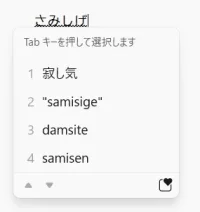
I assume for a good reason, I've been reading it as 「さびしき」 this whole time 😬 (not really due to AI this time but I think IME, because that's the only way I could type it with the kanji
Really?
samishige.jpg

After thinking about it, I actually confused it with さ, so that's my fault 😅 the whole thing I was talking about applies to 「さ」 such as 寂しさ, 明るさ, or 愛しさ, right? If that's right, then it was actually my fault and not ChatGPT since I, for some reason, confused it with the 「し」 part of the adjective when I started this conversation.
I see. Then, you got the correct explanation. さ is indeed a suffix to make a noun with the stem of adjectives, similar to "-ness" in English.
e.g.
新しい --> 新しさ
長い --> 長さ
静かだ --> 静かさ
愚かだ --> 愚かさ

Sorry to post three times, but I was thinking about something else related to the original topic: The phrasing on Japanese lyrics, does it tend to be different than how it is in English?
In English: typically, the sentence is either finished or split at a point where both pieces separate make sense, but we typically wouldn't cut the sentence at a part where it doesn't make sense on its own anymore. Maybe something like "I'm always ・ by your side" vs a weirder phrasing like "I'm always by ・ your side" (except we do shift it sometimes for emphasis on certain words like "I'm always by your ・side" to create more impact, but it's typically done on the last word (like this in Japanese too I think, except replace "word" with "syllable" I guess)
Japanese: the sentence can seemingly be split in many places without it being detrimental to the flow/feeling of the song. For example, I think I just heard a song where the singer continued singing the next sentence in the song, after splitting the previous one... or let me try to rephrase that
One sentence was sung halfway, then chopped off for the next phrasing, and the rest of it was sung while singing the next sentence connected to it on top of that. Even though the previous sentence was a complete sentence, it was sung halfway, then connected to the next sentence which (I think) was already a complete sentence of its own. The lyrics in regular sentence form:

The lyrics the way the singer sang it:

I can only assume this has some kind of poetic affect by saving certain parts for later, similar to how we do the emphasis thing in English, but it's hard to see the pattern especially in general when just listening to music since I can't really get the lyrics for every single song and analyze them like this... Does anyone know by first glance if there's some kind of pattern being followed that I can learn? Any rule that this might follow so I can try it too? I really want to spice up my phrasings in a more interesting way, but I'm kinda bad at this part...
My initial interpretation when reading your excerpt was like this.

飛んでボディを捨てて魂で吹かす(エンジン)
恋のハンドル(を)握るのはわたし(だ)

In the first line, it's not mentioned, but the actual object of 吹かす is "engine". It should be put at the end of the line, but omitted since it can be easily guessed by the verb 吹かす. Thus, the first line is actually not a complete sentence.

However, I googled with the lines, and got the title of the song. After reading the full lyrics and listening the song, I changed my interpretation.


As you can see, there is a space after 飛んで. Thus, 飛んで is a single imperative sentence, as same as the beginning part of other 5 lines in the verse.

止めて 恋の加速装置
どいて ブレーキなんてない
跳んで キスまでの距離
ハイスピードでとばす遺伝子
止めて 恋のスピンアウト
どいて 邪魔をしないで
飛んで ボディを捨てて魂で吹かす
恋のハンドル握るのはわたし

This -te form is not for continuing the sentence, but a feminine/soft imperative form here (cf. 止めろ, どけ, 跳べ/飛べ).

Also, she actually sang like the following way.

飛んで
ボディを捨てて

で吹かす恋のハン
ドル
握るのはわたし

But it's written as ボディを捨てて魂で吹かす in the lyric sheet. It would be because to make clear that ボディを捨てて is not an imperative sentence (unlike 邪魔をしないで), and 捨てて is for continuing the sentence, I think.

In my new interpretation, ボディを捨てて魂で吹かす modifies 恋. 吹かす means "to rev up" here, as you might already know, and the object is usually "engine" for this meaning, but it's used figuratively here. The listeners can get it more easily also from the word ハンドル.

In conclusion, the two lines are two sentences.

飛んで!
ボディを捨てて魂で吹かす恋のハンドル(を)握るのはわたし(だ)。

So, yes, the sentence can be split in many places without it being detrimental to the flow/feeling of the song (, as far as it's understandable for the listeners, including the cases mdchachi-san mentioned).
 
As a non-native speaker, I'm not sure about your example but I don't think the meaning changes. But in general of course the meaning could change.

Like what if I said:
自由に踊る
犬がハピー

this could mean
(I) dance freely
The dog is happy

or
the dog that dances freely is happy

The phrasing won't necessarily tell me the answer either. It depends on context and author intent.
I see... it's quite easy to be extremely vague and unclear in Japanese while still making sense, it seems... I can even see how with average context it could still be difficult to decide the definitive meaning in a sentence like this 😮‍💨 I've got a lot more work to do in order to master this kind of technique as an art style. Thank you for showing me this example 🙏

I believe the best choice is 煌く雲(きらめくくも) for the most concise and not-misunderstandable expression.
Thank you! While I may not be able to use it now, when I have a better command of the language, I hope to be able to incorporate something like this into my future server name.
Yes, I think 夢空間 can convey the meaning correctly.
Thank you, 〃same for this one.

Well, I guess if I used さみしげ instead of さびしげ it would work, but I used the reading that uses 「び」 and it doesn't recognize the 「げ」 part when I use it. I didn't think about trying the 「み」 reading since I thought I was wrong in the first place and that 「き」 is how 「気」 was read in that word.

I see. Then, you got the correct explanation. さ is indeed a suffix to make a noun with the stem of adjectives, similar to "-ness" in English.
Phew 😅 not completely useless, guys! 😂

My initial interpretation when reading your excerpt was like this.

飛んでボディを捨てて魂で吹かす(エンジン)
恋のハンドル(を)握るのはわたし(だ)

In the first line, it's not mentioned, but the actual object of 吹かす is "engine". It should be put at the end of the line, but omitted since it can be easily guessed by the verb 吹かす. Thus, the first line is actually not a complete sentence.

However, I googled with the lines, and got the title of the song. After reading the full lyrics and listening the song, I changed my interpretation.
👀👀👀
As you can see, there is a space after 飛んで. Thus, 飛んで is a single imperative sentence, as same as the beginning part of other 5 lines in the verse.
I guess I didn't consider it a space since she didn't breathe there *(more on that 3 responses below)

In my new interpretation, ボディを捨てて魂で吹かす modifies 恋. 吹かす means "to rev up" here, as you might already know, and the object is usually "engine" for this meaning, but it's used figuratively here. The listeners can get it more easily also from the word ハンドル.

In conclusion, the two lines are two sentences.
I used DeepL to translate 吹かす originally and thought the "behave as" translation was what fit, but in the way you explained it, it only makes sense for it to be "rev up" or "accelerate". This is a type of verb that makes me love the way Japanese people think, since it can probably be both about accelerating in a more "aggressive" manner or about smoking too, but I'm guessing the mental imagery is the fumes and smoke that come from both actions. I wonder if the "behave as" translation has to do with the transformation jutsu of ninja 🤣
755

But in all seriousness, since jisho says one of the meanings can be interpreted as "to put on (an air of)", maybe this visualization isn't far from accurate 🤔 what do you think?
This -te form is not for continuing the sentence, but a feminine/soft imperative form here (cf. 止めろ, どけ, 跳べ/飛べ).
But it's written as ボディを捨てて魂で吹かす in the lyric sheet. It would be because to make clear that ボディを捨てて is not an imperative sentence (unlike 邪魔をしないで), and 捨てて is for continuing the sentence, I think.
I see, that makes sense then. I was assuming that the て形(?) was almost always lightly imperative by default, and could also allow you to continue the sentence if you wished as well. Turns out, as you've shown, it can be meant as one way (sentence continuation) without meaning the other...
Well now that I think about it, I kinda understood that subconsciously, but in a different way, like for example if someone was listing the things they did/do, then I know they'd probably use the て form without it being imperative, but it feels like whatever is in those sentences to indicate that to me isn't there to notify me that this is the same thing...
Also, she actually sang like the following way.

飛んで
ボディを捨てて

で吹かす恋のハン
ドル
握るのはわたし
*It turns out the version you listened to was sung slightly differently than the one I listened to. Feel free to take a listen to the version called "sky riders (vo+pf)" which is just her (相対性理論) singing the same thing in a duet with 渋谷 慶一郎 playing the piano. Especially the 「ハンドル」 part is different because she doesn't breathe there in the version I listened to. I guess overall, I considered either a shutting of the throat (other than っ) or a breath as a pause or line break, but if I had listened to the version you sent me first, I think I would've actually interpreted and broken it up it a bit differently (though probably still not too correctly), since I would have to consider something else as something that determines the "spacing" or phrasing of the lyrics. There's so many variables 🤕
So, yes, the sentence can be split in many places without it being detrimental to the flow/feeling of the song (, as far as it's understandable for the listeners, including the cases mdchachi-san mentioned).
Thank you both for your amazing explanations... There are so many variables to Japanese overall that I haven't really played with at all (just sticking to the "typical" way of saying things), but I hope I can make at least fair progress in being able to make use of these literary tools... Right now, it's still quite difficult for me to interpret a sentence correctly, especially when it's not specifically directed at me, so content like this can make me unsure of more than a vague meaning containing the separate parts. Plus limited vocabulary, but surprisingly it doesn't have that big of an effect now that I have learned a decent amount of grammar, since I can kinda "fill in the blank" (like for example if someone says "this is a pear" in Japanese, even if I don't know the word for pear, assuming they show me the pear, I will understand completely, where as a year ago I couldn't do that).
I made some good progress, but I really need to make way more to achieve my goals in due time!! 💪
 
Back
Top Bottom