Minamoto no Yoritomo (源頼朝, 1147–1199) ordered the construction of Yōfuku-ji (永福寺) in the years after consolidating his authority and establishing Kamakura as the political centre of the emerging warrior government. The temple stood in what was then the village of Nikaidō in Kamakura County and forms the origin of the district name still used today. Although nothing of its superstructure survives, it was once one of the most imposing religious complexes in Kamakura and, together with Tsurugaoka Hachimangū and Shōchōju-in, was counted among the city's three great temple sites. Archaeological investigations have only recently brought its lost grandeur into focus.
Computer-generated image of Yōfuku-ji created by the Shonan Institute of Technology
Yoritomo's decision to found the temple can be traced directly to the outcome of the Ōshū campaign of 1189 (文治五年). During that operation, his forces destroyed the Northern Fujiwara and eliminated their power in the north. The campaign also brought death to his younger brother, Minamoto no Yoshitsune (源義経, 1159–1189) and to Fujiwara no Yasuhira (藤原泰衡, 1155–1189), along with thousands of others. When Yoritomo passed through Hiraizumi after the collapse of the Fujiwara regime, he visited Chūson-ji (中尊寺) and Mōtsū-ji (毛越寺). Their great halls and expansive Pure Land gardens deeply impressed him.
On his return to Kamakura in late 1189, Yoritomo resolved to create a counterpart. He intended Yōfuku-ji not only as a place of prayer for the souls of those who had perished in the north—Yoshitsune among them—but also as a site that would quiet spirits he regarded with apprehension. Work began in December that year. Oversight lay chiefly with Kudō Yukiyuki, acting as zōritsu bugyō , and with Hatta Tomoie (八田知家, d.1212), head of the sakusho (作所) in the mandokoro. Tomoie had already played a significant part in the construction of Shōchōju-in and thus worked at the centre of the architectural projects by which Yoritomo sought to shape his new administrative capital. The Azuma Kagami notes that Hatakeyama Shigetada and other Kantō gokenin contributed labour and resources, giving the undertaking the character of a collective effort by the emerging warrior elite.
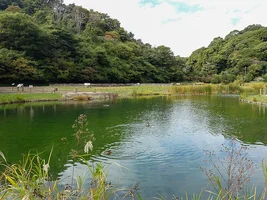
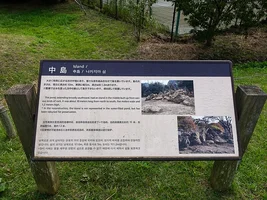
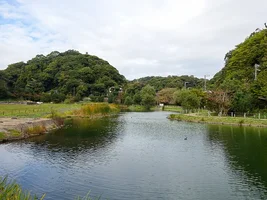
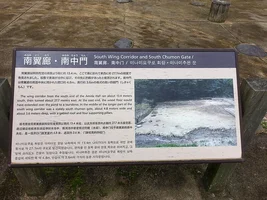
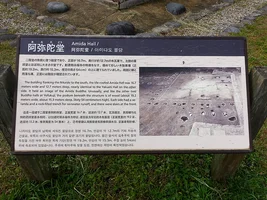
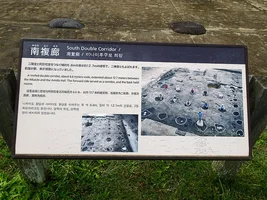
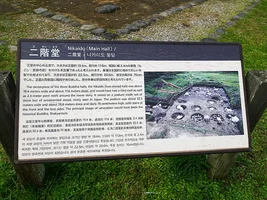
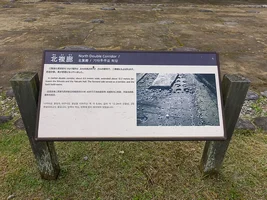
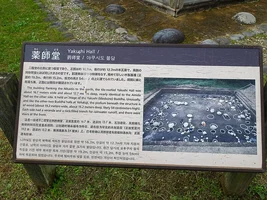
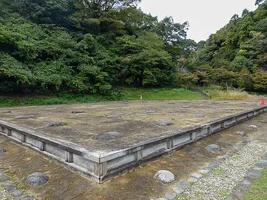
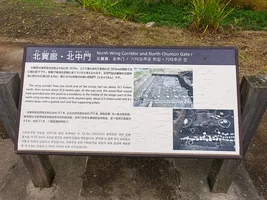
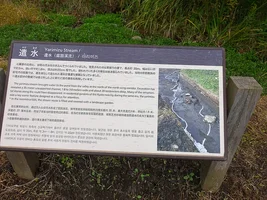
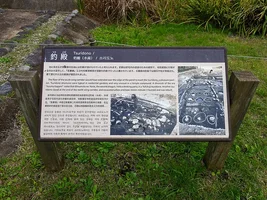
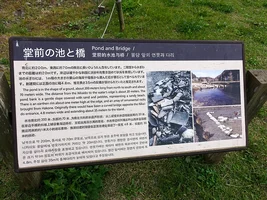
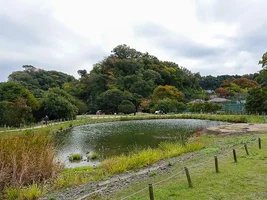
The design deliberately recalled Hiraizumi's architecture. The two-storey main hall, known as the Nikaidō, was modelled on Chūson-ji's Daichōju-in. Construction progressed, and the hall was completed in November 1192; its dedication followed shortly afterwards. In the years that followed, additional buildings were added: an Amida Hall (阿弥陀堂) to the north, a Yakushi Hall (薬師堂) to the south, a tahōtō-style pagoda (多宝塔), a bell tower, priestly quarters, and a network of covered corridors. A large Pure Land garden (浄土庭園), extending nearly two hundred metres from north to south and up to seventy metres across, occupied the centre of the grounds. A stream descending from the valley fed a pond whose banks were planted with willow, cherry, and plum. A small bridge reached an island, and a fishing pavilion stood at the end of one corridor. The axial placement of the Nikaidō between the Amida and Yakushi halls echoes the plan of Muryōkō-in in Hiraizumi. It suggests that the layout as a whole was conceived as a conscious reworking of Northern Fujiwara models—a reminder that the campaign that made Yoritomo master of the north also furnished the template for his most ambitious temple foundation.
Yōfuku-ji became a favoured site for successive Kamakura shoguns and later kubō (公方), who visited it on formal occasions. Its prominence, however, did not secure its survival. A fire in 1405 destroyed the principal structures, after which the temple declined and was eventually abandoned toward the end of the Muromachi period (1336–1573). By early modern times, the area had become little more than a damp field covered with pampas grass; only place-names preserved the memory of the Nikaidō.
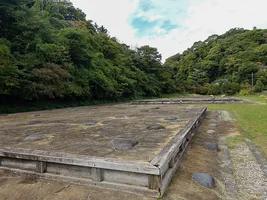
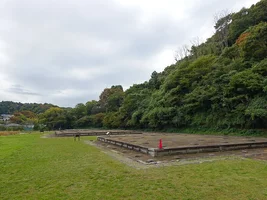
Systematic archaeological investigation began in 1983 and revealed the scale and layout of the lost complex. The foundation stones of the main hall, some measuring over 1.6 metres in diameter, indicated the building's size and marked the positions of attached corridors and adjacent halls.
Excavated material such as roof tiles stamped with the characters 永福寺, metal fittings from which ritual banners (幡 ban) had once hung, fragments of lacquerware ornamented with mother-of-pearl, and a large porcelain vessel used for storing sutras underground. These finds, combined with the surviving footprint of the pond garden, allowed the reconstruction of the site's principal structures.
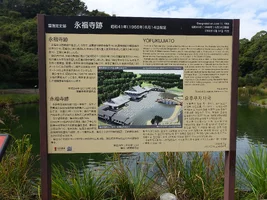
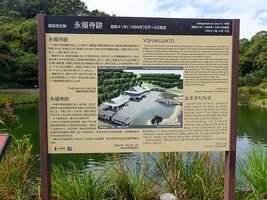
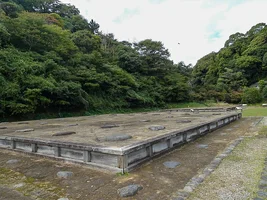
The area was declared a Historic Site in 1966, and public acquisition of the land began the following year. Comprehensive restoration work started in 2007. By June 2017, the stone platforms of the Nikaidō, the Amida Hall, and the Yakushi Hall had been rebuilt, and the outline of the garden pond had been restored. Visitors can now walk through the space where one of Kamakura's most significant temples once stood and gain a clearer sense of the religious and political world that shaped its creation.
Computer-generated reconstructions, produced jointly by Kamakura City and the Shōnan Institute of Technology, allowed the public to visualise the appearance of the Nikaidō and its surrounding structures. What earlier generations knew only from the Azuma Kagami and medieval notes has gradually taken on a clearer shape thanks to modern technology and excavation.
Gallery:
References:
- Baldessari, Francesco. Kamakura: A Historical Guide, 2016.
- Cooper, Michael. Exploring Kamakura, Weatherhill 1979.
- Mutsu, Iso. Kamakura: Fact and Legend, Tuttle 2012.
- Nussbaum, Louis-Frédéric. Japan Encyclopedia. Harvard University Press, 2005.
- Papinot, Edmond. Historical and Geographical Dictionary of Japan. Tuttle, third printing 1988.
- Sansom, George. History of Japan to 1334. Stanford University Press, 1965.
- Sansom, George. A History of Japan 1334-1615. Stanford University Press, 1961.
- Sato, Hiroaki. Legends of the Samurai . Overlook Duckworth, 1995.
- Totman, Conrad. A History of Japan. Wiley-Blackwell; second edition 2005.