- 14 Mar 2002
- 21,057
- 18,915
Last week, the World Wide Fund for Nature (WWF) Japan reported that an undercover investigation had uncovered poor management practices and the presence of 137 bacterial species at "wildlife cafés" where visitors can handle or view rare animals. Many of these cafés lacked proper safety and hygiene measures to prevent injuries and infections. WWF Japan warned that allowing people to come into close contact with wild animals — a danger made clear during the COVID-19 pandemic — could create ideal conditions for the spread of infectious diseases. The organisation urged both café owners and visitors to be more aware of these risks and called for stricter legal controls to prevent further problems.
Researchers from WWF Japan visited 25 such establishments across Tokyo, Chiba, and Kanagawa prefectures, all of which were listed online as exhibiting ten or more animal species. They examined the range and number of animals, whether staff were present, and how hygiene and safety measures—such as barriers and handwashing facilities—were maintained.

 mainichi.jp
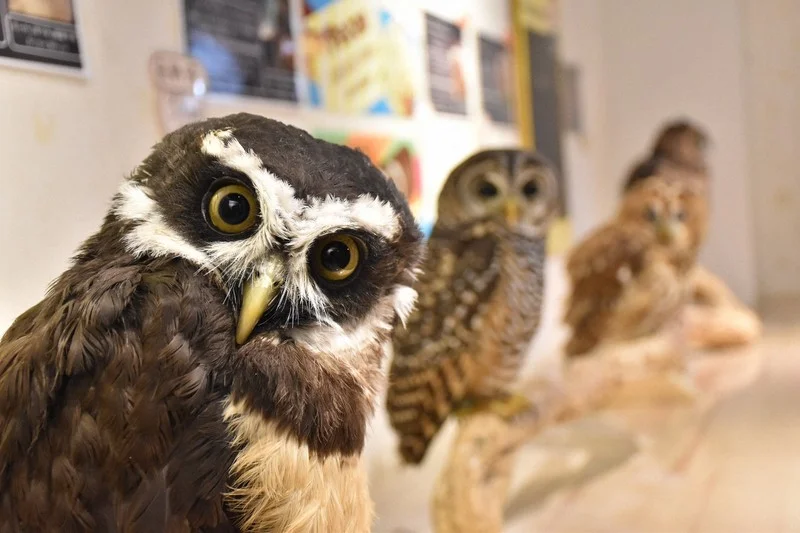
I visited a Tokyo owl café about ten years ago and couldn't help feeling pity for these poor creatures. Owls aren't pets, and neither are otters and many other species on display. I asked ChatGPT whether Japanese wildlife cafés complied with international animal welfare standards. Conclusion:
Researchers from WWF Japan visited 25 such establishments across Tokyo, Chiba, and Kanagawa prefectures, all of which were listed online as exhibiting ten or more animal species. They examined the range and number of animals, whether staff were present, and how hygiene and safety measures—such as barriers and handwashing facilities—were maintained.
The investigation identified 1,702 wild animals on display, including 459 endangered species such as snowy owls and Asian small-clawed otters. Animals posing a high risk of injury through contact, like meerkats with sharp claws and teeth, were found in 23 cafes. Ideally, barriers should be installed to prevent direct contact, but 19 of these facilities lacked barriers or employee supervision, indicating insufficient injury prevention measures.
Investigation finds inadequate management, 137 bacteria species at wildlife cafes in Japan - The Mainichi
TOKYO -- An undercover investigation by the World Wide Fund for Nature (WWF) Japan has found inadequate management and 137 bacteria species at
I visited a Tokyo owl café about ten years ago and couldn't help feeling pity for these poor creatures. Owls aren't pets, and neither are otters and many other species on display. I asked ChatGPT whether Japanese wildlife cafés complied with international animal welfare standards. Conclusion:
[H5]While animal cafés are popular (for novelty, relaxation, photo-ops, etc.), several issues come up again and again in research and reporting:[/H5]
- Many cafés display exotic species that are endangered or regulated under international wildlife laws.
- Animals often live in small cages or enclosures ill-suited to their natural behaviours. For example, owls (nocturnal animals) are being forced to stay awake by day to meet visitor schedules, or reptiles in tanks are lacking proper space or habitat.
- Hygiene, safety and infection risk are also concerns—both for the animals and for people, especially in places where visitors often touch animals, or where cleaning and veterinary oversight are limited.
- Some cafés allow the animals to be bought by visitors. This raises questions about legal sourcing, whether the animals are bred or wild-caught, and whether owners are prepared to care for them.