

Navigation
Install the app
How to install the app on iOS
Follow along with the video below to see how to install our site as a web app on your home screen.
Note: This feature may not be available in some browsers.
More options
Style variation
System
Light
Dark
You are using an out of date browser. It may not display this or other websites correctly.
You should upgrade or use an alternative browser.
You should upgrade or use an alternative browser.
The Yakuza Thread
- Thread starter Davey
- Start date
-
- Tags
- bōryokudan mafia underworld yakuza ヤクザ 暴力団

- 14 Mar 2002
- 21,050
- 18,904
Calling themselves the "chivalrous groups" (仁侠団体 ninkyō dantai) and based on a strict code of conduct and rituals reminiscent of samurai days, the Yakuza, the Japanese mafia, are involved in numerous illegal activities, ranging from gambling, prostitution and protection rackets to white-collar crime to this day. Dwindling acceptance in the population, tough anti-mafia legislature and sweeping law enforcement campaigns have resulted in a stark decline in yakuza members: the 10 largest groups in 2009 fielded some 35,490 members. This number fell to just 16,200 in 2016 and continues to plummet.
The Yakuza Thread is for the general discussion of our article on the Yakuza - Japanese crime syndicates and for news and updates relating to Japan's mobsters.
The Yakuza Thread is for the general discussion of our article on the Yakuza - Japanese crime syndicates and for news and updates relating to Japan's mobsters.
- 14 Mar 2002
- 21,050
- 18,904
Here's an article of a former yakuza member who succeeded in restarting life in legality. As a construction worker, he now earns less than a third of what he did as a gang member. But he's happy.
However, not everyone manages to leave gang life behind:
When he was in his mid-20s, the man worked as the chauffer for a gang boss in Tokyo. He received 700,000 yen ($6,300) a month. But he was expected to be at the beck and call of his boss at all times. In those days, the man would often have sushi or grilled beef dinners at restaurants. Working in the construction industry today, the man makes about 200,000 yen a month, so his dinners consist mainly of bento meals from convenience stores. But he says he does not mind the switch to the less luxurious fare. "Meals after a hard day of work are really delicious," he said. "I should have realized much earlier how great a normal life is."
However, not everyone manages to leave gang life behind:
The agency said there were about 78,600 gang members across Japan in 2010, but that fell to about a third over the span of a decade, to 25,900 in 2020. Between 2011 and 2020, about 5,900 gang members have left their gangs behind after receiving help from police and local organizations striving to drive out organized crime. However, it can be tough to find help once they leave gang life. Only about 210, or 3.5 percent of the total, have found jobs through the association set up to help such individuals return to a normal life.

- 21 May 2003
- 14,310
- 4,404
The ones who came to the bar where I worked always liked to show off their knives they carried , but not their tattoos. Most of their knives looked like they would break if they stabbed a pillow , LOL. For some reason , they needed to be pretty drunk before they would show off their tats. I only met 10 or 12 , so I can't speak about all of them as a whole.
- 14 Mar 2002
- 21,050
- 18,904
According to Mainichi, the yakuza now resort to meetings in family restaurants and regular apartments. Gone are the days of camera-surveilled fortresses and convoys of black limousins.

 mainichi.jp
The Mainichi Shimbun investigated the situation with the Kudo-kai, one of Japan's largest yakuza groups, which is based in the southwestern Japan prefecture of Fukuoka. In Fukuoka's Chuo Ward, a high-rise apartment building with over 100 apartments stands along a main road. One of these apartments is used as the office of a gang operating under the Kudo-kai, which is headquartered in the Fukuoka Prefecture city of Kitakyushu. Looking at housing registry records, ownership of the apartment was transferred to a business in the city of Fukuoka about 20 years ago. A senior member of the Kudo-kai was listed as a director of the company. Fukuoka Prefectural Police recognize the apartment as an office affiliated with the Kudo-kai. When a Mainichi Shimbun reporter talked to people living in the building, most of them gave responses such as "I've never seen a gang member," and "there's no interaction between residents amid the coronavirus crisis, so I don't know about that." According to one investigative official, there are many days when there are no gang members present in the daytime, so in the event of a criminal investigation, the group may be contacted to come and unlock it. There are believed to be about 100 gang offices in Fukuoka Prefecture, and one investigation official divulged, "Gang offices in Fukuoka are often in one apartment, and there are quite a few offices that forward calls."
Japan's yakuza quietly moving offices to condos, meeting in restaurants amid crackdowns - The Mainichi
FUKUOKA -- A formidable building with security cameras, rows of black cars and rough-looking men staring out -- such is the image of yakuza offices po
- 14 Mar 2002
- 21,050
- 18,904
The police are helping former yaks to set up bank accounts to assimilate into society and stay away from trouble.
The National Police Agency in February provided written guidelines to prefectural police departments on procedures to enable former gangsters, who have severed all ties with organized crime, to open bank accounts. The NPA, through the Financial Services Agency, also notified financial institutions, from megabanks to community banks, about the assistance measure for former mobsters. Lacking a bank account hampers the social reintegration of former gangsters because, for example, they have difficulties receiving automatic deposits of their wages. The NPA's move is intended to encourage as many gangsters as possible to quit their yakuza groups and get reintegrated into society. "It is a key element of anti-gang measures to allow those who have left yakuza groups for good to open their own bank accounts," a senior police officier said. "We hope to work steadily and do whatever we can do as a police force." The decision on opening accounts is ultimately up to financial institutions, which have their own anti-gang provisions.
- 14 Mar 2002
- 21,050
- 18,904
An Asakusa-based yakuza gang called Anegasaki-kai (姉ヶ崎会) officially disbanded on 25 July. They "specialised" in scalping tickets for concerts and running stalls at summer festivals. The group founded in the early Taisho Era (1912-1926) officially informed other yakuza organisations of their business termination. The group saw its business shrink due to increased electronic ticket sales and the cancellation of many events and festivals during the pandemic.
The Anegasaki-kai was regarded as a leading ticket scalper in Tokyo as it monopolized the business in the capital. The group also made a handsome profit running stalls at summer festivals, the sources added. For well over a decade, the group would "hire" part-timers to buy up tickets in bulk for concerts featuring prominent live acts or sports events, such as professional baseball games, a source close to another crime syndicate said. This activity was its main source of funds. The Anegasaki-kai prospered by reselling those tickets at inflated prices to diehard fans near the event venues. However, the group's membership plummeted from about 700 in 2003 to 85 or so at the end of 2021.
- 21 May 2003
- 14,310
- 4,404
They all should go into politics , seems to be where all the money is made nowdays , LOL.
- 14 Mar 2002
- 21,050
- 18,904
They all should go into politics , seems to be where all the money is made nowdays , LOL.
Yep, the required skill sets are quite the same.
- 14 Mar 2002
- 21,050
- 18,904
Although the Japanese police are trying to curtail yakuza activities, criminal gangs in Tokyo continue to run protection rackets. However, shopkeepers who pay mikajime-ryō (みかじめ料) protection money violate an ordinance aimed at eliminating syndicates. In July, the police in the Japanese capital only referred three such cases to the public prosecutor's office.
Just like in a cheap B movie, mikajime-ryō is handed over in brown envelopes on deserted streets and can also be discounted.
The managers of three restaurant and sex establishments in Tokyo found themselves on the wrong side of the law for paying protection money to a local yakuza gang that operates in the busy Kanda commercial district of the capital. [...] Aside from the three outlets, several other stores in Kanda are known to have offered mikajimeryo as well. Officers at the Kanda Police Station estimated the three managers paid a combined total of 720,000 yen ($5,000) in mikajimeryo to a senior member of a gang affiliated with the Sumiyoshi-kai syndicate between October 2019 and January of this year. The gang member has already been indicted for extorting protection money from the operators in breach of the ordinance. The MPD in March arrested the senior member and three others linked to the same group in a separate case of extortion over a five-year period from an "izakaya" pub operator. Investigations revealed the gang coerced more than 10 outlets located around JR Kanda Station that included an izakaya and a hostess bar to pay mikajimeryo over the course of 10 years or so.
Just like in a cheap B movie, mikajime-ryō is handed over in brown envelopes on deserted streets and can also be discounted.
The [bar] manager knew that paying protection money was wrong as it brought no discernable benefit to his establishment. But he feared that his staff and customers would be assaulted and the bar's reputation undermined. "My predecessor and all the others paid protection money," the manager said. "I simply viewed the payments as a necessary expenditure like utility expenses in order to dodge risks." He did not bother to consult with the police, saying, "It is impossible for the police to protect us day and night." Looking back on those days, he said, "The idea of sharing the problem with the police never crossed my mind."

- 26 Sep 2015
- 2,612
- 3,543
Just a comment that such extortion is by no means limited to Japan.
My brother once opened a bar with a couple of friends in a fairly prosperous market town in England and had to pay the equivalent of a few man a month to the local gang to ensure that their bar was 'protected' against fire.
My brother once opened a bar with a couple of friends in a fairly prosperous market town in England and had to pay the equivalent of a few man a month to the local gang to ensure that their bar was 'protected' against fire.
- 14 Mar 2002
- 21,050
- 18,904
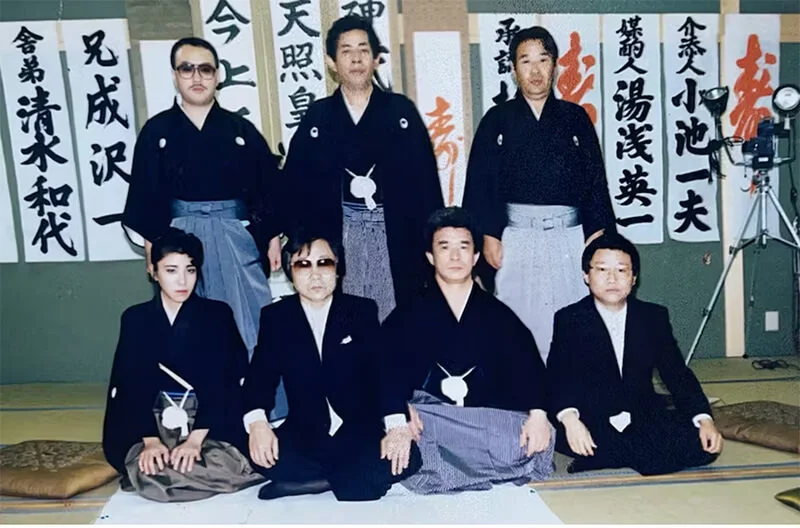
The Conversation on the only woman to join the yakuza.

 theconversation.com
The yakuza is dominated by men and leaves only informal roles to women. Typically a woman involved with the yakuza might be an anesan, a boss' wife who takes care of young affiliates and mediates between them and her husband. Wives and partners of the members support the group in a peripheral way. Some get involved to the extent that they manage yakuza-owned clubs or deal drugs. When I interviewed Nishimura recently as part of my research, she told me that when she had become involved with the yakuza at 20, she took up both roles. But she went one step further – Nishimura is the only woman who has ever partaken in the sakazuki ceremony of exchanging sake cups. This is the ritual that confirms formal affiliation with a yakuza group.
‘I never lost a fight against a man’: the story of the only woman to join Japan’s notorious yakuza
Nishimura Mako’s life in the yakuza was dangerous and violent.
theconversation.com
- 14 Mar 2002
- 21,050
- 18,904
- 14 Mar 2002
- 21,050
- 18,904
It has been ten years since Japan's most feared yakuza gang, the Kudo-kai based in Fukuoka Prefecture, was shattered by a concerted police effort, "Operation Summit", conducted on 11 September 2014. The gang now exists mainly in name only. Its leader is in prison, the group's ranks are depleted, and those left are so starved of revenue sources that some can't even afford a drink in a bar. The gang's downfall ten years ago will be celebrated in the annals of successful police operations for decades. Residents have taken back control of city streets where members once swaggered with impunity.
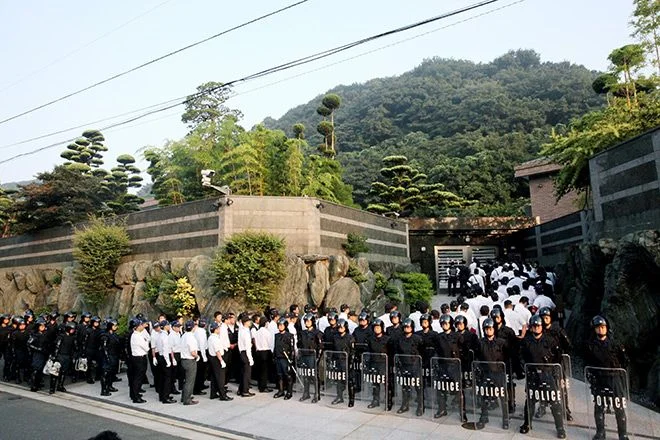
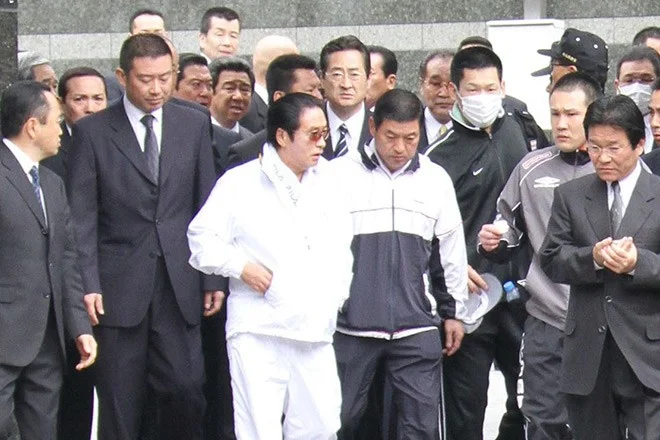
"It was such a relief to see firsthand that we had finally come this far," said a resident as she recalled hearing that Nomura had finally been arrested. That was on Sept. 11, 2014. The gang's propensity for violence earned it the special designation of the most dangerous yakuza group in Japan. In the woman's view, Kudo-kai was "too ferocious to be merely called a gang." "Kudo-kai was more of a terrorist group," she said. "But this was not fully understood at that time, which is why not everybody was eager (to fight the yakuza)." The woman was working as a hostess at a nightclub in the city's Kokura-Kita Ward in August 2003 when a Kudo-kai member lobbed a grenade into the establishment, injuring 12 individuals, including her. The club, which has since closed, was run by a man who spearheaded a campaign against Kudo-kai. Even after the audacious attack, mobsters from Kudo-kai openly roamed the streets of Kita-Kyushu at night. The woman relocated to another club nearby, only for the same gangster to show up and sit next to her at her new workplace. In April 2012, a former police inspector who had headed investigations into Kudo-kai was gunned down on the street and seriously wounded.
- 14 Mar 2002
- 21,050
- 18,904
Organized crime groups in Japan, facing declining membership and dwindling profits, are increasingly adopting methods used by a new generation of criminals who operate more covertly. These criminals often use social media to recruit members and carry out illegal activities. While yakuza syndicates openly signalled their presence in the past—sometimes displaying large signs outside their offices—to assert dominance and intimidate local businesses, repeated police crackdowns have significantly altered the landscape.
Affiliation with such groups has become more of a liability, limiting their ability to operate openly. Officials at the National Police Agency suspect that traditional crime syndicates are increasingly aligning with so-called tokuryū (特流) groups—loosely connected criminal networks that maintain anonymity through social media and disposable phones, engaging in offences such as robbery and fraud. The Sumiyoshi-kai syndicate, Japan's second-largest organized crime group after the Yamaguchi-gumi, is reportedly withdrawing even further from the public eye.
A senior police official suggested Sumiyoshi-kai might forgo a permanent headquarters altogether, opting to operate more discreetly by establishing temporary offices in different locations instead. Authorities suspect a growing collaboration between traditional organized crime groups and tokuryu networks and believe that these loosely connected, anonymous groups are channelling a portion of their profits to established gangs.
Affiliation with such groups has become more of a liability, limiting their ability to operate openly. Officials at the National Police Agency suspect that traditional crime syndicates are increasingly aligning with so-called tokuryū (特流) groups—loosely connected criminal networks that maintain anonymity through social media and disposable phones, engaging in offences such as robbery and fraud. The Sumiyoshi-kai syndicate, Japan's second-largest organized crime group after the Yamaguchi-gumi, is reportedly withdrawing even further from the public eye.
It is in the process of selling its headquarters in Tokyo's Shinjuku Ward, according to investigative sources. But police are still not sure where the gang plans to set up its new base. The NPA said Sumiyoshi-kai has about 3,200 members on its payroll as well as others who engage in all sorts of criminal activity although they are not full-fledged members. In November 2023, the Tokyo Metropolitan Public Safety Commission designated the Shinjuku condominium now on sale as the Sumiyoshi-kai headquarters. In June 2024, the Tokyo District Court, acting on a request from the local neighborhood association, issued a temporary injunction banning use of the condo as the gang's headquarters. As of August, the gang was in the process of moving out of the office, investigative sources. However, it has not been completely cleared because the gang could not find a moving company willing to remove large items, such as desks.
A senior police official suggested Sumiyoshi-kai might forgo a permanent headquarters altogether, opting to operate more discreetly by establishing temporary offices in different locations instead. Authorities suspect a growing collaboration between traditional organized crime groups and tokuryu networks and believe that these loosely connected, anonymous groups are channelling a portion of their profits to established gangs.
- 21 May 2003
- 14,310
- 4,404
Back in the early 70's , Yakuza members started coming into the bar where I worked. Most just had their pinky finger missing , but a few had several missing. Almost all of them carried a knife they liked to show off. I guess we didn't impress them as after a few weeks they all disappeared.

Ukigumo
後輩
- 15 Mar 2025
- 1,382
- 2,684
Maybe they went on to become the leaders of China, Russia and the USABack in the early 70's , Yakuza members started coming into the bar where I worked. Most just had their pinky finger missing , but a few had several missing. Almost all of them carried a knife they liked to show off. I guess we didn't impress them as after a few weeks they all disappeared.

- 14 Mar 2002
- 21,050
- 18,904
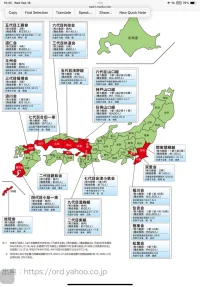
Last Monday, senior leaders of the Yamaguchi-gumi—Japan's largest organized crime group—submitted a written pledge to the Hyogo Prefectural Police, vowing to end ongoing conflicts with its breakaway factions. Since the formation of the Kobe Yamaguchi-gumi in 2015, following a split from the original syndicate, violent clashes between the groups and other splinters have occurred in various areas.
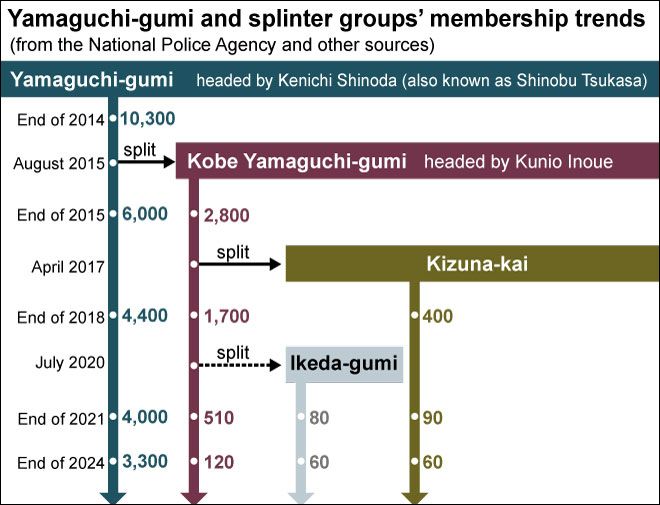
Image credit: Asahi
Yamaguchi-gumi unilaterally moved to halt the hostilities. The NPA remains cautious and continues to monitor the activities of all involved yakuza organizations. Three senior Yamaguchi-gumi executives visited the prefectural police headquarters on the afternoon of 7 April, promising to cease all confrontations and refrain from further disturbances.
Image credit: Asahi
Yamaguchi-gumi unilaterally moved to halt the hostilities. The NPA remains cautious and continues to monitor the activities of all involved yakuza organizations. Three senior Yamaguchi-gumi executives visited the prefectural police headquarters on the afternoon of 7 April, promising to cease all confrontations and refrain from further disturbances.
In August 2015, some gangs of the Yamaguchi-gumi left the group and formed Kobe Yamaguchi-gumi. The split is said to have been caused by strong dissatisfaction with the management of the Yamaguchi-gumi, which was centered around the Kodo-kai. Kodo-kai, based in Nagoya, is the organization that Yamaguchi-gumi's leader Kenichi Shinoda, who is also known as Shinobu Tsukasa, originated from. Violent conflicts broke out immediately after the split, resulting in deaths and injuries for members of both groups. In January 2020, both groups were designated as dangerous criminal organizations based on the anti-organized crime law.

- 14 Mar 2002
- 21,050
- 18,904
The SCMP reports that a police investigation into suspected organised crime in Japan has revealed possible ties between a yakuza group and Hong Kong's 14K triad—one of Asia's most influential criminal syndicates, according to experts. Authorities are focusing on a video found on a mobile phone seized during an arrest in September last year. The footage reportedly shows individuals partaking in a sake-sharing ceremony, a traditional custom often interpreted as a symbolic act of alliance or loyalty.
The Tokyo Metropolitan Police believe the video depicts members of a Japanese yakuza organisation engaging in the ritual with figures thought to be linked to the 14K triad. The gathering allegedly occurred at a hotel in Yamanashi Prefecture in March 2024. Although the video was uncovered six months later during a separate investigation into the illicit resale of mobile phones, five Japanese men seen at the hotel event were later arrested for failing to disclose their alleged gang affiliations during check-in—a violation of laws intended to curb the movements and operations of organised crime groups.

 www.scmp.com
The Tokyo Metropolitan Police believe the video depicts members of a Japanese yakuza organisation engaging in the ritual with figures thought to be linked to the 14K triad. The gathering allegedly occurred at a hotel in Yamanashi Prefecture in March 2024. Although the video was uncovered six months later during a separate investigation into the illicit resale of mobile phones, five Japanese men seen at the hotel event were later arrested for failing to disclose their alleged gang affiliations during check-in—a violation of laws intended to curb the movements and operations of organised crime groups.
Among those arrested was Kajiro Shirai, 51, who officers identified as a member of the Chinese Dragon gang – a group largely composed of descendants of Japanese nationals who were left in China after World War II and later repatriated. Also detained was Kazuyuki Tajima, 53, who police described as a senior member of the Sumiyoshi-kai, one of Japan's largest yakuza syndicates.
Jake Adelstein, author of Tokyo Vice: An American Reporter on the Police Beat in Japan and an authority on the nation's underworld groups, said the Japanese authorities' crackdown on yakuza had dramatically cut into their profits and hit recruitment. The only way for them to survive, he said, was to form new alliances and diversify their operations. "These groups are joining forces in order to expand into the international drug trade," Adelstein told This Week in Asia. "The 14K triad controls methamphetamine routes in Southeast Asia and tying up with the Sumiyoshi-kai will give them access to overseas drug supply chains." According to Adelstein, a second opportunity lies in money laundering through the booming tourism and property sectors. "The boom in Chinese tourists coming to Japan has created channels to launder cash via duty-free shops and property deals," he said. With the 14K known to have expertise in cybercrime and the Sumiyoshi-kai's ability to provide "local infrastructure" in Japan, Adelstein said both groups together "are capable of conducting phishing scams and cryptocurrency fraud, both crimes that are rising sharply in Japan".
Concern in Japan as police investigation uncovers possible yakuza-triad alliance
Footage found during a raid shows yakuza members taking part in a ritual with individuals believed to be part of Hong Kong’s 14K triad.
www.scmp.com
- 14 Mar 2002
- 21,050
- 18,904
More on that alleged pact between Sumiyoshi-kai and 14K:

[ Video deleted ]
A total of five individuals, including senior figures from organized crime groups, have been arrested on suspicion of reserving a hotel room without disclosing their ties to criminal organizations. Authorities believe the site was used to conduct an alliance ceremony between a Japanese gang and the Hong Kong-based mafia group known as 14K. Kazuaki Tajima, 53, identified as a top leader in the Sumiyoshi-kai syndicate, and Utaro Shirai, 53, a senior figure in the quasi-gang group "Chinese Dragon", allegedly concealed their gang affiliations when booking a hotel in Yamanashi Prefecture two years ago. Police suspect that during the hotel stay, Tajima participated in a ritual known as sakazuki-goto—a sake-sharing ceremony signifying a formal alliance—with members of the 14K mafia, mediated by Shirai and others.
Sumiyoshi-Kai Leader and Hong Kong Mafia Allegedly Form Pact
A total of five individuals, including senior figures from organized crime groups, have been arrested on suspicion of reserving a hotel room without disclosing their ties to criminal organizations. Authorities believe the site was used to conduct an alliance ceremony between a Japanese gang and...
newsonjapan.com
Last edited:
- 14 Mar 2002
- 21,050
- 18,904
Jake Adelstein on the death of Goto Tadamasa, one of the brightest and most ruthless gangsters in Japan.

 tokyopaladin.substack.com
Highly interesting: the chapter on the connections between Soka Gakkai and the yakuza.
If you were going to summarise the life (and death) of Tadamasa Goto, one of the most ruthless yakuza (gangsters) in Japan, the best word would be "不愉快" (fuyukai). It literally means "unpleasant". It may seem a benign word for a man Japanese police thought was responsible for countless crimes and several murders. He was one of the most famous living yakuza in Japan, but not the most typical. Typical yakuza have, at the very least, a rudimentary sense of honour.
Japan's Most Ruthless Yakuza Boss Is Heading To The 6 Realms
Tadamasa Goto was one of the brightest and most ruthless gangsters in Japan, His legacy may be that he launched the legal architecture that has decimated the yakuza. He won't be missed.
tokyopaladin.substack.com
Highly interesting: the chapter on the connections between Soka Gakkai and the yakuza.
Similar threads


- Replies
- 112
- Views
- 19K
