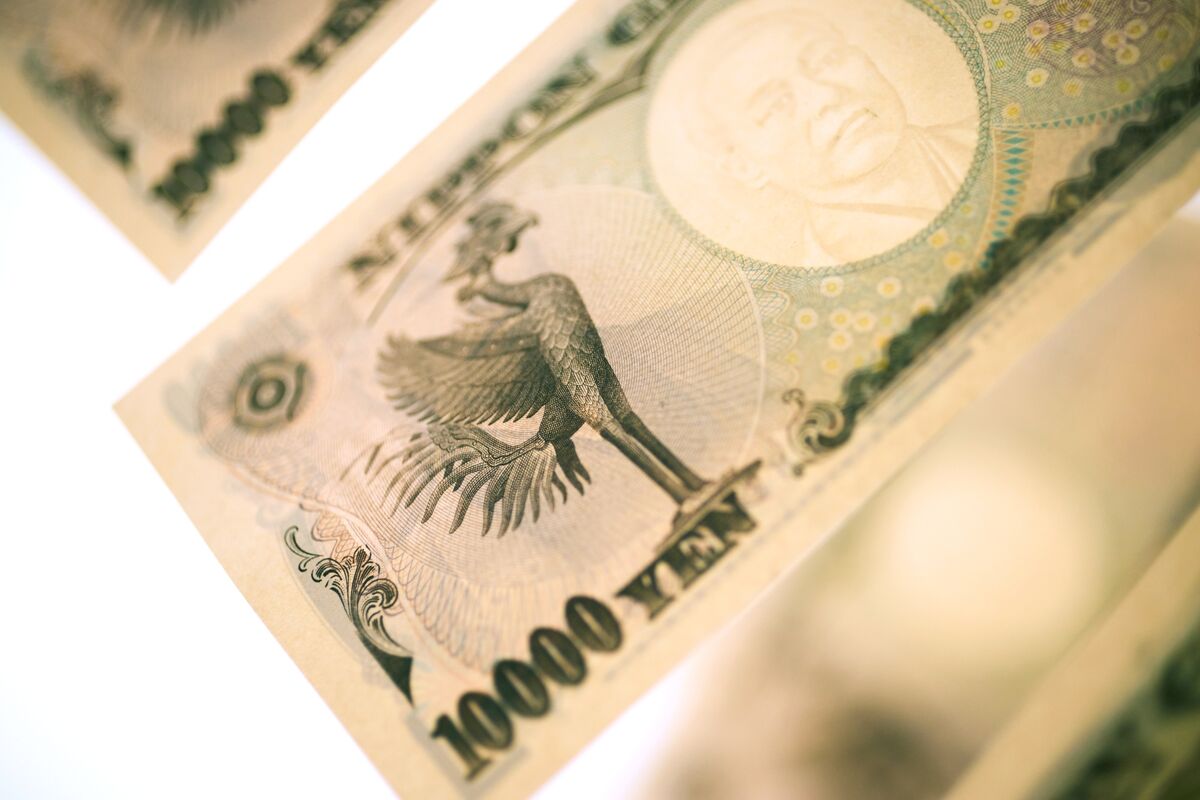
Economy The weakening of the yen

No point in changing to dollars. That would give you a double conversion hit. I'd change a little from Yen to Baht at Fukuoka airport so you have some cash on hand and then the rest in Thailand where the exchange rate into the local currency is likely to be better.
 
I had to get some Hong Kong dollars last year and got a really good rate at one of those little currency exchanges near Shinjuku station by Ame Yokocho.


These exchange parlours are outstanding in terms of efficiency and rates. They seem to handle millions and millions of cash per hour. For larger amounts, you can make an online appointment. I used this one last year to change EUR into JPY.


There are plenty of others, and shopping around for the best rates pays off.
 
The Japanese authorities' efforts to stabilize the yen are proving ineffective, particularly against non-U.S. currencies. The yen is reaching record lows compared to currencies like the Swiss franc and the British pound, mainly due to the prevalence of carry trades. Yesterday, the yen dropped to approximately 158 against the dollar. The BOJ's decision to continue its Japanese government bond purchases until at least July has drawn attention to the widening interest rate disparity with the U.S., where rates have surpassed 5%.


With traders continuing to sell the yen, the market is watching whether the Japanese currency returns to the 160 mark against the dollar reached on 29 April. Japan is believed to have conducted its first yen-buying intervention of the year that day. But the yen continues to depreciate against other currencies seen as less likely to draw Japanese intervention. The Japanese currency hit the 178 range against the Swiss franc on Tuesday, its weakest in data going back to 1982. It also reached the 201 range against the pound on Friday, a roughly 16-year low. The yen also marked a 17-year low against the New Zealand dollar on Friday and an 11-year low against the Australian dollar on Wednesday. The currency did strengthen against the euro following the Japanese intervention. However, the yen has since weakened to 169 from the 167 range marked Friday.


Paywall alert:
 
One hundred seventy will be the new 160. JPY for USD, that is.

The Japanese yen is in danger of declining to levels not seen since 1986, and traders betting against it are not deterred by the possibility of government action to support the struggling currency. As experts from Sumitomo Mitsui DS Asset Management and Mizuho Bank suggested, a drop to around JPY170 against the dollar is feasible due to ongoing yen sales in exchange for the higher-yielding US dollar.

Currently, investors don't see any vital factors, including potential Japanese yen buying, that could significantly change the trend that has caused the yen to fall nearly 12% this year. The market's behaviour since early May highlights this situation, with the yen returning to its initial position after the finance ministry's unprecedented JPY9.8 trillion (USD61.4 billion) intervention in the market. Nick Twidale from ATFX Global Markets, with 25 years of experience trading the Japanese currency, believes the dollar-yen exchange rate could reach JPY170 quite swiftly. He asserts that short-term interventions are ineffective.


"With the Federal Reserve in no rush to lower interest rates, traders can see all the emphasis for a yen turnaround sits with Japanese authorities and for now their words are doing little to convince traders to change direction," Bloomberg strategist Mark Cranfield said. Japan's currency may strengthen beyond ¥150 per dollar should officials intervene, but "in the long term, the yen will continue to weaken toward ¥170," said Shinji Kunibe, lead portfolio manager at Sumitomo Mitsui DS Asset Management. "It's really tempting fate to say 'you can't do ¥170,'" said Vishnu Varathan, head of economics and strategy at Mizuho Bank in Singapore. "Is it desirable? No. Is it ruled out as a possibility? Unfortunately not."


One hundred seventy will be the new 160. JPY for USD, that is.

The Japanese yen is in danger of declining to levels not seen since 1986, and traders betting against it are not deterred by the possibility of government action to support the struggling currency. As experts from Sumitomo Mitsui DS Asset Management and Mizuho Bank suggested, a drop to around JPY170 against the dollar is feasible due to ongoing yen sales in exchange for the higher-yielding US dollar.

Currently, investors don't see any vital factors, including potential Japanese yen buying, that could significantly change the trend that has caused the yen to fall nearly 12% this year. The market's behaviour since early May highlights this situation, with the yen returning to its initial position after the finance ministry's unprecedented JPY9.8 trillion (USD61.4 billion) intervention in the market. Nick Twidale from ATFX Global Markets, with 25 years of experience trading the Japanese currency, believes the dollar-yen exchange rate could reach JPY170 quite swiftly. He asserts that short-term interventions are ineffective.


Ok I guess I won't buy any more for now. I'm in the red at the moment.
 
Today, the yen fell past 160 against the dollar for the first time since late April, when the government and the Bank of Japan began to support the currency. At one point Thursday morning, the dollar traded at 160.86 yen, the Japanese currency's weakest since December 1986. The yen dropped to 171.79 against the euro, the lowest level since the unified European currency was adopted in 1999.

Bank of America Securities thinks the Japanese government has drawn a line in the sand at 165 for intervention, although it said in a report on Thursday that it may do so between 164 and 164.5. Shusuke Yamada, the company's chief Japan foreign exchange strategist, stated that while FX intervention might slow down the yen's depreciation and potentially keep the dollar-yen rate under 165 temporarily, it probably won't alter the underlying fundamentals and structural capital outflows.

Paywall alert:
 
Yesterday, the yen surged to 157.41 against the dollar after softer-than-expected U.S. inflation data for June showed a 0.1% decline, sparking speculation of intervention by the Japanese government and the Bank of Japan. Previously, the yen had plunged to 161.99 on 3 July, its weakest since December 1986. Nikkei reported a "rate check" by the Bank of Japan against the euro, which fell to 175.42, its lowest since 1999, suggesting potential intervention.

Paywall alert:


Bloomberg estimates yesterday's intervention to be USD 22 billion! :oops:

 
Lo and behold: the yen slid past ¥150 per dollar!

The Japanese yen plummeted below the ¥150 per dollar mark on Wednesday for the first time since November, sparking intense criticism from Japanese officials. This sharp decline was fueled by hotter-than-expected US inflation data, which dampened expectations of an imminent Federal Reserve interest rate cut. As a result, the dollar strengthened against major currencies, including the yen. The persistent upward pressure on US prices has fueled speculation that the Fed will maintain its aggressive monetary policy for an extended period, exacerbating the yen's weakness.


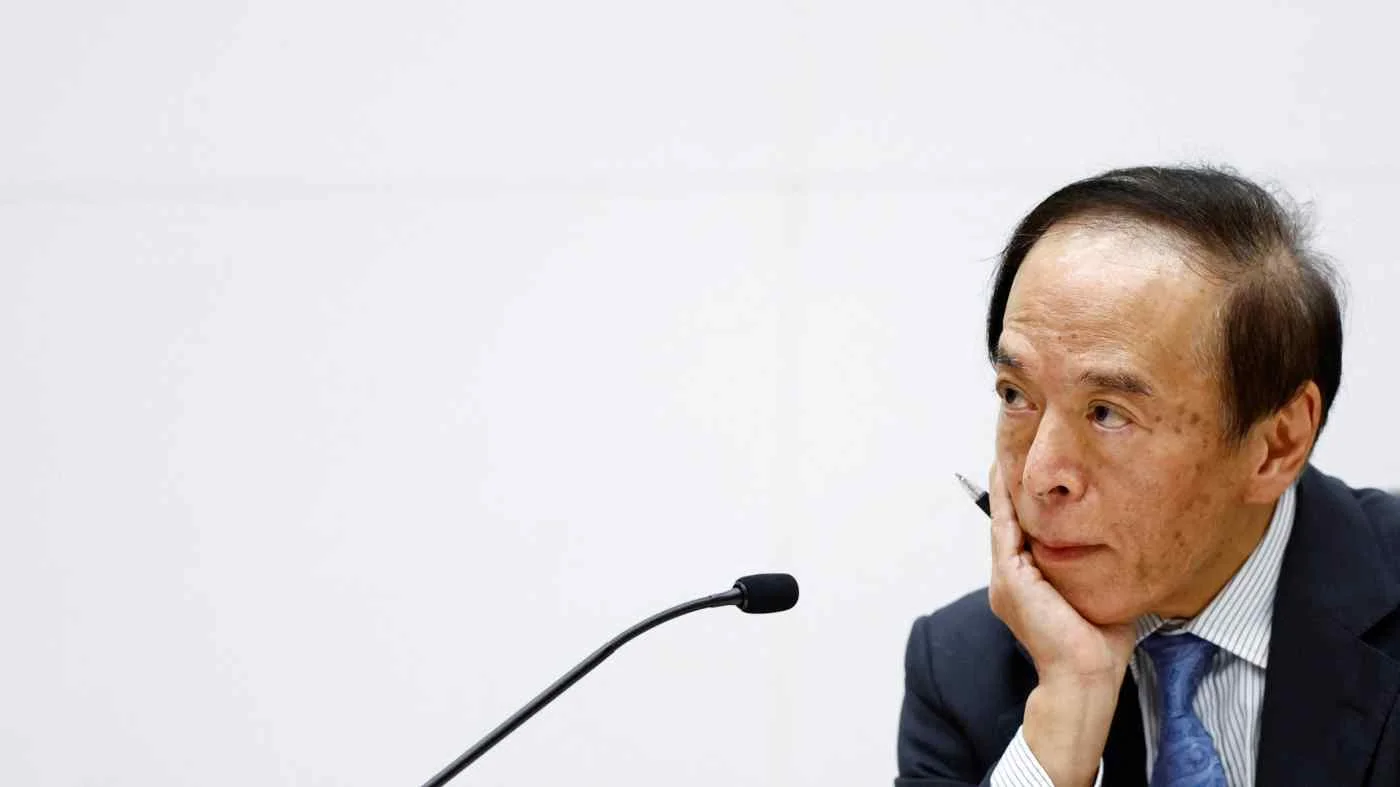
BOJ governor Ueda Kazuo

BOJ governor Ueda Kazuo (photo credit: Reuters)


The BOJ on 31 July marked a significant shift in monetary policy, abandoning its ultra-loose stance by raising interest rates to approximately 0.25%. This decision, coming four months after exiting negative interest rates, was accompanied by a plan to halve its monthly government bond purchases to around ¥3 trillion by early 2026. The policy change sent shockwaves through financial markets, with the yen surging to its strongest level in over four months against the dollar. Investors bought the yen following the announcement, sending the Japanese currency to the 151-yen range against the dollar at one point, its strongest level in more than four months. BOJ Governor Kazuo Ueda subsequently held a press conference to elucidate the rationale behind these policy adjustments.


Paywall alert:
 
We're back to almost 154 JPY for 1 USD! :confused:

And this might last for weeks or months:

The yen (USD:JPY) weakened to 153.84 per U.S. dollar after the election results, its lowest level since the end of July. Japanese stocks were higher, with the Nikkei 225 Index (NKY:IND) up 1.8% on Monday. "With the need to form a new coalition, the government could face weeks of political negotiations," said Charu Chanana, head of FX strategy, Saxo. "... a more divided coalition may feel compelled to implement substantial fiscal spending, complicating the Bank of Japan's path to policy normalization," she added, underscoring the significance of the BOJ's policy decision on Thursday. BOJ is not expected to hike rates then, but markets see a possible increase in December or January.


My shorthand has always been 100 yen to a dollar. Of course that was a huge over-simplification, but it worked for me. Mostly because it made the math simple. Back in those days, I never switched between the two much, anyway. However, it sounds like it might be due time to change that mental math from 100 yen to a dollar to 150 yen to a dollar.
 
The Japanese yen strengthened to the upper 150 range against the dollar on Thursday, recovering losses following Donald Trump's return to power. The currency breached the 151 mark for the first time since 22 October after U.S. consumer spending showed a slightly stronger-than-expected increase in the previous month. :(

By early Thursday morning, the yen had climbed to approximately 150.50, regaining levels seen before Trump's reelection on 6 November. As of 9:32 a.m., the yen was trading at 151.51, up 0.28% from Wednesday. In the U.S., the core personal consumption expenditures price index, the Federal Reserve's preferred measure of inflation, rose by a modest 2.8% year-on-year in October. The data aligns with the Fed's cautious stance on reducing interest rates, with Chair Jerome Powell indicating no urgency to take action.

Yen strategists diverge in their outlook after Trump's inflationary fiscal policies and tariff threats have cast uncertainty over the pace of U.S. monetary easing. Higher Treasury yields and a wider U.S.-Japan yield gap would eventually lead to a stronger dollar. Yen bulls foresee the currency strengthening to 140 over the next year whereas bears predict it weakening to 160.


Paywall alert:
 
In the US, the latest CPI reading showed inflation is still a threat, meaning bets that the Fed will lower rates at their next meeting just evaporated.

And as an aside, uncle jerry* has said he responds to what is actually occurring, rather than what might happen.


*chair of the Fed
 
I'm trying to figure out if I should get more yen given the current sh!tshow in the U.S. Seems like the dollar will become weaker. But there's no real consensus it seems.

I wonder if this analysis is just AI-generated.

Major Takeaways
  • The current price of the pair is ¥147.314 as of 07.03.2025.
  • The USDJPY pair reached its all-time high of ¥358.4 on 1971-01-10. Its all-time low of ¥75.57 was recorded on 2011-10-31.
  • Most experts anticipate the USDJPY pair to decline further in 2025. According to various estimates, the price may drop to around ¥140.00 by the end of the year. An optimistic outlook suggests a possible rise to ¥160.74. However, experts largely view this scenario as improbable.
  • In 2026, the negative momentum may change to a positive one. According to expert forecasts, the price may increase to ¥159.00–¥173.93 by the end of the year. At the same time, some analysts suggest that quotes may plunge to ¥138.39.
  • From 2027 to 2030, projections vary widely. Some experts predict a spike to ¥215.26–¥218.84, while others anticipate a decrease to ¥124.29.
  • By 2040–2050, the USDJPY pair will be affected by global economic shifts, technological advances, and geopolitical changes. The asset will experience fluctuations due to interest rate changes, trade wars, and political instability. The long-term trend will be determined by the relative strength of the US and Japanese economies, as well as innovations in finance.
 
JP Morgan said this a year ago.

"After the strong U.S. CPI print, expectations for Fed cuts have decelerated further and the market now only prices in only around 50 bp of cuts in 2024," Chandan said. "As such, we revise up our USD/JPY forecasts to 155 in June 2024, 154 in September 2024, 153 in December 2024 and 153 in March 2025."

But clearly they didn't anticipate the destruction that's taking place in the U.S. On the other hand, what is happening may actually be good for the markets even if ordinary people get destroyed. Assuming democracy itself isn't suspended. 🤷‍♂️
 
Those ranges are all over the place.
"The yen might go higher, but then again it might go lower. It depends on a lot of things." It's saying a whole lot of nothing.

I don't see any strong reason to buy yen at this point. My preference would be to hold US$, all things considered. Too much uncertainty, most of it generated by the US itself. But in times of uncertainty, people dump risky assets and cling to the most stable one around.
 
Those ranges are all over the place.
"The yen might go higher, but then again it might go lower. It depends on a lot of things." It's saying a whole lot of nothing.

I don't see any strong reason to buy yen at this point. My preference would be to hold US$, all things considered. Too much uncertainty, most of it generated by the US itself. But in times of uncertainty, people dump risky assets and cling to the most stable one around.
The reason would be if you have any purchases in yen coming up and you think the yen will get stronger.

Most of the analysis doesn't taken into account what happened post-election. But my AI friend thinks that the dollar will probably remain strong despite all the dysfunction at the top:

The U.S. government's preference for dollar strength is complex and somewhat contradictory based on recent developments:

  1. President Trump has expressed a preference for a weaker dollar to support U.S. export competitiveness and reduce the trade deficit38.
  2. However, the policies proposed and implemented by the Trump administration are likely to result in a stronger dollar:

    • The extension of the 2017 Tax Cuts and Jobs Act and other tax reductions are expected to increase fiscal deficits, which typically strengthens the currency34.
    • Proposed tariffs on imports from trading partners like China tend to strengthen the dollar as other currencies weaken in response34.
    • The combination of looser fiscal policy and potentially tighter monetary policy to control inflation also supports a stronger dollar3.
  3. The Federal Reserve, which operates independently from the government, has maintained a cautious approach to lowering interest rates, indirectly supporting dollar strength6.
Despite the stated preference for a weaker dollar, the actual policies and economic conditions are driving the dollar stronger. This disconnect between rhetoric and policy outcomes suggests that the U.S. government's actions are currently favoring a strong dollar, even if unintentionally348.
 
I often wonder what would happen if they discover there is no gold in Fort Knox? It was big news about an inventory inspection for a few days and it seemed to disappear off the radar. Would the US economy tank if there no gold?

200.gif
 
Prior to 1971, the US dollar was backed by gold. Today, the dollar is backed by 2 things: the government's ability to generate revenues (via debt or taxes), and its authority to compel economic participants to transact in dollars.

If all the gold disappeared in Fort Knox I really don't think the economy would crash at all bond rates would probably worsen due to decerase in trust perhaps. Its about 425 billion worth. Again we are not on the gold standard, US currency is not backed by gold.
 
Last edited:
The US government is currently trashing the state machinery and treating former friends like enemies, and the markets don't like it. Even with supposedly US-first policies, the dollar is about 2% weaker against the yen than it was a month ago (the pound and euro are both about 2% higher). As the US becomes a pariah, more countries will be making arrangements with other countries, as Canada is already rapidly doing, which will reduce demand for dollars. The West has been in long-term decline and, as one commentator recently put it, Trump has slammed his foot on the accelerator. I would be buying yen now rather than in a few years. Japan's slow decline due to depopulation and ageing is predictable; America's could be sudden and violent.
 
The US government is currently trashing the state machinery and treating former friends like enemies, and the markets don't like it. Even with supposedly US-first policies, the dollar is about 2% weaker against the yen than it was a month ago (the pound and euro are both about 2% higher). As the US becomes a pariah, more countries will be making arrangements with other countries, as Canada is already rapidly doing, which will reduce demand for dollars. The West has been in long-term decline and, as one commentator recently put it, Trump has slammed his foot on the accelerator. I would be buying yen now rather than in a few years. Japan's slow decline due to depopulation and ageing is predictable; America's could be sudden and violent.
That was my initial thought too but I think it's perhaps more likely the dollar will remain strong against the yen on average. If the U.S. gets its fiscal house more in order (even while destroying its society and working class) the markets could remain strong. Of course that's assuming democracy, such as it is, continues to function. There's sure to be a lot of volatility for a while though. It's the uncertainty the markets don't like more so than the actions that have been taken.
 
Back
Top Bottom