

Navigation
Install the app
How to install the app on iOS
Follow along with the video below to see how to install our site as a web app on your home screen.
Note: This feature may not be available in some browsers.
More options
Style variation
System
Light
Dark

You are using an out of date browser. It may not display this or other websites correctly.
You should upgrade or use an alternative browser.
You should upgrade or use an alternative browser.
Question The title of a shunga
- Thread starter Ger
- Start date

- 21 May 2003
- 14,310
- 4,404
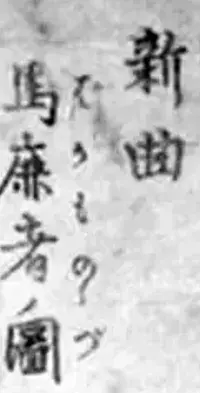 A hair bigger. I smile at some shunga that looks like two people in fancy kimonos wrestling under large futons.
Last edited:
- 21 May 2003
- 14,310
- 4,404
- 21 May 2003
- 14,310
- 4,404
Probably not a good idea with all the young members we have now active . With Google search , you can find hundreds of pictures though. I looked for yours to see if there was any info , but couldn't find that one. Probably someone will be able to tell us something from the Kanji you posted. Sometimes it just takes a day or two to get a reply.

- 14 Mar 2002
- 21,054
- 18,909
If jref allows me I would list them in higher resolution
Or would I then be banned ???
Wrap it in a spoiler tag and add a disclaimer.
Code:
[SPOILER="text"]Your text or image here.[/SPOILER]
- 17 Sep 2005
- 6,017
- 1,970
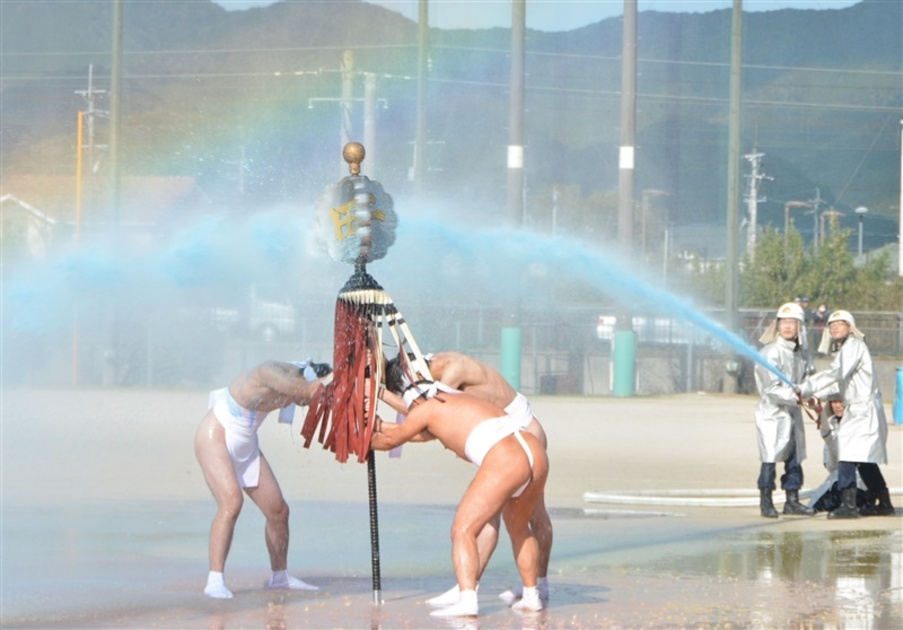
出初め式で披露された「馬簾回し」 - 防火、防災へ思い新た 佐賀各市町で消防団出初め式 - 写真・画像(1/1) | 西日本新聞me
出初め式で披露された「馬簾回し」
Those strips dangling from that pole in the middle that the three men are holding ...those are 馬簾
Another reference

og:site_name_otomaya
だんじり祭りで有名な岸和田市にある、おとま屋は、お祭り用品の専門店です。特に特大うちわ、大団扇、だんじり団扇、渋うちわ、襷、記念品、法被、巾着、垂れ幕など、様々な祭りグッズについて、専門的に対応いたします。当店の得意分野は、だんじり、地車、神輿、太鼓、やぐら、山車、体育祭うちわ、企業広告、興行、よさこい、各種パレードなど、全国各地の祭礼やイベント向けのオーダー商品製作です。ぜひ、お気軽にご相談ください。
www.otomaya.com
- 17 Sep 2005
- 6,017
- 1,970
Regarding that particular piece, I found it on an auction site, but it doesn't give much information.

《阡》版画 春画「新曲 馬廉者ノ図」21図 つり船... - Yahoo!オークション
《阡》版画 春画「新曲 馬廉者ノ図」21図 つり船 茶うす 竹馬 入船等 艶絵 枕絵 □商品詳細 古い物ですので汚れ・使用感・シミ等有ります。 真ん中と下部に少し目立つ傷みが有ります。 詳しくは画像でご確認下さい。 サイズ:横550・縦380mm(約) □支払詳細 Yahoo!かんたん決済 □発送詳細 レターパックプラス(600円)の発送(補償無し) □注意事項 ☆金額の誤入札の取消しやキャンセルはお受けできませんので良くお確かめの上ご入札下さい。 ☆新規の方や評価が「非常に悪い・悪い」の多い方の入札は取
page.auctions.yahoo.co.jp

Ger
後輩
- 17 Jan 2018
- 190
- 95
- Thread starter
- #10
What would the connection be between these "baren",馬簾, and the shunga print ?
Here
https://www.otomaya.com/matsuri/plate/minimaku.html
it says
②馬簾(バレン):記入文字・スケッチ【平面イラスト】や写真【正面・側面・斜め]
google translate
②Baren: Filled letters and sketches [Flat illustrations] and photos [Front, Side, Slanted]
Here
https://www.otomaya.com/matsuri/plate/minimaku.html
it says
②馬簾(バレン):記入文字・スケッチ【平面イラスト】や写真【正面・側面・斜め]
google translate
②Baren: Filled letters and sketches [Flat illustrations] and photos [Front, Side, Slanted]
Last edited:
- 17 Sep 2005
- 6,017
- 1,970
Just responding to this.Please read the title of this shunga.
...
Would it be like this?
新曲 馬簾者ノ図
新曲 馬廉者ノ図
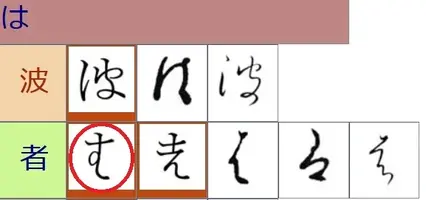
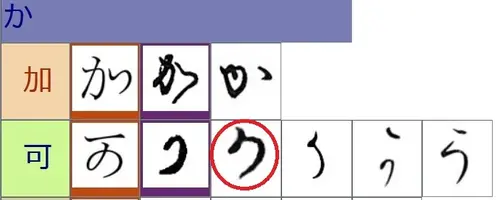
The yomigana looks to me like it says むうものノづ
I know that sometimes the old way of writing kana and modern reading can differ. So in this case, I think it could be read as もうもののず
Just speculation, but perhaps the author was using some kind of play on words for 猛者?

- 12 Oct 2013
- 4,071
- 5,023
I'm curious about the title 馬廉 (instead of 馬簾). There is a subtle difference in the kanji character, and it seems significant. Maybe it is some play on words. At any rate, I couldn't find anything on it, or come up with a good guess as to the title's meaning.
Ger
後輩
- 17 Jan 2018
- 190
- 95
- Thread starter
- #13
Now I see 馬廉 is also a (Chinese simplified 马廉) name.
For example: 馬廉(1893年—1935年)
 zh.wikipedia.org
Then 新曲 馬廉者ノ図 simply reads "New song(?) Diagrams by Mr. Maren(?)"
zh.wikipedia.org
Then 新曲 馬廉者ノ図 simply reads "New song(?) Diagrams by Mr. Maren(?)"
"Song" being something like "composition"?
Is there an artist 馬廉?
For example: 馬廉(1893年—1935年)
馬廉 - 維基百科,自由的百科全書
"Song" being something like "composition"?
Is there an artist 馬廉?
Last edited:

- 22 Feb 2008
- 18,266
- 4,926
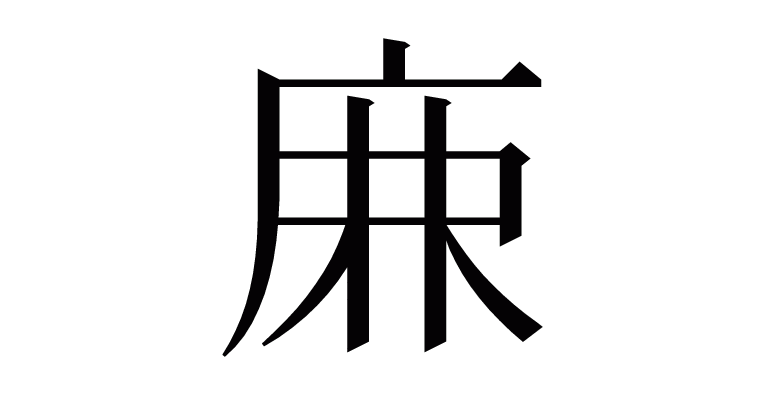
The second kanji is not 廉. It's a variant of 鹿. See the following page.Please read the title of this shunga.
In low resolution because I don't know how explicit it is allowed here.
The size of this 21 scenes print is 55 x 38 cm.
Would it be like this?
新曲 馬簾者ノ図
新曲 馬廉者ノ図
Would it be like "The perverse Horsemen"?
View attachment 124931 View attachment 124930
The yomigana is written in hentaigana. It's actually ばかもの, i.e., fool(s).
Ger
後輩
- 17 Jan 2018
- 190
- 95
- Thread starter
- #16
Thanks very much.The second kanji is not 廉. It's a variant of 鹿. See the following page.
https://kanji.jitenon.jp/kanjiy/28083
So I assume it is a "new composition of fools drawings"
馬鹿 says it all in wikipedia:
https://ja.wikipedia.org/wiki/馬鹿
and in google image search for 馬鹿
- 22 Feb 2008
- 18,266
- 4,926
Needless to say, words in different languages are not always (or more likely "are usually not") one-to-one corresponding to each other. 曲 doesn't have all the meanings of the English word "perverse". 曲 is never used as "perverse/perversion" in a sexual meaning.
- 12 Oct 2013
- 4,071
- 5,023
This definition caught my eye: it says "shinkyoku" may refer to any new style of song written after the An'ei era (1772-1781).
The woodblock print in question would have fallen into the "post An'ei" era, so it may be an allusion to any trend happening after the late 1700s.
しん‐きょく【新曲】
1 新しく作られた歌曲・楽曲。 2 箏 そう の 組歌 くみうた のうち、安永年間(1772~1781)以後に作られた曲。 3 三味線組歌の新作曲。
The woodblock print in question would have fallen into the "post An'ei" era, so it may be an allusion to any trend happening after the late 1700s.
しん‐きょく【新曲】
1 新しく作られた歌曲・楽曲。 2 箏 そう の 組歌 くみうた のうち、安永年間(1772~1781)以後に作られた曲。 3 三味線組歌の新作曲。
Ger
後輩
- 17 Jan 2018
- 190
- 95
- Thread starter
- #20
Or these 21 "new compositions" would be a "new version" of the classical "48 positions", or an allusion to both:

 ja.wikipedia.org
四十八手 (アダルト用語) - Wikipedia
- 22 Feb 2008
- 18,266
- 4,926
The same thing can be said for "曲 vs. composition". 曲 doesn't have that meaning. It's for "composition" as "a piano composition by Mozart", for example. 新曲 would have something to do with "song/music" there, anyway.
Ger
後輩
- 17 Jan 2018
- 190
- 95
- Thread starter
- #22
Thanks, I understand. How would a new musical composition be related to the explicit images - is it a matter of wordplay, a certain song?The same thing can be said for "曲 vs. composition". 曲 doesn't have that meaning. It's for "composition" as "a piano composition by Mozart", for example. 新曲 would have something to do with "song/music" there, anyway.
- 22 Feb 2008
- 18,266
- 4,926
That's possible. It might be a parody of a popular song at the era, for example.

