


- 14 Mar 2002
- 21,050
- 18,903
This week, the Japan Sumo Association has been inundated with medical reports detailing various health issues among top-division wrestlers, including hyperhidrosis, bronchitis, arthropathy, osteoarthritis, and pharyngitis. While the growing number of absentees from the ongoing autumn regional tour has raised significant concerns, the sport's popularity remains undeterred.
Although withdrawals from regional tours are not unusual, the sheer scale of this year's dropouts, with nearly a quarter of the top tier out of action, is alarming. Despite the absence of several prominent stars, attendance figures for the tour's stops remain impressively high, with many arenas selling out. This situation presents a unique challenge for the JSA, which must balance prioritising wrestler health with the demands of maintaining the sport's popularity and financial viability.

Shonannoumi, here hitting the dirt at the hands of Kotozakura during a bout in Tokyo in May, dropped out of this month's tournament.

 www.japantimes.co.jp
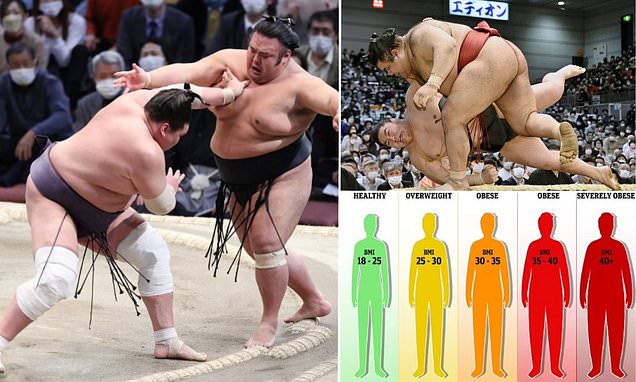
A BMI of 40-43 is considered advantageous for rikishi:
 www.dailymail.co.uk
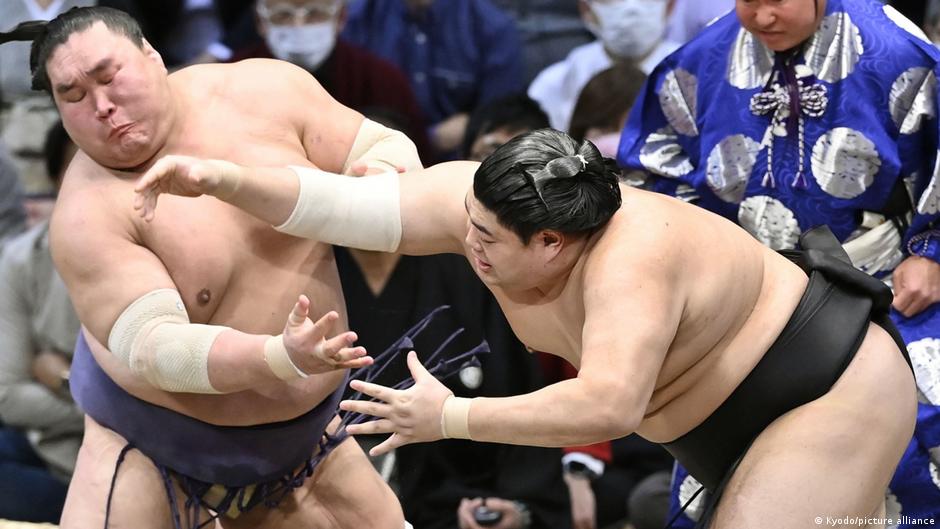
In 2021, three rikishi died of weight-associated illnesses:
 www.dw.com
Although withdrawals from regional tours are not unusual, the sheer scale of this year's dropouts, with nearly a quarter of the top tier out of action, is alarming. Despite the absence of several prominent stars, attendance figures for the tour's stops remain impressively high, with many arenas selling out. This situation presents a unique challenge for the JSA, which must balance prioritising wrestler health with the demands of maintaining the sport's popularity and financial viability.
Shonannoumi, here hitting the dirt at the hands of Kotozakura during a bout in Tokyo in May, dropped out of this month's tournament.
The fact that sumo's main attractions are out of action for extended periods or unable to put their abilities on full display is a significant cause of concern, but far from the only one. Recruitment remains an ongoing issue in Japan's national sport. With a schedule so intense that injuries and illnesses are increasingly commonplace, it can be hard to convince potential wrestlers (or their parents) that joining professional sumo is right. Of course, none of this is new, and over the past couple of years, numerous articles and opinion pieces have focused on the expansion of jungyō and the strain it puts on wrestlers. That's part of a broader (and growing) awareness of the health challenges faced by sumo wrestlers among the media, the general public, and the sport's various governing bodies at amateur and professional levels.
Spate of sumo tour dropouts highlights need to rethink wrestlers’ health
While it would be foolish not to capitalize on sumo’s surging popularity, expanded tour schedules cut into recovery time and push wrestlers to their physical limits.
A BMI of 40-43 is considered advantageous for rikishi:
Sumo in crisis after wave of fighters pull out due to health issues
Wrestlers pulling out from autumn events in Japan has reached double digits with top fighters succumbing to injuries and health issues exacerbated by their heavyset lifestyle.
In 2021, three rikishi died of weight-associated illnesses:
In an interview with The Asahi Shimbun newspaper, Mikhakhanov said: "It's never easy to stay healthy as long as you are living the life of a sumo wrestler." "But you are the only person who can take care of you," he said. "Nobody in your sumo stable cares about you." The suggestion that wrestlers are being encouraged to bulk up even more than usual to be successful is supported by statistics which show that the average weight of a wrestler today is around 160 kilograms, an increase of 15 kilograms from 30 years ago. Similarly, today's wrestlers today have an average body mass index (BMI) of more than 47, even though someone with a BMI of 25 is considered overweight. "It is true that you cannot do training unless you eat, but there is no sense in ending up ill," Mikhakhanov said, adding that he had been deeply saddened by his colleague's death. He also called on other wrestlers to "place their own health ahead of everything else."
Japan: Sumo wrestler deaths raise obesity concerns
Several recent deaths have highlighted the weight-associated risks in the traditional Japanese sport. Experts are calling for improved oversight and more attention to personal health on the part of wrestlers.
www.dw.com


