Some Translations

But it isn't there in Japanese either. This is your own invention. How would you know it "fit better" to Japanese?

Probably "fits better" weren't the right words. Anyway, it's hard to explain. Let's just leave it as "You want me to give you my book and pencil" instead of "you want that I give you my book and pencil". The only question now is should I use the "to iu no ga" construction or is that completely incorrect?
 
Well that's not all of the sentence I originally had.
My original sentence was "If you want me to give you my book and pencil, you have to tell me why you want them."
And refer to my previous post on how I didn't actually mean "you want that I give you my book and pencil" but rather "you want me to give you my book and pencil".

Wouldn't "you" be the subject of that sentence since "you" is doing the main actions?
Not all of the sentence, but the key of the first half clause of the sentence. It's OK you compose this "simple" sentence first and then change it to a conditional clause. (This is a way to compose a complicated sentence, isn't this?)

Yes for the subject. So, the sentence you should compose is?
 
Probably "fits better" weren't the right words. Anyway, it's hard to explain. Let's just leave it as "You want me to give you my book and pencil" instead of "you want that I give you my book and pencil". The only question now is should I use the "to iu no ga" construction or is that completely incorrect?

It is completely incorrect.

You started with "no to iu ga", not "to iu no ga", by the way.
 
Your edit is a perfect example of why learning from reference materials instead of proper textbooks sucks like an Electrolux.

Tae Kim's guide is actually smiled upon by the people who use it, though I have yet to encounter one who has done a decent job learning from it. My opinion of it is that it is better than nothing and worth every penny you paid for it.

Get a proper textbook and workbook and you'll be doing yourself a tremendous favor.

I didn't pay a cent for the Tae Kim's Guide to Japanese app. It's completely free.
If you disagree with how I learn Japanese, that's fine. I'm aware that there are other options, but I'm not buying a textbook or a workbook anytime soon. Right now I have a sentence that is incorrect. If you don't want to correct it, then don't. I just want to get this particular grammar correct.
 
I know it didn't cost a cent. That's exactly how much it's worth for teaching yourself Japanese....not a cent.

I will just point our that it is easy to spot people learning from reference materials instead of textbooks. They are usually tackling somewhat advanced elements despite having completely skipped/missed more fundamental elements or displaying an inadequate grasp of them. They also get indignant when it is pointed out that what the Titanic of their learning needs is major hull repair when all they're interested in is rearranging the deck chairs.

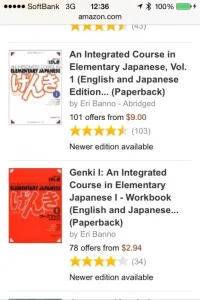
I can't understand what so many people have against using materials which have a proven track record and instead prefer to "teach" themselves with reference materials. It must be that they're too proud to use something meant for "beginners". It can't be money, because used texts and workbooks can be had for next to nothing.

ImageUploadedByTapatalk1406174206.049269.webp

Best of luck to you with your studies. I don't think I can be of any help to you.
 
Toritoribe, I didn't understand fully what you meant by "the key of the first half clause of the sentence."
The best simple sentence I could come up with is (without conditional):

あなたに私の本と鉛筆を貸してあげる。
I think this sounds like "I do the favor of lending my book and pencil to you," but I am not sure.
 
I'm talking about the similarity in structure between "I want you to give me my book and pencil." and "You want that I give you my book and pencil. / You want me to give you my book and pencil."

Hint again:
I want you to give me my book and pencil.
私はあなたに私の本と鉛筆を貸して欲しい。

You want me to give you my book and pencil.
?
(Actually this answer is grammatically wrong as a stand alone sentence, but you need to compose it as a step to reach the goal.)
 
I'm guessing you need to switch the pronouns?

(あなたは)私に私の本と鉛筆を貸して欲しい。
 
I'm guessing you need to switch the pronouns?

(あなたは)私に私の本と鉛筆を貸して欲しい。
Yes, of course. Then, what is the conditional form of it?
 
(あなたは)私に私の本と鉛筆を貸して欲しければ
 
That's right. In this case, it's obvious that the speaker is talking to the addressee and asking about the addressee's wish/hope/request, so the subject あなた is usually omitted. Further, 私の本と鉛筆 shows the speaker is the owner of the book and pencil, and since it's common to ask to give them to the owner, 私に also can be omitted. In conclusion, it's OK just to say 私の本と鉛筆を貸して欲しければ for the first half of your sentence.

Next, what is your translation of "you have to tell me why you want them"?
 
どうして欲しいか私に言わなくてはいけません。

I'm guessing that I need to use something else besides the negative te-form + wa + ikemasen because that's more along the lines of "must do."
Also, when I have a verb in the -te form + hoshii, could I put hoshii all in hiragana?
 
どうして欲しいか私に言わなくてはいけません。

I'm guessing that I need to use something else besides the negative te-form + wa + ikemasen because that's more along the lines of "must do."

This is where those verbs of giving/receiving would come in handy. (And having done some drills and having seen several more examples would have served you better than just reading Tae Kim's blurb).
 
Mike, you said "Best of luck to you with your studies. I don't think I can be of any help to you." With a closing remark like that, I would assume that you would actually stop giving help. Or in case you did stop, I would assume you are only here to continue to jab at my supposed poor work ethic and wrong educational resource because you have nothing else better to do. Either way, I would ask that you please refrain from replying or at least answer my questions constructively without any irrelevant comments or questions, like Toritoribe is doing.

If my errors are so massive that they are comparable to Titanic's hull damage, then I guess you have no business here if you are not going to fix them.
 
I gave you a massive hint. Ignore it and embrace your pique if that's what you like.
 
Again, still questioning why you are still helping me even though you practically made your leave from this discussion. But fine, I'll go by your hint.

(あなたは) 私の鉛筆と本を貸して欲しければ、どうして欲しいか私に言ってくれる。
better?
 
It's in the ballpark. But you seriously need to go learn the giving/receiving verbs and their usage. It is a bit hard to get a handle on at first, but it is extraordinarily useful and extraordinarily used....very important stuff and both needful and deserving of more than a couple of short introductory paragraphs.
 
Next, what is your translation of "you have to tell me why you want them"?

And you don't have to be literal, either. Think about what you're really trying to say. A lot of times, what comes naturally to you as an English speaker doesn't work to just transpose into Japanese.
 
And you don't have to be literal, either. Think about what you're really trying to say. A lot of times, what comes naturally to you as an English speaker doesn't work to just transpose into Japanese.

He would probably find it easier to get a polite Japanese sentence if he didn't start with an impolite English sentence....
 
どうして欲しいか私に言わなくてはいけません。

I'm guessing that I need to use something else besides the negative te-form + wa + ikemasen because that's more along the lines of "must do."
Also, when I have a verb in the -te form + hoshii, could I put hoshii all in hiragana?
なくてはいけません can be used both for "have to" and "must", or rather, it's hard to express the difference between "have to" and "must" in Japanese.

The point you must know is that どうして欲しい can have two different meanings and you seem to confuse them.
1)
どうして / 欲しいか
why you want them
This どうして is an adverb, meaning "why", not "どう + the -te form of する".

2)
どう / して / 欲しいか
how you want to be done
This is "どう(how/in what way) + the -te form of する". (Actually, this どうして is also usually treated as an adverb, meaning "in what way", but the structure you are misunderstood is equivalent to this interpretation.)

Thus, どうして is not "どう + して" in your translation.

You already mentioned that 貸して欲しければ in the first half of your sentence, so you don't need to repeat it. 私に is also unnecessary (the same reason as the conditional clause). It's OK just say 理由を(the reason) instead of どうして欲しいか私に.

Now you have an answer 私の本と鉛筆を貸して欲しければ、理由を言わなくてはいけません. See the difference between this answer and your initial translation あなたは、あなたに私の本と鉛筆お上げるのというが欲しければ、どうして欲しいか私に言わなくてはいけませんよ. It seems to me that this structure is advanced for you to translate yet.

By the way, this answer is grammatically perfect, but still sounds rather translationese-like, as already pointed out. I would just say どうして本と鉛筆を貸してほしいんですか instead in that situation.
 
I think that anyone following a sensibly laid-out plan of study (read: "textbook") could hardly reach a point in their studies where they're attempting something like this without having something as mundane and obvious as 〜てください involuntarily fly out.

なぜ貸して欲しいか教えてください
なぜ借りたいか教えてください
Plus any of a great number of variants, of course

One of the things Japanese forces English speakers to do is to develop an ability to recognize what is either contextually obvious or implied in certain word choices. It is a good skill to develop early on, as it can save you the anguish of trying to construct some needlessly complicated seven-jointed monstrosity of a sentence and the risk of crippling yourself trying to get it out of your mouth.

I once was helping a guy on IRC who was trying to figure out how to say: "If you tell me what time your plane arrives I will go to the airport to pick you up".

His version:
もしもあなたが私にあなたの飛行機が何時に到着するか教えてくれれば私は空港まであなたを迎えに行ってあげます。

My version:
迎えは?

More wordy alternatives:
迎えはどうする?
迎えは大丈夫?
迎えに行ってあげようか?

OP: whatever means or materials you choose to do it with, go and LEARN the giving/receiving verbs and try to find sufficient explanation of them (drills would be nice) that you can use them proficiently. They are considered basic/beginner material not because they're easy to understand (they're NOT) but because they are so commonly used that there is no real hope of developing any facility with Japanese communication until you get a handle on them. A paragraph or two from Tae Kim ain't gonna hack it.

The problem with trying to do freebie self-teaching with materials prepared by amateurs or by flipping through reference books is that you unavoidably end up completely skipping some important stuff that you don't even have any clue you're skipping, which comes back to bite you on the butt as you continue along.
 
Back
Top Bottom