Origin of Kimono ( 呉服 )

tokapi

後輩
Joined
8 Sep 2007
Messages
850
Reaction score
5
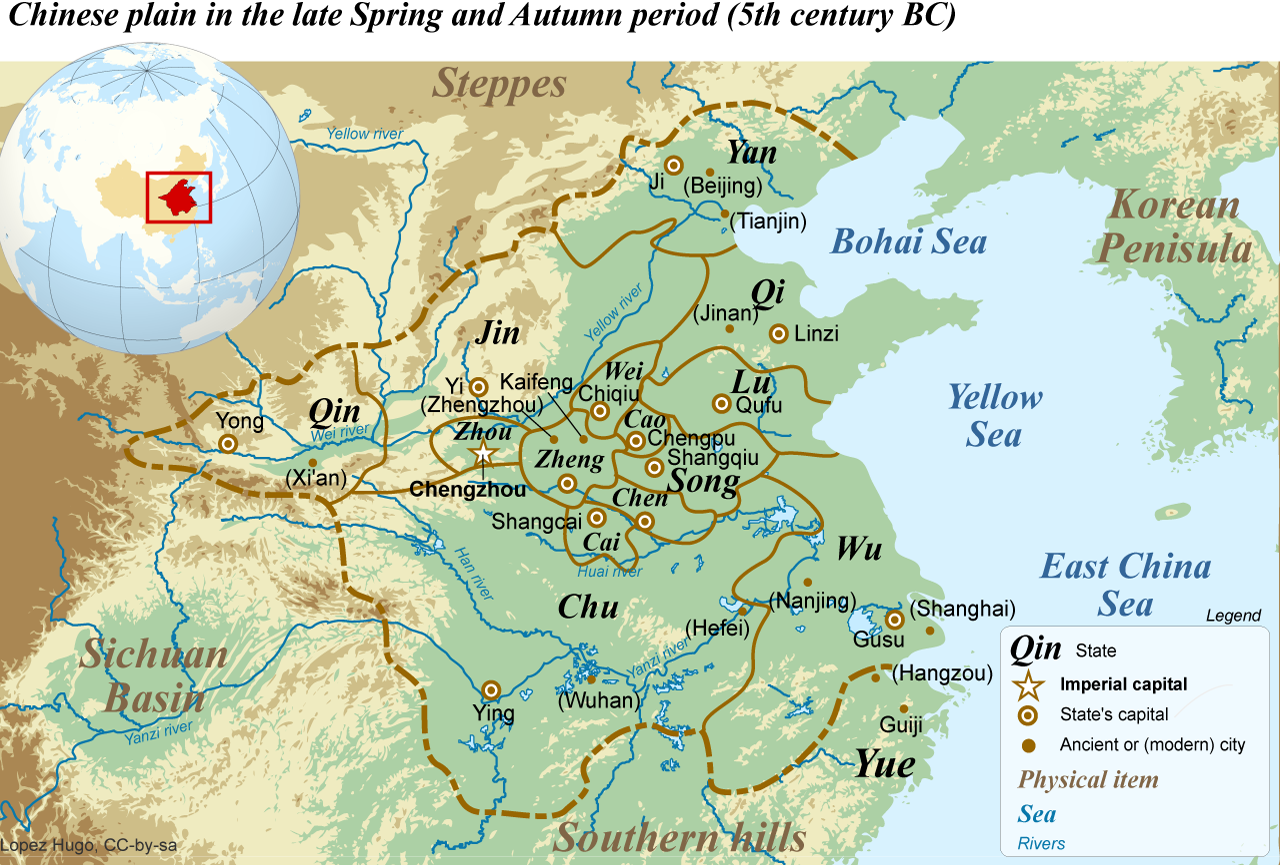
A Japanese couple re-visited birthplace ( ancient Wu region of China ) of Kimono in present day 蘇州 Suzhou city of Jiangsu province in China,note they both wore Kimono 和服 or Gofuku 呉服 ( literally translated as "Costume of Wu" ) to symbolized this trip. :)

Japanese blog: 蘇州


* Japanese dictionary source acknowledged its Chinese origin


ã'¨ã'ã'µã'¤ãƒˆç¿»è¨³


* 呉服神社拝殿 Kureha Shrine
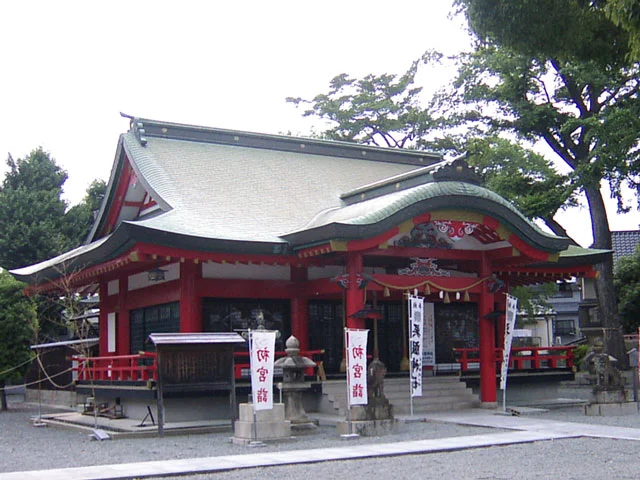
Kureha-shrine.webp
 
During WWII, patriotic Chinese activists harrassed Japanese women to pull up the kimono in China, for they did not usually wear underwears in kimono.
 
One other interesting link between Japan & coastal region of China. Chinese Wu dialect for Nihon 日本 sounded something like " Zeppen " (modern-day local Shanghainese still pronounce Nihon 日本 that way).:-)

related thread: Who Named Japan - Japan?

 
During WWII, patriotic Chinese activists harrassed Japanese women to pull up the Kimono in China, for they did not usually wear underwears in Kimono.

Cite a source ( Japanese is ok ) ..... 😌:?😲

I have seen HK TV drama acting scenes of local Chinese folks threw stuff at Japanese women & children on streets in China during 1930's-1940's.☝

Of-course,no Chinese major media outlets would mention such because the goal is feed " victimhood complex " to its population. 😊
 
During WWII, patriotic Chinese activists harrassed Japanese women to pull up the kimono in China, for they did not usually wear underwears in kimono.


Where did you read that?

With traditional Japanese underwear, as far as I am aware men wore fundoshi while women wore fundoshi as well except in a different style as to what men wore their fundoshi in- I dunno if women's fundoshi had a different name though. There are lots of additional types of undergarments though often worn with kimono, like hadajuban and nagajuban, but the fundoshi is essentially what we would consider underwear, where juban act more like petticoats or to increase the formality of the outfit etc.


Kimono is a Japanese garment but it evolved from Heian era dress where women used to wear a lot more robe-like garments, and Heian era dress for nobility was certainly very Chinese in origin although it was not the same as Chinese clothes being worn at that time- you can see the clothes I am talking about in the link below (BTW the costume museum is a great site for Japanese costume history);


During the feudal periods, lords like Oda Nobunaga decided he was fed up with the old ways of traditions, the old dress of the Heian era was considered too flamboyant and excessive. So people decided to tone the entire look down a lot so that the only princess continued the old ways of dress, and what was actually an undergarment of the old traditional style dress all of a sudden became an outer garment, and this quickly evolved into what we now know as kimono.

There are dozens of types of kimono's and undergarments and other related traditional types of clothing, and all of these different types have different significances or primary uses.
Nowadays in Japan the kimono you are most likely to see being worn are yukata at summer festivals (yukata is an unlined cotton kimono), komon kimono for tea ceremony or town wear or similar unformal toned down kimono, or black kurotomesode or tomesode being worn by relatives at weddings and bridal furisode (or susohiki/hikisuri, which is basically a kimono long enough to trail along the ground when worn, they are most often worn by geisha, maiko, dancers and actors and brides etc) worn by brides etc 👍 .
 
according to ancient Chinese documents, it can guess..

wajin and Kudara were related like Twin.
Both ppl were also related to Buyeo Kingdom(夫餘族).
both have the same blood


However, wajin was not from Kudara.

However, Buyeo tribe, they went south so that it might search for the prolific land 3000years ago.

they arrived southern part of Yangtze River
wajin, They became agricultural people there.
太白 became a king who had a related with the king of Xia Dynasty


His alias was 夫差. it can imagine it easy.

BC770、 he founded of a nation '呉"
it might say, he bundled Wajin, Buyeo and descendants of Xia..

However, BC473, 呉 was destroyed by


some of them might escape to Ryukyu, land of Aiunu and kyusyu..

according to 梁書諸夷伝 in tang dynasty,
倭の者自ら云う、
太白の後也り」とあり、倭人は呉の始祖太白の子孫を
自称していたということです

wajin said "we are descendants of 太白"

there are 太白 mountains in Korea
in Japan, 大隅国府正八幡呉太白を祀るといふ異説あり. This Shinto shrine in Kagoshima has a different opinion said that he was enshrined.

so, 夏+呉人=倭人=百済

it was said it did not need translator between wajin and Kudara at that time.

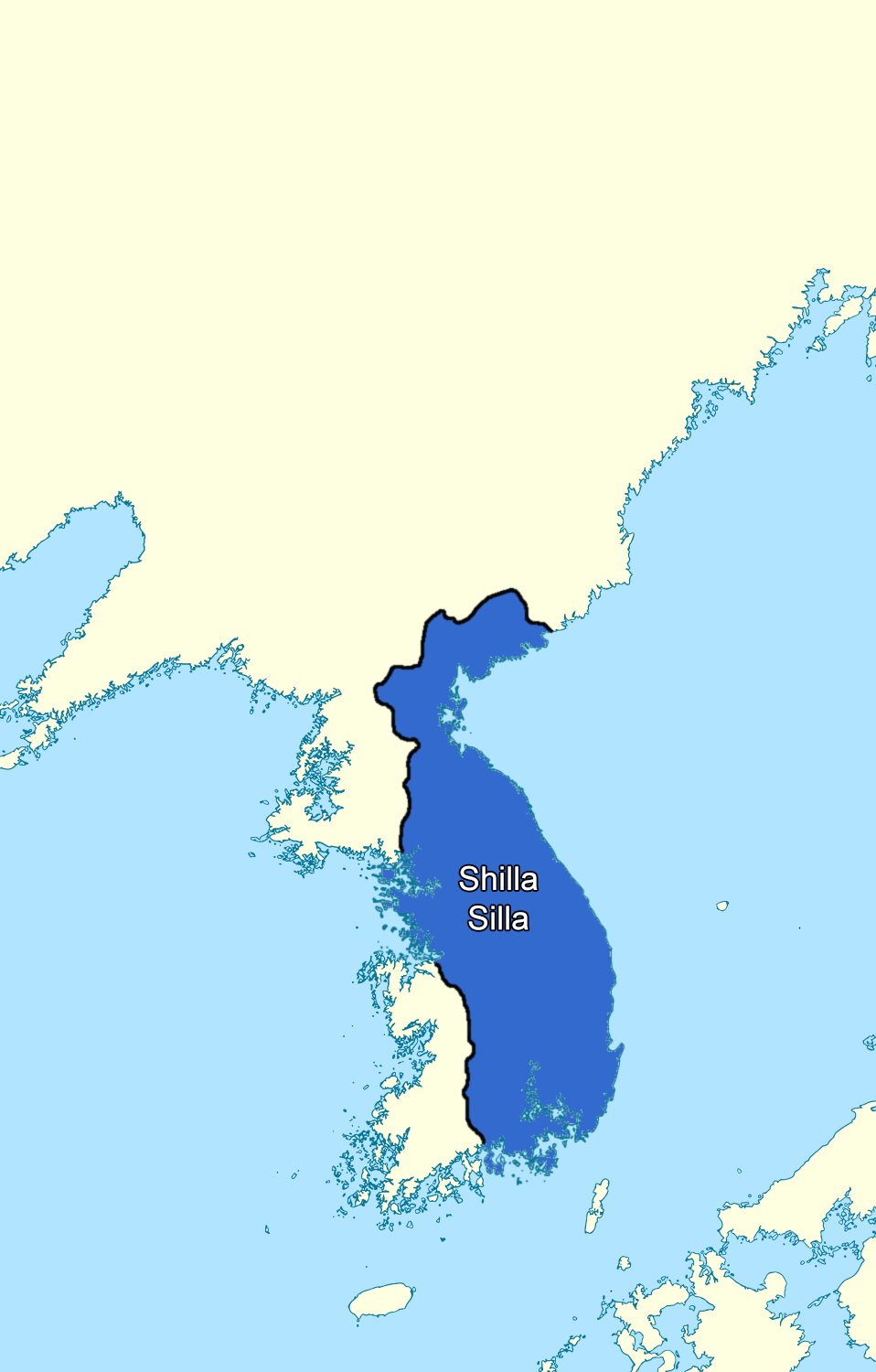
about 新羅、


As for it, circumstances are a little different.


殷+秦=新羅

after that, many defectors from 秦 also settled in Japan (especially Izumo, Kyoto ) it is said they were related with Jew
so, #4 king of Silla 脱解 was wajin from kyoto.
Kudara ppl received the influence of the culture of 呉, and were another races.
Kudara ppl was a race who was nearer Yamato than Koguryo.
however, kudara was gone..

I think Yayoi ppl was 呉人
 
Last edited:
With Japanese people as we know them, their population is mostly founded on Chinese and Korean immigrants who came to Japan in many phases over hundreds or thousands of years- however the actual original natives of Japan are a people called the Ainu, often referred to as "Japanese Aborigines" (even though they have no connection to Australian aborigines or races of black people for that matter). They differ slightly in appearance from non-native Japanese (although it can require a trained eye to tell the differences apart) and their native styles of clothing are different from Japanese kosode, although a lot of their clothing does have quite a kimono-esque appearance.
Unfortunately though though Ainu have almost constantly been mistreated by the Japanese throughout their history with the Japanese continuously taking or moving the Ainu off their lands and mistreating them in Japanese society etc, the Ainu fought 3 major wars against the Japanese in their history to try and stop this however unfortunately they lost all three. Ainu populations have been continuously shrinking ever since the Japanese decided they didn't respect them hundreds upon hundreds of years ago.
However apparently there are a lot of half Ainu and half Japanese people living in modern society although even though now days the Japanese government does more to protect the Ainu people, a lot of Ainu people (whether true or half Ainu people) try to keep their Ainu identities a secret since their is still a lot of prejudice and racism towards Ainu people even now days.
Apparently Ainu people are though to have been originally descended from Mongals who came to Japan's islands long before any Chinese or Koreans made their way over there, however i am not sure how much of Ainu culture has influenced Japanese culture over their histories together.

It isn't really correct to say that kimono is descended from Chinese Hanfu/dress since kimono is really descended from Heian period dress like the kazami, which itself is much more closely descended from Chinese dress 👍 .
 
Wajin and Kudara were related like twins.Both ppl were also related with Buyeo Kingdom(夫餘族),have a same blood.

I think Yayoi ppl was 呉人

The connection was 穢貊 ( ancestors of Puyo & Koguryo 夫餘 & 高句麗 ) 🙂

* 早期社會 .穢貊族在夏商時本居於山東半島 ,屬東夷民族

I think so too,Chinese 呉人 arrival was the first wave of Yayoi people then came Torai-jins 渡来人 of both Koreans & Chinese.
 
There may in fact be much older influences towards a kimono, and from several ways.
The mentioned Mongol-direction via Korea plus Ainu is as relevant as China indeed. I must check an according book again, that I once bought in Paris, which also relates to old excavations plus according wonderfull fotos, although it is basically related to China, but fom long ago.

There is one thing about the Korean traditional hambok, by the way, that is worn also nowadays, as much as a Kimono in Japan. It results from in fact Mongol tradition (which again has also influenced China, since for long, the Mongols clans were residing in China!), and is often made from great handwoven stiff linen (if not modern fabrics or good silk), which can already be found in such excavations.
This stiff and often very fine linen is still everywhere on the markets in Korea and has the wonderfull effect, of not being close to the body, but leaving you open for any breeze in summer. It makes you feel, as if you are naked underneath and well aired, no sweaty stickings or the like!
The knot above the waiste, under or on the breast adds to this, since this is the only part (if in fact tied as closely as onto the breast) beside the shoulders and upper back, where the body is actually touched. And thats it. Also enough room there for pregnancy, when this might be even more comfortable.
I enjoyed it immensely and can only recommend it in hot and also wet hot whether.
While in winter, there is enough room for wearing warmer things underneath.
Only a yukata can give a similar comfortable feeling and may stem from it.

Such designs are also in the mentioned very old tombs.

Interesting thread, btw.!

PS: I made a mistake, only the male Hanbok is in one piece (eventually with additional trousers), there is a funny pic of these days with some polititians or the like, all dressed in the traditional male hanbok). . . The female one has two pieces, the upper part is like a stiff spanish bolero over a wide skirt, that usually starts very high under the bosom (how could I forget this. . .sorry).
Also I read, that the linen or ramie later came from China, but then who knows, where they got it from, in relation to these old excavations.

True seems to be, the Koreans did in fact consciously adopt nomadic styles, when it came to hanbok, also to differ it from chinese styles.
This again did in fact also influence the Japanese at a certain time of general korean influence, who then tried to differ themselves from chinese styles. . .and only after that, the Kimono was on its way and much later established as that. Which may also explain the yukata style.
So the present informations, but who knows for sure. . .
 
Last edited:
There is one thing about the Korean traditional Hanbok, by the way, that is worn also nowadays, as much as a Kimono in Japan. It results from in fact Mongol tradition (which again has also influenced China, since for long, the Mongols clans were residing in China!)

Korean traditional Hanbok and China connection was Sui & Tang,both dynasties were much influenced by Nomadic people from the Steppes.As matter of fact,Sui & Tang Royal Houses were intermixed with Mongol 鮮卑 clan.😊

Actually,I have seen a few rare history book photos of Sui Dynasty's Chinese women formal wears look identical to Hanbok.
 
Well, nomadic people from the steppes and mongol intermixed. . .there you go. . .;-)

I promise, I will try to scan a bit from the book, when time (I hope, I don't run into trouble with any coyrights though)

Do you think, you can find yours again?

We should also check old Ainu wearings then, maybe.
Sounds interesting.
 
Actually, Ichiroya sell a massive amount of kimono and other Japanese clothes, they have a few authentic/real piece's of museum quality Ainu clothing for sale- when you see the pics of Ainu clothing, it's possible to see many similarities between Japanese kimono and traditional Chinese clothing and even traditional Mongol clothing.

Ainu Jacket;


In structure, the last Ainu jacket looks very similar to this antique Japanese farmers noragi;


The items of clothing are practically the same in their structure, the main thing that tells them apart is the materials, dyes and designs on them. Does anyone have any pics of traditional Chinese or Mongol clothes that look similar to these jackets?
 
Yes, I just saw some, its running under turc-mongol style, but the turc is mainly related to the kind of buttons for straight closing and some ornamentals.
We have such items in our wonderfull Berlin ethnic museum!

But the patterns of your examples are OUTSTANDING!!
Yet remind me much more on typical Mongol patterns than Chinese. . .

As for Mongol-Tibetan relations, which were very rich in old days and renewed via Buddhism, one could also have a look in that area too, as for patterns and styles etc!

The little persistent Mongol horses went long ways!!. . .

What I remember in my book, is the development of the cross over closings in relation to the straight ones of the shown Ainu coats.
That cross over is once more also known from old Mongols, but not so for the turcs. (although, there is one jacket with cross over closing, a cross of Mongol-Turc once more. . .also they talk about some Persian style in relation to a cross over Tibetan coat. . .)

Here some examples from old Turkestan, non crossed and lightly crossed

pity is, it does not say, how old. . .

indiana01.webp


indiana02.webp


Anyhow, an interesting site:

 
Well, nomadic people from the steppes and mongol intermixed. . .there you go. . .;-)

Do you think, you can find yours again?

I still have the book,it's put away in a storage box.Sure,I will scan & upload the pages here.:-)
 
And thanks, Caster, for all the Puyo (Buyeo) pieces of information.

We have lived very nearby the old town and ancient cites of Puyo (how it was simply called in the 90ties)), in Kongju(also Gongju), actually, thus went there from time to time:

Buyeo County - Wikipedia

and here is a bit from Kongju

Gongju - Wikipedia

both on the same Kum river, our working place.

It seems to be very difficult to get information out of the net, but we have loads of german information in Books.

I can check if they also found some costume remains in the old tombs there. In general, in many (big and local) Korean museums I saw a lot!

PS. And thanks @tokapi , I will also do some homework :-)
 
Some interesting additional information:


``Japan has long accepted and mimicked the culture of the (Asian) continent through the Korean peninsula,'' she said. ``Up until the Nara Era, the designs and colours of court costumes resemble those of hanbok.''

Nara was one of Japan's earliest civilizations and was heavily influenced by Korean civilizations. Nara means "country" in Korean.

``The Paekje costume, with separate jackets and trousers, continued to dominate Japanese costume through the following Heian era,'' Kawada said.

Paekje is one of three major kingdoms that prevailed on the Korean peninsula about 2,000 years ago and is considered to have had the greatest influence on Japan's early civilizations.

``The traditional Japanese court costume was completed after Japan digested the culture of Paekje,'' Kawada said. ``Thereafter, the aristocratic Heian Era blossomed and the court costume lasted over a millennium''

I don't know, but that's just one voice.

Another interesting one is this:

A Brief History of Japanese Clothing

 
I do keep falling over very ancient Korean clothes, like the turumagi, the same style as the male hanbok, but also for women then.
In general, the Mongol/Nomad influences are in fact pretty strong (and have close relations to the Ainu as well), beside a taste of China.
A strong own taste already, and definitely a forunner for one piece kimonos, even without obi (which came later anyhow), even if wider originally, and the Korean preferred to move the closings higher up as own style/creation. But thats about it as difference.

While the Japanese made their very own thing out of it. Not the other way round.

Nice links:

http://www.hellopageskorea.com/insight/discover/life/insight_discover_lifestyle_clothing_body.htm

http://www.h6.dion.ne.jp/~fu35/minzokuHP/korea-deta/korea-deta-1-1.htm

It looks, as if this designer Kawada knew what he/she said.
 
"Nara" in modern Korean is equivalent to the Japanese "kuni". They say "uri nara" when a Japanese would say "waga kuni".

In recent years,S Korean ultra-nationalist netizens have trumped up wild claims of cultural influence over ancient Japan & falsely take credit of China's bygone sophisticated cultures.

A few years back,some Koreans even claimed the Japanese word " Samurai " derived from Korean " Samurang ".Just as a note,the Samurang are a fabrication of Korean martial art " Haedong Gumdo". There are no historical references to Samurang in any of the old texts.The Gyeongdang or the Seonbae were probably the closest Goguryeo got to any sort of military organization.

It is a monomaniacal dream of Koreans that Koreans were superior than Japanese in ancient times.It is a superior inferior complex of Koreans to cover up the humiliation of its colonization by Japanese.They are not matured to study about archeology without the idea of primitive nationalism.

マンガ日本の歴史①秦漢帝国と稲作を始める倭人 written by 石ノ森章太郎 & different series of children Manga about history of Japan mentioned cultural contributions by Korean and Chinese
 
Oh, come on, you are still wearing the same glasses, try some new ones and have a look at the idea of Renga, for example. . .

You somehow have not understood simple international creative processes. They have nothing to do with nationalism, thats laughable.
This case is so clear after all, one only needs eyes to see.
Anything against korean pottery too, that clearly also influenced Japan very much?

Spit it out then. . .

Or what about the still very young Kannon, coming all the way from the west? Incl. Rome influences, by the way. Are you now going against all the contries of the passage as well?

By all means, what about growing up?
 
Prof. Ushio Azuma of Tokushima University was not surprised, pointing out that Japanese had lived in the southern part of South Korea and that there might have been mutual exchanges between the countries at the time.

As for the control of the southern tip of Korean penninsula by Japan, there are Yamato-style barrows there, which was found not to preceed those of Yamato, but was actually of a later period-I wonder what that suggests ? I'll try to find some source in English, but if you're from Korea yhen look up for 全羅南道、日式古墳 or 前方後円墳 in your language.
 
However, Buyeo tribe,they went south so that it might search for the prolific land 3000years ago.They arrived southern part of Yangtze River,Wajin became agricultural people there.

There is no truth to it as no documented migrations from Korea peninsula for that time frame.

It was during Tang Dynasty, immigrants from Korea peninsula flooded many coastal cities of China.

Here is one book referenced it, read an interesting passage in The Genesis of East Asia:

"By the ninth century, long after the Sillan unification of an independent native Korean state, there was a notably strong Sillan presence in Tang China. Several Tang cities had "Sillan wards" or "Sillan villages" in the suburbs, and the Japanese pilgrim Ennin encountered Sillan boats carrying cargoes of charcoal inside China. Some ninety Sillans are known to have passed the Confucian civil service examinations in China during roughly the last century of the Tang dynasty. Koreans, in general, probably constituted the single most numerous group of foreign students in Tang China." page 180

When I read this it seemed like Tang China was a lot like the U.S. today for Koreans. A strong and wealthy country that attracted a lot of Koreans who immigrated there because they could not be as successful in Korea. One of these immigrants was Jang Bo Go 張保皐, whose life was dramatized in the Korean TV show Hae Shin 海神.

Jang Bogo - Wikipedia

* By the ninth century thousands of Silla subjects were living in Tang, centered mostly around merchant activities in coastal Shandong and Jiangsu provinces, where they established their own Silla communities often led by Silla officials.

Jiangsu - Wikipedia
 
since kimono is really descended from Heian period dress like the kazami, which itself is much more closely descended from Chinese dress 👍

Well,since you acknowledged Tang Dynasty's ( 618-907 ) great cultural influences on Japan,the time frame was also in concurrent with Heian period.

* reference: post#18 of " Japanese Royal Tomb Opened to Scholars "

 
Back
Top Bottom