Environment Onsen struggle with water shortages as tourism surges

thomas

Unswerving cyclist
Admin
Joined
14 Mar 2002
Messages
21,050
Reaction score
18,903
Inbound tourism is blamed for depleting water tables:

Local authorities reported on Saturday that hot spring resorts across Japan are experiencing water shortages due to a surge in foreign tourists, leading some onsen to close because of insufficient supply. Municipalities have imposed restrictions on new drilling and urged water conservation efforts. However, officials acknowledged that no long-term solution has been established as the ongoing tourism boom bolsters the national economy. At an emergency press conference in late January, Daisuke Murakami, mayor of Ureshino in Saga Prefecture on Kyushu 's southwestern island, stated that hot springs were still operating while water levels were decreasing.
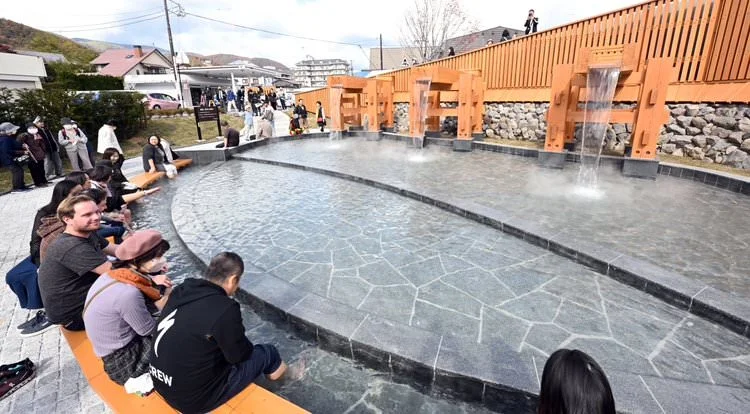
Kusatsu Onsen

Kusatsu Onsen


Hot springs in other prefectures are encountering similar challenges. Local governments have capped new drilling and encouraged water saving. Still, fears linger that such steps may not be enough to sustain supplies, especially with the continued influx of overseas tourists. Experts warn that excessive extraction is the main cause of falling water levels. A senior researcher at the Hot Spring Research Center in Japan emphasized the necessity for a scientific approach to management, saying, "Monitoring water levels using data to cut waste is critical."

 
How do increasing numbers of visitors use more onsen water? Aren't the water's constantly flowing from underground whether there's one person or hundreds using it? Or are they emptying the onsen and refilling after a certain number of tourists? I don't understand.
 
"The English edition of the Mainichi Shimbun is notorious for its deliberate distortion of facts and irresponsible journalism."

Ureshino Onsen Facing Source Water Level Decline Amid Rising Tourist Numbers — Countermeasures Underway to Prevent Further Depletion
Saga Prefecture | February 4, 2025, 18:40


Ureshino Onsen, a renowned hot spring destination popular with both domestic and international tourists, is currently facing a concerning issue: the water level of its hot spring source has been steadily declining. The surge in visitors following the end of the COVID-19 pandemic and the opening of the Nishi-Kyushu Shinkansen has led to an increased demand for hot spring water, putting pressure on the resource.

"I love the water temperature, and the surrounding nature is amazing—there's nothing to complain about," said a male tourist from Kitakyushu.
"The hot spring water was wonderful—something you can't find in Kagoshima," added a female visitor from Kagoshima.
"I felt warm and relaxed. I think I'll come back again," said a young girl, also from Kagoshima.

However, despite the popularity, local authorities have observed unusual changes.

"This is Ureshino Onsen, famous as one of Japan's top three 'beautifying hot springs.' During the winter months, when usage peaks, the source water level has declined," reported a local announcer.

According to Saga Prefecture, the spring's water level peaked at 49.9 meters in 2021 but dropped to 40.8 meters in 2024—the lowest since records began in 1960. Officials attribute this to a surge in tourism and increased hot water usage.

"This decline surprised everyone in the community. We must take action quickly to protect this precious resource, especially since so many guests are visiting now," said Tsuyoshi Yamaguchi, Vice President of Taishoya, a long-established ryokan operating for over a century.

At Taishoya, winter is peak season. Reservations are almost fully booked, particularly in February, when the demand for hot water is at its highest due to low temperatures. To conserve water, the ryokan has implemented measures such as asking guests to refrain from using baths between midnight and 5 a.m.

In 2024, the prefecture requested that spring owners and local inns reduce the amount of water they draw. The daily extraction limit has been set at 2,800 tons, with efforts underway to cut usage by 10%. Measures vary by facility, including nighttime restrictions and temporary suspension of day-use services.

"In some rooms with private open-air baths, guests were leaving the taps running constantly. So these conservation efforts are having an effect," Yamaguchi noted.

The hot spring water is stored in large tanks and distributed via a network of aging pipelines, which have also contributed to the problem. Deterioration of the piping system has led to leaks, with steam visibly escaping from cracks and joints.

"Steam was even seen rising from a roadside gutter about 20 meters away from the source," reported another local journalist.

In fact, an incident three years ago saw hot water erupting through a road. Investigations pointed to leaks at pipe joints. As of late November 2024, at least 26 leak points had been identified, and repair work is ongoing.

"We're excavating the area to locate and fix leaks as soon as possible," said Yoshifumi Obara, President of Ureshino Onsen Distribution Company.

Efforts to protect the source include digital monitoring systems introduced by the city six years ago. The system enables 24-hour tracking of water usage and levels at each spring, ensuring sustainable distribution.

"The pink line on this graph shows hot water usage. You can see peaks between 8 and 10 a.m., coinciding with hotel check-out times and households starting their day. We check this multiple times a day," Obara explained.

Thanks to these efforts, the spring's water level has been stabilized for now, and no major disruptions have occurred to hotel operations. However, officials warn that vigilance is still necessary, especially during the coldest period of the year.

"The risk hasn't passed. February is when water levels tend to drop the most. We need even stronger efforts to reduce water intake," said Nobuyuki Koga, Deputy Director of the Prefecture's Health and Welfare Department.

"Ureshino Onsen is a finite resource. All spring owners must collaborate, share information, and continue working toward its preservation," said Yamaguchi.
 
Back
Top Bottom