


- 14 Mar 2002
- 21,050
- 18,903
Poor Mount Fuji. Japan's most iconic World Heritage site struggles with crowds, the threat of eruptions--and a planned railway line.
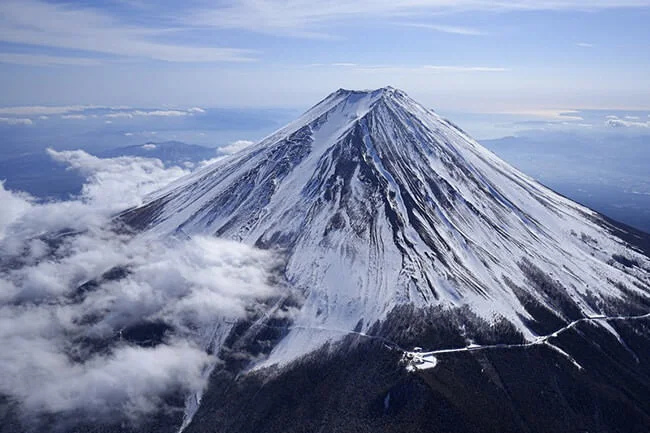
Communities around Mount Fuji call for a cap on the number of hikers and other safety measures ahead of an expected post-COVID-19 boom in visitors to Japan's tallest mountain this summer.
Another concern is disaster prevention, as Mt. Fuji is an active volcano. A challenge that has taken on a greater urgency than before the World Heritage listing is disaster prevention at Mount Fuji, an active volcano. The 2014 eruption of Mount Ontake, straddling Nagano and Gifu prefectures, illustrated the risk of a volcanic eruption. The sudden eruption left 58 climbers dead and five missing.

 mainichi.jp
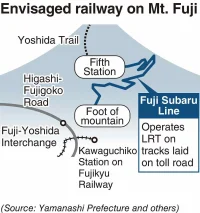
And as if all this wasn't enough, the Yamanashi Prefectural government contemplates constructing a railway from Mt. Fuji's foot to the fifth station on the existing Fuji Subaru Line toll road.

 japannews.yomiuri.co.jp
The 3,776-meter-high mountain, Japan's tallest peak, attracted more than 200,000 tourists annually before the coronavirus pandemic. Now mountain huts have already been fully booked for the climbing season partly because admissions are still limited due to COVID-19 restrictions. The International Council on Monuments and Sites, UNESCO's advisory organ known as ICOMOS, called for "visitor management," such as reducing the number of hikers, when Mount Fuji was added to UNESCO's World Cultural Heritage list on June 22, 2013. But local authorities have not introduced a mandatory admission fee for hikers. Currently, hikers are only asked to voluntarily pay 1,000 JPY, in principle, toward the environmental preservation of the mountain.
Communities around Mount Fuji call for a cap on the number of hikers and other safety measures ahead of an expected post-COVID-19 boom in visitors to Japan's tallest mountain this summer.
Mount Fuji is usually open to hikers between July 1 and Sept. 10. According to the official government-run website for information about climbing the mountain, bullet runs, in which people attempt to scale and descend the mountain over two days without sleeping overnight, raises the risk of injury from causes such as a lack of sleep. The site recommends climbers stay a night at one of the lodging facilities on the mountain whenever attempting to reach its peak. According to the Ministry of the Environment statistics, more than 300,000 climbers hit Mount Fuji's slopes in 2013, and the annual number remained around 200,000 until 2019. The mountain was closed to climbers in 2020 due to the coronavirus pandemic. Around 78,500 people trekked it in 2021, followed by roughly 160,100 in 2022.
Another concern is disaster prevention, as Mt. Fuji is an active volcano. A challenge that has taken on a greater urgency than before the World Heritage listing is disaster prevention at Mount Fuji, an active volcano. The 2014 eruption of Mount Ontake, straddling Nagano and Gifu prefectures, illustrated the risk of a volcanic eruption. The sudden eruption left 58 climbers dead and five missing.
Mount Fuji communities plead for hiking cap, measures against 'bullet climbs' - The Mainichi
KOFU -- Communities around Mount Fuji on June 12 submitted a formal request to the Yamanashi Prefectural Government calling for a cap on the number of
And as if all this wasn't enough, the Yamanashi Prefectural government contemplates constructing a railway from Mt. Fuji's foot to the fifth station on the existing Fuji Subaru Line toll road.
Although the prefecture plans to start technical surveys soon, some parties have expressed opposition, arguing that the mountain's designation as a World Heritage site emphasizes its significance as a "sacred mountain." Yamanashi Prefecture is considering running a light rail transit (LRT) system on tracks to be laid on a 28-kilometre section of the Fuji Subaru Line toll road. An LRT is a low trolley with limited noise and shaking. One train would be able to accommodate up to 120 passengers. It is expected to take about 52 minutes to reach the fifth station but about 74 minutes to come down, as there will be a speed limit for descending. Construction is projected to cost about ¥140 billion. Based on surveys among climbers, the prefecture estimates that about 3 million people would use the service annually if the round-trip fare were set at ¥10,000.
Opinion Divided Over Possible Railway for Mt. Fuji
With Thursday marking the 10th anniversary of Mt. Fuji’s designation as a UNESCO World Cultural Heritage site, authorities are debating how to curb the number of tourists on Japan’s highest mountain and ease the environmental burden they create. The government of Yamanashi Prefecture, which is...
japannews.yomiuri.co.jp


