


- 14 Mar 2002
- 21,050
- 18,903
A study by the National Institute of Advanced Industrial Science and Technology found that ants placed in isolation die younger due to an accumulation of reactive oxygen. This finding may lead to ways to reduce animal stress levels and help make them more resistant to loneliness. According to Akiko Koto, a researcher of behavioural ecology who was part of the team, even insects have more reactive oxygen through isolation, and the system is shared among a range of living creatures.
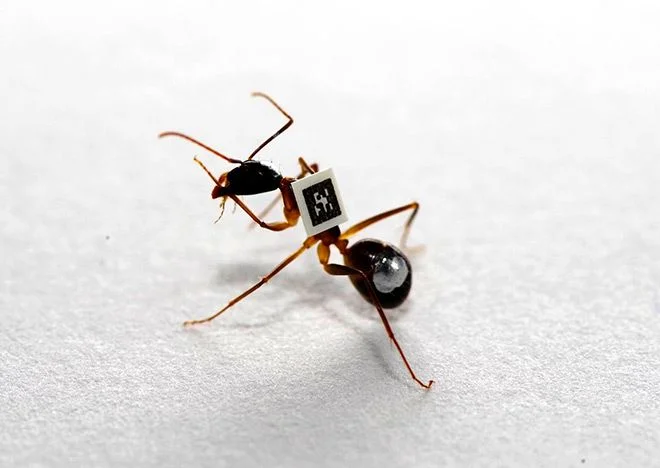
Photo credit: National Institute of Advanced Industrial Science and Technology
The researchers found that isolated ants had increased expression of genes involved in reactive oxygen production, which can cause cellular damage and disease. This was particularly evident in an organ analogous to the human liver. They treated the isolated ants with melatonin, a hormone that scavenges reactive oxygen, and observed improved behaviour and doubled median survival time. They cited previous evidence of elevated reactive oxygen in socially deprived rats but noted that the phenomenon's mechanism remains unclear. They proposed to use ants as a model to explore how social relationships influence health outcomes.

 www.nature.com
Photo credit: National Institute of Advanced Industrial Science and Technology
Koto, a chief researcher at the National Institute of Advanced Industrial Science and Technology, formed a team from AIST to look at the behavioral pattern of ants by placing them separately in containers. With two-dimensional barcodes applied to the back of each ant, the observation results were compared with those for a group of 10 ants that stayed in the same container together. Most grouped ants returned to their nest within an hour, with only a few remaining outside to keep watch, standard behavior for the species. Ants living in isolation roamed near walls longer. At times, they headed for their nests but did not stay long, underlining their "abnormal" condition. On top of that, 50 percent of the ants kept in isolation died within 25 or so days. Nearly 80 percent of their grouped counterparts were still alive 50 days later when the experiment ended.
The researchers found that isolated ants had increased expression of genes involved in reactive oxygen production, which can cause cellular damage and disease. This was particularly evident in an organ analogous to the human liver. They treated the isolated ants with melatonin, a hormone that scavenges reactive oxygen, and observed improved behaviour and doubled median survival time. They cited previous evidence of elevated reactive oxygen in socially deprived rats but noted that the phenomenon's mechanism remains unclear. They proposed to use ants as a model to explore how social relationships influence health outcomes.
Social isolation shortens lifespan through oxidative stress in ants - Nature Communications
The mechanisms behind the negative effects of social isolation on social species are unclear. Here, the authors examine colonies of carpenter ants, finding that behavioral, physiological, and lifespan changes may be caused by oxidative stress.
www.nature.com


