- 14 Mar 2002
- 21,054
- 18,910
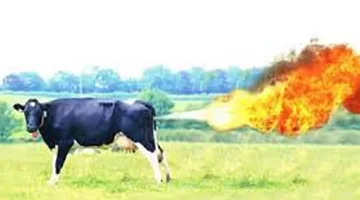
A Kochi-based startup is experimenting with an unusual approach to climate change: feeding seaweed to cattle to reduce methane released through their burps, with plans to bring the technology to market in the coming years. The work centres on a red seaweed called kagikenori (カギケノリ), a species long regarded as unsuitable for human consumption due to its bitterness and astringency. While it has attracted little interest as food, scientists involved in the project say it may have considerable value as an environmental tool. Tests suggest that adding small amounts of kagikenori to cattle feed can reduce methane emissions from cattle by as much as 98%, a figure that, if sustained at scale, could have notable implications for agricultural emissions.
The project is part of a wider effort by the startup to use seaweed as a climate technology, treating marine resources not only as food or industrial materials but also as a way to reduce the environmental impact of livestock farming.

In 2013, the Food and Agriculture Organisation of the United Nations estimated that livestock production accounted for 14.5% of global greenhouse gas emissions. This number has meanwhile been revised to about 5%.

 thebreakthrough.org
 worldwithoutcows.com
The project is part of a wider effort by the startup to use seaweed as a climate technology, treating marine resources not only as food or industrial materials but also as a way to reduce the environmental impact of livestock farming.
At Kochi University, researchers are conducting experiments to verify the methane-suppression effect. In one test, feed and kagikenori were placed in test tubes along with actual cow stomach fluid and artificial saliva, then shaken for 12 hours. The amount of methane generated was measured. Comparisons show that methane levels were significantly lower in samples containing kagikenori. According to Kameoka Naoki, a research student at Kochi University, methane levels were reduced by about 80% compared with samples without the seaweed. Beyond environmental benefits, kagikenori could also help livestock farmers by improving efficiency. Energy that would otherwise be used to generate methane can instead be redirected toward weight gain in cattle, potentially lowering feed costs.
Japanese Startup Slashes Methane from Cow Burps
A startup is working to curb global warming by feeding seaweed to cattle in an effort to reduce methane emissions from their burps, with plans to commercialize the technology in the coming years.
newsonjapan.com
In 2013, the Food and Agriculture Organisation of the United Nations estimated that livestock production accounted for 14.5% of global greenhouse gas emissions. This number has meanwhile been revised to about 5%.
Livestock Don’t Contribute 14.5% of Global Greenhouse Gas Emissions
thebreakthrough.org
The environmental impact of cows: What the filmmakers learned on their global journey - World Without Cows
Cows play a role in climate change — and in climate solutions
worldwithoutcows.com