


- 14 Mar 2002
- 21,050
- 18,903
More good news from science.
Last Wednesday, a group of Japanese researchers announced the development of a novel bioplastic that is robust, disintegrates quickly in seawater, and can be produced on a large scale. The study by scientists at Kobe University and other institutions suggests that plastic debris could eventually be removed from the world's oceans. According to data from the Organization for Economic Cooperation and Development, the ocean contained approximately 30 million tons of such debris in 2022. The newly developed bioplastic comprises polylactic acid, a polyester derived from starches like sugarcane and corn. The team reported this in the U.S. scientific journal ACS Sustainable Chemistry and Engineering.
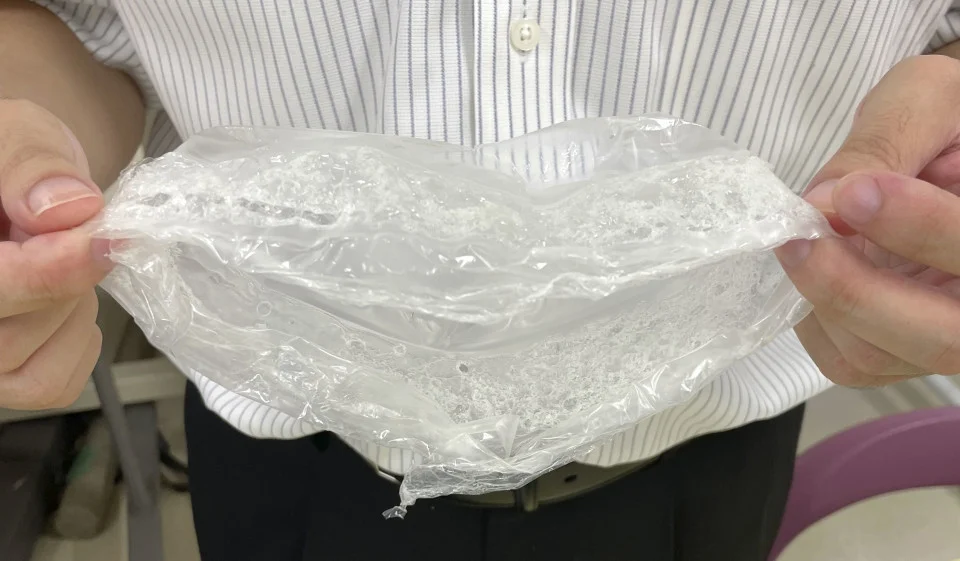
Next-generation polylactic acid (photo credit: University of Kobe)
 english.kyodonews.net
Last Wednesday, a group of Japanese researchers announced the development of a novel bioplastic that is robust, disintegrates quickly in seawater, and can be produced on a large scale. The study by scientists at Kobe University and other institutions suggests that plastic debris could eventually be removed from the world's oceans. According to data from the Organization for Economic Cooperation and Development, the ocean contained approximately 30 million tons of such debris in 2022. The newly developed bioplastic comprises polylactic acid, a polyester derived from starches like sugarcane and corn. The team reported this in the U.S. scientific journal ACS Sustainable Chemistry and Engineering.
Next-generation polylactic acid (photo credit: University of Kobe)
Polylactic acid, also known as polylactide, has attracted attention as an alternative material to petroleum-based plastics, but the material is brittle and difficult to mold and dissolve. A type of polylactide with enhanced degradability, known as LAHB, has already been developed, but it is difficult to produce in bulk. To address such shortcomings, the team utilized a bacteria known as lactate dehydrogenase capable of producing plastic, and through its genetic modification, the team managed to mass-produce LAHB. LAHB by itself is cloudy white in color, but the team achieved a typical transparent appearance by adding a small amount of LAHB to conventional polylactic acid. The Japanese government hopes to increase the country's use of bioplastics to approximately 2 million tons by 2030.
Japanese team create biodegradable plastic fit for industrial use
A team of Japanese researchers said Wednesday it has developed a new bioplastic that is not only durable but degrades rapidly in seawater and can be mass produced.


