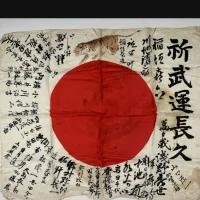
The big vertical writing on the rightmost edge is 祈武運長久, 'praying for continued good luck in battle'. The rest is mostly -- possibly entirely -- names signed on the flag by well-wishers. I can make out some family names pretty easily -- 野村 Nomura, 上野 Ueno, 田中 Tanaka, and 近藤 Kondou.
I don't immediately recognize any other slogans; there is often an indication of who the flag was presented to with their unit and sometimes their rank, but I can't find it among the other names.
It seems likely to be real, it's actual Japanese writing, the signatures appear to be by different individuals, it looks like an old flag of the type that was often presented. The tiger is unusual, but I don't think it's a red flag.
It would take expert analysis to say for sure if it is a real flag from the period, and if it is a period flag, whether it's a real gifted good luck flag or quality forgery from the time. A lot of flags were made to sell to foreign troops at the end of the war. If it isn't real, it's a very good forgery, and in-period forgeries are also historical artifacts.
I don't really know what materials real flags could have been made from, but availability and affordability could have made a difference. Certainly many photographs of real flags don't show a satin sheen, but what kind of fiber they were made from I couldn't say.