


- 14 Mar 2002
- 21,054
- 18,909
I just stumbled across an interesting piece on Nippon.com on (the maybe not so) evolving Japanese beauty standards. The original interview with Prof Harashima was conducted in 2009 but seems to be as accurate today as it was when it first appeared:
A beautiful face might seem eternal, but standards of beauty change over time. In recent years, Japan has idealised the "small face" (小顔 kogao) for both women and men. Prof Harashima Hiroshi (原島博), 79, received his doctorate in engineering from the University of Tokyo and has been a visiting researcher at Stanford University and a professor at the University of Tokyo. He founded the Japan Academy of Facial Studies in 1995. In the interview, he discusses how facial characteristics have changed in Japan in line with societal changes and evolving ideas about beauty.
Beauty standards have changed significantly:
And the face of modernisation is altogether different:
The emergence of the "small face":
Three-second vs thirty-year beauty:
If you're interested in why effeminate men (such as K-pop and J-pop celebs) and masculine women (Takarazuka, female wrestlers) are all the rage, read the entire interview here:
 www.nippon.com
A beautiful face might seem eternal, but standards of beauty change over time. In recent years, Japan has idealised the "small face" (小顔 kogao) for both women and men. Prof Harashima Hiroshi (原島博), 79, received his doctorate in engineering from the University of Tokyo and has been a visiting researcher at Stanford University and a professor at the University of Tokyo. He founded the Japan Academy of Facial Studies in 1995. In the interview, he discusses how facial characteristics have changed in Japan in line with societal changes and evolving ideas about beauty.
Beauty standards have changed significantly:
In terms of the general image, the Jōmon physiognomy is boldly chiseled and sharply defined, while Yayoi features are flatter and more subtle. You might say the Jōmon face has a more Western flavor and the Yayoi a more Eastern flavor. The Mongolian wrestlers who have become so dominant in professional sumō of late have typical Yayoi faces.
And the face of modernisation is altogether different:
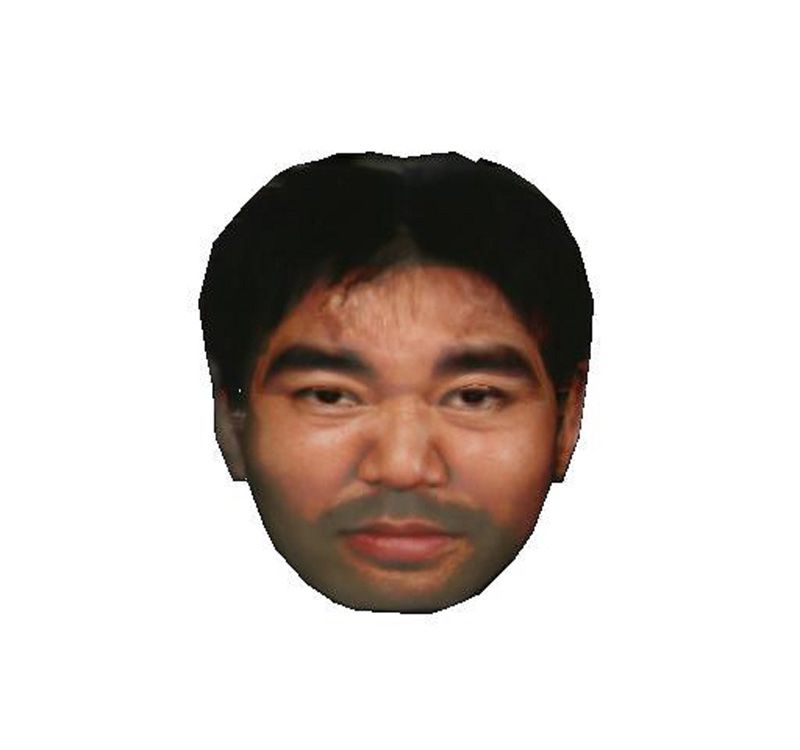
One aspect of daily life that has changed dramatically is diet. Since the end of World War II, the Japanese diet has become heavily slanted toward soft foods. In earlier times, people would take about an hour to finish an average meal in order to chew their food well, as everyone was told to do. These days you need no more than five or ten minutes. The amount of chewing that we do has decreased drastically. Things like hamburgers hardly require any chewing, so our masticatory strength has declined, and our jaws don't grow as large as they used to. I was wondering what people's faces would look like a hundred years from now if current trends continued, so I collaborated with the anthropologist Baba Hisao to generate a computer simulation. The result is a bit different for men and women, but one thing both have in common is smaller jaws. Men's faces become triangular. Women's faces, which are rounder than men's to begin with, end up rounder still because of the smaller jaw.
The emergence of the "small face":
[...] women's magazines these days are full of makeup and hair tips for making one's face look smaller or thinner. I can think of a number of explanations. One has to do with fashion in clothing, and the fact that the Japanese now wear Western-style clothes instead of traditional Japanese attire. With Japanese-style clothing, a larger face is more becoming. But a smaller face looks better with Western clothes, because they're designed for Westerners, who have smaller faces. Another key point about the term kogao is that it suggests not only a physically small face but a childlike face. The craze for kogao is in part a craze for cute faces, reflecting our society's bias toward the cute and childish as opposed to the mature. At some level, I think it's closely intertwined with the infantilization that we see throughout our society.
Three-second vs thirty-year beauty:
My own theory is that feminine beauty can be classified according to a time scale, ranging from three seconds to thirty years. A three-second beauty is someone who makes you turn your head involuntarily when you see her on the street and think, "Wow, what a beautiful woman!" This is almost completely superficial. In fact, it may have more to do with her figure and how she's dressed than her face. Next is the three-minute beauty. A typical example would be a receptionist, someone with whom you communicate for about three minutes. She presents you with a professionally arranged countenance and deals with you across a counter that creates an impassable barrier. Next comes the thirty-minute beauty. When you talk with someone for thirty minutes, her true countenance comes through, and you find beauty not in her superficial features but in the natural charm of her facial expressions. With a three-day beauty, the beauty you perceive is a product not just of her countenance but of her values and her outlook on life. Finally, there's the thirty-year beauty. This is the woman who has been with you over the years, through thick and thin, and even though you may have cheated once or twice, in the end you know she's the one for you.
If you're interested in why effeminate men (such as K-pop and J-pop celebs) and masculine women (Takarazuka, female wrestlers) are all the rage, read the entire interview here:
The Evolving Face of the Japanese
A beautiful face might seem eternal but standards of beauty change over time. Japan in recent years has idealized the “small face” (kogao) for both women and men. Professor Harashima Hiroshi discusses how facial characteristics have changed in Japan in line with societal changes and evolving...
www.nippon.com


