Crime Iwao Hakamada cleared of murders after 46 years on death row

thomas

Unswerving cyclist
Admin
Joined
14 Mar 2002
Messages
21,050
Reaction score
18,903
The Shizuoka District Court on Thursday found former death row inmate Iwao Hakamada innocent of multiple murders, overturning a conviction based on fabricated evidence that kept him imprisoned for nearly five decades. The court agreed with the defence's arguments and evidence presented in the retrial, concluding that Hakamada, now 88, did not kill four family members in 1966. Absent from the courtroom, Hakamada has been fighting for his freedom since his arrest 58 years ago.
267a00289fa0b46d6de4c81134557978.webp

Due to mental illnesses developed during his decades behind bars, the court exempted him from testifying in the retrial hearings. In declaring Hakamada's innocence, Presiding Judge Kunii Koshi determined that three pieces of evidence were fabricated by investigative authorities to secure a conviction. One such fabrication was the prosecution's claim that Hakamada had confessed to the crimes. The judge stated that the confession was obtained through inhumane interrogation tactics, violating the suspect's right to remain silent.


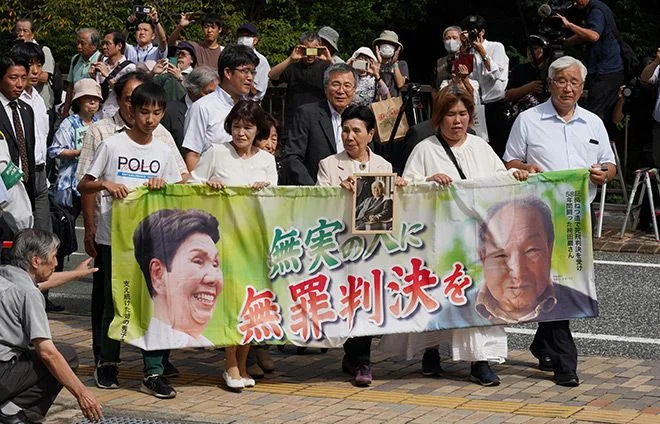
"Investigators tampered with clothes by getting blood on them," the ruling said, and criticised the use of "inhumane interrogations meant to force a statement … by imposing mental and physical pain". It said: "The prosecution's records were obtained by effectively infringing on the defendant's right to remain silent, under circumstances extremely likely to elicit a false confession." Hakamada's 91-year-old sister, Hideko Hakamada, who has campaigned tirelessly on behalf of her brother, told reporters before Thursday's verdict: "For so long we have fought a battle that has felt endless. But this time, I believe it will be settled." [...] Hundreds of people had queued outside the district court on Thursday in the hope of securing a seat in the public gallery, while supporters held up banners demanding Hakamada's acquittal. Hakamada initially denied robbing and fatally stabbing the victims but confessed after what he later described as a brutal police interrogation that included physical abuse. Campaigners said his ordeal had exposed flaws in Japan's criminal justice system and the cruelty of capital punishment.


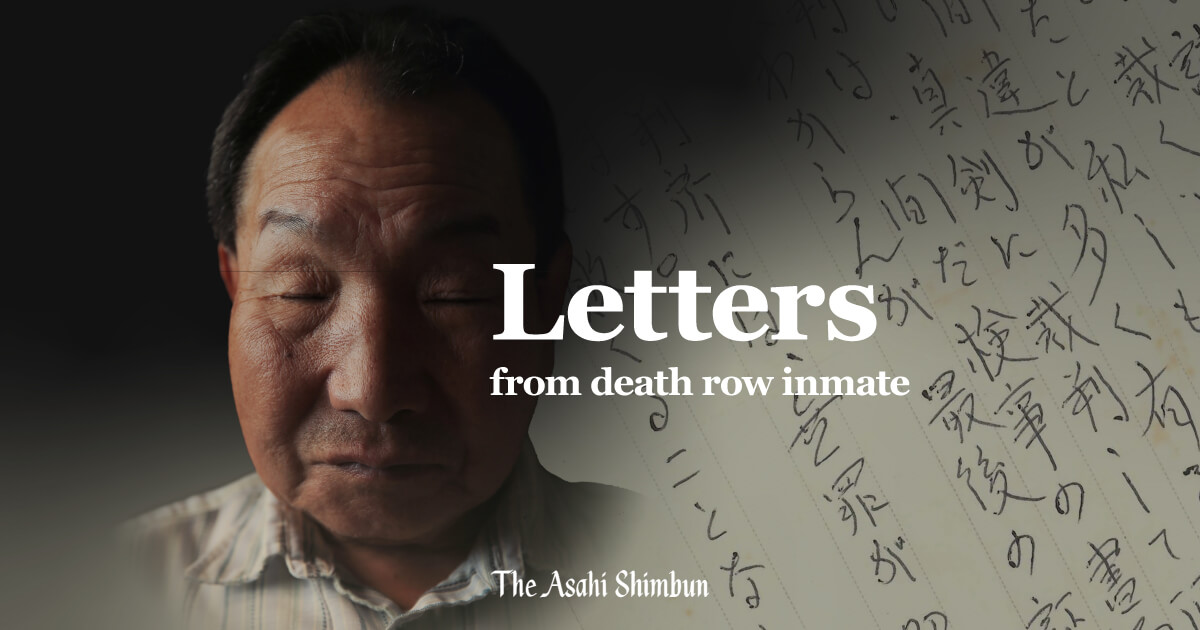
Asahi has a special feature on the case, with a general overview of the murders in 1966 and Hakamada's arrest, the legal proceedings, the fabrications of the police and the prosecutors, and the letters he wrote while on death row.


Outline of the Hakamada case
On June 30, 1966, a fire razed a house in what is now Shizuoka city. In the ruins, the bodies of a manager of a miso manufacturer and three of his family members were discovered. They all had multiple stab wounds in the chest and back. In August that year, Iwao Hakamada, then 30-year-old employee of the manufacturer, was arrested on suspicion of murder-robbery and arson. Hakamada initially denied the accusations. But he "confessed" to the crimes during grueling police questionings. In the trial, however, Hakamada recanted his confession. More than a year after his arrest, five bloodstained clothing items were discovered in a miso tank at the manufacturer's factory. Prosecutors claimed the clothing was worn by Hakamada during the attack.

 
I wonder why they let him sit there for so long. Practically speaking they would have never had to address this travesty if they had executed him decades ago.
 
I wonder why they let him sit there for so long. Practically speaking they would have never had to address this travesty if they had executed him decades ago.

Do you mean by executing someone innocent? While often distorted and circumvented, the rule of law still prevails in Japan. The problem is procedural: there were/are no clear rules for law enforcement to share evidence with defence lawyers. They reported that some of these regulations date back to the Meiji period . As seen in the Ghosn case, prosecutors will do everything to save their face and their conviction rate of over 99%. In the case of Mr Hakamada, they went as far as to manipulate evidence. I wonder if prosecutors and police can be held responsible for falsifying evidence.
 
Do you mean by executing someone innocent? While often distorted and circumvented, the rule of law still prevails in Japan. The problem is procedural: there were/are no clear rules for law enforcement to share evidence with defence lawyers. They reported that some of these regulations date back to the Meiji period. As seen in the Ghosn case, prosecutors will do everything to save their face and their conviction rate of over 99%. In the case of Mr Hakamada, they went as far as to manipulate evidence. I wonder if prosecutors and police can be held responsible for falsifying evidence.
Yes. The most puzzling thing about this whole thing to me is how he managed to get this overturned. Confessions are coerced as a matter common practice. And I'm sure evidence handling if often is dubious as well. Did one of the original investigators become a witness for him?
 
Yes. The most puzzling thing about this whole thing to me is how he managed to get this overturned. Confessions are coerced as a matter common practice. And I'm sure evidence handling if often is dubious as well. Did one of the original investigators become a witness for him?

I doubt that many of them are still alive. Legal proceedings started in 1966. It's Mr Hakamada's sister that needs to be credited. She had fought for her brother for decades. She was present when the verdict was read yesterday, as her brother couldn't attend in person.
 
I doubt that many of them are still alive. Legal proceedings started in 1966. It's Mr Hakamada's sister that needs to be credited. She had fought for her brother for decades. She was present when the verdict was read yesterday, as her brother couldn't attend in person.
But still, how could the judge have decided the confession was coerced then? It doesn't compute. Maybe there was original video of it...
 
In the ruling, the Shizuoka District Court said "there were three instances of fabrication of evidence," including five pieces of clothing that Hakamada was alleged to have worn during the incident and his confession, which the court said was forced. The clothing evidence played a key role in his conviction. On the clothing items, which were found in a miso tank near the site of the murders 14 months later, the court backed the defense's claim that the reddish color could not have been bloodstains from the time of the incident as bloodstains on clothing would not remain red when immersed in miso for more than year.

hakamada-fake-evidence.jpg

The focus now shifts to whether prosecutors, who again demanded the death penalty in the retrial, will appeal Thursday's ruling. The defence team has urged prosecutors not to challenge an acquittal.

I'd be surprised if they didn't.

The verdict also begs the question of who killed the family in 1966.
 
If found he was framed , here in the US there would probably be a big law suit where they have to pay him millions for false imprisonment. Wonder if he will get anything for all that jail time?
 
If found he was framed , here in the US there would probably be a big law suit where they have to pay him millions for false imprisonment. Wonder if he will get anything for all that jail time?

I am sure he's entitled to compensation, but what's appropriate for wrongfully spending 46 years on death row?
 
A month in Thailand with hot women and all he can drink , all expenses paid , LOL. Be his luck , he'd have a heart attack the first day probably.
 
But still, how could the judge have decided the confession was coerced then? It doesn't compute. Maybe there was original video of it...


More on the evidence taken from the JT comment section:

Some of that evidence included -
  • The small fruit knife they said was the murder weapon was undamaged after 40+ horrific stabbings and experts determined the size of the wounds to be not compatible with such a small knife.
  • The clothing was too small for Hakamata. Prosecutors said no - it's "B" size his size. The B on that item indicated the color Black not size.
  • The blood stains were still reddish after 14 months in a miso tank, and the material was still very light in color proven by independent testing to be utterly unbelievable.
  • Modern DNA testing - a number of times - revealed that the blood was Not Hakamatas.
  • Wiki - "According to his lawyers, Hakamada was interrogated a total of 264 hours, for as many as 16 hours a session, over 23 days to obtain the confession. They added that he was denied water or toilet breaks during the interrogation. At his trial, Hakamada retracted the confession, saying police had kicked and clubbed him to obtain it, and pleaded not guilty."
  • Prosecutors the world over hate to be proven wrong, no more so than here in Japan. And to add angst to it all, they will never admit to a failing let alone a wrongdoing - never!
 
I remember when I was in Fukuoka (71-73) , the police had a horrible reputation. I was told stories about them beating confessions out of people. The owner of the bar where I worked said payoffs to police were common. An acquaintance I knew got picked up with birth control pills (not in their original package) and was arrested for drug procession , LOL. He said by the time the cops got done with him , he would have turned in his mother for crimes so they would give him a break. The 5am raid where they kicked in the door to my apartment and panicked when they learned a "gaijin" owned it , did not do much to make me like them , LOL. If the guy was truly innocent , I really feel bad for him.
 
The Supreme Public Prosecutors' Office on 8 October said it will not appeal the 26 September ruling of the Shizuoka District Court that acquitted Hakamada, 88, in a long-awaited retrial. The decision confirms Hakamada's innocence, ending his 58-year battle to clear his name. The prosecutor's office did criticize the district court's ruling, which acknowledged evidence against Hakamada had been fabricated.

Still, prosecutors were unwilling to accept that "investigative authorities fabricated evidence."

The prosecutors' office did criticize the district court's ruling that acknowledged evidence against Hakamada had been fabricated. "We cannot help but feel strong dissatisfaction with the ruling that investigative authorities fabricated evidence," the office said in a statement. But prosecutors noted the protracted time it took for Hakamada to gain a retrial. "As a result, Hakamada's legal status has been unstable for a long period of time. We have come to the conclusion that it is not appropriate for the prosecution to appeal and for this situation to continue," the statement said.


I hope Mr Hakamada will receive compensation in his lifetime and enjoy the rest of his days.
 
The Supreme Public Prosecutors' Office on 8 October said it will not appeal the 26 September ruling of the Shizuoka District Court that acquitted Hakamada, 88, in a long-awaited retrial. The decision confirms Hakamada's innocence, ending his 58-year battle to clear his name. The prosecutor's office did criticize the district court's ruling, which acknowledged evidence against Hakamada had been fabricated.

Still, prosecutors were unwilling to accept that "investigative authorities fabricated evidence."


I hope Mr Hakamada will receive compensation in his lifetime and enjoy the rest of his days.
I've read the Wikipedia about this case, and there were some pretty obvious holes. I'm surprised he was even convicted at all.
 
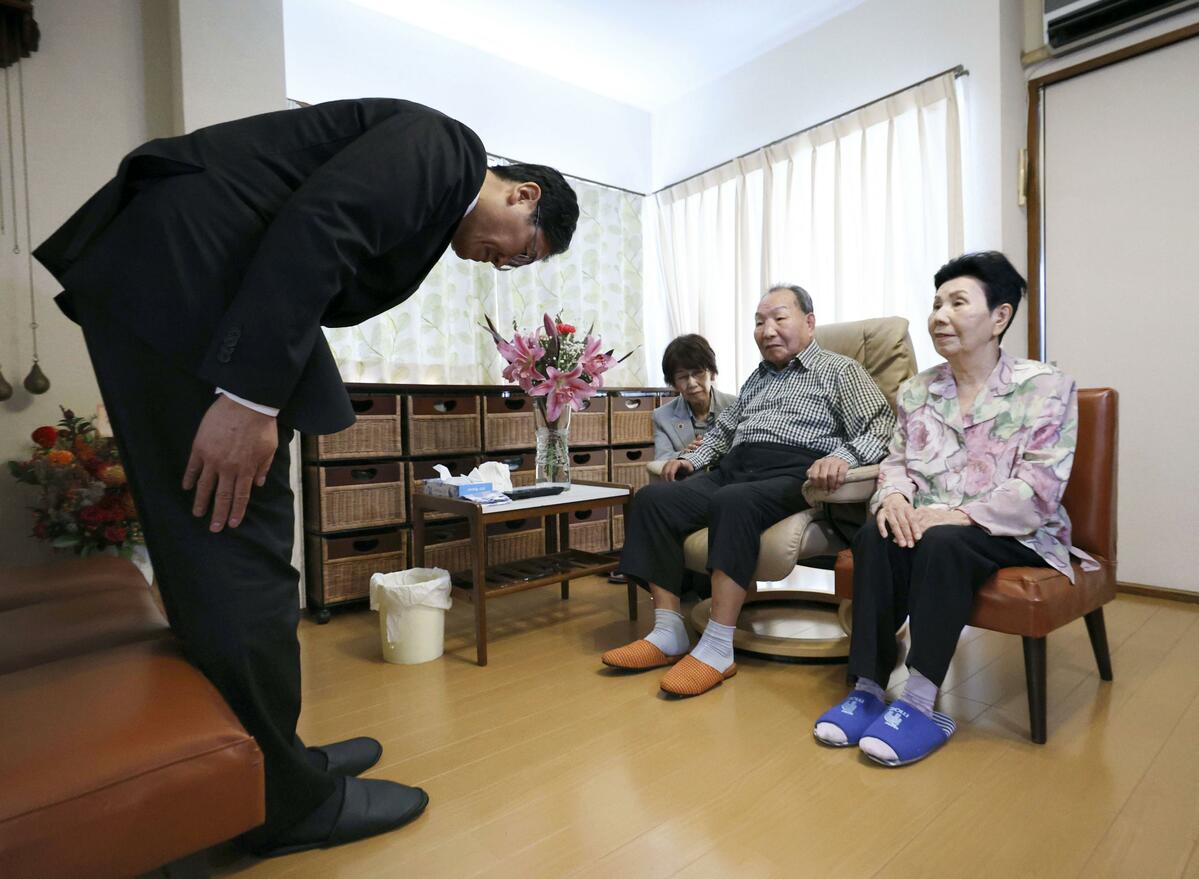
The Police Chief of Shizuoka, Tsuda Takayoshi, issued an apology on Monday to Hakamata Iwao, who spent nearly half a century on death row. During a visit to Hakamata's home in Hamamatsu, Chief Tsuda expressed deep remorse for the immeasurable hardship and suffering inflicted upon Hakamata during his decades-long ordeal. This personal apology marks a significant step as it is the first time an official from the police or prosecution has directly addressed the injustice of Hakamata's wrongful conviction. Hakamata was arrested by Shizuoka police in 1966 but released in 2014 after new evidence emerged casting doubt on his guilt. The apology serves as a poignant acknowledgement of the grave errors made by the justice system and a testament to the pursuit of justice, even in the face of such a prolonged injustice.


Tsuda's visit to Hakamata came after he had told reporters he intended to offer him an apology in person and that the prefectural police were "sorry that Mr. Hakamata was placed in an unstable legal status for a long time." His remark followed a similar statement issued by Prosecutor General Naomi Unemoto apologizing to Hakamata. The former professional boxer was a live-in employee at a miso maker when he was arrested for allegedly killing the firm's senior managing director, his wife and two of their children. They were found dead from stab wounds at their house in Shizuoka Prefecture, which had been burned down.


I wonder if any of the investigating cops and prosecutors (1966-1980 and thereafter) are still alive. These guys faked evidence and should have been prosecuted themselves.
 
Wrongful convictions in capital (& other) cases are so common we have The Innocence Project to try to rectify the wrongs. I wonder if Japan has any similar initiatives.

 
Today, the Shizuoka District Court ruled that Hakamada Iwao should receive compensation of over 217 million yen, or about 1.45 million dollars. The amount is the highest in Japan, according to Hakamada's defence team.

The district court on Monday decided to order payment of the full amount to Hakamada. The Presiding Judge Kunii Koshi pointed out that of the over 47 years, Hakamada had been detained for about 33 years for the capital punishment, and that the mental and physical pain he had suffered was extremely severe. The judge said Hakamada was subjected to inhumane questioning coordinated among various investigative organizations. Kunii noted that the five items of clothes fabricated by investigators were seen as the main evidence, and that convictions against Hakamada were repeatedly upheld by the court.

 
Today, the Shizuoka District Court ruled that Hakamada Iwao should receive compensation of over 217 million yen, or about 1.45 million dollars. The amount is the highest in Japan, according to Hakamada's defence team.


Yep that sounds about right.
 
Back
Top Bottom