Question Is the "~てーform" just a shortened version of 「~ていい」?

Haruto Uzumaki

渦巻ハルト
Joined
24 Apr 2022
Messages
382
Reaction score
470
Similar to how things like「なければ(いけない、ならない、等々)」get shortened to 「なきゃ」, I have a strong feeling that 「何何」is just a shortening of 「何何て(いい、ほしい、等々)」and not actually a "polite request form" at all like it's taught to us. Rather, what if it's more like "it would be (good, desired) if you did " or more accurately, "doing _ is (good/desirable/etc)", which is, in a way, definitely a Japanese way of asking someone to do something? I think at the heart of it, the て-form is simply a "continuous verb connector" of sorts that allows you to connect other words and phrases to the verb, and anything more than that is just implied. Would I be right about that or onto something?
 
TE form by itself has never been a "polite request form." But it's how you form polite requests such as "~TE KUDASAI."
て-form is simply a "continuous verb connector" of sorts that allows you to connect other words and phrases to the verb, and anything more than that is just implied. Would I be right about that or onto something?
It's not just implied though. These phrases are part of the language and well understood.

~て(も)いい is a way of giving or asking for permission
 
Similar to how things like「なければ(いけない、ならない、等々)」get shortened to 「なきゃ」, I have a strong feeling that 「何何」is just a shortening of 「何何て(いい、ほしい、等々)」and not actually a "polite request form" at all like it's taught to us. Rather, what if it's more like "it would be (good, desired) if you did " or more accurately, "doing _ is (good/desirable/etc)", which is, in a way, definitely a Japanese way of asking someone to do something?
Indeed the -te form can be an imperative, but it's not a polite imperative but more likely a casual soft imperative. Thus, you can't use this form to your superior. This is not the contraction such like なければ vs. なきゃ, but the omission of the following word (e.g. 食べて vs. 食べてください) since it's obvious from the context.

I think at the heart of it, the て-form is simply a "continuous verb connector" of sorts that allows you to connect other words and phrases to the verb, and anything more than that is just implied.
That's exactly the fundamental function of the -te form, therefore, it can show, for example, the reason/cause.

teacher: なぜ遅刻したの?
student: 事故で電車が遅れて。

Wikipedia has a list of other usages of the -te form.
 
TE form by itself has never been a "polite request form." But it's how you form polite requests such as "~TE KUDASAI."
That's true, just the way I originally learned it made me think using the て form in itself (when used alone) caused the feeling of a request, and I eventually found that to not really be the case...
It's not just implied though. These phrases are part of the language and well understood.
The word I should've used is "omitted" as @Toritoribe worded it, as in, the sense of it being a request comes from the omitted word that comes after て, and the omitted word is "imagined" due to the fact that as a connective form, using て in the first place implies the speaker intended to connect something to it, but omitted whatever would've been connected. Basically, my feeling is that it's only understood because of the fact that it's expected for something to be connected to the て, as the connector it is. Hope that makes sense.
Indeed the -te form can be an imperative, but it's not a polite imperative but more likely a casual soft imperative. Thus, you can't use this form to your superior.
I guess I just never made that distinction before, I thought only the imperative form (ろ、れ、等々) could be considered imperative, so I considered て as a "request" the whole time... And I guess in contrast to how the imperatives sound, I considered that polite (and also with how tightly wound the て form is to ください and other 丁寧語)
This is not the contraction such like なければ vs. なきゃ, but the omission of the following word (e.g. 食べて vs. 食べてください) since it's obvious from the context.
I used a bad example I guess, since as you said, it's a contraction, but omission was what I meant.
That's exactly the fundamental function of the -te form, therefore, it can show, for example, the reason/cause.
Now that you said that it helped me make sense of times when people end their sentences with て :)
teacher: なぜ遅刻したの?
student: 事故で電車が遅れて。
With this example, could I be right to assume to technically "finish" the sentence, the student would've most likely said 「遅刻しました」? Now it makes sense, it's just like ので in this case o_O
It all clicked now, thank you guys 🥹
So basically, て is the connector, and whatever could be expected to come after it gives it meaning, whether to request or to give reason.

One more thing I have to ask, which is about the formatting of the original question:
When I typed 「何何て」, I knew I felt something was wrong with it and kept switching between 「○○て」 and 「何何て」, but after reading my question again, I finally figured out why I felt that way.
At least for me, having て right after the word なに sounds very unnatural, so I think if it were a Japanese person posing this question, they might've used 「何何って」 instead. There's probably a more natural way altogether to make the question, but am I right in feeling this way? If て is right next to 何 it feels like it has to be read as 「なんて」, but the two 「何」 indicate 「なになに」 so it feels contradictory and just outright wrong. I thought I would write it without っ as that's usually a property of the verb itself and technically not part of the て form. Would ○○て be better (despite the censorship connotation it has sometimes)?
 
I guess I just never made that distinction before, I thought only the imperative form (ろ、れ、等々) could be considered imperative, so I considered て as a "request" the whole time... And I guess in contrast to how the imperatives sound, I considered that polite (and also with how tightly wound the て form is to ください and other 丁寧語)
Requests are imperatives. Advice can be as well. "Drink plenty of water."
Rude imperatives and polite imperatives are still imperatives.

So basically, て is the connector, and whatever could be expected to come after it gives it meaning, whether to request or to give reason.
I don't think this understanding makes sense in the case of imperative use.
早く起きて
マジック豆を食べて
you don't need anything additional after it, explicit or implied.

Would ○○て be better (despite the censorship connotation it has sometimes)?
○○ is the normal way to me. I didn't realize there was a risque connotation.
For example:
1706910889973.webp
 
With this example, could I be right to assume to technically "finish" the sentence, the student would've most likely said 「遅刻しました」? Now it makes sense, it's just like ので in this case
That's right!(y)

So basically, て is the connector, and whatever could be expected to come after it gives it meaning, whether to request or to give reason.
Yes, you got it right.

When I typed 「何何て」, I knew I felt something was wrong with it and kept switching between 「○○て」 and 「何何て」, but after reading my question again, I finally figured out why I felt that way.
At least for me, having て right after the word なに sounds very unnatural, so I think if it were a Japanese person posing this question, they might've used 「何何って」 instead. There's probably a more natural way altogether to make the question, but am I right in feeling this way? If て is right next to 何 it feels like it has to be read as 「なんて」, but the two 「何」 indicate 「なになに」 so it feels contradictory and just outright wrong. I thought I would write it without っ as that's usually a property of the verb itself and technically not part of the て form. Would ○○て be better (despite the censorship connotation it has sometimes)?
って is usually not used for the -te form. って in 何何って or ○○って is interpreted as the colloquial form of ~というのは.

何々/○○って難しいよね。
(e.g. 日本語って難しいよね。)

The most common way to express the -te form in Japanese is ーて or ~て. The same goes with ー(or ~)た for the past form, ー(or ~)れる/られる for the potential form or ー(or ~)ば for the -ba conditional.

I don't think this understanding makes sense in the case of imperative use.
早く起きて
マジック豆を食べて
you don't need anything additional after it, explicit or implied.
Actually, it's the omission of ください or くれ that follows it.;)

て の解説
2[終助]活用語の連用形に付く。
3 依頼、軽い命令を表す。…てください。…てくれ。「早く来—」「私にも見せ—ね」
[補説] 2(= 終助/終助詞/sentence ending particle)は、くだけた表現、うちとけた会話に用いられる。いずれも接続助詞「て」によって導かれる文を表現しない言い方で、本来の質問・主張・命令などに比べると柔らかく、婉曲 (えんきょく) な表現になっている。
 
I don't think this understanding makes sense in the case of imperative use.
早く起きて
マジック豆を食べて
you don't need anything additional after it, explicit or implied.
My understanding has always been that this is an implied ください or similar, not an inherent function of the て form.
 
Requests are imperatives. Advice can be as well. "Drink plenty of water."
Rude imperatives and polite imperatives are still imperatives.
Ah, I guess I never made such a connection before... Thanks for telling me. Since Japanese is the one language I've been continually learning fully consciously, it's the first time even being introduced to a concept such as imperatives and I always separated them from requests since in english, requests are usually like "can you..." which leaves room for the listener to say no easily. I guess in Japanese it's still an imperative assuming the following words would be something like ください, but if it were ~くれませんか or something, would that really still be considered an imperative? Or can that form only be used with を and not て :unsure: I think it can...
I don't think this understanding makes sense in the case of imperative use.
早く起きて
マジック豆を食べて
you don't need anything additional after it, explicit or implied.
Maybe not "need" but I mean like it's technically speaking, an unfinished sentence that doesn't need to be finished, because with the context the only words that make sense after て in that moment are already known. Whether it's an imperative or someone giving reason to something, it would be known what type of word or phrase could be said after it, and therefore the meaning is already understood due to the fact that it's probably obvious what they mean. Although, I'm not insisting that they spend energy thinking about not saying whatever they don't say, but what I mean is this:

Imagine a scene where a kid's dad takes him out for pizza every Saturday. It's nearing the time they usually go out for pizza, and as if he forgot, the dad says, "man, I'm so bored tonight, wonder what I'll do". The child responds, "well, it's Saturday, so..."
In this moment, he could've said something like "let's go out for pizza like always", but instead he omitted it, whether or not he was thinking about what words he would say at that point isn't too important, because he simply didn't feel the need to say anything more than that, whatever else there could've been (whether imperative or reasoning).
And he was right about feeling that way, because the dad replied "oh yeah, I almost forgot, it's about time we get some pizza son. Let's go!". :)
Hope that makes sense.
○○ is the normal way to me. I didn't realize there was a risque connotation.
I see. Maybe 何々 would just be the spoken way or something.
That's right!(y)
Yes, you got it right.
やったー 🙇‍♂️
って is usually not used for the -te form. って in 何何って or ○○って is interpreted as the colloquial form of ~というのは.
Ahh I see, makes sense, there's that too...
The most common way to express the -te form in Japanese is ーて or ~て. The same goes with ー(or ~)た for the past form, ー(or ~)れる/られる for the potential form or ー(or ~)ば for the -ba conditional.
Thanks, I guess I just wanted to put more emphasis on the blanks but I suppose that's a weird thing to do in writing. I'll use ~ from now on :)
 
Since Japanese is the one language I've been continually learning fully consciously, it's the first time even being introduced to a concept such as imperatives and I always separated them from requests since in english, requests are usually like "can you..." which leaves room for the listener to say no easily. I guess in Japanese it's still an imperative assuming the following words would be something like ください, but if it were ~くれませんか or something, would that really still be considered an imperative? Or can that form only be used with を and not て :unsure: I think it can...
You need to distinguish imperative form and imperative mood. ください is the imperative form of 下さる*, but the mood can be invitation, allowance, hope, etc., as you already know. In fact, いらっしゃいませ is the imperative form of いらっしゃいます, but there is no imperative mood here, right? Similarly, the dictionary form can be an order depending on the situation.
e.g.
teacher in a class: そこ、静かにする!(=しなさい!)

*There are two theories about the etymology of ください; the phonetic change of くだされ and the omission of ませ from くださいませ. It's considered as the imperative form, anyway.
 
You need to distinguish imperative form and imperative mood. ください is the imperative form of 下さる*, but the mood can be invitation, allowance, hope, etc., as you already know. In fact, いらっしゃいませ is the imperative form of いらっしゃいます, but there is no imperative mood here, right? Similarly, the dictionary form can be an order depending on the situation.
e.g.
teacher in a class: そこ、静かにする!(=しなさい!)

*There are two theories about the etymology of ください; the phonetic change of くだされ and the omission of ませ from くださいませ. It's considered as the imperative form, anyway.
That was very helpful! I did notice that some imperatives are not "aggressive" sounding basically, while some are, but now I know that the mood is what matters. I've also always thought of 「いらっしゃいませ!」 as something akin to "be welcomed!", similar to how we just say "welcome!" in English. While it's technically an imperative form (we are basically forcing someone to feel welcomed), the mood is still "nice" rather than "aggressive", so it works for polite sentences. Makes sense :) and I appreciate the *info as well, I've been thinking about many words that use the さい form (like なさい as well) and it's a wonder to slowly but surely understand how it's all connected over time, and I get to see more of the consistencies (and some inconsistencies) of Japanese :)
 
I used "imperative form" and "imperative mood" as grammatical terms.


The imperative form (命令形) can express various moods such like invitation(勧誘), allowance(許可), hope(希望), advice(忠告), request(依頼), etc.. Similarly, the imperative mood, i.e., "order(命令)" can be expressed by various forms, for example, 静かに!, 静かにする!, 静かにすること!, 静かにするように!, 静かにするんだ! and so on.

I've also always thought of 「いらっしゃいませ!」 as something akin to "be welcomed!", similar to how we just say "welcome!" in English. While it's technically an imperative form (we are basically forcing someone to feel welcomed), the mood is still "nice" rather than "aggressive", so it works for polite sentences.
いらっしゃいませ is an imperative form of いらっしゃいます, いらっしゃいます is a polite form of いらっしゃる, and いらっしゃる is an honorific verb of 来る.

来る -honorific-> いらっしゃる -polite-> いらっしゃいます -imperative-> いらっしゃいませ

Thus, いらっしゃいませ is a very respectful version of 来い. (It's originally a word used to attract customers at a storefront, and later, it's used also when a customer comes in the store as the same meaning as いらっしゃいました/来た.) It doesn't directly mean "welcome" or "to be welcomed". It's just used in a situation where "welcome" is used in English.

I've been thinking about many words that use the さい form (like なさい as well)
なさい is an imperative form of なさる, which is an honorific verb of する. (It's considered whether it's the phonetic change of なされ or the omitted form of なさいませ, as same as ください.) Thus, さい is just a part of なさい or ください, not like "な + さい" or "くだ + さい". It's just a coincidence that the two words end with さい, similar to 逃げる vs. 投げる or "to throw" vs. "to know" in English, for example.
 
I caught all of what you said :) and I never put together the fact that なさる is する but honorific, makes sense now! I wonder if the な in なさる originates from it being attached to words that use な? (not saying that's what it was originally attached to, but just wondering if that would be something that caused it, cause I've noticed similar occurrences in other aspects of Japanese).
For いらっしゃる, I was also surprised that it's the honorific form of 来る, expecting it to be a form of いる instead. Do you know why 「~いらっしゃいますか?」 can be translated as something like "is anyone who ____ here?" ? It made me think it stemmed from いる because of that. Thanksss and sorry that this thread is getting so off topic 😅
 
I caught all of what you said :) and I never put together the fact that なさる is する but honorific, makes sense now! I wonder if the な in なさる originates from it being attached to words that use な? (not saying that's what it was originally attached to, but just wondering if that would be something that caused it, cause I've noticed similar occurrences in other aspects of Japanese).
For いらっしゃる, I was also surprised that it's the honorific form of 来る, expecting it to be a form of いる instead. Do you know why 「~いらっしゃいますか?」 can be translated as something like "is anyone who ____ here?" ? It made me think it stemmed from いる because of that. Thanksss and sorry that this thread is getting so off topic 😅
いらっしゃる is honorific for 来る, いる, and 行く.
 
I wonder if the な in なさる originates from it being attached to words that use な? (not saying that's what it was originally attached to, but just wondering if that would be something that caused it, cause I've noticed similar occurrences in other aspects of Japanese).
なさる is originally from the honorific form of なす. なす(成す/為す) and なる(成る/為る) are the transitive-intransitive verb pair, thus, なる(成る/為る) is related to なす/なさる. However, this doesn't mean that な has a meaning, and なす and なる are made from "な + す" and "な + る". Both なす and なる are a single word that can't be parsed.

Also, there is no relation between なす and other words that start with な. For example, unlike 成る/為る, 鳴る has nothing to do with 成す/為す. The transitive counterpart of 鳴る is 鳴らす, not なす, and the pitch accent type of 鳴る is different from 成る/為る (while 鳴る is 無核型; the accent type is flat /ナル=/, 成る/為る is 有核型; the accent is on the first mora /ナ]ル/). The same goes with ない, 泣く, 舐める, 怠ける, 慣れる, etc..

Think about the verb "to throw" in English. You don't think that it has something to do with "to think" or "to thaw" just because all these words begin with "th", right? It's like that.

For いらっしゃる, I was also surprised that it's the honorific form of 来る, expecting it to be a form of いる instead. Do you know why 「~いらっしゃいますか?」 can be translated as something like "is anyone who ____ here?" ? It made me think it stemmed from いる because of that.
いらっしゃる の解説
「行く」「来る」「居る」の尊敬語。おいでになる。「休日にはどこへ—・るのですか」「先生が—・った」「明日は家に—・いますか」

See the following example.

ぜひうちへいらっしゃってください。

"いらっしゃる means 来る" is the only one possible interpretation here since ぜひうちへ行ってください is semantically odd, and ぜひうちへいてください is grammatically wrong. It should be ぜひうちいらっしゃってください when いらっしゃる means いる.

Thanksss and sorry that this thread is getting so off topic
No need to apologize.:) It's often the case that new questions arise one after another.
 
いらっしゃる is honorific for 来る, いる, and 行く.
なんと便利な言葉~
makes sense, crazy that it covers three words. Also, if I'm not mistaken, isn't there another honorific for 行く? Can't remember right now but I think I've seen it used in emails and such before.
なさる is originally from the honorific form of なす. なす(成す/為す) and なる(成る/為る) are the transitive-intransitive verb pair, thus, なる(成る/為る) is related to なす/なさる. However, this doesn't mean that な has a meaning, and なす and なる are made from "な + す" and "な + る". Both なす and なる are a single word that can't be parsed.
Ahh okay, I see.
Also, there is no relation between なす and other words that start with な. For example, unlike 成る/為る, 鳴る has nothing to do with 成す/為す. The transitive counterpart of 鳴る is 鳴らす, not なす, and the pitch accent type of 鳴る is different from 成る/為る (while 鳴る is 無核型; the accent type is flat /ナル=/, 成る/為る is 有核型; the accent is on the first mora /ナ]ル/). The same goes with ない, 泣く, 舐める, 怠ける, 慣れる, etc..
Well I might've asked incorrectly but I wasn't thinking that it could be related to other words that start with な but rather, words that use な to attach other words to them. Basically, I felt there was a chance that maybe long ago, な had a more universal usage, which eventually split up into more modern Japanese usages. Similar to how I can kind of tell 出来る is most likely a modern singular form of ideas that used to be "separate" in a way. When I think of the potential root meaning of 出来る, I think maybe "something (a concept?) that comes to be." 未 also contains one same kanji, which strengthens the idea of "coming to be / coming to pass". Then for 出, I wonder if this is just the default kanji for the original で particle. As in, maybe です is just 出す with a more primitive meaning, but since it has a different spelling it has to be spelled without the kanji. At the very least, I'm fairly certain です in itself is, by technicality, a verb. I'm also fairly certain that the で particle is just です in its "unfinished" form. I could be wrong about most or all of that but basically I always wonder about how these words truly originated, because it's unlikely that they were always words from the start of the language...
Think about the verb "to throw" in English. You don't think that it has something to do with "to think" or "to thaw" just because all these words begin with "th", right? It's like that.
True, but it does turn out those words are all related from the same Old(?) English roots, where a letter known as Þ・þ (thorn, uppercase/lowercase respectively) made both the unvoiced and voiced "th" sound. Indeed, the letter itself doesn't have a meaning at least now, but it would be interesting if I found out something like "that letter originated from _____ and used to mean something but became a letter after being used to form more complex words for more complex ideas." (just a made up scenario)
Something that goes that far back would be cool to know about Japanese, if it even formed through first singular syllables with meaning at all. I basically asked the question because I had started to notice some patterns, and felt like it potentially could've meant な has a long history in the formation of modern Japanese words.
"いらっしゃる means 来る" is the only one possible interpretation here since ぜひうちへ行ってください is semantically odd, and ぜひうちへいてください is grammatically wrong. It should be ぜひうちいらっしゃってください when いらっしゃる means いる.
Yeah that makes sense, just had no clue before that there are honorific words that cover multiple regular words o_O
No need to apologize.:) It's often the case that new questions arise one after another.
😅 I suppose
 
Also, if I'm not mistaken, isn't there another honorific for 行く? Can't remember right now but I think I've seen it used in emails and such before.
参る is humble for 行く, this is probably what you're thinking of. It appears often in keigo emails, but on the 謙譲語 side, not the 尊敬語 side.


な is a copula-like word today to attach adjectives to things, but that evolved にある->なる->な so this is a relatively modern use and there won't be any ancient spread of it to other uses.

Languages are generally made up of a small number of distinct, recognizable sounds, so by necessity those sounds are regularly used for entirely unrelated meanings. On top of which, words change in pronunciation over time, so modern words that are pronounced similarly today may have been pronounced entirely differently in the past. Etymology can be fascinating, but the connections are seldom as easy as pairing up words that contain the same sound in modern pronunciation.
 
参る is humble for 行く, this is probably what you're thinking of. It appears often in keigo emails, but on the 謙譲語 side, not the 尊敬語 side.
Ah yes, I believe that's the one, even the elevators in Japan speak like that :ROFLMAO: 「上に参ります」
な is a copula-like word today to attach adjectives to things, but that evolved にある->なる->な so this is a relatively modern use and there won't be any ancient spread of it to other uses.
Wow, so it was the complete opposite direction of what I was thinking :oops: but I guess that's expected to occur as it's not always the more "simple" forms that it starts with, but sometimes a more complex thing that refines into something more simple yet superior. I love it!! And I really appreciate your answer, this gave me closure to a connection I was feeling for quite some time, but had no idea how to properly map out.
Languages are generally made up of a small number of distinct, recognizable sounds, so by necessity those sounds are regularly used for entirely unrelated meanings. On top of which, words change in pronunciation over time, so modern words that are pronounced similarly today may have been pronounced entirely differently in the past. Etymology can be fascinating, but the connections are seldom as easy as pairing up words that contain the same sound in modern pronunciation.
Indeed, indeed... It's definitely a lot more complex than I could possibly fathom, yet for some reason I still want to learn as if I could possibly come to understand it all one day... And for some reason, only Japanese sparked this kind of interest in language for me, while when I was learning Spanish (though in school), I never really had any interest beyond how the words were similar to English. Japanese history is addicting somehow...
 
Also, if I'm not mistaken, isn't there another honorific for 行く?
You can also use お越しになる or おいでになる as honorific for 行く.

Similar to how I can kind of tell 出来る is most likely a modern singular form of ideas that used to be "separate" in a way. When I think of the potential root meaning of 出来る, I think maybe "something (a concept?) that comes to be." 未 also contains one same kanji, which strengthens the idea of "coming to be / coming to pass". Then for 出, I wonder if this is just the default kanji for the original で particle. As in, maybe です is just 出す with a more primitive meaning, but since it has a different spelling it has to be spelled without the kanji. At the very least, I'm fairly certain です in itself is, by technicality, a verb. I'm also fairly certain that the で particle is just です in its "unfinished" form.
The classical form of 出来る is 出来(でく). This で is originally from the classical verb 出づ(いづ). (Incidentally, おいでになる is the honorific form of this いづ (お + masu stem (連用形) of verb + になる, e.g., お書きになる, お食べになる.))

いづ -attributive form (連体形)-> いづる -phonetic change-> づる -conjugation type change-> でる -masu stem (連用形)-> で

On the other hand, the particle で is the phonetic change of にて(particle に + particle て). This particle で is indeed the etymology of です or だ. It's said that です is from で候(そうろう), でおはす, でございます, であります etc.. Thus, です is not 出す.

だ changed like this.
であり -attributive form (連体形)-> である -phonetic change-> であ -phonetic change-> だ

As I wrote above, で is from にて, and as Chris-san explained, な is from にあり/ある.

にあり(particle に + classical verb あり) -contraction-> なり -attributive form (連体形)-> なる -phonetic change-> な

Thus, both な and だ/です have the same etymology "the particle に". That's why な is treated as the attributive form of だ/です for the convenience sake.


This is another example where the modern pronunciation is often useless to judge the connection among words. You need to know the etymology to think about their connection, and knowledge about classical Japanese is necessary to know the etymology. Indeed both できる and です start with で in modern Japanese, but the etymologies of the two で, いづ and にて, are totally different from each other, right?
 
You can also use お越しになる or おいでになる as honorific for 行く.
Ohh, interesting, I just love how many ways there are to say things 🤩

The classical form of 出来る is 出来(でく). This で is originally from the classical verb 出づ(いづ). (Incidentally, おいでになる is the honorific form of this いづ (お + masu stem (連用形) of verb + になる, e.g., お書きになる, お食べになる.))
いづ -attributive form (連体形)-> いづる -phonetic change-> づる -conjugation type change-> でる -masu stem (連用形)-> で
It's mindblowing 🤯 and this いづ I'm assuming is the same one as the more modern spelling 出ず?(Of course taking into account the different pronunciation that used to exist)
On the other hand, the particle で is the phonetic change of にて(particle に + particle て). This particle で is indeed the etymology of です or だ. It's said that です is from で候(そうろう), でおはす, でございます, であります etc.. Thus, です is not 出す.
It's just amazing, the complexity of the evolution of the language, and despite what some would consider "chaos" in the formation of the language, it somehow turned out to be such a respectably cohesive and consistent language, I'm thoroughly impressed 🙏
だ changed like this.
であり -attributive form (連体形)-> である -phonetic change-> であ -phonetic change-> だ
I figured so on that one, just makes sense if you say である fast enough 😅
にあり(particle に + classical verb あり) -contraction-> なり -attributive form (連体形)-> なる -phonetic change-> な
Didn't think about it before, but certainly does make sense after you've shown it to me :) There's so much I'm gonna have to study and research in order to truly begin to understand the depths of this Japanese language evolution 🥹
This is another example where the modern pronunciation is often useless to judge the connection among words. You need to know the etymology to think about their connection, and knowledge about classical Japanese is necessary to know the etymology. Indeed both できる and です start with で in modern Japanese, but the etymologies of the two で, いづ and にて, are totally different from each other, right?
Indeed, now I definitely need to get much further into classical Japanese if I truly want to understand it on a "molecular" level... This has all been truly mindblowing to hear 🤯 I'm quite lucky to have access to the knowledgeable people on the jref forum!! I'll have to be more careful about how I form my theories as well, and research from valid sources to have a more solid foundation on the beginnings of Japanese. But hopefully, I'm getting there 🙏 I appreciate everyone's help on ensuring I'm learning something new about Japanese, beyond just the obvious stuff anyone can learn about.
 
this いづ I'm assuming is the same one as the more modern spelling 出ず?(Of course taking into account the different pronunciation that used to exist)
Exactly!
いず〔いづ〕【出づ】 の解説
[補説]基本的には「でる」に同じ。

And this is why the -te form and imperative form are いでて and いでよ, not いて and いよ, respectively, even it's written as 出ず in the modern kana usage.

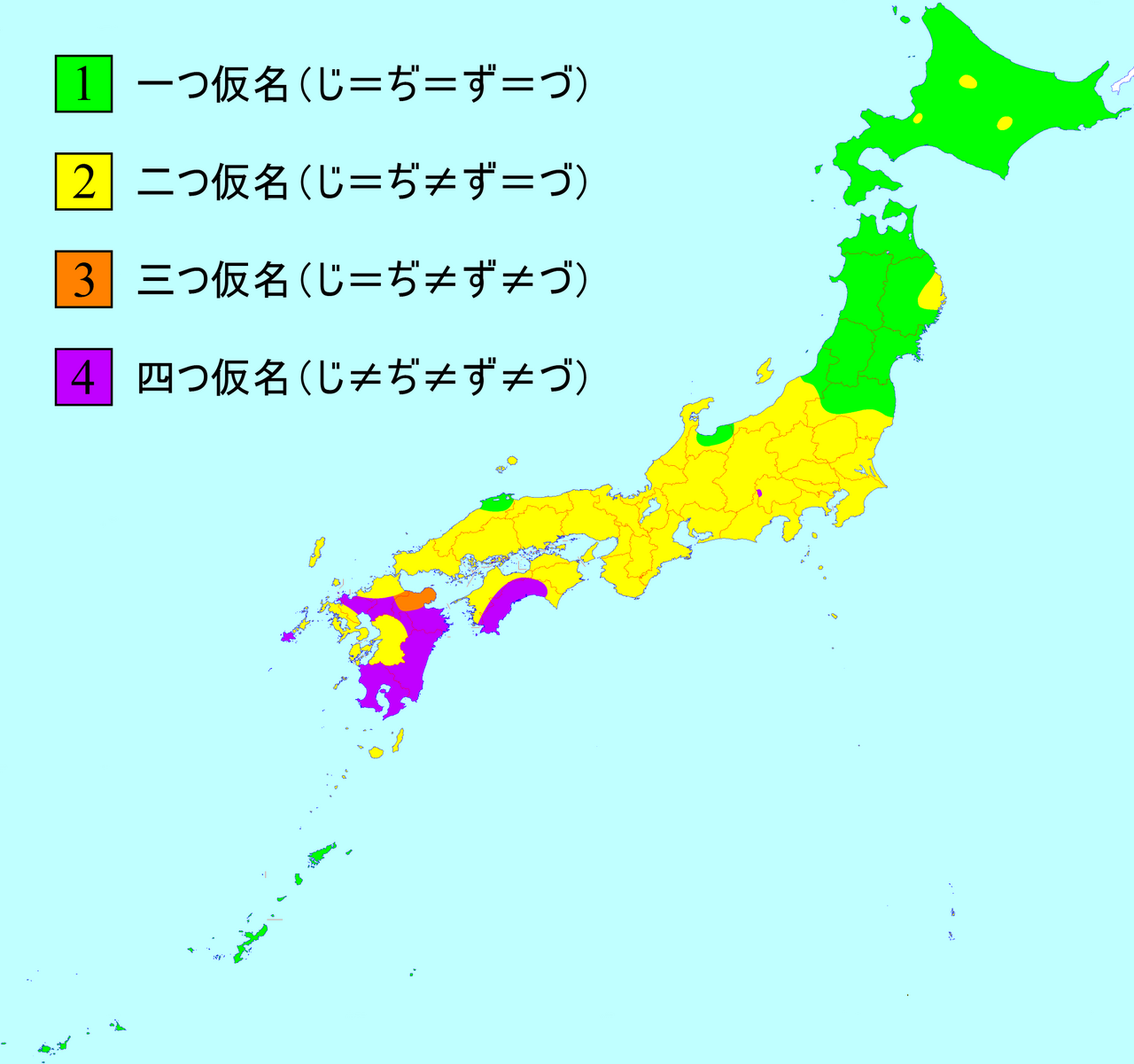
づ and ず (and also ぢ and じ) were pronounced completely the same by the end of 16th century.
 
Even after reading and pretty much understanding the definitions, I still find it difficult to really wrap my head around the true possibilities of this verb...
And this is why the -te form and imperative form are いでて and いでよ, not いて and いよ, respectively, even it's written as 出ず in the modern kana usage.
Makes sense then :)
づ and ず (and also ぢ and じ) were pronounced completely the same by the end of 16th century.
I see, good to know exactly when that occurred.
After reading the wiki page, I'm just curious about one thing that was mentioned there:
only the two kana じ zi and ず zu are to be used, with two notable exceptions:

  1. When a word exhibits sequential voicing, or rendaku, as a result of compounding, a second morpheme that would otherwise begin with the kana つ tu or ち ti in isolation (神無月 かんなづき kannaduki for which 月 in isolation is written つき tuki).
  2. When the kana つ tu or ち ti is repeated and voiced in a word (続く つづく tuduku).
There's a station I'm going to live near soon, called 笹塚駅(ささづか). With my current understanding of the rules, wouldn't this be a disallowed spelling? Yet, I was unable to type ささずか for IME to have a clue what kanji to use (though it does work on my phone's Gboard). The station is in Tokyo and most definitely effectively pronounced "sasazuka", but there is no repeated つ or ち becoming voiced, and according to my understanding of 連濁 it would have to be さざづか for it to be acceptable to spell it that way. So now I'm confused if that rule is inaccurate or something by today's standards? Maybe I'm missing something...
 
according to my understanding of 連濁 it would have to be さざづか for it to be acceptable to spell it that way.
This is your misunderstanding.

Rendaku is a phenomenon in Japanese morphophonology that governs the voicing of the initial consonant of a non-initial portion of a compound or prefixed word.

See the examples in the wikipedia page.

ひと + ひと → ひと-びと (not ひびと)
いけ (from verb 生ける (いける)) + はな → いけばな (not いばな)
て + かみ → て-がみ (not がみ)
まき + すし → まき-ずし (not まずし)
 
See the examples in the wikipedia page.

ひと + ひと → ひと-びと (not ひびと)
いけ (from verb 生ける (いける)) + はな → いけばな (not いばな)
て + かみ → て-がみ (not がみ)
まき + すし → まき-ずし (not まずし)
Ahh oops, though I already read a bit of the page, I guess for some reason I got confused and thought it was based on the singular kanji character doubling, and not the pronunciation, if that makes sense (even though that doesn't really make sense far down the line of thinking). I also assumed it had to be a the unvoiced version of the same consonant for some reason, but reading the rest of the examples as you've shown, that's not required. I think I understand now 🤔 thank you!
 
Back
Top Bottom